
 EL
EL  EN
EN  FR
FR  RU
RU  DE
DE  AR
AR  ES
ES  PT
PT  IT
IT  NL
NL  PL
PL  SL
SL  ET
ET  RO
RO  CS
CS  LV
LV 
As a Canadian brand owner, you're being squeezed. Local production is too expensive1, και generic collars from distributors don't let your brand stand out2. Your profits are suffering, and your brand isn't unique.
The factory-direct way is to partner with a modern manufacturer that gives you complete control. It combines powerful online design tools, factory pricing to beat the exchange rate, and a simple, all-inclusive process from creation to your doorstep in Canada.

My name is Cathy, and as a pet traction customization expert at qqpets, I understand the Canadian market. You have amazing ideas inspired by the vast and beautiful Canadian landscape, but turning those ideas into profitable products feels like an uphill battle. The old way of sourcing through layers of middlemen just doesn't work for modern online brands. That's why we've built a new way—a factory-direct path designed to make you more creative, more profitable, and more competitive.
How can you design truly unique Canadian patterns without being an artist?
You want your collars to scream "Canada"—from Rocky Mountain adventures to east coast charm—but you don't have the design skills. You feel stuck with generic patterns that don't tell your brand's story.
You can now design unique patterns instantly using our free online tools. Our system empowers you to create unlimited Προσαρμοσμένα μοτίβα using AI or our vast design library, bringing your Canadian-themed ideas to life in seconds.
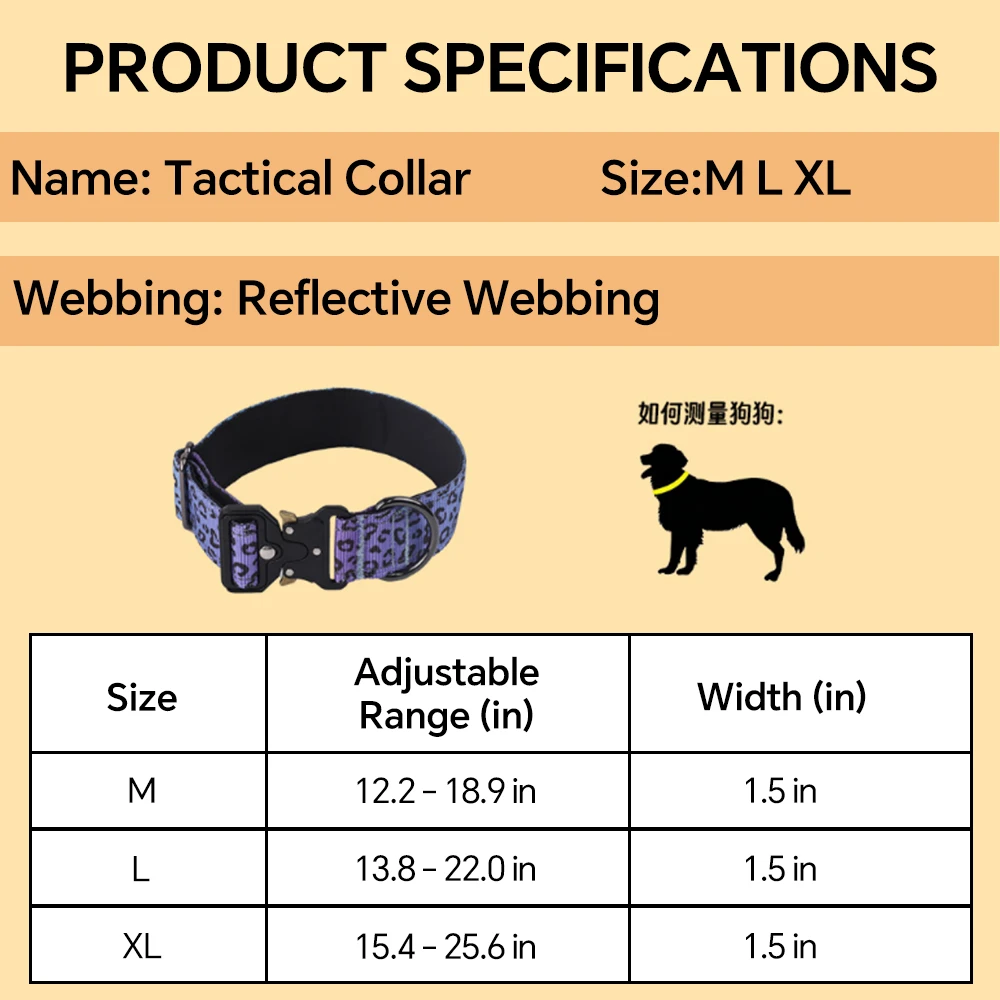
Your brand's identity is everything. The factory-direct way puts you in the designer's seat. Go to our 3D Mockup System right now. You can use our AI generator3 and simply type in your vision: "A pattern with canoes and pine trees," "a design inspired by the Calgary Stampede," or "a pattern of iconic Montreal bagels." In seconds, the AI generates exclusive patterns that you can see on a 3D collar model4. This isn't a future dream; it's a tool for you to use today, for free. It’s the "Mockup in seconds" part of our promise. This technology allows you to create a differentiated product line that connects deeply with your Canadian customers, making your brand unforgettable.
How does factory-direct pricing help you beat the Canadian exchange rate?
The weak Canadian dollar eats into your profits when buying from US-based distributors5. You're forced to either raise your prices and lose customers or accept razor-thin margins that make it hard to grow.
Factory-direct pricing eliminates the middlemen and their markups6. This significant cost reduction provides a powerful buffer against unfavorable exchange rates7, directly boosting your profit margin on every single collar you sell in Canada.
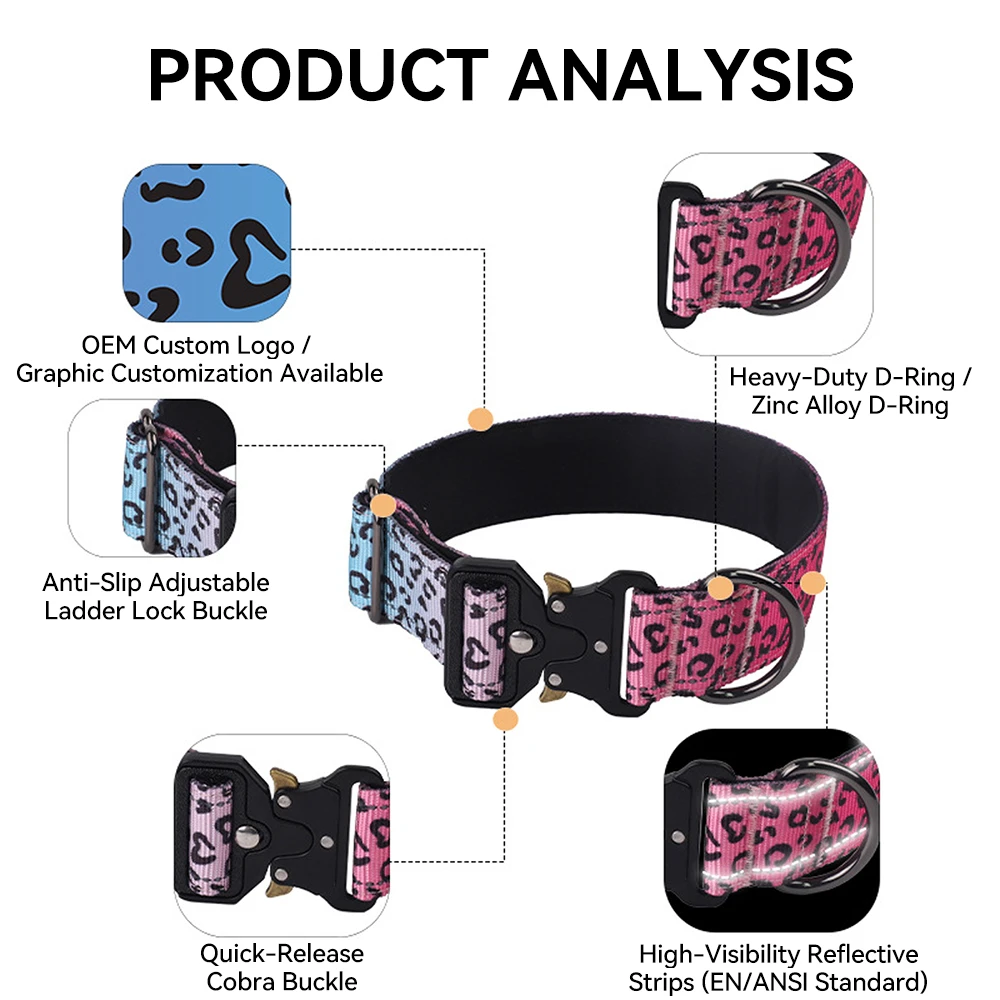
Let's be blunt: every agent, distributor, and trading company between you and the factory is a tax on your business. By going direct, you cut them all out. The price you pay is for the product itself, not for a long chain of people. For a Canadian business, this is a massive advantage. The money you save isn't just a small discount; it can fundamentally change your business's profitability. Furthermore, we empower you with financial flexibility. Our "lightweight customization" model allows you to order as few as 50 pieces per design. You don't have to risk thousands of dollars on one idea. You can test five different provincial-themed designs and see what sells8. This is how smart brands grow.
Old Sourcing Model vs. The Factory-Direct Way
| Feature | Old Distributor Model | The Factory-Direct Way | Your Canadian Advantage |
|---|---|---|---|
| Cost Structure | Inflated by multiple middlemen | Transparent, direct-from-source price | Higher profit margins9 |
| Design Control | Limited to distributor's catalog | Unlimited, AI-powered design tools | A truly unique brand identity |
| Risk | High MOQ, large upfront investment | Low MOQ (50 pcs), test the market | Lower risk, data-driven decisions |
How do you get products from the factory to your door in Canada?
You worry about the nightmare of international shipping. The thought of dealing with customs, brokerage fees, and paying GST/HST on your import10 makes the whole process seem too complicated and risky for your business.
The factory-direct way makes shipping simple and predictable. We offer an all-inclusive shipping service (DDP) that handles all logistics, customs, and taxes. The price you are quoted is the final price to your door11.
We've turned a complex process into a simple checklist. Once you've perfected your design on our 3D system, we can create and ship a physical sample in just 3 days—the second half of our "Mockup in seconds. Sample in 3 Days" promise. When you place your full order, we manage the entire journey. We use a method called DDP (Delivered Duty Paid)12. This is the gold standard for easy importing. It means our shipping quote includes everything: the transportation cost, customs clearance fees, and even the GST/HST. Your shipment will clear customs seamlessly and be delivered by a local Canadian courier right to your address. There are no surprise invoices from a customs broker. Our expert team provides tracking and support, ensuring you have complete peace of mind.
Ready to build your Canadian brand the factory-direct way? Contact our team today and let's bring your vision to life.
Συμπέρασμα
The factory-direct way gives you total control. Create unique Canadian designs in seconds, increase your profits with direct pricing, and enjoy stress-free, all-inclusive shipping right to your door.
"Unit labour costs - OECD", https://www.oecd.org/en/data/indicators/unit-labour-costs.html. Statistics Canada labour-cost data for manufacturing can contextualize why Canadian production may carry higher wage and operating-cost inputs than offshore sourcing. Evidence role: statistic; source type: government. Supports: Canadian brand owners may face high costs when using local production.. Scope note: This would support the cost-pressure context, not prove that every Canadian dog-collar producer is prohibitively expensive. ↩
"[PDF] Evaluating Competitive Advantage of A New Product for Designing ...", https://web.mst.edu/lib-circ/files/Special%20Collections/INCOSE2010/Evaluating%20Competitive%20Advantage%20of%20a%20New%20Product%20for%20Designing%20Successful%20Product%20Differentiation.pdf. Marketing research on product differentiation supports the general proposition that undifferentiated or generic products are harder to distinguish in competitive markets. Evidence role: expert_consensus; source type: paper. Supports: Generic distributor products make brand differentiation more difficult.. Scope note: The evidence would be general marketing theory and would not specifically measure Canadian dog-collar distributors. ↩
"[2102.12092] Zero-Shot Text-to-Image Generation - arXiv", https://arxiv.org/abs/2102.12092. Research on text-to-image generative models documents that AI systems can create visual images from natural-language prompts, providing context for prompt-based pattern generation. Evidence role: mechanism; source type: paper. Supports: AI tools can generate visual design patterns from text prompts.. Scope note: This supports the general capability of text-to-image AI, not the originality or exclusivity of any specific generated collar pattern. ↩
"[PDF] The Development and Application of Computer Aided Design in the ...", https://scholarworks.uni.edu/cgi/viewcontent.cgi?article=4790&context=grp. Product-development literature on computer-aided design and virtual prototyping supports the use of 3D models to visualize and evaluate designs before physical production. Evidence role: mechanism; source type: paper. Supports: Viewing designs on a 3D model can help evaluate a product before production.. Scope note: The evidence would support 3D visualization generally, not the performance of this specific mockup system. ↩
"Recent factors affecting the Canada-US exchange rate", https://www.bankofcanada.ca/publications/mpr/mpr-2025-01-29/in-focus-2/. Bank of Canada or Statistics Canada exchange-rate materials can show that Canadian-dollar depreciation increases the Canadian-dollar cost of purchases priced in U.S. dollars. Evidence role: mechanism; source type: government. Supports: A weak Canadian dollar can reduce margins for Canadian firms buying U.S.-priced goods.. Scope note: This supports the exchange-rate mechanism, not the exact profit impact for any individual collar seller. ↩
"[PDF] 1 Disintermediation in Business-to-Business ... - DiVA Portal", https://www.diva-portal.org/smash/get/diva2:611231/FULLTEXT01.pdf. Supply-chain literature on channel intermediaries explains that wholesalers, distributors, and retailers typically add margins to cover their costs and profit, so disintermediation can reduce channel markups. Evidence role: mechanism; source type: paper. Supports: Buying factory-direct can reduce costs by removing intermediary markups.. Scope note: The source would support the general mechanism, not the exact savings from this manufacturer. ↩
"[PDF] How Do Exchange Rates Affect Import Prices? Recent Economic ...", https://www.usitc.gov/publications/332/ID-21.pdf. International business and finance sources describe exchange-rate risk as a cost uncertainty for importers, while lower purchase costs can partially offset adverse currency movements. Evidence role: mechanism; source type: paper. Supports: Lower factory-direct costs can help offset unfavorable exchange-rate movements.. Scope note: This would support the financial logic only; it would not quantify the buffer for a specific collar order. ↩
"Small-batch production: Definition, Methods and ...", https://www.tacto.ai/en/procurement-glossary/low-volume-production. Entrepreneurship and product-development research on market experimentation supports the idea that testing multiple small product variations can generate demand information before larger commitments. Evidence role: expert_consensus; source type: paper. Supports: Small-batch ordering can allow brands to test multiple designs before scaling inventory.. Scope note: This supports the testing logic, not the specific feasibility or sales results of provincial-themed dog-collar designs. ↩
"Determinants of Margins in the Distribution Channel: An Empirical ...", https://www.gsb.stanford.edu/faculty-research/working-papers/determinants-margins-distribution-channel-empirical-investigation. Research on supply-chain disintermediation and direct sourcing can support the general claim that reducing channel layers may improve seller margins when other costs remain controlled. Evidence role: general_support; source type: paper. Supports: Factory-direct sourcing may contribute to higher profit margins compared with distributor sourcing.. Scope note: This does not establish that a particular Canadian seller will achieve higher margins, because freight, duties, marketing, returns, and pricing strategy also affect profitability. ↩
"GST/HST on imports and exports - Canada.ca", https://www.canada.ca/en/revenue-agency/services/tax/businesses/topics/gst-hst-businesses/charge-collect-imports-exports.html. Canada Border Services Agency guidance on importing commercial goods explains that importers may need to account for customs requirements, applicable duties or taxes, and goods and services tax or harmonized sales tax. Evidence role: definition; source type: government. Supports: Importing goods into Canada can involve customs procedures, brokerage-related costs, and GST/HST obligations.. Scope note: Brokerage fees depend on the carrier or broker and are not imposed uniformly by the government. ↩
"Know Your Incoterms - International Trade Administration", https://www.trade.gov/know-your-incoterms. Authoritative Incoterms explanations of DDP support the principle that the seller’s quoted arrangement may include transport, import clearance, and duties through delivery to the named destination. Evidence role: mechanism; source type: institution. Supports: Under a DDP arrangement, a seller can quote an all-inclusive delivered price to the buyer’s destination.. Scope note: This supports the DDP pricing concept but cannot verify that any individual quotation includes every possible local charge or exception. ↩
"Know Your Incoterms - International Trade Administration", https://www.trade.gov/know-your-incoterms. The International Chamber of Commerce Incoterms rules define Delivered Duty Paid as a term under which the seller bears responsibility for delivery to the named destination, including import clearance and applicable duties or taxes. Evidence role: definition; source type: institution. Supports: DDP means the seller is responsible for import clearance and duty-paid delivery to the buyer’s destination.. Scope note: Incoterms define contractual responsibilities; actual tax treatment and carrier procedures can vary by shipment and jurisdiction. ↩