 EL
EL  EN
EN  FR
FR  RU
RU  DE
DE  AR
AR  ES
ES  PT
PT  IT
IT  NL
NL  PL
PL  SL
SL  ET
ET  RO
RO  CS
CS  LV
LV 
You want to order classy custom dog collars, but you're rightfully worried about quality. How can you be sure the product you receive will be safe, durable, and beautiful? This fear of inconsistency and poor craftsmanship can stop a brand from growing.
We guarantee quality by controlling the entire process from start to finish1. This is achieved through three core pillars: an integrated design and proofing system, strict control over raw materials, and a certified, multi-stage production process.
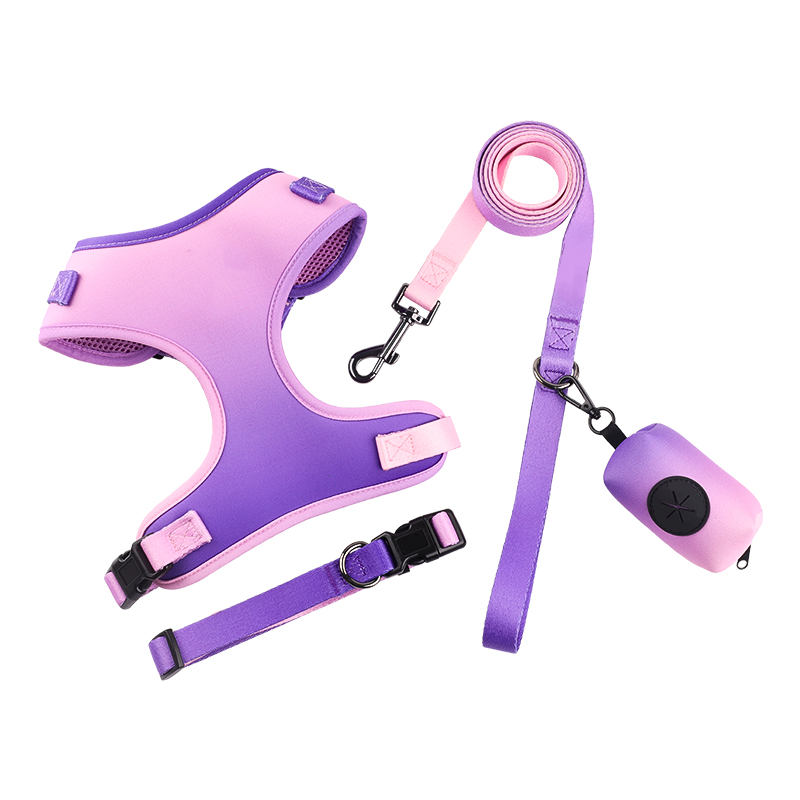
My name is Cathy, and at qqpets, we are experts in the pet traction industry. I talk to online brand owners every single day, and their number one question is always about quality. A "guarantee" from a trading company or a middleman is just a promise. For us, as a direct factory, a guarantee is not a promise—it is a system. It is a series of transparent, verifiable steps that we have built into our DNA to ensure that the classy custom collar you design is the exact same high-quality collar your customer receives, every single time. Let me show you exactly how this system works.
How do we guarantee the design you create is the design you get?
You have a perfect vision for a classy collar, but you're worried it will get lost in translation. You fear the colors will be wrong, the pattern will be distorted, and your brand will look unprofessional.
We guarantee design fidelity with our advanced 3D Mockup System. This tool creates a perfect digital version of your product, acting as a visual contract that we replicate with 100% accuracy.
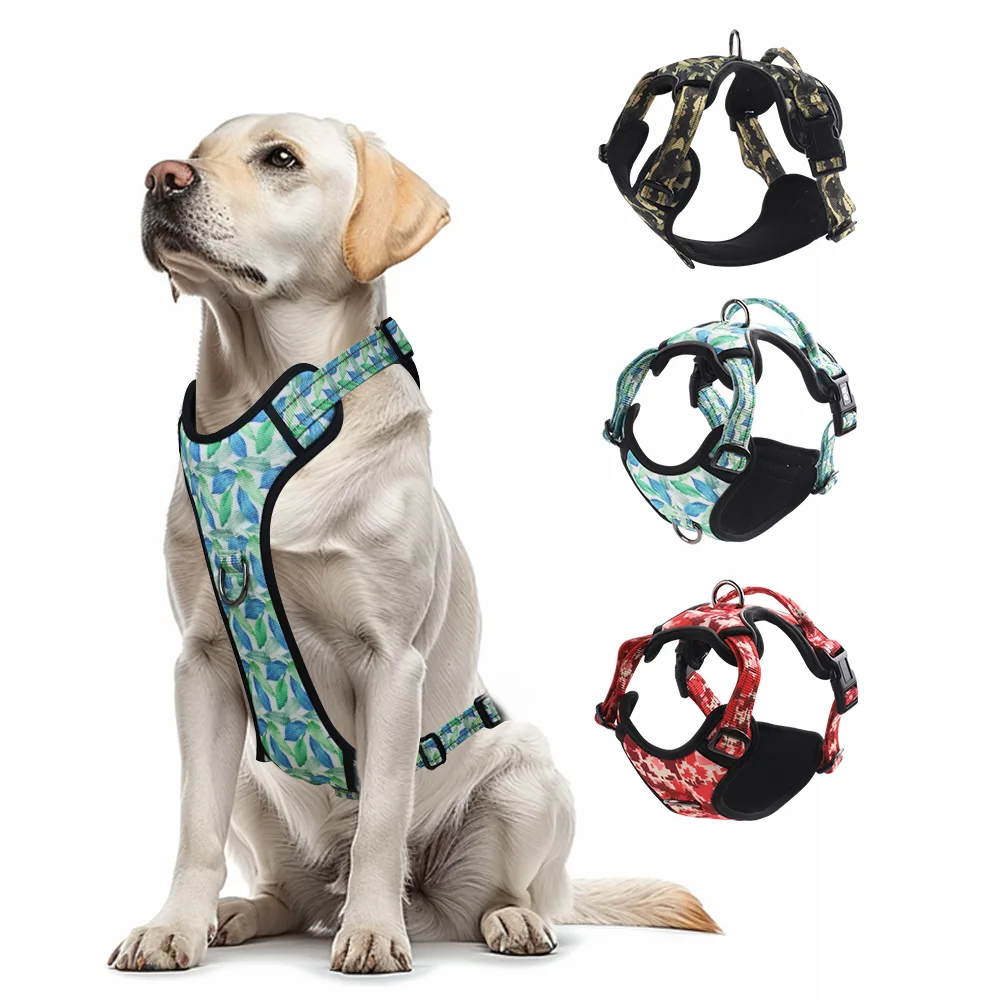
The first step in guaranteeing quality is to eliminate misunderstandings. The traditional process of emailing design files and waiting for a static photo proof is slow and filled with risk. Colors can look different on different screens2, and placements can be misinterpreted. We have solved this problem by giving you direct control. Our powerful online mockup system is the foundation of our design guarantee. It’s where our promise of "Mockup in seconds" comes to life. You can upload your own art, use our AI to generate a unique Προσαρμοσμένο μοτίβο from a simple text prompt, or choose from our library of thousands of free designs. You then apply this pattern to a 3D model of the collar. You can see exactly how it will look from every angle. This isn't just a picture; it's a digital twin3 of the final product.
The Bridge Between Digital and Physical
This accurate digital mockup is the blueprint for our production team. But the ultimate guarantee is the physical product. This is where our "Sample in 3 Days" promise becomes so powerful. We can take your approved 3D design and turn it into a physical sample in your hands faster than most companies can even reply to your email. This physical sample is your proof. It is tangible evidence that we can perfectly translate the digital design into a real-world, high-quality product.
A System of Accuracy
This seamless integration between design, mockup, and sample is only possible because we are the factory. We control the software, the printers, and the production line. A middleman can't offer this because they have to coordinate between you, themselves, and a separate factory, creating gaps where errors occur.
| Feature | Our Factory Guarantee | Traditional Process Risk |
|---|---|---|
| Design Proof | Interactive, 3D Real-time Mockup | Static, Flat 2D Image via Email |
| Color Accuracy | Calibrated System (What you see is what you get) | Screen variations, guesswork |
| Pattern Placement | Precisely visualized on 3D model | Open to interpretation |
| Confidence | 100% certainty before production | Hope that it turns out right |
How do we guarantee the materials are safe and durable?
Your biggest nightmare is a customer review saying your "classy" collar broke. A weak buckle or flimsy webbing not only ruins your brand's reputation but also puts a pet's safety at risk4.
We guarantee material quality by controlling our supply chain and using only components that meet our strict standards for strength and durability, including high-density webbing and load-tested hardware.

A classy collar must be more than just beautiful; it must be reliable. The quality of the final product is determined by the quality of its individual parts. As a factory, we don't just assemble collars; we are deeply involved in the sourcing and testing of every component. This gives us an unmatched level of control that a trading company simply cannot replicate. They are forced to trust whatever their chosen supplier uses, which can change from one order to the next. Our guarantee is built on a foundation of superior, consistent raw materials.
The Fabric of Quality: Webbing
The collar's foundation is its webbing. We refuse to use cheap, thin material.
- Υλικό: We use high-density polyester webbing5. This material is chosen for its superior strength-to-weight ratio and its soft feel, ensuring it is both secure and comfortable for the pet.
- Printing: Your custom pattern is applied via dye-sublimation. This process infuses the ink directly into the fibers of the webbing. The design becomes part of the material itself, meaning it will never crack, peel, or fade6, even after washing or heavy use. This ensures the "classy" look lasts.
The Hardware: Your Brand's Strongest Link
The hardware is the most critical safety component of any collar.
- D-Rings: We use welded D-rings. A non-welded ring has a small gap that can be pulled open by a strong or panicked dog. Our welded rings are a closed loop of metal, offering superior strength and peace of mind.
- Buckles: Every buckle style we offer is subjected to load-bearing tests7 to ensure it meets and exceeds the demands of daily use.
This focus on material science is a core part of our quality guarantee. It is a promise of safety and longevity that is physically built into every collar.
How do we guarantee consistency from the first collar to the ten-thousandth?
Your first order was perfect. But now you need to reorder a larger quantity, and you're worried. How do you ensure the quality doesn't drop as the quantity goes up? This is where many brands fail.
We guarantee consistency through our ISO 9001 certified Quality Management System8. This is a documented, systematic process of multi-stage inspections9 that ensures every collar is made to the exact same standard.
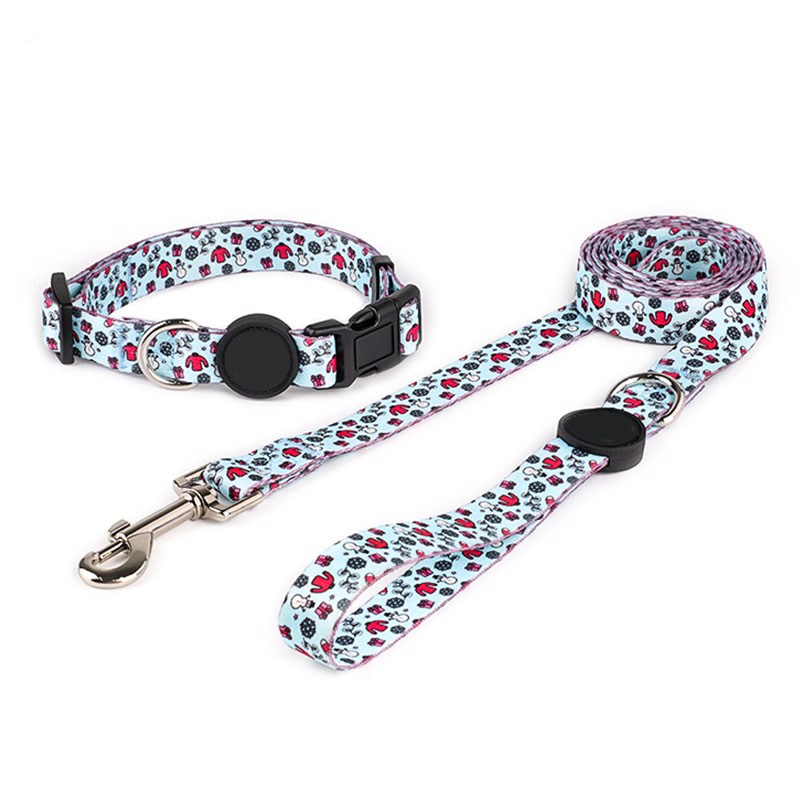
Consistency is the hallmark of a professional brand. Your customers expect the same excellent experience every time they buy from you. The only way to guarantee this at scale is through a robust, repeatable system. A handshake deal with a trading company offers no real recourse when quality drops on your second or third order. Our ISO 9001 certification isn't just a piece of paper; it's the rulebook that our entire production team lives by. It is your ultimate guarantee of consistency.
A System of Checkpoints
Our quality guarantee is not a single check at the end. It's a series of checkpoints woven throughout the entire manufacturing process.
- Stage 1: Raw Material Inspection10: Before a single collar is made, our QC team inspects all incoming webbing, buckles, and D-rings to ensure they meet our standards.
- Stage 2: In-Process Inspection: As the collars are being made, we have inspectors on the factory floor. They check the color and clarity of the printing against the approved sample. They check the precision and strength of the stitching.
- Stage 3: Final Assembly Inspection: Each completed collar is individually inspected. We check for correct assembly, buckle function, and overall cosmetic appearance. Any product with even a minor flaw is rejected.
This systematic approach is what allows us to confidently offer a low MOQ of just 50 pieces for custom designs. We know our system can produce a small batch or a massive batch with the exact same level of quality. Ready to build your brand on a foundation of guaranteed quality? Contact our expert team today to get started.
Συμπέρασμα
We guarantee quality with a three-part system: accurate 3D design proofing, superior material sourcing, and a certified, multi-stage inspection process. This ensures every classy custom collar is perfect.
"What is vertical integration in companies?", https://www.esade.edu/beyond/en/vertical-integration-companies/. Research on vertical integration and supply-chain control describes how ownership or close control of sequential production stages can reduce coordination failures and improve process oversight; this supports the article’s rationale for end-to-end control as a quality mechanism, but it does not verify qqpets’ internal practices. Evidence role: general_support; source type: paper. Supports: Quality can be strengthened by controlling the full production process rather than relying on disconnected intermediaries.. Scope note: Contextual support only; it does not independently prove the company controls every production stage. ↩
"Color Management for Creators: ICC Profile - Eizo", https://www.eizo.com/library/management/color-management_icc-profiles/. Color-management literature explains that display devices vary in color reproduction unless calibrated and profiled, supporting the claim that digital proofs can appear differently across screens; this does not assess the accuracy of any particular mockup system. Evidence role: mechanism; source type: research. Supports: Colors in digital design proofs can appear differently on different screens.. Scope note: Supports the general display-color issue, not the performance of the company’s system. ↩
"Security and Trust Considerations for Digital Twin ...", https://tsapps.nist.gov/publication/get_pdf.cfm?pub_id=957183. Definitions from standards and technical literature describe a digital twin as a virtual representation of a physical object or process used to support design, monitoring, or production decisions; this supports the article’s use of the term conceptually, but not the exact fidelity of the collar mockup. Evidence role: definition; source type: institution. Supports: A digital model can serve as a virtual representation of a planned physical product.. Scope note: Defines the concept; it does not prove the mockup is a true digital twin or is 100% accurate. ↩
"Review of Collars, Harnesses, and Head Collars for Walking Dogs - PMC", https://pmc.ncbi.nlm.nih.gov/articles/PMC12345489/. Veterinary and animal-welfare guidance notes that collars and restraint equipment should fit properly and be maintained because failures or improper use can lead to escape, injury, or choking hazards; this supports the safety relevance of collar reliability, but it does not quantify risk from the specific hardware described. Evidence role: general_support; source type: institution. Supports: Weak or unreliable collar components can create safety risks for pets.. Scope note: General pet-safety support; it does not provide failure rates for custom dog collars. ↩
"(PDF) "Design Fabrics Suitable for Being Used as Heavy Duty ...", https://www.academia.edu/17856546/_Design_Fabrics_Suitable_for_Being_Used_as_Heavy_Duty_Webbing_Slings_. Textile engineering sources describe polyester fibers as having high tensile strength, abrasion resistance, dimensional stability, and low moisture absorption, which provides contextual support for using polyester webbing in durable straps and collars; the source would not verify the density or grade used by qqpets. Evidence role: mechanism; source type: education. Supports: High-density polyester webbing is chosen for strength and durability in collar construction.. Scope note: Supports polyester’s general material properties, not the specific webbing specification in the article. ↩
"Sublimation Fabric – Stretch, Polyester & Performance Materials", https://spandexbyyard.com/pages/sublimation?srsltid=AfmBOopcCQ_yQZS9iq5UYTnRYronTwRxbHnlpnGetpw3B8gDNdogI4B6. Textile-printing sources commonly distinguish dye-sublimation from surface printing because the colorant penetrates polyester fibers, which can reduce cracking and peeling associated with surface inks; however, claims that prints “never” fade are stronger than typical evidence supports because fading can still occur under UV exposure, abrasion, laundering, or chemical conditions. Evidence role: mechanism; source type: research. Supports: Dye-sublimated designs are more resistant to cracking, peeling, and fading than surface-applied prints.. Scope note: Supports improved resistance to cracking and peeling, but not an absolute guarantee of never fading. ↩
"Tensile Testing: A Complete Guide to Principles, Equipment, and Standards", https://www.instron.com/en/resources/test-types/tensile-test/. Standardized tensile and load-testing methods are widely used to evaluate the breaking strength and performance of straps, fasteners, and polymer components, supporting the relevance of load-bearing tests for collar hardware; the cited standard would not demonstrate that any particular buckle passed qqpets’ tests. Evidence role: mechanism; source type: institution. Supports: Load-bearing tests are an appropriate way to assess whether buckles can withstand expected use forces.. Scope note: Supports the appropriateness of load testing, not the company’s test results. ↩
"ISO 9001:2015 - Quality management systems", https://www.iso.org/standard/62085.html. ISO describes ISO 9001 as a standard that specifies requirements for a quality management system, including consistent provision of products and continual improvement; this supports the role of ISO 9001 as a process framework, but it does not verify the company’s certification status. Evidence role: definition; source type: institution. Supports: ISO 9001 is a quality management system standard intended to support consistent products and services.. Scope note: Defines ISO 9001 and its purpose; certification should be verified through a certificate or accredited registrar. ↩
"Quality Inspector - Career Training Programs from Texas State University", https://ce.careertraining.txst.edu/training-programs/quality-inspector/. Quality-management references describe inspection at incoming-material, in-process, and final-product stages as common controls for detecting defects before shipment; this supports the article’s inspection framework generally, but not the effectiveness of the company’s specific inspection program. Evidence role: expert_consensus; source type: education. Supports: Multi-stage inspections are a recognized manufacturing quality-control practice.. Scope note: General manufacturing quality-control support; it does not validate actual inspection records. ↩
"Best Practices for Incoming Inspections: Ensuring Quality Control", https://kiuey.com/best-practices-incoming-inspections-ensuring-quality-control/. Quality-control literature identifies incoming or raw-material inspection as a preventive control used to confirm that supplied materials meet specifications before production begins; this supports the article’s claim that material inspection is part of a consistency system, but not that every qqpets batch is inspected. Evidence role: mechanism; source type: education. Supports: Inspecting webbing, buckles, and D-rings before production can help prevent defects from entering the manufacturing process.. Scope note: Supports the quality-control method, not its implementation by the company. ↩