 EL
 EN
 FR
 RU
 DE
 AR
 ES
 PT
 IT
 NL
 PL
 SL
 ET
 RO
 CS
 LV
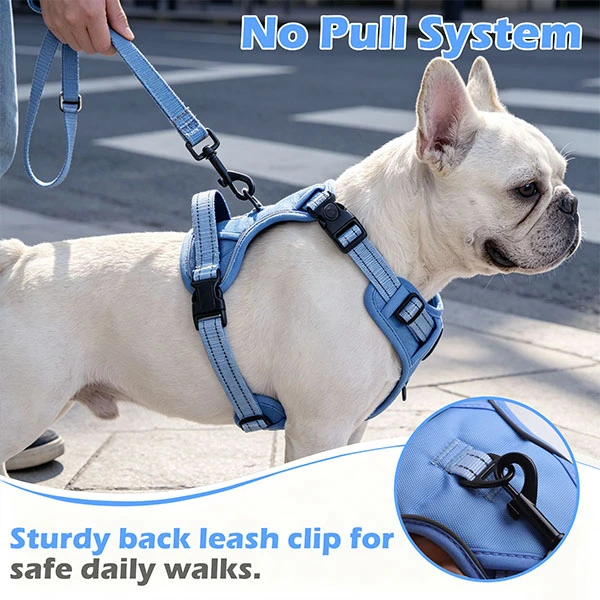
Your pet brand wants to capture the massive Bulldog market1, but you know a standard dog collar is a poor, even dangerous, choice for them. You're worried about creating a product that causes breathing issues or slips off their notoriously thick necks.
The ideal solution is to design custom dog collars for Bulldogs that are wider, softer, and feature specific hardware. This means focusing on materials that prevent chafing on their sensitive skin and a design that respects their unique brachycephalic anatomy.
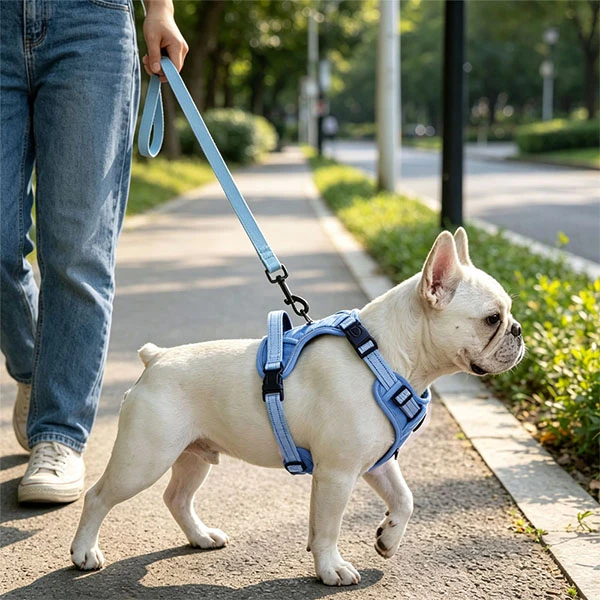
My name is Cathy, and as a pet traction customization expert at the qqpets εργοστάσιο, I've seen brands struggle with this exact challenge. The unique physiology of a Bulldog—their thick, muscular neck that's often wider than their head, combined with their sensitive skin and breathing considerations—makes them one of the hardest breeds to fit. Simply put, a generic collar is not just uncomfortable; it's a liability. This guide was written for brand owners like you. I will provide a step-by-step blueprint for developing a safe, comfortable, and incredibly stylish collar that Bulldog owners will actively seek out, helping you build a reputation for expertise and quality.
Why Do Bulldogs Need Carefully Designed Dog Collars?
You see Bulldogs everywhere, but you notice many are wearing ill-fitting collars. You're hesitant to enter this market without a product that genuinely addresses their anatomical needs, fearing it will fail.
Standard collars pose two major risks to Bulldogs: they can dangerously restrict breathing by putting pressure on the trachea and they can easily slip off over their wide necks and smaller heads.
Bulldogs are a brachycephalic breed, meaning they have short snouts. This anatomy can already make breathing more challenging2, και a narrow collar that pulls tightly on their throat can exacerbate this issue3, especially if they pull on the leash. Furthermore, the classic Bulldog build features a powerful, muscular neck that is often thicker than the circumference of their head. A standard collar, if not perfectly tightened, can simply slide right off4, creating a terrifying situation for the owner. Therefore, a specially designed collar isn't a gimmick; it's a critical piece of safety equipment that shows your brand understands and cares about the well-being of these beloved dogs.
How Does the Collar Design Differ for French, English, and American Bulldogs?
You want to serve the entire Bulldog category, but you recognize that a French Bulldog is vastly different from an English Bulldog. You're unsure how to tailor your collar designs for these distinct variations.
You must offer different widths and potentially different hardware styles. A French Bulldog requires a lighter, more flexible collar, while an English or American Bulldog needs a wider, more robust design to handle their strength and size.
Although they share a name, these breeds have very different needs. A "one-size-fits-all" approach to your Bulldog line will fail. A collar designed for the strength of a 60-pound English Bulldog would be far too bulky and heavy for a 25-pound Frenchie. Conversely, a lightweight Frenchie collar would be unsafe for its larger cousins. Showing you understand these differences in your product offering is a powerful way to build trust. For this reason, successful brands often create distinct product lines or sizing guides for these different types, a detail that knowledgeable owners will notice and appreciate.
### Collar Design Considerations by Bulldog Type
| Bulldog Type | Key Anatomical Traits | Recommended Width | Key Design Focus |
|---|---|---|---|
| French Bulldog | Smaller, more delicate build, very sensitive skin. | 1 inch (2.5 cm) | Lightweight, extremely soft materials, minimal hardware. |
| English Bulldog | Very thick neck, heavy wrinkles, powerful build. | 1.5 - 2 inches (3.8 - 5.0 cm) | Wider to distribute pressure, smooth materials to avoid chafing in folds. |
| American Bulldog | Taller, more athletic build, still very powerful. | 1.5 - 2 inches (3.8 - 5.0 cm) | Durability and strength, with heavy-duty hardware being a priority. |
What Are the Most Comfortable Materials for Bulldog Collars?
You know Bulldog skin is notoriously prone to irritation and allergies.5 You're searching for a material that is both strong enough for a powerful dog and gentle enough for their sensitive skin folds.
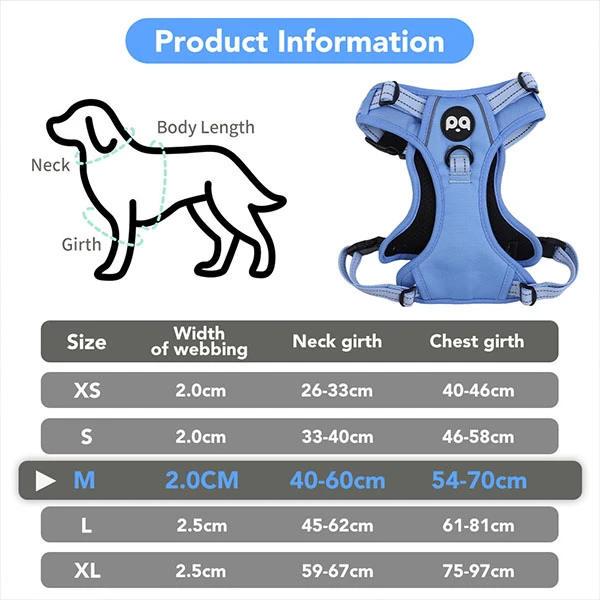
The ideal construction is a durable polyester webbing base with a soft, padded neoprene lining. This combination provides the necessary strength while ensuring a gentle, hypoallergenic surface is against the dog's skin.
The material choice is paramount for Bulldog comfort. Standard nylon webbing, while strong, can be abrasive. Its rough texture can easily chafe a Bulldog's neck, especially within their skin wrinkles, leading to painful irritation. This is a product-return nightmare waiting to happen. The solution we champion is a dual-material approach. The outer layer is a high-density polyester, which provides the structural integrity and serves as the perfect canvas for your vibrant custom patterns. The inner layer, the part that touches the dog, is a thick, soft neoprene padding. Neoprene is the same material used in wetsuits; it's hypoallergenic, quick-drying, and incredibly soft. This thoughtful construction results in a collar that is both tough and exceptionally comfortable, a key selling point for discerning Bulldog owners.
How Should You Choose Buckles and Hardware for a Bulldog?
You're worried that a big, bulky buckle will dig into a Bulldog's neck wrinkles. You need hardware that is secure but also low-profile and comfortable for their unique anatomy.
For Bulldogs, you should prioritize hardware that lies flat against the collar. A classic, sturdy metal pin buckle (like a belt buckle) is often a better choice than a bulky side-release clip that can pinch skin folds.
This is a subtle but crucial detail. Many heavy-duty collars use large, quick-release "Cobra" style buckles. While strong, their size and shape can be problematic for a Bulldog, getting caught in their neck wrinkles and causing discomfort. A more traditional, high-quality metal pin buckle, on the other hand, sits much flatter. It provides excellent security without creating uncomfortable pressure points. The D-ring for leash attachment should also be positioned carefully, ensuring it sits smoothly and doesn't interfere with the buckle. These small ergonomic considerations demonstrate a deep understanding of the breed's needs and elevate your product from a generic collar to a specialized piece of gear.
How Can You Create Custom Patterns That Bulldog Owners Will Love?
The Bulldog market is saturated with the same generic patterns like crowns, bowties, and skulls. You want your brand to stand out with fresh, unique designs that capture the breed's fun-loving personality.
To break through the noise, you must create your own proprietary patterns. Leverage modern design technology to develop signature looks that are completely unique to your brand, moving beyond the tired clichés.
This is your single greatest opportunity for differentiation. Imagine offering a pattern of French Bulldogs riding skateboards, or a cool floral design in your brand's specific color palette. This is now easier than ever. As a pet traction customization expert, we built our factory to empower your creativity. Our exclusive 3D Mockup System includes a powerful, free AI Pattern Generator. You can simply type your idea—like "a pop art pattern of English Bulldogs with sunglasses"—and our AI will instantly create unique, seamless patterns for you. Then, our "Mockup in seconds" feature lets you apply that design to a photorealistic 3D collar model. You can visualize and perfect your entire collection without spending a dime on graphic design. This is how you create a brand that people remember.
How Do You Develop a Full Bulldog Collection and Order Smartly?
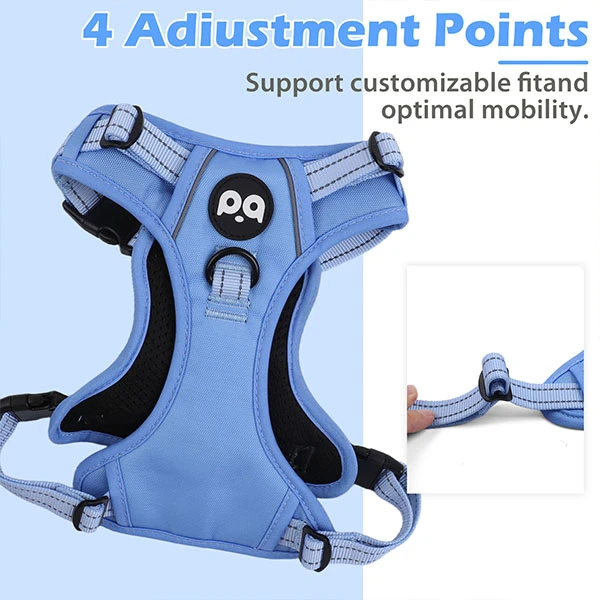
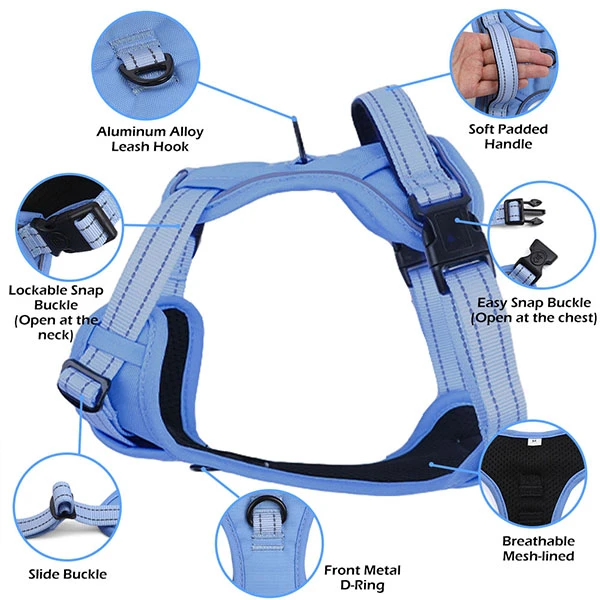
You've designed the perfect Bulldog collar. You know that many Bulldog owners prefer to walk their dogs on a harness, and you don't want to lose a sale because you don't offer a matching set.
You must think of your product not as a single item, but as a collection. Developing a matching harness and leash, and partnering with a factory that allows for small-batch ordering, is the key to launching successfully.
For a brachycephalic breed like a Bulldog, many vets and owners prefer harnesses to avoid any pressure on the neck. By offering a matching harness—designed with the same custom pattern and commitment to comfort—you not only solve a real problem for your customer but also significantly increase your average order value. The problem for most brands is the financial risk of ordering a full collection. This is where our model changes the game. We offer a "lightweight customization" approach with an industry-leading low MOQ of just 50 pieces per design/size. Combined with our "Sample in 3 Days" policy, you can design a collar, a matching harness, and a leash, get physical samples for all three in days, and then place a low-risk bulk order. This agility allows you to launch a full, professional Bulldog collection from day one. Ready to build your brand? Contact our team today to get started.
Συμπέρασμα
Success in the Bulldog market requires specialized collars that are wide, soft, and use flat hardware. Leverage AI design tools and a low-MOQ partner to create a unique, full collection that stands out.
"Modern pedigree dogs in the United Kingdom Kennel Club", https://pmc.ncbi.nlm.nih.gov/articles/PMC12004854/. A breed-registration or kennel-club popularity dataset supports the claim that Bulldogs and related Bulldog breeds represent a large consumer segment by documenting their registration or popularity rankings among dog breeds. Evidence role: statistic; source type: institution. Supports: The Bulldog market is large enough to be commercially significant for pet brands.. Scope note: Popularity rankings indicate market potential but do not directly measure collar sales or purchasing behavior. ↩
"Strategies for the management and prevention of ... - PMC", https://pmc.ncbi.nlm.nih.gov/articles/PMC6067768/. A veterinary review on brachycephalic obstructive airway syndrome explains that shortened skull conformation can narrow the upper airway and increase respiratory difficulty in affected breeds such as Bulldogs. Evidence role: mechanism; source type: paper. Supports: Brachycephalic anatomy can make breathing more difficult for Bulldogs.. Scope note: The source supports the general respiratory risk associated with brachycephaly; severity varies among individual dogs. ↩
"Effect of a Collar and Harness on Intraocular Pressure ... - PMC", https://pmc.ncbi.nlm.nih.gov/articles/PMC12036695/. A veterinary guidance source or clinical review supports that pressure on the neck or upper airway can worsen respiratory compromise in brachycephalic dogs, which is why harnesses are often advised over neck collars for leash restraint. Evidence role: mechanism; source type: institution. Supports: Tight neck collars can worsen breathing concerns in brachycephalic dogs such as Bulldogs.. Scope note: The evidence is likely to support the risk mechanism and general recommendation rather than test this exact collar design in Bulldogs. ↩
"Dog collars for dogs with bigger necks than heads", https://www.facebook.com/sarah.bastien.3/posts/these-types-of-collars-can-be-used-on-any-breed-of-dogs-but-especially-if-you-ha/10240490791921666/. Animal-welfare or veterinary collar-fit guidance explains that dogs with necks similar in size to, or wider than, their heads are at higher risk of slipping out of conventional flat collars if the fit is not secure. Evidence role: mechanism; source type: institution. Supports: Dogs with Bulldog-like neck and head proportions can slip out of standard collars when fit is inadequate.. Scope note: The source may address collar escape risk generally rather than Bulldogs specifically. ↩
"Ironing out the wrinkles and folds in the epidemiology of skin ...", https://pmc.ncbi.nlm.nih.gov/articles/PMC9259571/. A veterinary dermatology source documents that Bulldogs and related brachycephalic breeds are predisposed to skin conditions such as atopic dermatitis, skin-fold dermatitis, and irritation in facial or body folds. Evidence role: expert_consensus; source type: paper. Supports: Bulldogs are prone to skin irritation, allergic skin disease, and fold-related dermatitis.. Scope note: Predisposition does not mean every Bulldog has skin disease; risk varies by individual genetics, environment, and care. ↩