 EL
EL  EN
EN  FR
FR  RU
RU  DE
DE  AR
AR  ES
ES  PT
PT  IT
IT  NL
NL  PL
PL  SL
SL  ET
ET  RO
RO  CS
CS  LV
LV 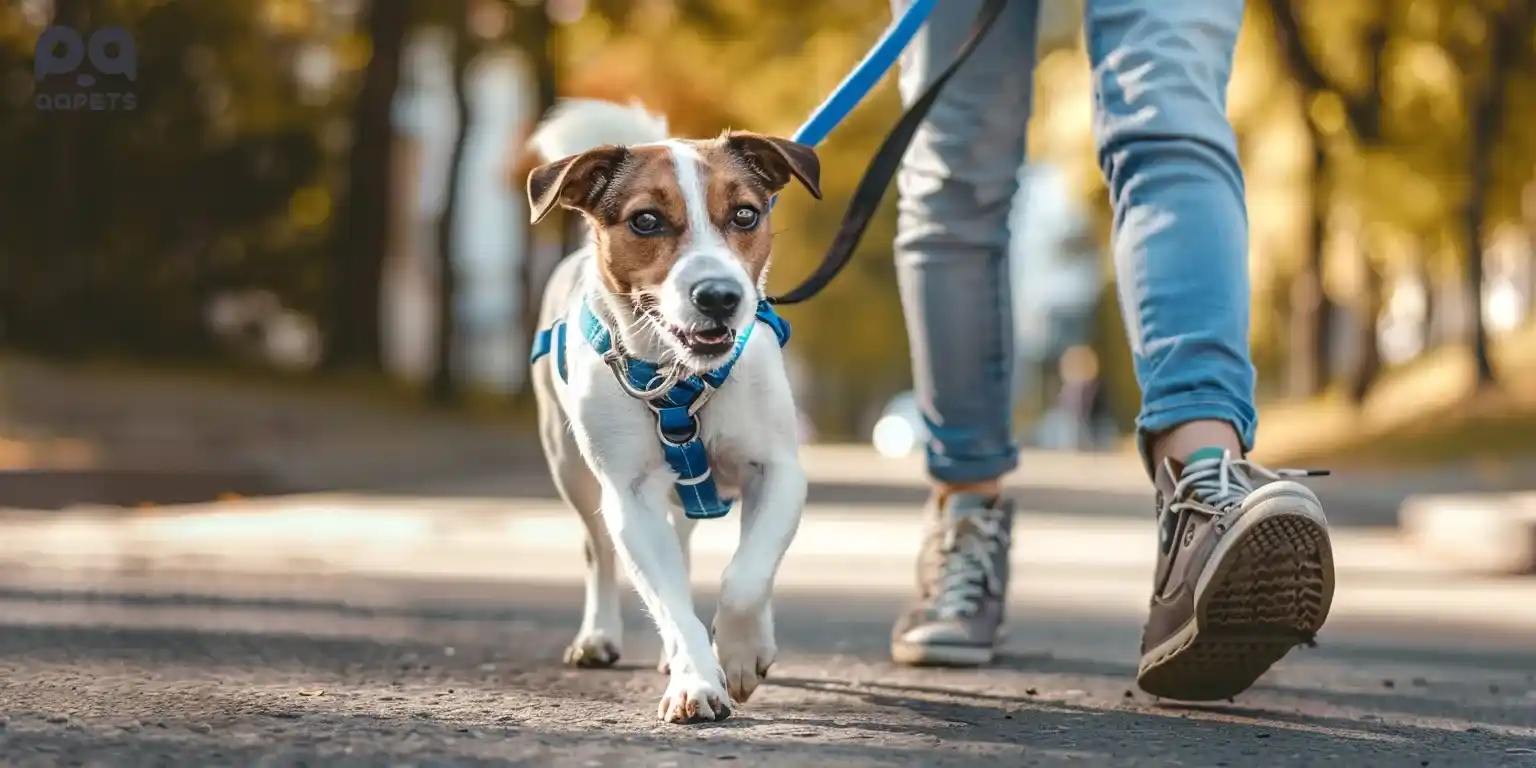
Your brand promotes a "fully adjustable" harness, but the customer complaints about poor fit just won't stop. This constant stream of negative feedback undermines customer trust and inflates return rates, directly hitting your brand's reputation and profits.
A harness is only TRULY adjusted for a custom fit when its fundamental structure matches the dog's unique body type. Simple strap adjustments on the wrong structural foundation can't fix a poor fit.1 This next level of customization is only achievable through a direct factory partnership.

As the pet traction industry's customization experts, I see this all the time at qqpets. Brands come to us frustrated because their "one-size-fits-all" adjustable harness is failing a huge portion of the market. They are stuck in a cycle of returns from owners of deep-chested, barrel-chested, or long-bodied dogs.2 The truth is, you can't solve a structural problem with a simple adjustment strap. The real solution is to offer different harness styles designed for different body shapes, all unified under your single, powerful brand identity.
Aren't adjustable straps enough for a custom fit?
Your current supplier probably sold you on the idea of "5-point adjustability" as the ultimate solution for fit. Yet, you're still dealing with feedback about chafing under the legs, harnesses twisting sideways, or dogs backing right out of them.3
No, adjustable straps alone are not enough for a custom fit. They can only fine-tune an already good fit; they absolutely cannot fix a fundamentally bad one. If the harness's core structure is wrong for the dog's body type, no amount of adjustment can prevent discomfort, restriction, or escapes.

Think of it like a suit. You can adjust the sleeve buttons and tighten the vest, but if the jacket was cut for a completely different body shape, it will never look right or feel comfortable. It will pull in some places and bunch up in others. A dog harness works the same way. An H-style harness, for example, is great for many dogs, but on a deep-chested breed like a Vizsla, the chest strap may sit too close to the front legs, causing painful chafing with every step.4 For a barrel-chested Pug, that same harness might be too restrictive around the neck.5 The "adjustability" is useless because the underlying architecture of the product is wrong.
The Difference Between a Good Fit and a Forced Fit
The key to customer satisfaction and brand loyalty is understanding that a "forced fit" created by over-tightening straps on the wrong harness is not a "good fit."
- Forced Fit: This is what happens when you try to make a single harness style work for every dog. It often creates pressure points, restricts natural movement, and can lead to dangerous escapes.6 This is the source of your negative reviews.
- Good Fit: This is achieved by first selecting the correct harness structure for the dog's body type, and then using the adjustment points to fine-tune it. This results in comfort, safety, and a happy customer.
| Aspect | "Adjustable Only" Fit (Forced) | "True Custom" Fit (Good) |
|---|---|---|
| Foundation | One harness style for all body types. | Different styles for different body types (e.g., H-style, Y-style).7 |
| Άνεση | Straps dig in, restrict shoulders, cause chafing. | Pressure is distributed evenly, allowing free movement. |
| Ασφάλεια | Prone to twisting, allows for easy escapes. | Stays securely in place without over-tightening.8 |
| Result | High return rates, poor reviews, damaged brand trust. | High customer satisfaction, 5-star reviews, brand loyalty. |
How can you offer multiple harness styles without multiplying your risk?
Okay, offering a collection of different harness styles seems like the perfect solution to the fit problem. But the very idea of doubling or tripling your inventory costs and dealing with massive minimum order quantities (MOQs) for each style feels like a financial nightmare.
You can offer multiple styles without the risk by partnering with a modern factory built for "lightweight customization." With revolutionary low MOQs, rapid sampling, and free, powerful design tools, you can launch a diverse collection of harnesses with less financial investment than a single large order from a traditional wholesaler.
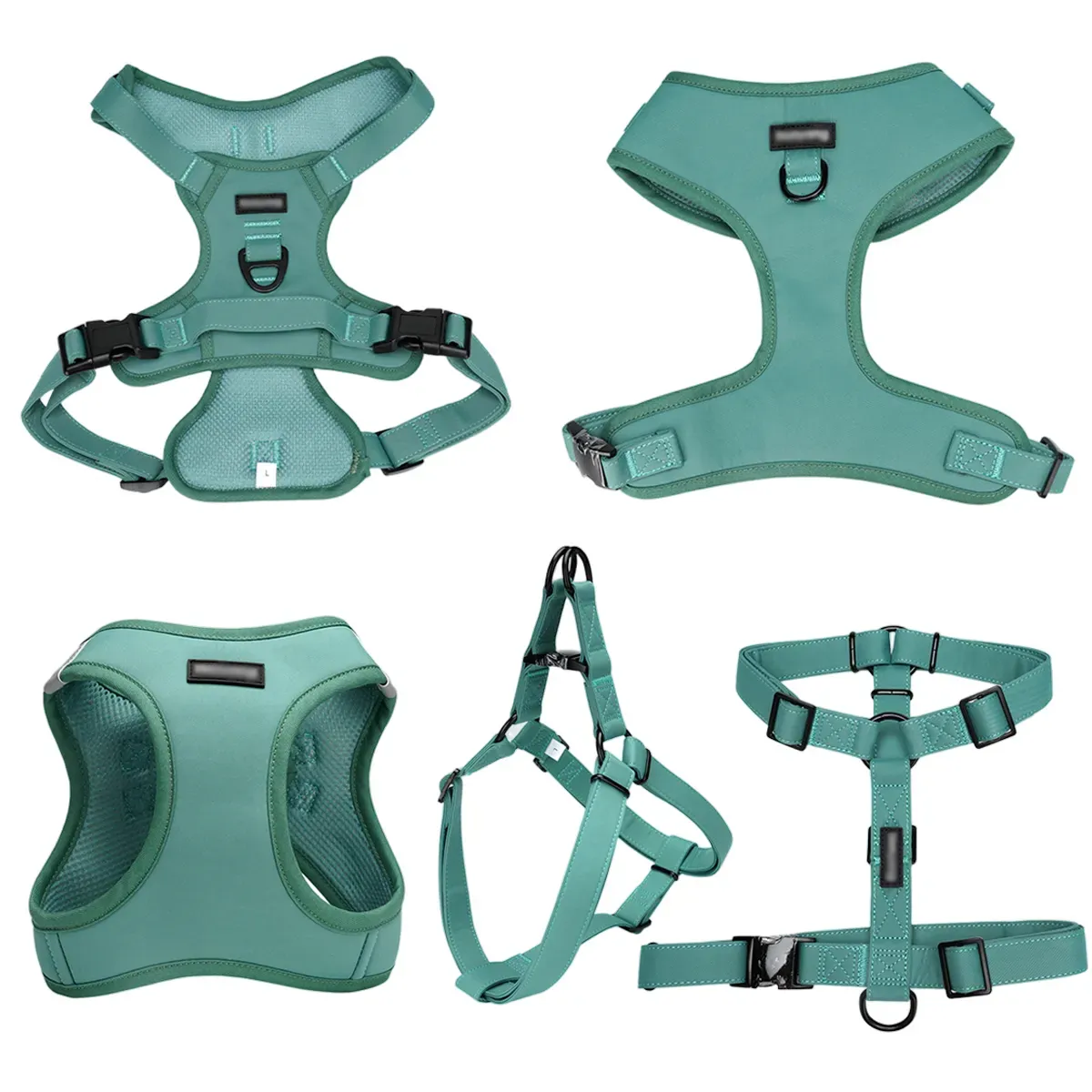
The old manufacturing model forced brands into a high-risk, high-volume corner. We destroyed that model. Our entire process is designed for the agility and creativity of online brand sellers. We believe you should be able to create a unique collection of products that all carry your brand's signature look. By applying your exclusive Προσαρμοσμένα μοτίβα across a range of harness styles, you aren't just selling products; you are offering a cohesive, problem-solving system that makes your brand the go-to expert for fit.
Your 3-Step Plan for Low-Risk Product Line Expansion
Here is the exact, simple blueprint for creating a full collection of truly custom-fit harnesses.
- Step 1: Design Your Entire Collection in Minutes. Access our powerful and free 3D Mockup System. Here, you can choose an H-style harness, a Y-style harness, and a step-in harness. Then, become the designer. Upload your logo and use our AI Pattern Generator to create a stunning, exclusive pattern—just by typing your idea. Apply this same pattern across all styles to create your branded collection instantly.
- Step 2: Get Physical Samples at E-commerce Speed. We live by our promise: "Mockup in seconds. Sample in 3 Days." Once your designs are ready, our rapid sampling team gets to work. You'll have high-quality, physical samples of your entire collection in your hands in just a few days. You can physically test the fit on different dogs and approve the quality with absolute certainty.
- Step 3: Launch Your Collection with Unbeatable Flexibility. Say goodbye to MOQ anxiety.9 Our "lightweight customization" model supports a game-changing low MOQ of just 50 pieces per size and pattern. This means you can launch multiple harness styles at once, test which ones your customers love most, and scale your brand intelligently without tying up all your capital.10
Ready to offer a fit that's truly custom? Contact us today, and let our expert team show you how easy it is to build your dream collection.
Συμπέρασμα
A truly custom fit comes from offering the right harness structure, not just adjustable straps. A modern factory partner gives you the low-risk tools you need to build a diverse, high-quality, and truly custom collection that your customers will love.
"Effect of harness design on the biomechanics of domestic dogs ...", https://pubmed.ncbi.nlm.nih.gov/37731281/. This source explains why adjustable straps alone cannot compensate for a harness structure that is incompatible with a dog's body type. Evidence role: mechanism; source type: education. Supports: Adjustable straps cannot fix a poor fit caused by an incompatible harness structure.. ↩
"Canine Body Types, Groups & Purpose for Breed - Lost Temple Pets", https://losttemplepets.com/canine-body-types-groups-breed-purpose/. This source categorizes dog body types and explains how harness fit varies based on these shapes. Evidence role: definition; source type: encyclopedia. Supports: Different dog body types, such as deep-chested or barrel-chested, require specific harness designs for proper fit.. ↩
"Harnesses: The good, the bad, and the ugly - Happy Hound University", https://www.happyhounduniversity.com/single-post/harnesses-the-good-the-bad-and-the-ugly. This source discusses common issues with poorly fitting dog harnesses, including chafing and escape risks. Evidence role: general_support; source type: research. Supports: Poorly fitting harnesses can cause chafing, twisting, and escape risks for dogs.. ↩
"Harness recommendations please? : r/vizsla - Reddit", https://www.reddit.com/r/vizsla/comments/1955oss/harness_recommendations_please/. This source explains how H-style harnesses may cause discomfort for deep-chested breeds like Vizslas. Evidence role: case_reference; source type: education. Supports: H-style harnesses can cause chafing for deep-chested breeds like Vizslas due to strap placement.. Scope note: The source may focus on specific breeds and not generalize to all deep-chested dogs. ↩
"Review of Collars, Harnesses, and Head Collars for Walking Dogs", https://pmc.ncbi.nlm.nih.gov/articles/PMC12345489/. This source discusses how barrel-chested breeds like Pugs may experience neck restriction with certain harness styles. Evidence role: case_reference; source type: education. Supports: Barrel-chested breeds like Pugs may experience neck restriction with certain harness styles.. Scope note: The source may not address all barrel-chested breeds, focusing primarily on Pugs. ↩
"Effects of Safety Harnesses Protecting against Falls from a Height on ...", https://pmc.ncbi.nlm.nih.gov/articles/PMC9819434/. This source outlines the risks of forced fit harnesses, including pressure points and escape risks. Evidence role: mechanism; source type: research. Supports: Forced fit harnesses can create pressure points, restrict movement, and increase escape risks for dogs.. ↩
"Choosing the Right Harness for Your Dog - American Kennel Club", https://www.akc.org/expert-advice/lifestyle/choosing-the-right-dog-harness/. This source explains the importance of offering multiple harness styles to accommodate different dog body types. Evidence role: expert_consensus; source type: education. Supports: Offering multiple harness styles is essential to accommodate different dog body types.. ↩
"Dog Harnesses: Strong & Secure - Ruffwear", https://ruffwear.com/collections/dog-harnesses. This source discusses how properly designed harnesses stay securely in place without requiring excessive tightening. Evidence role: mechanism; source type: research. Supports: Properly designed harnesses stay securely in place without requiring excessive tightening.. ↩
"MOQ: How to Deal With High Minimum Order Quantity for C-Parts", https://www.bufab.com/en/insights/c-parts/moq-how-to-deal-with-high-minimum-order-quantity-for-c-parts. This source discusses how modern manufacturing models reduce MOQ requirements, alleviating financial risks for brands. Evidence role: mechanism; source type: institution. Supports: Modern manufacturing models reduce MOQ requirements, alleviating financial risks for brands.. Scope note: The source may not address all manufacturing models, focusing on specific examples. ↩
"MOQ: What is it and what are its advantages?", https://www.ar-racking.com/us/blog/moq-what-is-it-and-what-are-its-advantages/. This source explains how low MOQ manufacturing allows brands to test product popularity before scaling production. Evidence role: mechanism; source type: institution. Supports: Low MOQ manufacturing allows brands to test product popularity before scaling production.. Scope note: The source may focus on specific industries and not generalize to all product types. ↩