 EL
 EN
 FR
 RU
 DE
 AR
 ES
 PT
 IT
 NL
 PL
 SL
 ET
 RO
 CS
 LV
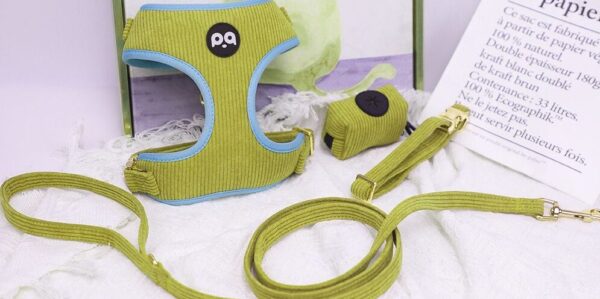
You want to learn how to customize dog collars and harnesses with your brand logo, but the process seems confusing and expensive. You're worried about finding a designer, high minimum orders, and ending up with a product where your logo looks like a cheap, misplaced afterthought.
The best way to customize pet gear is to use a factory's integrated 3D design system. This allows you to create a unique pattern that complements your logo, see it on a 3D model in seconds, approve a physical sample, and launch your brand with a low-risk, low-volume order.
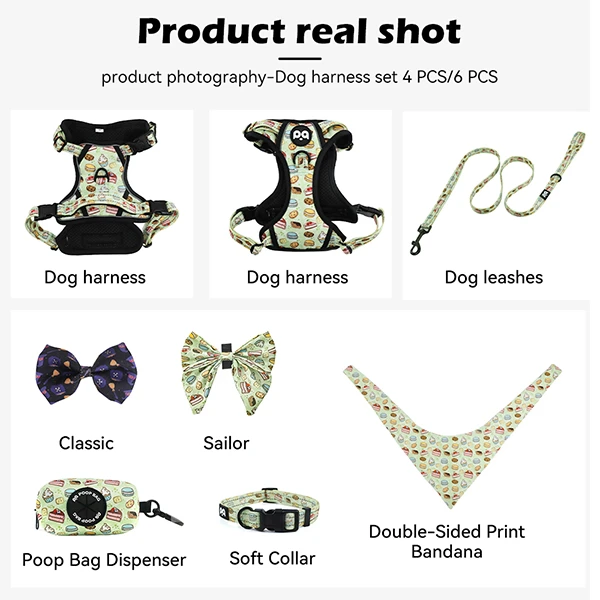
My name is Cathy, and as a pet gear customization specialist at the qqpets εργοστάσιο, this is the most common and important question I get from entrepreneurs. Adding a logo is the first step in building a brand1, but so many brands get it wrong. In the past, you had to hire an expensive graphic designer, send flat design files to a factory, and just hope the final product looked good. We saw how this outdated process was holding small brands back. So, we built a better way. We created a technology-first system that puts you in the designer's seat, removes the financial risk, and ensures your final product looks professional and premium. It's time to stop just adding a logo and start building a truly branded product line.
How do you design a collar that makes your logo look professional?
You have a great logo, but you're not a graphic designer. You're concerned that simply placing your logo on a plain collar will look amateurish. How do you create a cohesive design where the logo feels intentional, integrated, and elevates your brand's image?
You become the designer by using a free, powerful tool to create a unique background that complements your logo. By using an AI pattern generator and a 3D mockup system, you can build a complete, professional design in minutes without any design experience.
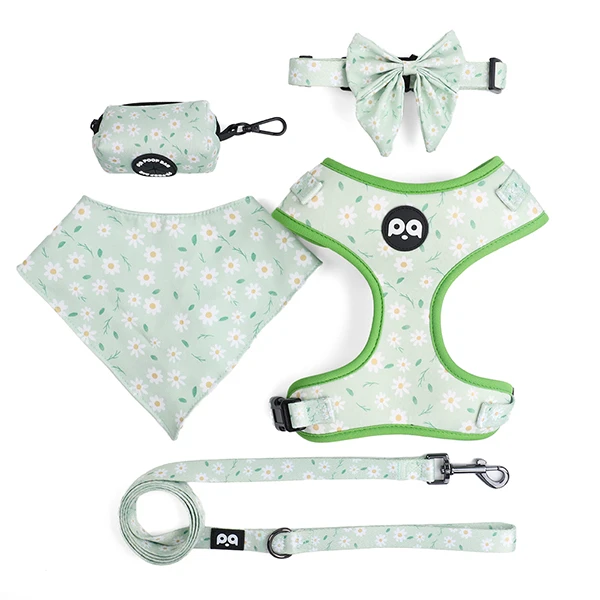
A professional look comes from a cohesive design2, not just a logo. Your logo needs a home, and a generic background isn't good enough. This is why we developed our revolutionary, free-to-use 3D Mockup System. Inside this system is our powerful AI Pattern Generator. This is where the magic happens. You simply type in a description of a pattern that fits your brand's vibe—for instance, "a playful pattern of cartoon dog bones" or "a sophisticated geometric pattern in navy blue and gold." In moments, the AI creates several completely original Προσαρμοσμένα μοτίβα3. Then, you select your favorite and, as part of our "Mockup in seconds" promise, instantly apply it to a 3D model of a collar or harness. Finally, you can upload your logo and place it perfectly within your new custom design. You are no longer just adding a logo; you are creating a complete, signature product.
Tertiary Heading: The Old Way vs. The Modern Way of Design
| The Old, Expensive Method | The qqpets Tech-Powered Method |
|---|---|
| Hire a freelance designer for hundreds of dollars. | Use our free, integrated AI designer 24/7. |
| Wait days or weeks for a single pattern idea. | Generate unlimited, unique patterns instantly. |
| Approve a flat, 2D proof and hope it works. | See your logo on an interactive 3D product model.4 |
| Design is separate from the product. | Design and product are integrated from the start. |
What is the best way to apply the logo to the physical product?
You've created a beautiful design, but you're worried about how the logo will be physically applied. Will it be a cheap sticker that peels off? Will the printing fade and crack after a few weeks of use? A poor-quality logo application can ruin your brand's reputation for quality.
The best application method combines digital printing with a physical branding element. The custom pattern and logo are infused into the fabric using dye-sublimation for permanence, while a separate, premium PVC or woven label is added to provide a tactile, high-end feel.
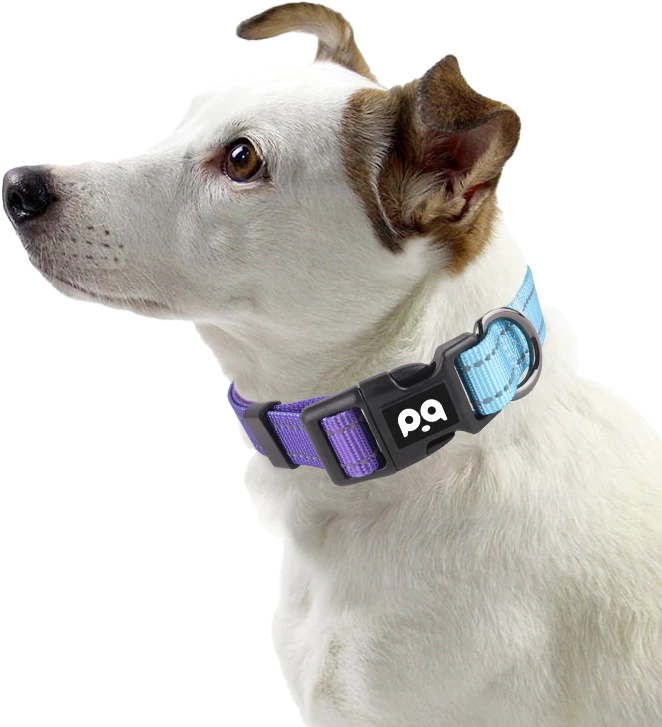
At our factory, we offer a two-part solution for a truly premium finish. First, your main design—the custom pattern you created with AI and your primary logo—is printed directly into the high-density polyester fabric using a process called dye-sublimation. This isn't ink sitting on the surface; the dye is heat-infused to become part of the fibers themselves5. This means your design will never crack, peel, or fade, even after countless walks and washes. Second, to add that extra touch of class that separates premium brands from the rest, we add a separate, custom-molded label featuring your logo. You can choose from a variety of materials, like a durable, modern PVC rubber label or a classic, sophisticated woven fabric label. This layered approach ensures your branding is both indestructible and has a tangible, high-quality feel that customers will notice. It shows an attention to detail that justifies a premium price point.
Tertiary Heading: Your Custom Logo Options
| Logo Method | Καλύτερα για | Why It Works |
|---|---|---|
| Dye-Sublimation | All-over patterns and primary branding. | Permanently infused into the fabric; will not fade or peel. |
| PVC Rubber Label | A durable, modern, and tactile feel. | Weatherproof and adds a rugged, high-end touch.6 |
| Υφαντή ετικέτα | A classic, sophisticated, and detailed look. | Excellent for intricate logos and conveying a traditional quality. |
How can a new brand afford to create a full line of custom products?
The biggest hurdle for any new brand is cost and risk. You have amazing ideas for custom collars and harnesses, but traditional manufacturers demand huge Minimum Order Quantities (MOQs)7, forcing you to risk thousands of dollars on a single, unproven design.
You can afford to launch your brand by partnering with a factory that was built for entrepreneurs. By choosing a partner who offers "lightweight customization," you can bypass the high-risk model and launch your fully custom, professionally branded products with an MOQ of just 50 pieces.
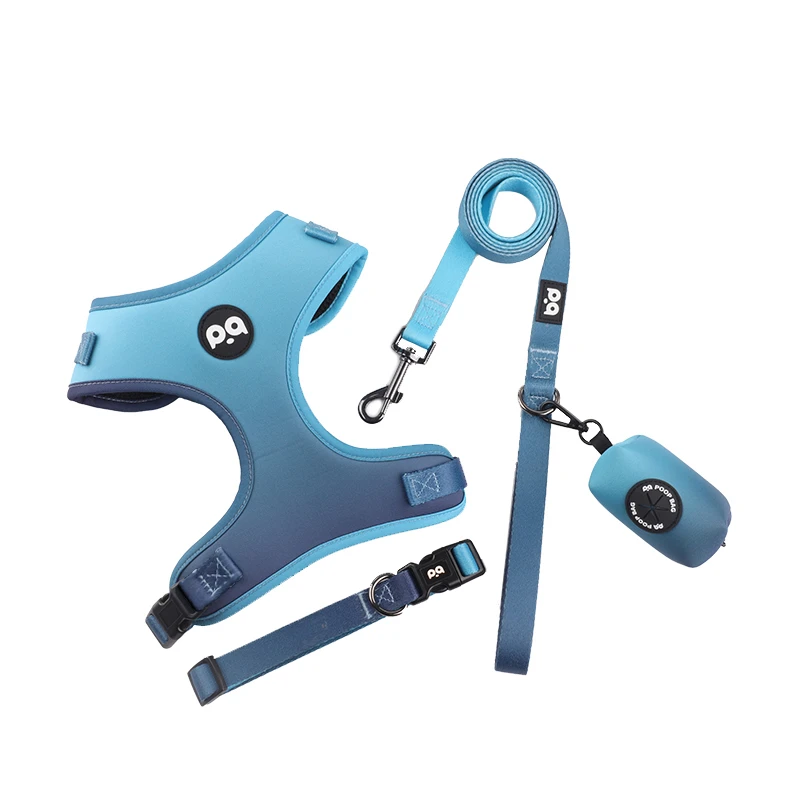
This is the key that unlocks your brand's potential. We rejected the old manufacturing model because it punished small businesses. Instead, we built our entire factory around the principle of "lightweight customization." Our industry-leading 50-piece MOQ per design means you don't have to bet your entire budget on one product. You can create three or four different custom designs and order just 50 of each to test the market8. This strategy is made even safer by our "Sample in 3 Days" promise. You will receive a perfect, physical sample to approve9 before you place your low-volume order. This combination completely de-risks the process of launching a brand. It protects your cash flow10, eliminates the fear of being stuck with unsold inventory, and allows you to grow your business intelligently, based on real customer data, not guesswork.
Are you ready to see your logo on a professionally designed, high-quality product? Our team is here to make it happen. Contact us today to start creating.
Συμπέρασμα
Customize your pet gear by using free AI and 3D tools to design it, approving a physical sample to guarantee quality, and launching your brand affordably with a 50-piece minimum order.
"What Is Brand Identity? Tips & Examples for Shaping Yours", https://online.hbs.edu/blog/post/brand-identity. Research on visual brand identity treats logos as a central brand-identity element that can aid recognition and differentiation; this supports the general branding premise but does not prove that a logo alone builds a successful brand. Evidence role: expert_consensus; source type: paper. Supports: A logo is an important early element in building a recognizable brand identity.. Scope note: Contextual support only; brand building also depends on product quality, positioning, distribution, and customer experience. ↩
"What Is Brand Identity? Tips & Examples for Shaping Yours", https://online.hbs.edu/blog/post/brand-identity. Design and branding literature describes consistency among visual elements—such as color, typography, imagery, and logo placement—as part of coherent visual identity; this supports the claim in principle rather than evaluating this article’s specific designs. Evidence role: expert_consensus; source type: education. Supports: Cohesive visual design contributes to a more professional brand presentation.. Scope note: The source would support the design principle, not the quality of any individual collar or harness design. ↩
"High-Resolution Image Synthesis with Latent Diffusion ...", https://arxiv.org/abs/2112.10752. Peer-reviewed work on text-to-image generative models shows that such systems can synthesize new images from textual prompts; this supports the technical possibility of prompt-based pattern generation but does not establish legal originality or uniqueness of every output. Evidence role: mechanism; source type: paper. Supports: AI image-generation systems can create pattern-like visual outputs from text prompts.. Scope note: Does not prove that generated patterns are copyright-clear, unique in the marketplace, or suitable for production without review. ↩
"A Content Analysis of 3D Virtual Prototyping and Zero- ...", https://scholarworks.calstate.edu/downloads/sn00b389v. Research on virtual prototyping and 3D product visualization finds that digital models can support design review before physical production; this provides contextual support but does not verify the speed or fidelity of the specific mockup system described. Evidence role: general_support; source type: paper. Supports: Interactive 3D product models can help users evaluate a design before manufacturing.. Scope note: Supports 3D visualization as a design-review method, not the performance of the article’s named tool. ↩
"Dye Sublimation Printer - Barnard Design Center", https://design.barnard.edu/dye-sublimation-printer. Textile references describe dye-sublimation printing as a heat-transfer process in which sublimated disperse dyes diffuse into synthetic fibers such as polyester; this supports the mechanism described, subject to fabric composition and process conditions. Evidence role: mechanism; source type: research. Supports: Dye-sublimation embeds dye into compatible synthetic fibers rather than leaving ordinary surface ink.. Scope note: The mechanism is most applicable to suitable synthetic fabrics, especially polyester, and depends on correct temperature, pressure, and time settings. ↩
"Effects of Weathering and Formulation on the Properties of ...", https://nvlpubs.nist.gov/nistpubs/TechnicalNotes/NIST.TN.2304.pdf. Materials references describe polyvinyl chloride as resistant to water and many environmental exposures, supporting the weather-resistance portion of the claim; the aesthetic judgment that it feels high-end is subjective and not established by material data. Evidence role: general_support; source type: encyclopedia. Supports: PVC labels can provide water-resistant or weather-resistant branding elements on products.. Scope note: Supports material resistance only, not consumer perception or premium feel; PVC performance can vary with additives and UV exposure. ↩
"Raw Material Minimum Order Quantity Optimization", https://dspace.mit.edu/entities/publication/e43f520c-9951-4e8d-b867-36c7afb5234c. Operations and supply-chain sources define minimum order quantity as the lowest number of units a supplier will produce or sell in an order, often related to setup costs and economies of scale; this supports the term’s meaning but not the article’s claim about typical size in the pet-gear industry. Evidence role: definition; source type: education. Supports: MOQ refers to the minimum quantity a supplier requires for an order, often influenced by production economics.. Scope note: Defines and contextualizes MOQ; does not verify that traditional pet-product manufacturers usually require high MOQs. ↩
"Why Minimum Viable Products are the Real MVP", https://businesstech.bus.umich.edu/blog/why-minimum-viable-products-are-the-real-mvp/. Entrepreneurship literature on lean startup methods and minimum viable products emphasizes using small experiments to gather customer feedback before larger investment; this supports the rationale for limited initial product runs, without proving that 50 units is optimal. Evidence role: expert_consensus; source type: education. Supports: Small initial runs can be used to test customer demand before committing to larger production.. Scope note: Supports the general market-testing strategy, not a specific order quantity or pet-product launch outcome. ↩
"Reducing the Risks of New Product Development", https://sloanreview.mit.edu/article/reducing-the-risks-of-new-product-development/. Engineering-design and product-development sources describe prototypes or preproduction samples as tools for verifying form, fit, function, and manufacturability before full production; this supports sample approval as a risk-reduction step but does not guarantee defect-free mass production. Evidence role: mechanism; source type: education. Supports: Approving a physical sample before production can reduce design and manufacturing risk.. Scope note: A sample reduces uncertainty but cannot eliminate all production variability or quality-control risks. ↩
"The Secrets of Working Capital: A Guide for Small Business ...", https://www.revenued.com/articles/business-finance/working-capital-a-guide-for-small-business-owners/. Small-business finance and inventory-management guidance explains that inventory purchases tie up working capital and affect cash flow; this supports the claim that smaller production commitments can reduce cash-flow pressure, though it does not quantify savings for this product category. Evidence role: general_support; source type: government. Supports: Lower initial inventory commitments can help preserve small-business cash flow.. Scope note: Contextual support only; actual cash-flow impact depends on unit cost, sales velocity, payment terms, and inventory turnover. ↩