 EL
EL  EN
EN  FR
FR  RU
RU  DE
DE  AR
AR  ES
ES  PT
PT  IT
IT  NL
NL  PL
PL  SL
SL  ET
ET  RO
RO  CS
CS  LV
LV 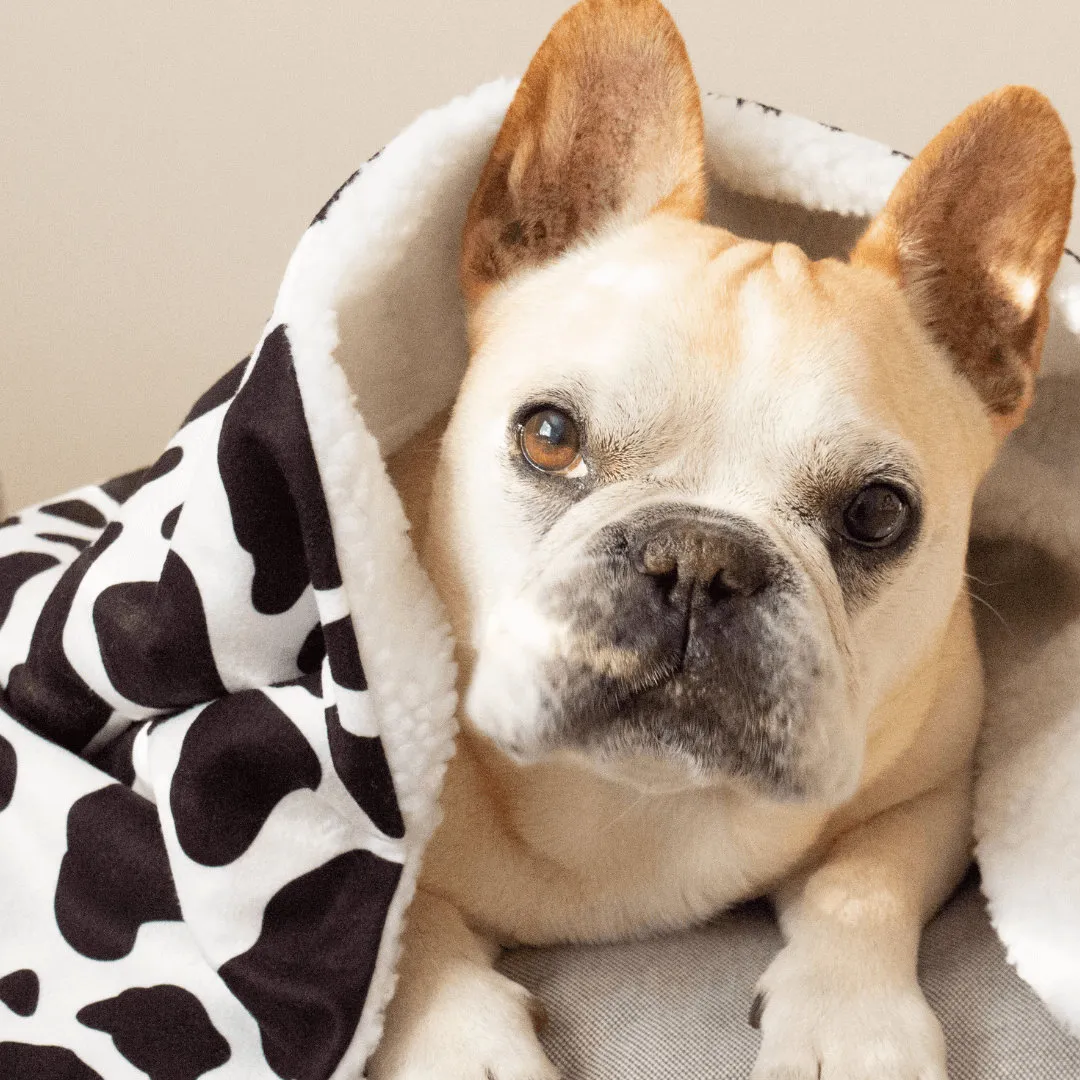
You want to serve the passionate bully breed market, but you're finding that generic harnesses just don't fit. You're selling a custom bully dog harness, yet you're plagued by returns and complaints from owners whose dogs have chafed, uncomfortable experiences.
A standard harness fails because it's not designed for the bully breed's unique anatomy: a wide chest, muscular neck, and powerful build1. Creating a true custom solution requires a partnership with a factory that can modify the harness structure itself, not just the color or pattern.
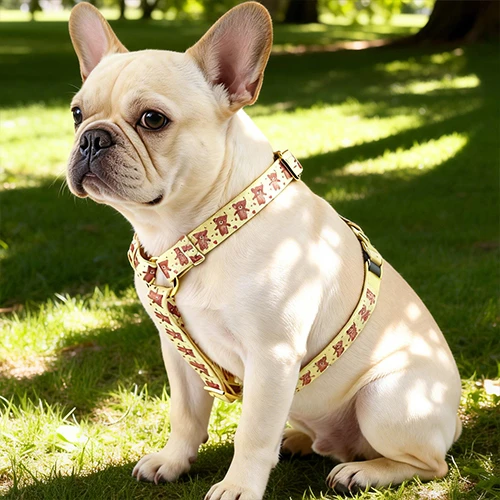
As a pet product customization expert at qqpets, this is a problem I see constantly. Well-meaning brands, especially new Shopify sellers, will buy what they think is a "heavy-duty" large harness from a generic catalog, market it to bully breed owners, and then get flooded with negative reviews. They don't realize the issue isn't just size—it's proportion2. A standard harness on a bully breed is like trying to fit a square peg in a round hole. It's not just ineffective; it can be unsafe and damaging to a brand's reputation. That's why we've focused on creating a system that allows you to build a harness that is genuinely engineered for these amazing dogs, protecting the dog, the owner, and your brand's future.
Why does a 'one-size-fits-all' harness never fit a bully breed?
You're seeing high return rates and poor reviews on your large harnesses. Customers are complaining about chafing under the front legs, straps digging into the neck, and harnesses that slip and shift during walks, creating a dangerous lack of control.
This happens because standard harnesses assume a typical dog's proportions, like those of a Labrador or Shepherd. A bully breed's broad chest and powerful shoulders3 mean the straps are in the wrong places, creating dangerous pressure points and restricting natural movement4.
You cannot solve a structural problem with a simple size increase. The entire geometry of the harness needs to be different. The chest plate needs to be wider to properly distribute force without pinching5. The position of the neck straps needs to be lower and wider to avoid pressure on the throat6, which is a common and dangerous flaw. Furthermore, the points of adjustment must be designed to accommodate a wide range of muscular builds, not just a longer or fatter torso. As a brand, selling a poorly fitting harness to the owner of a powerful dog is a massive liability. One viral video of a dog slipping its harness and running into traffic could destroy your business. We provide the tools to build a product that is not only beautiful but also structurally sound and safe, giving you a defensible position in a niche market.
Engineering for the Bully Build
Let's break down the specific engineering failures of standard harnesses and how a true custom approach solves them. The problem is rooted in geometry. A standard "Large" harness is just a scaled-up "Small" harness, maintaining the same ratios. But a bulldog isn't just a big Jack Russell. Their ratios are completely different.
- The Proportional Mismatch: A standard harness is built for a relatively narrow, deep chest and slender neck. When you force this onto a bully breed, the front chest strap sits too high, pressing on the trachea7. The girth strap, which should sit a few inches behind the front legs, gets pulled forward and cuts right into the sensitive skin of the "armpits," causing painful chafing8.
- The Safety Risk: This poor fit isn't just about comfort. A shifting harness is an escape risk9. A bully's powerful shoulders can easily shrug off a harness that doesn't fit snugly around the chest. A strap that digs in can cause long-term skin irritation, hair loss10, και ακόμη και joint problems from an altered gait11.
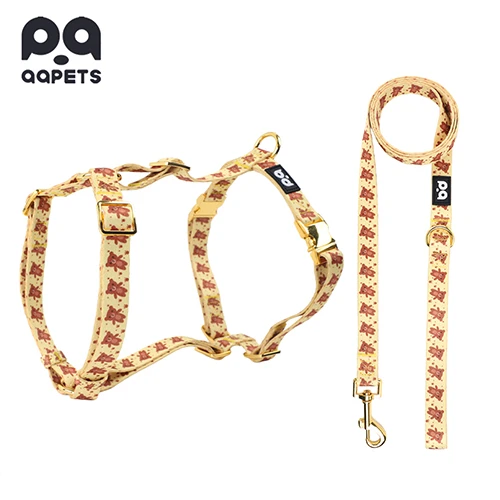
- The qqpets Solution: We don't just sell harnesses; we provide engineering solutions. We offer over 100 harness styles as starting points. For a bully breed, we can work with you to select a "Y-shaped" harness with a wider chest piece, adjust the strap angles for a perfect fit, and use reinforced, load-tested hardware to create a bespoke and supremely safe product.
| Feature | Standard "Large" Harness Failure | True Custom Bully Harness Solution |
|---|---|---|
| Chest Fit | Narrow plate; causes chafing and restricts shoulder movement. | Wide, padded plate; allows free, natural shoulder movement12. |
| Strap Placement | Puts pressure on the neck/throat area. | Distributes pressure across the strong chest bone (sternum). |
| Ανθεκτικότητα | Standard buckles and thin webbing stretch or break. | Reinforced stitching, load-bearing metal hardware, and thick webbing. |
How can you design a unique, durable bully harness without a massive investment?
You understand the need for a structurally superior harness, but the thought of designing one from scratch sounds incredibly expensive and risky. You imagine needing an engineering degree and a massive budget for a huge minimum order quantity (MOQ) that could bankrupt your business if it doesn't sell.
You can design a top-tier bully harness affordably by using a "lightweight customization" system. This lets you use a proven harness structure as a foundation, then make it entirely unique with Προσαρμοσμένα μοτίβα and branding, all while testing the market with a low MOQ of just 50 pieces.
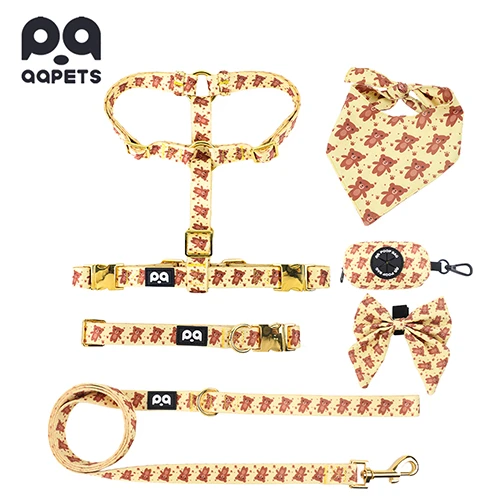
The old factory model is dead for modern e-commerce. It forced you to bet your entire budget on a single product run, based on nothing more than a guess. As an online brand seller on Shopify or Amazon, you need agility. You need to test, learn, and adapt quickly. Our entire system is built for this new reality. We have removed the traditional barriers of high cost, high risk, and long lead times. We provide the platform for you to create a premium, niche product and launch it with the same flexibility and speed as a major brand. Your brilliant design idea no longer needs to be just an idea; it can be a physical sample in your hands in just a few days. This is how you outmaneuver larger, slower competitors.
Your Platform for Low-Risk, Niche Dominance
Our process is designed to turn your vision into a sellable product, quickly and safely. It's a three-step system to build your bully brand empire.
- Step 1: Visualize Your Design in Seconds: Go to our free 3D Mockup System. This is your virtual design studio. First, choose a durable harness style suited for strong dogs, like our reinforced Y-harness. Then, the fun begins. Apply one of our thousands of free patterns, or create something nobody else has with our AI generator. You can type "tough-looking blue camo for a male frenchie" or "pink skulls and crossbones on a black background" and see your unique bully harness appear on screen instantly. You can add your logo, change buckle colors, and perfect the design.
- Step 2: Get Physical Proof in Days: A 3D model is great, but you need to feel the quality. Our "Mockup in seconds. Sample in 3 Days" promise is your ultimate risk-reducer. We will create a physical sample of your newly designed harness and ship it to you. You can pull on the straps, test the buckle strength, feel the thickness of the webbing, and see your pattern's vibrant colors with your own eyes. No more hoping the final product matches the catalog photo.
- Step 3: Launch with Unbeatable Agility: Once you approve your perfect sample, you can place a production order with an MOQ of just 50 pieces per design/size. Think about what this means. Instead of ordering 1,000 units of one design, you can launch five different, unique designs with 200 units each. You can test which patterns, colors, and styles the bully breed community loves most, without tying up all your capital in slow-moving inventory.
Ready to stop selling failing harnesses and start building a brand bully owners trust and recommend? Contact our expert team today.
Συμπέρασμα
Standard harnesses fail bully breeds by ignoring their unique structure. We provide the solution: a system to create a structurally sound, truly custom harness with unique patterns, proven in days, and launched with a low-risk MOQ.
"[PDF] FCI Standard No", https://www.fci.be/nomenclature/Standards/149g02-en.pdf. Breed-standard descriptions from established canine organizations describe bulldog- and bully-type dogs as having broad chests, substantial musculature, and strong necks, supporting the anatomical premise of the claim. Evidence role: general_support; source type: institution. Supports: Bully breeds commonly have a wide chest, muscular neck, and powerful build.. Scope note: Breed standards describe idealized breed conformation and may not represent every individual bully-type dog. ↩
"Morphometrics within dog breeds are highly reproducible and ... - PMC", https://pmc.ncbi.nlm.nih.gov/articles/PMC2748280/. Canine morphology literature documents substantial variation in body proportions across dog breeds, supporting the distinction between size and proportional fit. Evidence role: general_support; source type: paper. Supports: The fit problem is not only size but also body proportion.. Scope note: Such studies usually address breed morphology broadly rather than harness fit for bully breeds specifically. ↩
"Radiographic findings have an association with weight bearing and ...", https://pmc.ncbi.nlm.nih.gov/articles/PMC7218547/. Breed standards and veterinary conformation references describe bully-type dogs as broad-chested and heavily muscled, providing contextual support for the claim that harness geometry must account for these traits. Evidence role: general_support; source type: institution. Supports: A bully breed's broad chest and powerful shoulders can make standard harness strap placement unsuitable.. Scope note: The source would support typical conformation, not prove that all dogs marketed as bully breeds share the same shoulder structure. ↩
"Review of Collars, Harnesses, and Head Collars for Walking Dogs", https://pmc.ncbi.nlm.nih.gov/articles/PMC12345489/. Peer-reviewed canine gait studies report that harness design and placement can alter forelimb kinematics, supporting the claim that poor harness geometry may restrict movement. Evidence role: mechanism; source type: paper. Supports: Incorrect harness placement can create pressure points and restrict a dog's natural movement.. Scope note: Most gait studies test selected harness designs and dog samples, so they provide biomechanical context rather than direct proof for every bully harness. ↩
"Review of Collars, Harnesses, and Head Collars for Walking Dogs", https://pmc.ncbi.nlm.nih.gov/articles/PMC12345489/. Studies and veterinary guidance on harness pressure distribution indicate that contact area and strap placement influence localized pressure, supporting the mechanism that a wider chest plate can reduce pinching by spreading load. Evidence role: mechanism; source type: paper. Supports: A wider chest plate can distribute force better and reduce pinching.. Scope note: The evidence may establish the general pressure-distribution principle rather than a specific optimal chest-plate width for bully breeds. ↩
"Effect of a Collar and Harness on Intraocular Pressure and ... - PMC", https://pmc.ncbi.nlm.nih.gov/articles/PMC12036695/. Veterinary anatomy and animal-welfare guidance identify the neck and tracheal region as vulnerable to external pressure, supporting the claim that harness straps should avoid concentrating force on the throat. Evidence role: mechanism; source type: education. Supports: Harness straps should be positioned to avoid pressure on the dog's throat.. Scope note: The source would support the anatomical risk generally, not quantify the exact risk posed by the harness described in the article. ↩
"Effect of a Collar and Harness on Intraocular Pressure and ... - PMC", https://pmc.ncbi.nlm.nih.gov/articles/PMC12036695/. Veterinary sources describing canine tracheal anatomy and tracheal sensitivity support the concern that equipment applying pressure over the throat may affect the tracheal region. Evidence role: mechanism; source type: education. Supports: A poorly positioned front chest strap can press on the tracheal area.. Scope note: This would support the anatomical plausibility of the risk, not demonstrate that a specific standard harness always presses on the trachea. ↩
"Dog Chafing: What to Do and How to Help | The Rover Blog", https://www.rover.com/blog/dog-chafing-help/. Veterinary dermatology references describe friction and repeated rubbing as causes of skin irritation and hair loss in dogs, supporting the mechanism by which poorly placed straps can cause chafing. Evidence role: mechanism; source type: education. Supports: A forward-pulled girth strap can rub the axillary area and cause painful chafing.. Scope note: The source would support friction-related skin injury generally, not verify that the specific harness pattern in the article causes armpit chafing. ↩
"Prevents Dogs From Backing/Slipping Out Of Their Harness - YouTube", https://www.youtube.com/watch?v=Qv8iTq9dUC0. Animal-welfare and veterinary handling guidance commonly notes that loose or poorly fitted harnesses can allow dogs to slip out, supporting the claim that shifting fit increases escape risk. Evidence role: expert_consensus; source type: institution. Supports: A shifting or poorly fitted harness can increase the risk that a dog escapes.. Scope note: Guidance sources generally establish the risk qualitatively rather than providing breed-specific escape-rate statistics. ↩
"Alopecia Areata in a Dog: Clinical, Dermoscopic and Histological ...", https://pmc.ncbi.nlm.nih.gov/articles/PMC5939680/. Veterinary dermatology sources recognize chronic friction or pressure as potential causes of irritation and alopecia, supporting the claim that repeated strap rubbing may lead to skin irritation and hair loss. Evidence role: mechanism; source type: education. Supports: A strap that digs in can cause long-term skin irritation and hair loss.. Scope note: The evidence would support the medical mechanism generally, not prove long-term effects from every poorly fitting harness. ↩
"Review of Collars, Harnesses, and Head Collars for Walking Dogs", https://pmc.ncbi.nlm.nih.gov/articles/PMC12345489/. Canine biomechanics research shows that harnesses can change forelimb motion and shoulder extension, supporting the plausibility that altered gait may have musculoskeletal implications. Evidence role: mechanism; source type: paper. Supports: A poorly fitting harness may contribute to joint problems by altering gait.. Scope note: Existing gait studies usually do not directly prove that a poorly fitted harness causes long-term joint disease, so the citation would support plausibility rather than direct causation. ↩
"Effects of restrictive and non-restrictive harnesses on shoulder ...", https://pubmed.ncbi.nlm.nih.gov/30455191/. Peer-reviewed studies comparing harness designs report measurable effects on shoulder extension and forelimb range of motion, supporting the importance of harness designs that avoid restricting shoulder movement. Evidence role: mechanism; source type: paper. Supports: A well-designed harness should allow free, natural shoulder movement.. Scope note: The evidence supports the relevance of shoulder freedom in harness design but may not identify one universal design as optimal for all bully breeds. ↩