
 PL
 EN
 FR
 RU
 DE
 AR
 ES
 PT
 IT
 NL
 SL
 ET
 RO
 CS
 EL
 LV

You want to offer custom dog collars and leashes for all dogs, but you know a "one-size-fits-all" design is unsafe. This can lead to product failures and unhappy customers.
Developing for different sizes requires a "component scaling" strategy. This means adjusting the webbing width, hardware size, and stitching strength for each size category1, ensuring optimal safety, comfort, and performance for every single dog.
My name is Cathy, and as a customization expert at the fabryka qqpets, I've seen many brands make a critical mistake. They believe that creating a collar for a Chihuahua and a collar for a Great Dane simply involves changing the length. This is a dangerous oversimplification. A product that is safe and comfortable for a small dog could be a serious liability for a large one, and vice versa. True product development for different sizes is an engineering challenge. It involves a thoughtful and deliberate selection of materials and components for each specific size category. The entire product must be re-evaluated, from the width of the webbing to the break strength of the buckle. I've prepared this guide to walk you through how we, as pet traction experts, approach this process. This will help you build a safe, successful, and truly inclusive product line for your brand.
What Makes a Collar or Lead Safe and Comfortable for Small Dogs?
You are targeting the lucrative small dog market, but you see that bulky hardware and wide webbing look awkward and heavy. This discomfort leads to poor sales from discerning small breed owners.
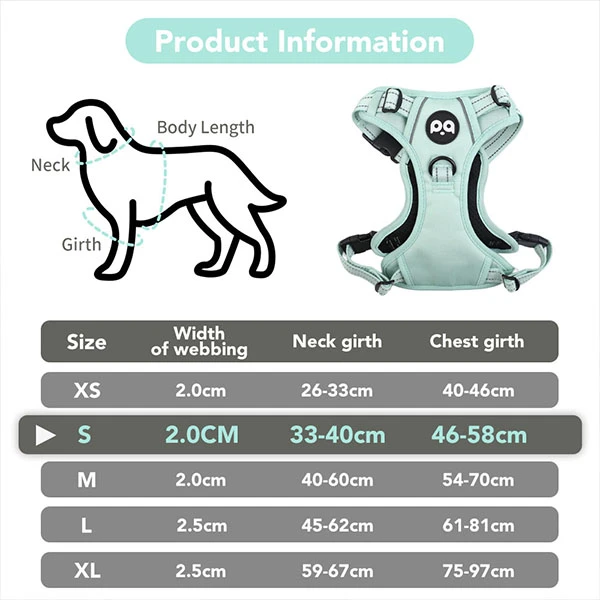
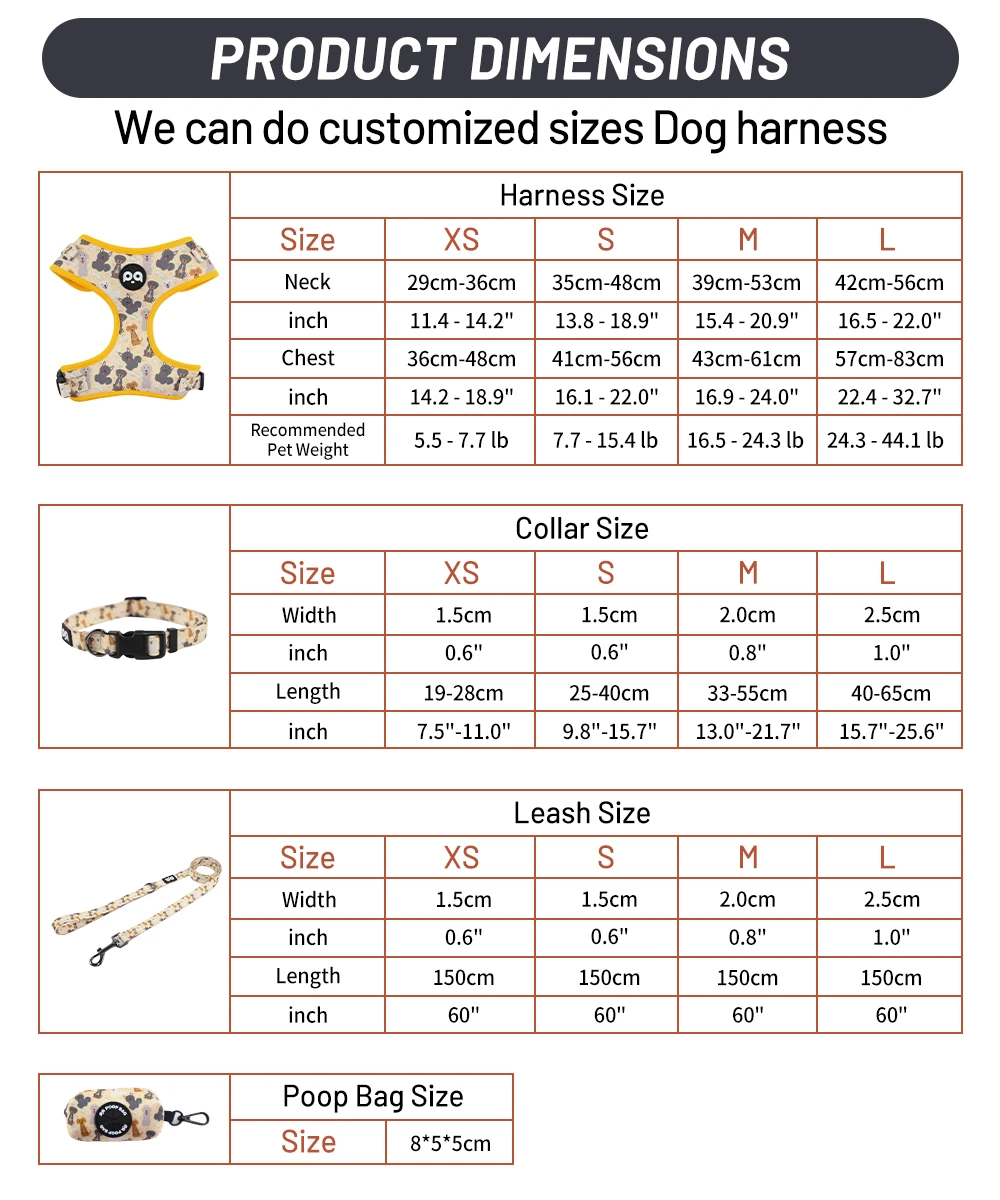
For small dogs, you must prioritize lightweight components. This means using narrower webbing (10mm or 15mm)2, smaller plastic buckles, and compact, lightweight D-rings to minimize bulk and weight while ensuring complete security for their size.
When it comes to small and toy breeds, comfort is just as important as safety. A collar that is too heavy or bulky can cause discomfort, neck strain, and even breathing issues.3 Your goal as a brand should be to create a product that the dog barely notices it's wearing. This is achieved by carefully selecting components where weight and size are the primary considerations. Using a heavy-duty 25mm webbing with a large metal buckle on a tiny dog is not only visually comical but also functionally wrong. The design must be scaled down in every aspect. This is where our "lightweight customization" model shines. You can use our incredible 3D Mockup System to visualize your unique Wzory niestandardowe on a narrow 15mm webbing. Our free AI designer can create beautiful, delicate patterns perfect for a smaller canvas. Then, with our low MOQ of just 50 pieces, you can launch a dedicated "Small Breed" collection without a huge investment. Our "Mockup in seconds, Sample in 3 Days" promise ensures you can physically hold and feel the lightweight construction before committing.
Tertiary Heading: Component Specification for Small Breeds (Under 20 lbs / 9 kg)
| Component | Recommended Specification | Rationale |
|---|---|---|
| Webbing Width | 10mm or 15mm | Reduces weight and bulk, preventing it from being wider than the dog's vertebrae. |
| Buckle Type | Lightweight POM Plastic | Offers secure closure without adding unnecessary weight. A metal buckle is too heavy. |
| D-Ring | Small, Lightweight Welded D-Ring | Provides a secure leash attachment point that doesn't hang heavily or make noise. |
| Stitching | Standard Reinforced Stitching | Strong enough for the forces exerted by small dogs without adding extra bulk. |
How Do You Balance Durability and Comfort for Medium-Sized Dogs?
Medium-sized dogs are the most common4, but this category is incredibly diverse. A "one-size-fits-most" approach often fits none of them well, which can lead to frustratingly high return rates from your customers.
The key for medium dogs is versatility and adjustability. You should use a standard webbing width of 20mm paired with robust hardware that isn't excessively heavy. Most importantly, your design must feature multiple adjustment points to accommodate their varied body shapes5.
The medium dog category, which includes everything from slender Beagles to stocky Corgis, presents a unique challenge. This is where adjustability becomes your most important feature. A collar with a generous adjustment range or a harness with multiple sliders is essential to creating a product that actually fits. For this size, the standard 20mm (or 3/4 inch) webbing width is the industry benchmark6. It offers an excellent balance, providing enough surface area for vibrant patterns and enough strength for energetic dogs without being overly bulky. The hardware should be robust—a high-quality POM plastic buckle and a solid, welded D-ring are perfect. They provide the necessary security for dogs that can be surprisingly strong pullers. This size is often the core of a brand's product line, so visual appeal is critical. Our AI pattern generator, found within the 3D mockup tool, allows you to create bold, eye-catching designs that look fantastic on 20mm webbing. You can design something truly unique, mock it up in seconds, and have a physical sample in just three days to confirm the fit and feel. This streamlined process is designed to help online sellers quickly develop and launch winning products for the largest segment of the market.
What Are the Non-Negotiable Safety Features for Large and Giant Breeds?
You want to cater to owners of large dogs, but you know a product failure is not just an inconvenience—it's a serious safety risk7. This liability fear can prevent you from entering a very profitable market segment.
For large dogs, safety is the absolute priority. This requires using the widest, strongest webbing (25mm), exclusively using heavy-duty metal hardware, and ensuring every single stress point is heavily reinforced with dense bar tacking or box stitching.
When you are developing products for large and giant breeds like German Shepherds, Rottweilers, or Mastiffs, the mindset must shift from "strong enough" to "over-engineered for safety." There is absolutely no room for compromise. A plastic buckle that is perfectly safe for a 40-pound dog can become a critical failure point when subjected to the force of a 120-pound dog lunging8. Every component must be selected for maximum break strength. The webbing must be the widest available, typically 25mm (1 inch), to distribute pressure and provide maximum tensile strength9. The hardware must be metal, period. This often means a zinc alloy or even a "cobra-style" metal buckle for maximum security, and the D-ring must always be thick-gauge and welded shut. Furthermore, the stitching at all stress points must be significantly reinforced. A single line of stitching is unacceptable. As a dedicated pet traction customization expert, we use dense bar tacking—a series of extremely tight, overlapping stitches—to lock down the D-rings and buckle attachments. This ensures the connection can withstand extreme, sudden forces. Building products for this segment shows your brand is serious about quality and safety.
Tertiary Heading: Hardware Showdown: Plastic vs. Metal for Large Breeds
| Hardware | Best Use Case | Break Strength | Brand Perception |
|---|---|---|---|
| POM Plastic Buckle | Small to Medium Dogs | Good | Convenient, standard quality. |
| Heavy-Duty Metal Buckle | Large & Giant Breeds (Required) | Excellent / Superior | Communicates maximum safety, premium quality, and trustworthiness. |
Ready to develop a safe, beautiful, and size-inclusive product line? Our expert team is here to guide you through the component selection for every size. Contact us today to get started.
Wnioski
Tailoring webbing, hardware, and stitching to each dog size is crucial for safety and success. This thoughtful development ensures every dog gets the perfect product, building trust in your brand.
"Load-Bearing Strap Design: Stitch Patterns & Webbing", https://acw1.com/load-bearing-strap-design/. Product-safety or textile-engineering sources on load-bearing straps and fittings support the general principle that strap width, connector strength, and seam construction should be matched to expected loads; the evidence would be an engineering analogue rather than a dog-collar-specific validation. Evidence role: mechanism; source type: research. Supports: Developing collars and leashes for different dog sizes requires adjusting webbing width, hardware size, and stitching strength for each size category.. Scope note: Likely supports the component-scaling logic generally, not exact dog-size categories or dimensions. ↩
"What Changes at Smaller Sizes Small dog collars aren't just ...", https://moonianpet.com/small-dog-collar/?srsltid=AYCX9vLF6JBD8ei8k2LIL5CiMR5xoqe5sWBDGLUyBsVY4zMEy2rRBX6S. Sizing guidance from veterinary, shelter, or animal-welfare institutions can document that smaller dogs are commonly fitted with narrower collars than larger dogs; such evidence would support the sizing convention but not prove that 10 mm or 15 mm is optimal in every case. Evidence role: general_support; source type: institution. Supports: Small-dog collars commonly use narrower webbing such as 10 mm or 15 mm to reduce bulk.. Scope note: Would support common sizing practice, not a universal safety requirement for those exact widths. ↩
"Pressure and force on the canine neck when exercised using ...", https://pmc.ncbi.nlm.nih.gov/articles/PMC7386734/. Veterinary sources discussing cervical pressure, tracheal sensitivity, and collar-related discomfort support the claim that poorly fitted or excessive neck equipment may contribute to discomfort or respiratory irritation; this does not quantify the threshold at which collar weight becomes harmful. Evidence role: expert_consensus; source type: institution. Supports: Overly heavy or bulky collars can cause discomfort, neck strain, or breathing problems in small dogs.. Scope note: Supports the medical plausibility of the risk, but not a specific collar-weight limit for small dogs. ↩
"Variation in activity levels amongst dogs of different breeds", https://pmc.ncbi.nlm.nih.gov/articles/PMC5465859/. Pet population or veterinary epidemiology data by dog weight category can support whether medium-sized dogs represent the largest share of owned dogs in a given market; applicability may vary by country and by the size definitions used. Evidence role: statistic; source type: government. Supports: Medium-sized dogs are the most common size category among owned dogs.. Scope note: Requires market-specific data and may not generalize globally. ↩
"Effect of harness design on the biomechanics of domestic ...", https://www.tandfonline.com/doi/full/10.1080/10888705.2023.2259796. Canine morphology and harness-fit literature supports that dogs vary substantially in chest, neck, and body proportions across breeds and individuals, making adjustability relevant to fit; such evidence supports the rationale but not the superiority of any specific product pattern. Evidence role: mechanism; source type: paper. Supports: Medium-dog collars or harnesses benefit from multiple adjustment points because body shapes vary widely.. Scope note: Supports the need for adjustability in principle, not a particular number or placement of adjustment points. ↩
"How to Choose the Right Collar Width For Your Dog", https://fbdcollars.com/blogs/news/how-to-choose-the-perfect-dog-collar-width?srsltid=AYCX9vIKgJD5xWCqKtEPxJpqlBs5x59h1k_hSeXWDQnhPGXdQT9dDLxm. Independent sizing guides or product-safety references can show that approximately 3/4-inch collar webbing is commonly recommended for many medium dogs; this would document common practice rather than establish a formal industry standard. Evidence role: general_support; source type: institution. Supports: A 20 mm or 3/4 inch webbing width is commonly used for medium-dog collars.. Scope note: May show common commercial or welfare practice, but not a legally recognized benchmark. ↩
"Dogs and Driving: Reasons to Restrain Pets in Cars", https://injury.research.chop.edu/blog/posts/dogs-and-driving-reasons-restrain-pets-cars. Public-health and animal-control sources on dog escape, traffic injury, and bite prevention support that loss of restraint can create safety risks for dogs and the public; these sources would not directly measure collar-component failure rates. Evidence role: general_support; source type: government. Supports: Failure of collars or leashes for large dogs can create serious safety risks.. Scope note: Supports the consequences of restraint failure, not the probability that a given collar will fail. ↩
"Behavioural Evaluation of a Leash Tension Meter Which ...", https://pmc.ncbi.nlm.nih.gov/articles/PMC7460501/. Biomechanics or physics sources on impulse, momentum, and leash-pulling forces support the claim that a heavy dog lunging can generate forces substantially greater than its static body weight; this evidence would model the mechanism rather than test the article’s buckle example directly. Evidence role: mechanism; source type: paper. Supports: A large dog lunging can impose high dynamic loads on collar and leash hardware.. Scope note: Would support the physics of sudden loading, not a specific 120-pound dog or buckle failure threshold. ↩
"Chapter 3 - Geosynthetic Reinforced Soil Integrated Bridge ...", https://www.fhwa.dot.gov/publications/research/infrastructure/structures/11027/003.cfm. Mechanical-engineering and textile references on straps and webbing support that wider straps distribute load over a larger contact area and that tensile strength depends on webbing material and construction; this does not prove that 25 mm is always the maximum practical width for dog collars. Evidence role: mechanism; source type: education. Supports: Wider webbing can distribute pressure and may provide greater load capacity, depending on material and construction.. Scope note: Supports the underlying mechanics, not an absolute requirement for 25 mm webbing in all large-breed products. ↩