
 PL
 EN
 FR
 RU
 DE
 AR
 ES
 PT
 IT
 NL
 SL
 ET
 RO
 CS
 EL
 LV
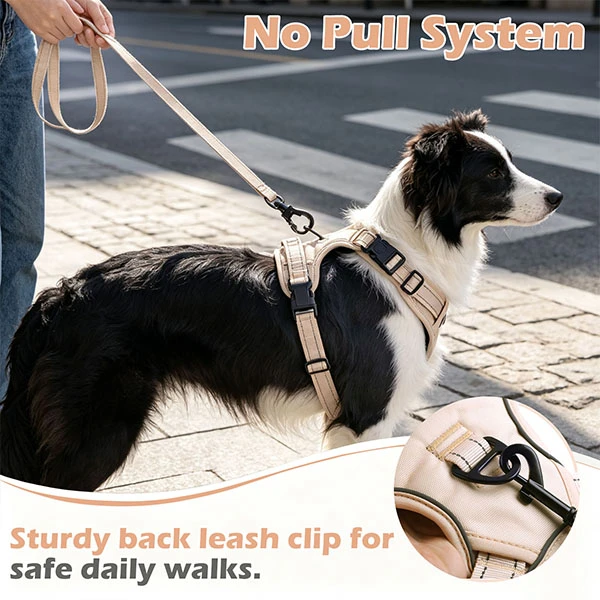
Field-ready safety, fast customization, and B2B reliability for outdoor pet lines
Waterproof dog collars for hunting brands are critical. High-visibility dog collars for outdoor dogs are also critical. Reflective hunting collars for field work are widely preferred. These features are required by buyers, and they are expected by users.
I build waterproof and high-vis hunting dog collars for brands that sell to hunters, hikers, and trainers. I design for marsh, mud, snow, dusk, and dawn. I focus on durability first, then visibility, then branding. My factory offers Custom Patterns with AI, free 3D previews, and fast samples. Mockup in seconds and Sample in 3 Days are standard. Stable lead times are maintained. Quality is tested. Risk is controlled. If you need a quick start, you can view our homepage at qqpets.com and try our 3D/AI tool now: https://qqpets.com/3d-mockup/.

1) Why Are Waterproof Dog Collars Important for Outdoor Use?
Rain, marsh, and snow expose weak builds. Wet webbing stretches.1 Odor builds.2 Color fades. Dogs slip or go unseen. Reviews drop. Returns rise. A waterproof collar prevents these failures.
Waterproof collars keep their shape when wet, wipe clean in seconds, and resist odor. High-visibility colors keep dogs visible under low light. Reflective details increase the detection distance for handlers and vehicles.3
Key field stresses and how I design against them:
- Water and mud: I choose TPU/PVC-coated webbing that does not absorb water. It cleans with a wipe and stays stable in shape.
- Abrasion: I use dense cores and bar tacks at stress points. Edges are sealed smooth to protect coats and skin.
- Low light: I set blaze or neon bases and add reflective bands where fur will not cover them.
- Cold and salt: I specify stainless or PVD-coated hardware. I confirm cold-flex and salt-spray performance.
| Field Risk | Typical Failure | Control Spec |
|---|---|---|
| Wetlands | Stretch, slippage | Coated webbing, sealed edge |
| Brush | Fray, abrasion | Dense webbing + box‑X at hardware |
| Low Light | Missed dog | Blaze base + reflective band |
| Coast | Rust | 304/316 SS or PVD finish |
2) How Do Nylon, Polyester, and Coated Webbing Compare?
Wrong base material causes most returns. Nylon absorbs water and stretches.4 Polyester keeps color and prints well.5 Coated webbing wipes clean and controls odor. The right choice depends on terrain and branding.
Use coated webbing for wetlands and heavy mud. Use high-density polyester for upland prints and cold-flex comfort. Reserve leather for heritage lines with clear care notes.
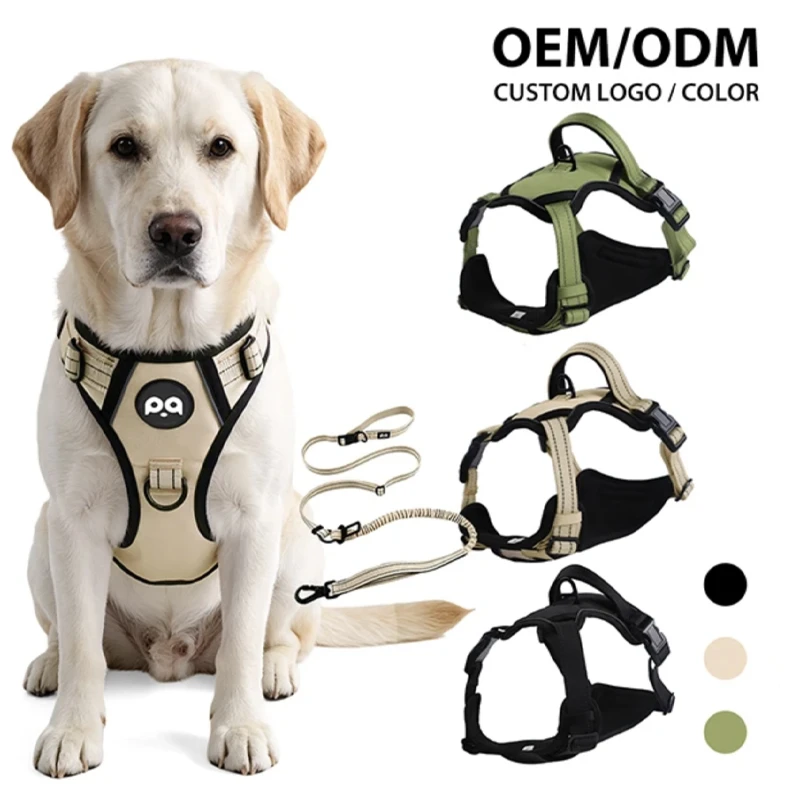
Plain terms that guide my specs:
- Nylon: strong but hydrophilic. Stretch risk after rain. I do not use it for marsh lines.
- Polyester: strong, colorfast, and print-ready with sublimation. It fits upland and mixed terrain.
- TPU/PVC-coated webbing: wipe-clean, odor-resistant, and stable. It suits marsh, snow, and kennel-heavy use.
- Leather: premium and durable with care. It fits a classic line with brass hardware.
| Attribute | Nylon | Poliester | Coated Webbing |
|---|---|---|---|
| Wet Stretch | High | Low | None |
| Cleanability | Moderate | Good | Excellent |
| Odor Control | Fair | Good | Excellent |
| Printability | Limited | Full-color | Solid + laser/UV logo |
| UV Colorfast | Fair | Excellent | Excellent |
| Hand/Comfort | Soft | Soft‑medium | Medium‑stiff |
I often build two parallel lines under one palette. One coated for wet seasons. One polyester for uplands with prints. One brand story. Two technical builds.
3) How Should High-Visibility Colors Be Selected for Hunting Dog Collars?
Visibility must be planned, not assumed. Long grass, brush, and fog hide dogs fast. A core color system keeps dogs safe and brands distinct.
Choose blaze orange as the anchor. Add neon yellow or signal green as alternates by habitat. Lock Pantones and apply across collars, leashes, harnesses, and bandanas. Keep reflective as a second layer.
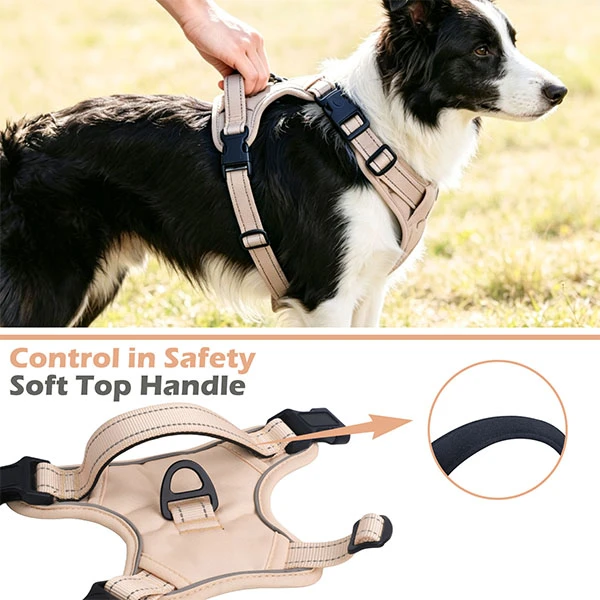
Color rules that keep safety and merchandising aligned:
- Upland: blaze orange with a bright reflective band.
- Woods: neon yellow with a reflective logo band for shade.
- Wetlands: signal green with a wide reflective patch near the D-ring.
- Snow: neon yellow to fight white-out6, with a full-length reflective strip.
| Habitat | Base Color | Reflective Placement |
|---|---|---|
| Upland | Blaze Orange | 10–15 mm top-edge ribbon |
| Woods | Neon Yellow | Mid-collar reflective band |
| Wetlands | Signal Green | Patch near D-ring |
| Snow | Neon Yellow | Full-length strip |
4) Do Reflective Details Actually Improve Real-World Visibility?
Reflective works when placed and bonded correctly. If tape sits under fur, or if it cracks on curves, it fails. Placement and bonding must be chosen by substrate.
Yes, reflective improves dawn and dusk detection. I set reflective on exposed arcs of the neck and near the D-ring. I match reflective type to the webbing to prevent cracking.
Practical notes I use:
- Sew-on reflective ribbon suits polyester. Ends are bar tacked to prevent peel.
- Reflective ink suits polyester for a flat, flexible logo band.
- Adhesive-backed tapes suit coated webbing if the adhesive is matched to the coating. Curves must be tested.
- Heat-transfer films are clean, but small radii must be avoided to prevent cracking.
5) Which Hardware Should Be Chosen for Outdoor Dog Collars?
Plastic breaks in cold.7 Split rings open under shock. Rings with seams pull apart. These risks must be removed. Hardware must be metal and tested.
Use metal pin buckles or load-rated metal quick releases. Specify welded D or V rings. Choose 304/316 stainless8 or PVD coatings for wet and coastal zones. Add box‑X stitches and bar tacks at all anchors.
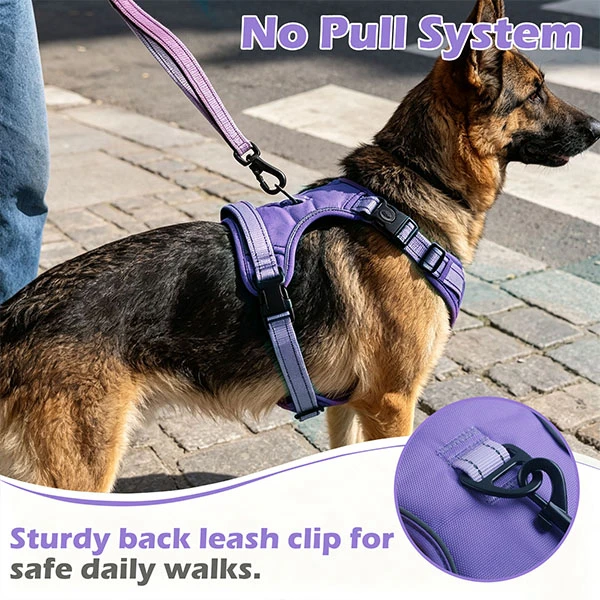
Hardware basics I standardize:
- Buckles: metal pin (fail-safe) or load-rated QR (for gloves).
- Rings: welded stainless or cast/forged V/D rings.
- Slides: metal with teeth for coated webbing; smooth slides may creep.
- Fasteners: solid or tubular rivets. Thread-lock on screws.
- Finish: stainless for rust control; PVD for color and corrosion resistance.
6) Which Custom Logo and Private-Label Options Fit Hunting Lines?
Noisy tags are removed in the field. Flat and silent branding works best. Logos must survive mud, wipes, and UV. Private-label must align across substrates.
Use laser metal plates, reflective logo prints, PVC patches, or woven labels. Keep branding bold and silent. Place logos away from rings and buckles for legibility.
Branding options I deploy:
- Coated webbing: metal nameplates with laser engraving, or PVC patches stitched or riveted.
- Polyester: reflective logo prints, woven labels near the adjuster, or heat transfers.
- ID without noise: QR or NFC tags riveted under the logo zone, so scanning is fast.
7) How Should Material and Product Quality Be Tested?
Photos hide problems. Edges scratch. Colors drift. Buckles differ. Samples must be approved with simple checks. Quality must be documented.
Approve a production-grade sample. Pull-test the D-ring. Inspect bar tacks. Verify Pantones. Hose-clean coated webbing. Run a quick odor test after drying. Review salt-spray tests for coastal lines.9
10-minute QC I use with buyers:
- Pull the D-ring with two hands. Cycle the buckle open/close 30 times with gloves.
- Check all bar tacks and the box‑X. Look for skipped stitches and loose threads.
- Feel both edges for smoothness. No sharp points are allowed.
- Compare final goods to Pantone chips. Test reflective with a flashlight.
- Smear mud, hose, dry, and smell. Odor must be controlled.
Pass standards are simple:
- No cracked buckles. No open welds.
- Dense, even stitching. No misses.
- Smooth edges. No burns or burrs.
- Pantone within tolerance. Reflective bright and clear.
- Wipe-clean success. No residue, no smell.
8) How Can a Wholesale Hunting Dog Collar Collection Be Developed?
One SKU is not enough. Sets tell a stronger story. Collars should match leashes, harnesses, and bandanas. Color drift must be prevented. Hardware finishes must match. Photos must align.
Plan two technical lines under one palette: coated-waterproof and polyester-print. Build sets by habitat. Keep SKUs tight. Sell kits and singles. Lock Pantones across all SKUs for clean PDPs.
Set plans I use:
- Upland set: polyester collar + 6 ft leash + reflective bandana.
- Wetland set: coated collar + 4 ft leash + long line.
- Training set: collar + traffic handle + front/back-clip harness.
B2B terms that lower risk:
- MOQ: 50 pcs per size or pattern for lightweight customization.
- Mockup in seconds using our free 3D AI tool, then Sample in 3 Days.
- Stable lead times from three production lines.
- Certifications and QC reports provided on request.
You can design now with AI and see instant previews here: https://qqpets.com/3d-mockup/. It is free. It is fast. It is built for Custom Patterns.
9) FAQs About Waterproof and High-Visibility Hunting Collars
Can I design patterns without a designer? Yes. Use the free AI inside our 3D tool: https://qqpets.com/3d-mockup/. Type your idea. Get unique, seamless Custom Patterns. Mockup in seconds.
How fast can I see a sample? Sample in 3 Days after artwork approval. Freight options are provided by our team.
What is the MOQ? 50 pcs per size or per pattern. This is ideal for Shopify sellers and offline shops.
Can logos be added to both coated and polyester lines? Yes. Laser plates, reflective prints, PVC patches, and woven labels are supported. Placement guides are provided in mockups.
Are reflective elements durable in wet and cold? Yes. I match reflective method to substrate and test bends and wipes. Cracking is screened out during sampling.
Which regions do you support? Europe, North America, and AU/NZ are supported with stable shipping lanes and clear documents.
Can certifications be provided? Yes. Material safety, tensile tests, abrasion tests, and salt-spray reports can be shared.
How do I keep colors consistent across sets? Lock Pantones in the tech pack. I color-match across widths and components, then verify during pre-production.
What about factory support and timelines? We are a factory with three production lines. Lead times are stable. A professional support team replies fast.
Wnioski
Build for water, abrasion, and low light. Use coated or polyester lines. Lock blaze colors and reflective zones. Approve real samples. Then scale fast with Custom Patterns, instant 3D mockups, and low MOQs.
My Role
I am Kyra, your pet traction customization partner at qqpets. I help hunting brands move fast with low risk. I design Custom Patterns with our free 3D AI tool. I align substrates, colors, and hardware. I set clear QC steps and deliver Sample in 3 Days. I keep MOQs low and lead times stable. If you want help now, email me at service@qqpets.com or contact the team: https://www.qqpets.com/contact-us/.
About qqpets
- Brand: qqpets
- Website: https://www.qqpets.com/
- 3D/AI Design: https://qqpets.com/3d-mockup/ — Custom Patterns, Mockup in seconds, Sample in 3 Days
- Country: China
- Identity: Factory with 3 production lines
- Business Model: B2B; wholesale customization only
- Products: dog harness, dog collar, dog leash
- Services:
- Custom Your Brand Logo: PVC, woven labels, reflective prints, laser plates
- Custom Patterns or Designs: AI-generated or upload your art
- Custom Styles: everyday, training, and hunting builds
- Zalety:
- AI design, 3D customization
- Mockup in seconds
- Sample in 3 Days
- MOQ: 50 pcs per size or pattern
- Stable lead times and audited quality
- Main Export Regions: Europe, North America, AU/NZ
- Ideal Customers: Shopify sellers and offline shop owners
"Glossary | Conserving Canvas", https://www.getty.edu/publications/conserving-canvas/glossary/. Textile engineering sources identify nylon as a moisture-absorbing synthetic fiber and note that absorbed water can affect dimensional and mechanical behavior, supporting the concern that some wet webbing may stretch. Evidence role: mechanism; source type: education. Supports: Wet webbing can stretch when exposed to rain, marsh, or snow.. Scope note: This supports the material mechanism generally; it does not prove that every collar webbing construction will stretch in field use. ↩
"Microbial Odor Profile of Polyester and Cotton Clothes after a Fitness ...", https://pmc.ncbi.nlm.nih.gov/articles/PMC4249026/. Studies of textile odor formation associate retained moisture, sweat or organic residues, and microbial activity with malodor development, providing contextual support for odor risk in damp collars. Evidence role: mechanism; source type: paper. Supports: Damp or soiled collar materials can develop odor over time.. Scope note: The evidence is likely to come from textile odor research rather than hunting dog collar trials specifically. ↩
"Nighttime Visibility Overview | FHWA - Department of Transportation", https://highways.dot.gov/safety/other/visibility/nighttime-visibility-overview. Human-factors and traffic-safety research on retroreflective markings shows that retroreflection improves nighttime conspicuity and detection distance under vehicle headlights, supporting the use of reflective details for low-light visibility. Evidence role: expert_consensus; source type: research. Supports: Reflective details can increase low-light detection distance for people or vehicles.. Scope note: Most evidence concerns pedestrians, cyclists, or roadway objects; it is contextual support for dog collars rather than direct proof for hunting dogs. ↩
"Nylon's mechanical properties change when wet", https://www.facebook.com/groups/623045356071128/posts/936956381346689/. Textile references report that nylon has higher moisture regain than polyester and that water uptake can alter its mechanical response, supporting the claim that nylon webbing is more prone to wet-state dimensional change. Evidence role: mechanism; source type: education. Supports: Nylon absorbs water and can stretch more than lower-absorption synthetic webbing.. Scope note: The degree of stretch varies with weave, denier, finishing, and load; the citation would not quantify performance for this specific product. ↩
"Performance Properties in Fibers and Fabrics", https://d24-h.tamu.edu/files/2023/02/D2D-Performance-Properties-in-Fibers-and-Fabrics-Copy.pdf. Textile science sources describe polyester as a hydrophobic fiber with strong dimensional stability and compatibility with disperse-dye or sublimation printing, supporting its use for printed, colorfast webbing. Evidence role: general_support; source type: education. Supports: Polyester is suitable for colorfast printed collar lines.. Scope note: Print quality and colorfastness also depend on dye chemistry, process control, and UV exposure conditions. ↩
"Emergency Vehicle Visibility and Conspicuity Study - USFA.FEMA.gov", https://www.usfa.fema.gov/downloads/pdf/publications/fa_323.pdf. Visibility and safety-color research indicates that fluorescent yellow-green materials can improve conspicuity under daylight or low-contrast conditions, providing contextual support for neon yellow in snowy environments. Evidence role: general_support; source type: research. Supports: Neon yellow can improve conspicuity in snowy or low-contrast settings.. Scope note: The evidence may come from roadway or occupational visibility studies rather than snow hunting dog collar tests. ↩
"Low Temperature Properties of Polymers", https://www.appstate.edu/~clementsjs/polymerproperties/plastics_low_temp.pdf. Polymer engineering references describe low-temperature embrittlement and ductile-to-brittle transitions in many plastics, supporting the concern that some plastic buckles may fracture in cold conditions. Evidence role: mechanism; source type: education. Supports: Some plastics become more brittle and may break in cold conditions.. Scope note: Cold performance is polymer-specific; engineering plastics rated for low temperatures may not share this failure mode. ↩
"304 vs 316 Stainless Steel: When to spend extra on marine grade? : r/CNC", https://www.reddit.com/r/CNC/comments/1rzb7r4/304_vs_316_stainless_steel_when_to_spend_extra_on/. Materials references distinguish 304 and 316 stainless steels and note the improved chloride resistance of molybdenum-bearing 316 grades, supporting their use where wet or coastal corrosion is a concern. Evidence role: definition; source type: institution. Supports: 304/316 stainless steel hardware is suitable for wet and coastal corrosion-control applications, with 316 generally preferred for chloride exposure.. Scope note: The citation supports alloy selection generally; corrosion performance also depends on surface finish, crevice geometry, and maintenance. ↩
"Salt spray test", https://en.wikipedia.org/wiki/Salt_spray_test. ASTM B117 and related neutral salt-spray methods provide standardized laboratory procedures for exposing coated or metallic specimens to a corrosive salt fog, supporting salt-spray testing as a comparative corrosion-screening method. Evidence role: definition; source type: institution. Supports: Salt-spray testing is an accepted method for screening corrosion resistance of hardware or finishes intended for coastal exposure.. Scope note: Salt-spray results are accelerated laboratory indicators and do not directly predict exact service life in coastal field use. ↩