 PT
 EN
 FR
 RU
 DE
 AR
 ES
 IT
 NL
 PL
 SL
 ET
 RO
 CS
 EL
 LV
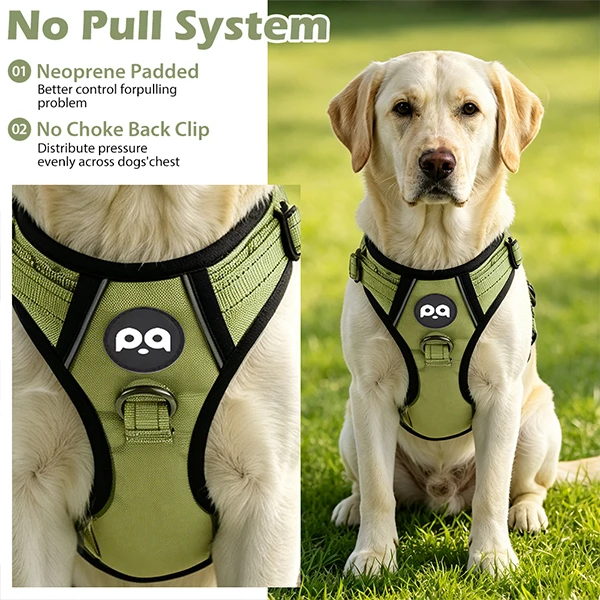
Your pet brand wants to serve the large dog market, but standard collars are a liability. You're worried about a product failure leading to a lost dog and a destroyed brand reputation.
To create safe custom dog collars for large breeds, you must prioritize strength in every component. This means choosing wider webbing, using heavy-duty metal hardware, and employing reinforced stitching techniques that can withstand the power of a large dog.
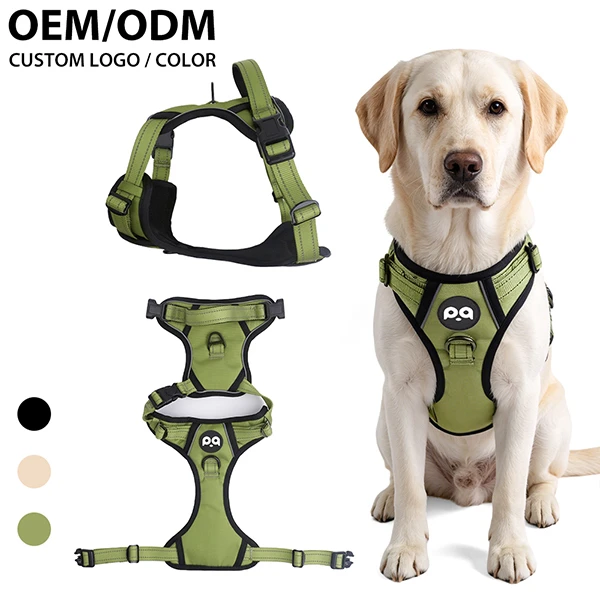
My name is Cathy, and as a pet traction customization expert at the Fábrica de qqpets, I've seen brands make a critical mistake: they assume a large dog collar is just a bigger version of a small one. This is a dangerous assumption. The forces exerted by a 100-pound dog are exponentially greater than those of a 20-pound dog. The hardware, materials, and construction must be fundamentally different. This guide was written to give you the confidence to design and source a large-breed collar that is not only stylish but uncompromisingly safe. I'll walk you through the non-negotiable elements that go into creating a product that will earn the trust of large-dog owners.
Why Do Large-Breed Dogs Need Specially Designed Collars?
You might think that simply increasing the length of a standard collar is enough for a large dog. This oversight can lead to product returns, negative reviews, and serious safety incidents.
A standard collar's components will fail under the strength of a large dog. The collar must be engineered with wider material to distribute pressure and prevent injury1, and feature hardware that can handle intense pulling forces.
The physics are simple but often ignored. A thin, 1-inch collar on a Great Dane or a Rottweiler concentrates all the force from pulling or lunging into a very narrow area on their neck. This can cause chafing, tracheal damage, and immense discomfort. Moreover, the plastic buckle and welded D-ring found on most standard collars are not rated to withstand the sudden, powerful jerks these dogs can produce. A buckle can shatter, or a D-ring can be pulled open, resulting in a dog running loose. For a pet brand, a single incident like this can be catastrophic. Therefore, a properly designed large-breed collar is not a luxury; it is an essential piece of safety equipment.
How Do You Choose the Right Collar Width and Size?
You want to offer collars for large dogs, but you are unsure what widths are appropriate. Choosing a width that is too narrow is unsafe, while one that is too wide may be uncomfortable.
The collar's width should be proportional to the dog's size and weight to ensure pressure is distributed safely. Wider collars are always the better choice for large, strong dogs.
This is the first and most visible indicator of a true large-breed collar. A wider surface area spreads force across the dog's neck more evenly, which is both safer and more comfortable for the animal. It also allows for the use of larger, stronger hardware. As a general rule, the bigger and stronger the dog, the wider the collar should be. When developing your product line, offering at least two distinct widths for the large-breed category shows that your brand understands these nuances. This is a detail that experienced large-dog owners will immediately recognize and appreciate.
### Recommended Widths for Large Breeds
| Dog's Approximate Weight | Recommended Collar Width | Common Breeds in this Range |
|---|---|---|
| 50 - 80 lbs (23 - 36 kg) | 1.5 inches (3.8 cm) | Labrador Retriever, Golden Retriever, Boxer |
| 80+ lbs (36+ kg) | 2 inches (5.0 cm) | German Shepherd, Rottweiler, Great Dane, Mastiff |
What Are the Best Materials for Large Dog Collars?
You need a collar material that won't stretch, fray, or break under pressure. You are worried that a standard nylon collar will not be strong enough, and you want a material that also displays your custom patterns beautifully.
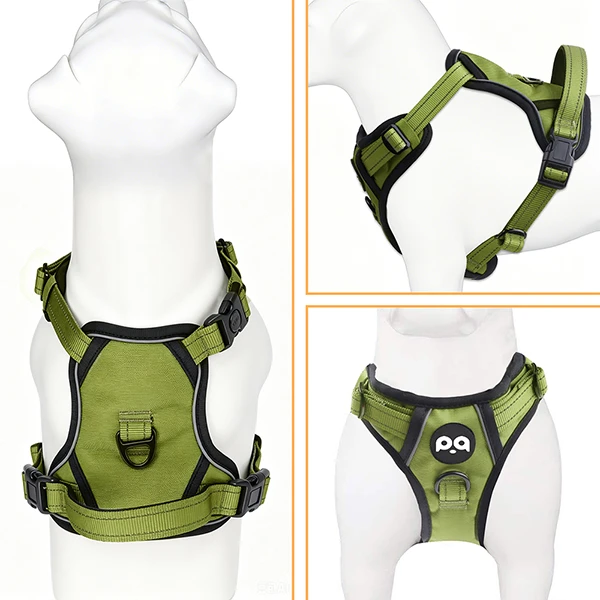
For large breeds, the ideal material is double-layer, high-density polyester webbing. This construction provides immense tensile strength, excellent abrasion resistance2, and a perfect surface for vibrant, custom printing.
While a single layer of nylon might be sufficient for smaller dogs, it is simply not adequate for large, powerful breeds. Our solution is a double-layer construction. We take two layers of our premium, high-density polyester webbing and sew them together. This immediately doubles the material's strength and creates a thick, substantial collar that feels incredibly secure. Polyester has another key advantage over nylon: it is far superior for sublimation printing. This process infuses your custom designs directly into the fibers, resulting in sharp, vivid patterns that will not crack, peel, or fade over time3. It ensures that your beautiful custom branding remains intact, even after heavy use in the sun, water, and mud.
How Should You Choose Hardware for Large Dog Collars?
You know the buckle and D-ring are the weakest points. The thought of a hardware failure keeps you up at night, as it represents the biggest risk to your brand's reputation for safety.
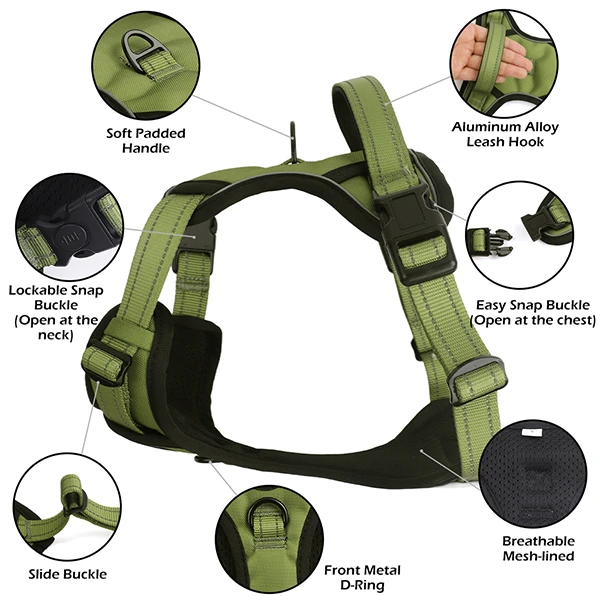
For large-breed collars, all-metal hardware is non-negotiable. You must select heavy-duty, load-rated metal buckles and solid, cast D-rings instead of standard plastic clips and welded rings.
This is the most critical decision in designing a large dog collar. A plastic buckle, regardless of its stated strength, can become brittle in the cold or develop micro-cracks over time4, leading to sudden, catastrophic failure. Your brand cannot take this risk. Heavy-duty metal hardware, such as a double-pin buckle (like a sturdy belt buckle) or a "Cobra" style quick-release buckle, provides the necessary security and peace of mind. Similarly, the D-ring where the leash attaches must be a solid piece of cast metal, not a simple welded ring that can be pulled apart. These over-engineered components are a clear signal to your customers that you have prioritized their dog's safety above all else, justifying a premium price for your product.
Why Is Reinforced Stitching So Important?
You have chosen strong materials and metal hardware. However, you are concerned that the seams holding the collar together could be a hidden weak point that might unravel under stress.
The entire strength of the collar depends on its stitching. For large breeds, standard sewing is not enough; you must specify reinforced stitching patterns, such as "box stitching" or "bar tacks," at all critical stress points.
Think of stitching as the welds on a steel frame. The stress points on a dog collar are the areas around the buckle and the D-ring. This is where all the pulling force is concentrated. A simple line of stitching will tear under the repeated strain from a large dog. That's why we use specialized sewing patterns. "Box stitching" (a square with an 'X' inside) and "bar tacks" (a series of very dense, tight stitches) are techniques borrowed from manufacturing climbing harnesses and tactical gear5. These methods create an incredibly strong bond that distributes force over a wider area, making it virtually impossible for the seam to fail. When a customer inspects your collar, seeing this robust stitching is an immediate and powerful indicator of high quality.
How Can You Offer Custom Designs for Wide Collars?
You've committed to making a safe, durable collar. Now, you need it to look unique and exciting. You're worried that wide collars will look bulky and that finding cool patterns for them is difficult.
A wider collar is a larger canvas for your creativity. Use this space to offer bold, unique designs that make a statement and partner with a manufacturer who can bring any pattern to life with modern customization tools.
This is where your brand can truly shine. A 2-inch wide collar provides a fantastic opportunity to showcase a stunning design. Don't be limited by generic options. As a pet traction customization expert, we built our factory to make differentiation easy. Our revolutionary 3D Mockup System includes a free AI Pattern Generator. You can type in any idea—"a pattern of mountain silhouettes at sunset," or "a geometric pattern with my brand's colors"—and the AI will generate unique, high-resolution designs just for you. Our "Mockup in seconds" feature then lets you instantly apply that pattern to a 3D model of your large-breed collar. You can see exactly how it looks before you ever commit to a sample. This is how you create a signature product line that no one can copy.
How Do You Develop a Matching Set for Large Breeds?
A customer loves the strong, stylish collar you created for their German Shepherd. They immediately want to buy a matching harness and leash that offer the same level of safety and style, but your brand doesn't offer them.
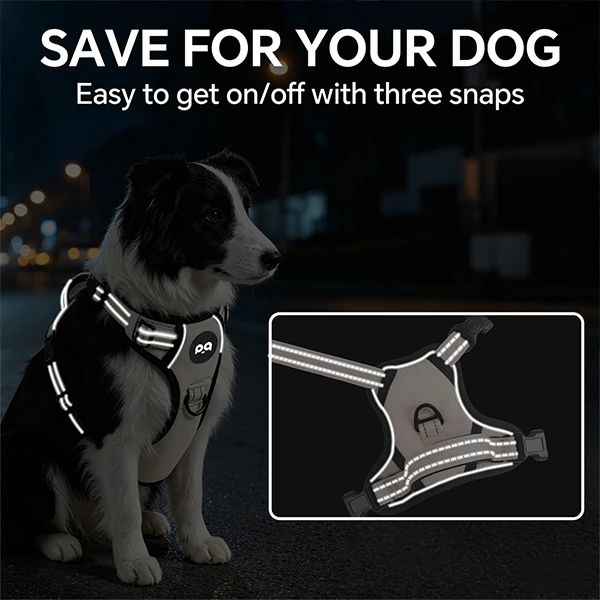
To maximize customer loyalty and sales, you must think in collections. Develop a matching harness and leash that are also specifically engineered for the strength and safety needs of large breeds.
Selling a single great product is good. Selling a complete, trusted safety system is great. Owners of large dogs are looking for a brand they can rely on for all their gear. As a direct factory with three production lines, we can be your one-stop partner for creating this entire ecosystem. We will ensure your custom pattern is applied with perfect color consistency across the collar, harness, and leash. More importantly, we'll engineer the matching pieces to the same high standards. The harness will feature reinforced chest plates and load-rated hardware. The leash will use the same double-layer webbing and a heavy-duty metal clip. This consistent quality and design create an incredibly powerful brand statement and dramatically increase your average order value.
What Should Wholesale Buyers Check Before Ordering?
You've designed the perfect large-breed collar and are ready to invest. However, you're worried about committing a large amount of capital to a manufacturer without being certain of their capabilities and business practices.
Before placing a bulk order, you must verify three critical points: the supplier's Minimum Order Quantity (MOQ), their sampling policy, and their factory certifications. These factors determine your financial risk and time to market.
These business details are just as important as the product's quality.
- Low MOQ: A high MOQ is a major risk for growing brands. Our "lightweight customization" model allows for an MOQ of just 50 pieces per design/size. This means you can launch a full range of sizes and patterns without a huge upfront investment.
- Fast Sampling: Never order in bulk without testing a physical sample. Our "Sample in 3 Days" policy ensures you can quickly get a production-quality sample in your hands to test its strength and approve the design.
- Factory Legitimacy: Are you working with a real factory? Ask for their BSCI or ISO9001 certifications. As a BSCI-certified factory, we provide transparency, better pricing, and a reliable partnership.
Ready to create a line of custom, heavy-duty collars that large-dog owners will trust? Contact our expert team today to get started.
Conclusão
Choosing collars for large breeds means prioritizing strength. Focus on wide webbing, metal hardware, and reinforced stitching. Partner with a factory that offers deep customization, low MOQs, and fast sampling to succeed.
"Pressure and force on the canine neck when exercised using ...", https://pmc.ncbi.nlm.nih.gov/articles/PMC7386734/. A veterinary or animal-welfare source discussing collar fit and pressure distribution can support the claim that wider collars spread load over a larger neck area and may reduce localized pressure. Evidence role: mechanism; source type: education. Supports: Wider collar material can distribute pressure more broadly on a dog’s neck and reduce localized stress.. Scope note: Such sources generally support the pressure-distribution mechanism; they may not directly test every large-breed collar design. ↩
"Boosting Polyester Fiber's Abrasion Resistance in Textiles", https://eureka.patsnap.com/report-boosting-polyester-fiber-s-abrasion-resistance-in-textiles. A textile materials reference comparing polyester fiber properties can support that polyester is commonly valued for abrasion resistance and dimensional stability. Evidence role: general_support; source type: encyclopedia. Supports: Polyester webbing can offer good abrasion resistance in textile applications.. Scope note: Abrasion performance depends on weave, denier, finish, and construction, so the source would not prove the durability of a particular collar without product testing. ↩
"Does sublimation printing crack or peel", https://www.facebook.com/mbnsublimation/posts/ever-wondered-why-sublimation-printing-is-so-popular-the-design-becomes-part-of-/1772295631563084/. A source explaining dye-sublimation chemistry can support that sublimation dyes penetrate or bond with polyester fibers rather than forming a surface film, which helps explain resistance to cracking and peeling. Evidence role: mechanism; source type: education. Supports: Sublimation printing on polyester is less prone to cracking or peeling because the color is embedded in the fiber rather than applied as a surface layer.. Scope note: The source can explain why cracking and peeling are less likely than with surface prints, but long-term fading still depends on dye quality, UV exposure, washing, and use conditions. ↩
"Embrittlement", https://en.wikipedia.org/wiki/Embrittlement. A polymer science source on low-temperature embrittlement and environmental stress cracking can support the general claim that some plastics lose toughness or develop cracks under cold, aging, or stress conditions. Evidence role: mechanism; source type: research. Supports: Plastic hardware can become more brittle or crack under cold, aging, and repeated stress depending on material and design.. Scope note: The evidence would be general to polymer behavior; the risk for a given buckle depends on the specific plastic, formulation, design, and testing standard. ↩
"Bar Tacks vs. Boxed X stitches on Webbing : r/climbing", https://www.reddit.com/r/climbing/comments/8b46z4/bar_tacks_vs_boxed_x_stitches_on_webbing/. A climbing-equipment or textile-engineering source describing bar tacks and reinforced stitch patterns can support that dense reinforcement stitching is used at load-bearing textile attachment points. Evidence role: historical_context; source type: institution. Supports: Box stitching and bar tacks are recognized reinforcement methods for load-bearing textile assemblies.. Scope note: This supports the use of reinforced stitching in load-bearing gear generally, not that the specific collar seam is “virtually impossible” to fail. ↩