 PT
PT  EN
EN  FR
FR  RU
RU  DE
DE  AR
AR  ES
ES  IT
IT  NL
NL  PL
PL  SL
SL  ET
ET  RO
RO  CS
CS  EL
EL  LV
LV 
As an online pet brand owner, this is the question that should keep you up at night. A customer's powerful bully breed dog slipping out of or breaking a harness that has your logo on it is more than just a product failure; it is a brand-destroying catastrophe. Consequently, when you source your product line, you are looking for more than just a supplier; you are searching for an assurance that your custom dog harness for bullies is genuinely escape-proof and strong enough. This is a promise many factories make, but few can actually prove.
A truly escape-proof and strong harness is not the result of a vague promise, but the end product of a rigorous engineering and quality control system1. It is a synthesis of advanced material science, reinforced structural design, and verifiable, systematic testing2. A factory partner that can deliver this level of security, and then combine it with unparalleled customization technology and a business model built for e-commerce, is the only choice for a serious brand. This is the exact system we have perfected at qqpets.
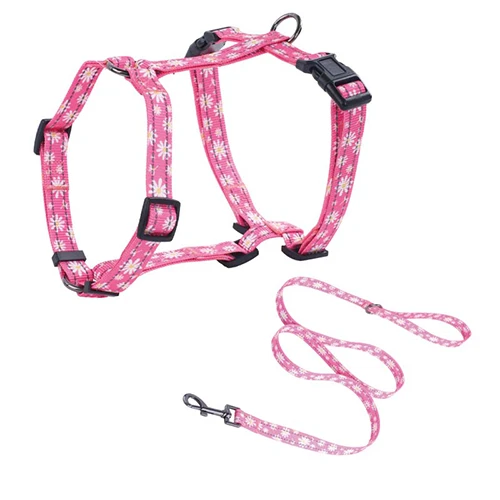
My name is Cathy, and as a pet traction customization expert, I speak with brand owners every single day who are haunted by this exact fear. They know that for breeds like Pit Bulls, American Bullies, and Staffordshire Terriers3, equipment failure is not an option. The peace of mind of their customers—and therefore, the reputation of their brand—hangs on the integrity of every stitch and every buckle. Therefore, let's move past simple claims and dive into the concrete evidence of what makes a harness truly secure, and how that security can become the foundation of a thriving, unique brand.
How is strength and safety engineered into every single harness?
You've received a beautiful sample, but how can you be sure the 1,000th piece in your bulk order won't be made with cheaper webbing or weaker thread? This fear of inconsistency is what separates a mere supplier from a true manufacturing partner.
A genuinely strong harness is an engineered product where every component is chosen and assembled for maximum load-bearing capacity. Its strength is guaranteed not by chance, but by a certified Quality Management System4 that verifies everything from the tensile strength of the raw materials5 to the integrity of the final stitch6, ensuring every single unit is as strong as the first.
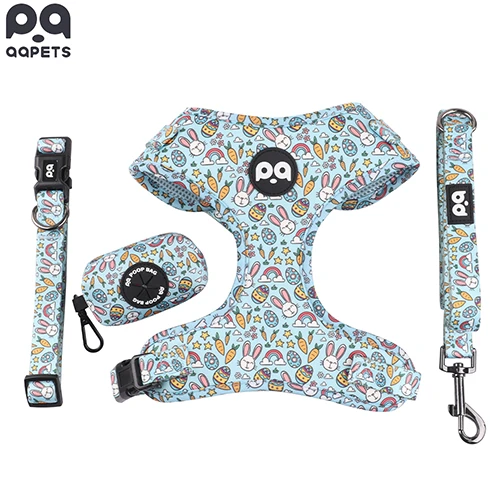
At our core, we are an engineering and manufacturing company. The "escape-proof" quality of our harnesses, especially for powerful bully breeds, is a direct result of a multi-faceted approach to quality that is embedded in our factory's DNA. This is a process that has been meticulously designed to eliminate failure points.
The Three Pillars of an Unbreakable Harness
We build security into our products through three critical areas, a system that is verified by our ISO 9001 certification.
| Pillar of Strength | Standard Supplier's Approach | The qqpets Certified System |
|---|---|---|
| 1. Material Science | Uses the cheapest available webbing with unknown specifications. | We source high-density nylon webbing7 and conduct in-house tensile strength tests to ensure it exceeds the force a powerful dog can exert. |
| 2. Structural Integrity | Employs basic, single-line stitching that can unravel under strain. | All load-bearing joints8 feature reinforced "box-X" stitching9, a technique that multiplies the tear resistance at critical stress points. |
| 3. Hardware Durability | Uses generic metal or plastic parts that may corrode or crack. | We use load-rated metal D-rings and impact-resistant POM (Polyoxymethylene) buckles10, which are tested for durability across thousands of cycles11. |
This systematic approach means that the harness is not just "strong," it is verifiably strong. Each component is a deliberate choice designed to contribute to an unbreakable whole. This system is our guarantee to you, and in turn, your guarantee to your customers. Your brand's reputation for safety is built on this very foundation.
But how can a strong harness also build a unique and profitable brand?
Safety is the price of entry, but it doesn't make customers fall in love with your brand. A plain black, strong harness is functional, but it's also a commodity. To build a loyal following and command premium prices, you need to stand out. You need a product that reflects the vibrant personality of the dogs and owners you serve.
The ultimate brand advantage is achieved when unshakeable strength is fused with limitless aesthetic possibility. This is made possible by a partner that provides not only robust engineering but also groundbreaking design technology and a hyper-flexible production model. The goal is to make your brand not just safe, but also unforgettable.

This is where we transition from being just a manufacturer to being your brand's growth engine. We've built an entire ecosystem around our core promise: "Mockup in seconds. Sample in 3 Days." This system is designed to give you, the online brand seller, an unfair advantage.
Our revolutionary, free-to-use 3D Mockup System is the centerpiece of this advantage. Here's how it empowers you:
- Create Without Limits: You don't need a design degree. You can choose from over a thousand of our free, market-ready Padrões personalizados or you can use our groundbreaking AI Pattern Generator. Simply type in an idea—like "a pattern of majestic pit bulls with floral crowns" or "a tough-looking diamond plate metal pattern"—and the AI will create a 100% unique design for you in seconds.
- Launch with Agility: Why bet your entire budget on one design? With our industry-leading MOQ of just 50 pieces per size/design, you can launch an entire collection. Imagine offering your bully breed customers a "Tough" line with metallic patterns, a "Playful" line with cartoon dog patterns, and a "Chic" line with abstract art patterns—all at once. This "lightweight customization" minimizes your risk and maximizes your appeal.
- Build a Full Brand Ecosystem: Your unique AI-generated pattern isn't just for a harness. With our system, you can seamlessly apply it to matching collars, leashes, and other accessories, creating a powerful and cohesive brand presentation that drives higher average order values.
Our professional service team is here to guide you through every step, ensuring your vision for a strong, escape-proof, and stunningly unique product line becomes a reality. This comprehensive support is why we are the preferred partner for so many global online brands. I encourage you to contact our expert team today to discover how we can build your brand on a foundation of unshakeable strength and unlimited creativity.
Conclusão
A truly escape-proof and strong harness is born from a system of engineering and verified quality. By partnering with a factory that provides this security alongside powerful design technology and a flexible business model, your brand can offer not just peace of mind, but a product your customers will love.
"ISO and Quality Management | NIST", https://www.nist.gov/mep/iso-and-quality-management. Quality-management literature and ISO 9001 guidance support the proposition that consistent product safety and performance depend on controlled processes, documented requirements, and verification activities rather than supplier assurances alone. Evidence role: expert_consensus; source type: institution. Supports: A strong, escape-resistant harness requires systematic engineering and quality control rather than a verbal promise.. Scope note: This supports the general quality-control principle, not the escape-proof performance of any specific harness model. ↩
"[PDF] Mechanical Design Reliability Handbook - NASA", https://extapps.ksc.nasa.gov/Reliability/Documents/Mechanical-Design-Reliability-Monograph.pdf. Engineering-design sources describe product reliability as a function of material selection, structural design, and verification testing, which provides contextual support for treating harness security as an engineered system. Evidence role: general_support; source type: education. Supports: Harness strength depends on material selection, structural design, and systematic testing.. Scope note: The evidence would be conceptual and would not prove the performance of the article’s specific harness design. ↩
"Official Standard of the American Staffordshire Terrier", https://www.waterfordmi.gov/DocumentCenter/View/277. Breed-standard and veterinary sources describe American Bullies, pit bull-type dogs, and Staffordshire terriers as muscular, strong-bodied dogs, supporting the article’s contextual claim that restraint equipment for these breeds must account for substantial physical force. Evidence role: general_support; source type: institution. Supports: Pit Bulls, American Bullies, and Staffordshire Terriers are commonly described as strong, muscular dogs requiring robust equipment.. Scope note: Breed descriptions do not quantify the pulling force of individual dogs and should not be treated as proof that every dog in these groups has the same strength. ↩
"ISO 9001:2015 - Quality management systems — Requirements", https://www.iso.org/standard/62085.html. ISO 9001 materials define a quality management system as an organized framework for controlling processes, meeting requirements, and improving consistency, supporting the claim that certification can relate to repeatable manufacturing controls. Evidence role: definition; source type: institution. Supports: A certified quality management system is relevant to consistent production and process control.. Scope note: An ISO source can explain what a quality management system is, but it does not verify that the named company is currently certified unless paired with an independent certificate record. ↩
"D6775 Standard Test Method for Breaking Strength and ...", https://www.astm.org/d6775-13r17.html. Textile-testing standards and engineering references identify tensile strength as a key measure of the maximum load a textile material or webbing can withstand before breaking. Evidence role: definition; source type: institution. Supports: Raw-material tensile strength is an appropriate property to evaluate for load-bearing harness components.. Scope note: Such a source defines the relevance of tensile strength testing but does not establish the tensile strength of this supplier’s raw materials. ↩
"Effect of Different Sewing Parameters on Lockstitch Seam ...", https://www.academia.edu/67471432/Effect_of_Different_Sewing_Parameters_on_Lockstitch_Seam_Strength_for_Denim_Fabric. Research on sewn seams and stitched textile assemblies shows that seam construction and stitch quality influence the breaking strength and failure behavior of load-bearing textile products. Evidence role: mechanism; source type: paper. Supports: Final stitch integrity is a meaningful determinant of harness strength.. Scope note: The source would support the general importance of stitch integrity, not the quality of any particular production batch. ↩
"Accelerated UV degradation behavior of high tensile nylon 6, 6 ...", https://link.springer.com/article/10.1007/s10965-025-04591-x. Textile and polymer references describe nylon webbing as a material used in load-bearing straps because nylon fibers can provide high tensile strength, abrasion resistance, and flexibility. Evidence role: mechanism; source type: education. Supports: High-density nylon webbing is an appropriate material choice for strong load-bearing straps.. Scope note: Material-property references support nylon’s suitability in general but do not verify the density, grade, or strength of the specific webbing used here. ↩
"Stress Concentration Factors for Non-Load-Carrying Welded ...", https://pmc.ncbi.nlm.nih.gov/articles/PMC10856285/. Mechanical-design references explain that joints and connection points often experience stress concentration and are common locations for structural failure, supporting the article’s emphasis on reinforcing harness joints. Evidence role: mechanism; source type: education. Supports: Load-bearing joints are critical areas where reinforcement can affect overall harness strength.. Scope note: General stress-concentration principles do not identify the actual failure points in a specific harness design without product testing. ↩
"Sewing a Box X Stitch in Webbing & Breaking Strength Formula", https://www.youtube.com/watch?v=wf6buu7PqT4. Sewn-webbing and rigging references describe box-and-cross stitch patterns as a common reinforcement method for distributing load across a larger stitched area in straps and harness-like assemblies. Evidence role: mechanism; source type: research. Supports: Box-X stitching can reinforce load-bearing webbing joints by distributing stress.. Scope note: This supports the mechanical rationale for the stitch pattern but does not quantify the strength increase for the article’s specific materials and thread. ↩
"Performance of polyoxymethylene plastic (POM) as a ...", https://pubmed.ncbi.nlm.nih.gov/16052509/. Polymer references describe polyoxymethylene, also known as acetal, as an engineering thermoplastic with high stiffness, dimensional stability, and good fatigue and impact-resistance characteristics. Evidence role: definition; source type: encyclopedia. Supports: POM is a durable engineering plastic suitable for hardware components such as buckles.. Scope note: The material properties of POM do not prove the durability of a particular buckle design, mold quality, or production batch. ↩
"Cyclic Durability (Fatigue) Testing - Environment Associates", https://eatest.com/cyclic-durability-fatigue-testing/. Fatigue and cyclic-testing standards explain that repeated loading or actuation tests are used to evaluate how components perform over many use cycles, supporting the relevance of cycle-based durability testing for buckles and hardware. Evidence role: mechanism; source type: institution. Supports: Cycle-based testing is an appropriate method for evaluating repeated-use durability of buckles and hardware.. Scope note: A standards source supports the testing concept but does not verify the number of cycles, conditions, or results claimed for this company’s hardware. ↩