 PT
PT  EN
EN  FR
FR  RU
RU  DE
DE  AR
AR  ES
ES  IT
IT  NL
NL  PL
PL  SL
SL  ET
ET  RO
RO  CS
CS  EL
EL  LV
LV You see the success of brands like Custom Catch and want to manufacture similar collars. However, you are worried about the complexity of personalization, the high cost of equipment, and how to create a product that stands out as your own brand.
To manufacture collars that compete, you must shift from a B2C personalization model to a B2B brand-building model1. Partner with a factory that offers advanced design tools and low-risk production, allowing you to create entire lines of unique, branded collars, not just one-off custom items.
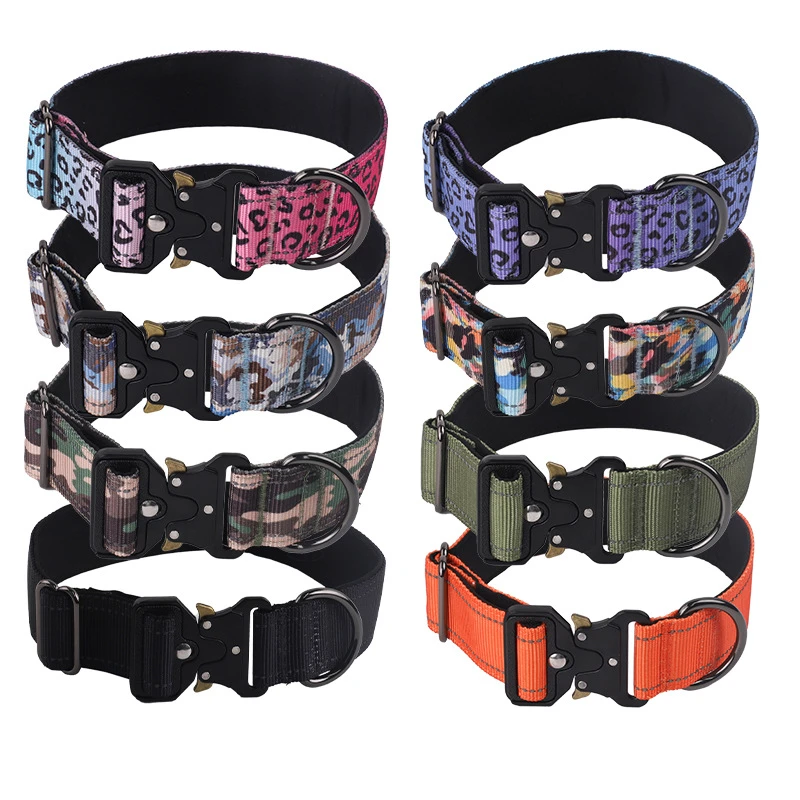
My name is Cathy, and as a pet traction customization expert at the Fábrica de qqpets, I help brand owners navigate this exact question every day. The Custom Catch model is fantastic for B2C (Business-to-Consumer) personalization—engraving a single name and phone number. But if you are a brand builder, a Shopify seller, or a retail store owner, that is not the most scalable or profitable path for you. Your goal is to build an asset: your brand. This means creating a line of products that are instantly recognizable and associated with your quality and style. The secret is not to copy their process, but to adopt a more powerful strategy: creating batch-customized products with unique Padrões personalizados and professional branding. Let's explore what you need to know to make this happen.
How do you achieve that 'custom' feel without individual engraving?
You want to offer the uniqueness that customers love2 about Custom Catch, but managing individual engravings seems like a logistical nightmare. You are concerned that without that feature, your collars will just be generic.
You achieve a superior 'custom' feel through brand-level design, not customer-level personalization3. Use a factory's free AI and 3D design tools4 to create exclusive patterns and styles that make your entire product line unique, building brand recognition instead of just personalizing a single item.
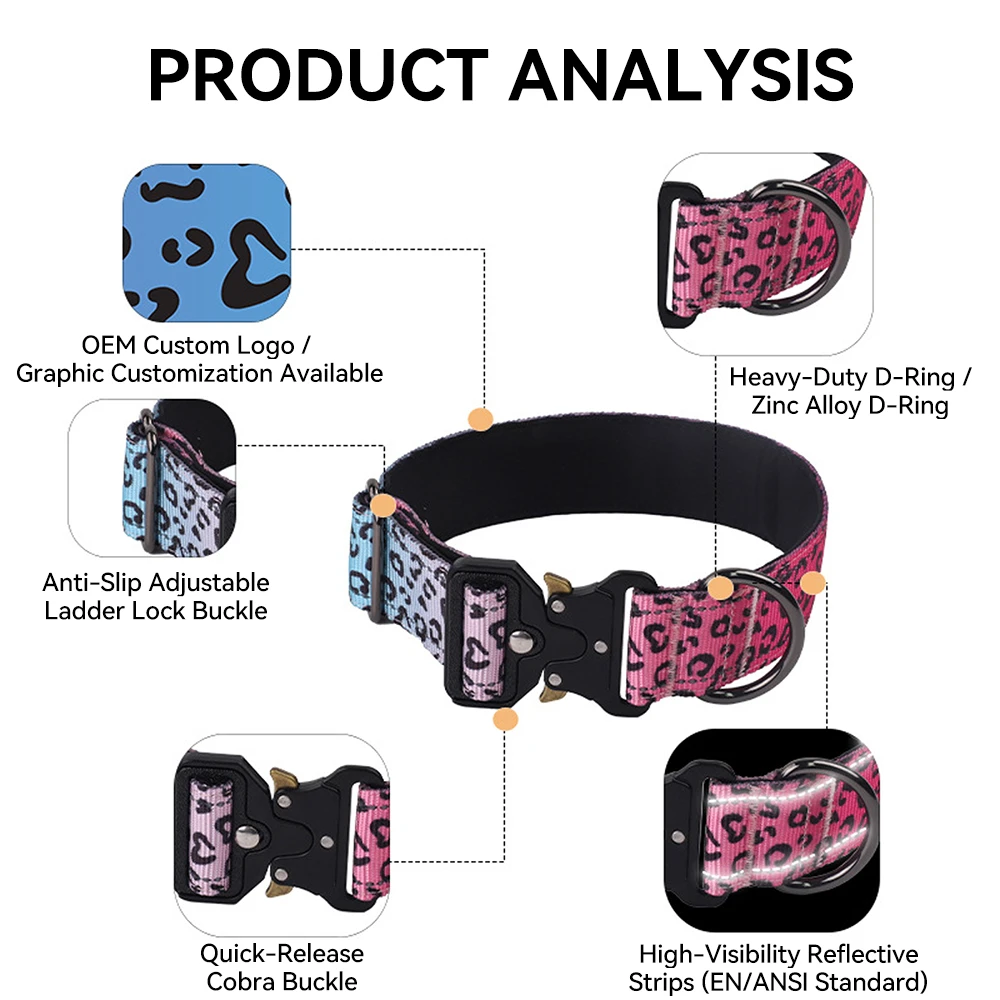
This is the most critical strategic shift you can make. While a customer might appreciate their dog's name on a collar, a truly memorable brand is built on a distinct aesthetic5. As pet customization experts, we have focused our technology on empowering you to create that aesthetic. We give you the tools to become a creative director for your own brand, without needing any technical skills. Our platform is designed for you to develop a signature style—whether it is through a specific color palette, a unique type of pattern, or a certain design motif. This approach creates a product that is not just personalized, but part of a desirable collection. It is the difference between selling a product and building a brand.
B2C Personalization vs. B2B Brand Customization
Understanding the difference is key to your strategy.
| Feature | Custom Catch Model (B2C Personalization) | Your Brand Model (B2B Customization) |
|---|---|---|
| What is "Custom"? | Customer's pet name and phone number. | Your unique pattern, logo, and design. |
| Who is the Hero? | The customer's pet. | Your Brand. |
| Scalability | Complex; requires one-by-one fulfillment6. | Highly scalable; sell pre-designed, branded stock. |
| Brand Building | Weak. The product promotes the pet, not your brand. | Strong. Every collar is a marketing tool for your brand. |
| Your Tool | Engraving machine. | Free AI Designer & 3D Mockup System. |
This shows that for brand growth, focusing on your own unique designs is the far more powerful path.
You are ready to create your own designs, but you have a deep-seated fear of quality issues. You are worried that your finished product will have a faded pattern or a cheap-looking logo, damaging your brand's reputation before it even starts.
You ensure premium quality by choosing a factory that uses superior manufacturing processes. This means permanent dye-sublimation printing that will not crack or peel, and professional branding options like stitched PVC patches or high-density woven labels that create a high-end feel.
This is where your choice of manufacturing partner becomes paramount. The physical quality of your product is the ultimate representation of your brand promise. A beautiful design is worthless if it fades after a month of use. That is why we do not compromise on production methods. We exclusively use dye-sublimation for all our patterned products. This process infuses the ink directly into the webbing fibers, making your design permanent and indestructible. It is like a tattoo for the fabric, not a sticker on top. Then, we help you apply your logo in a way that enhances the perceived value. This combination of a durable, vibrant pattern and professional branding tells your customer that they have purchased a high-quality item from a reputable brand.
From Design to Premium Product: The Quality Checklist
When vetting a manufacturer, ensure they offer these key quality features.
- Dye-Sublimation Printing: This is non-negotiable for patterned webbing. It guarantees the pattern is permanent, vibrant, and will not alter the feel of the fabric. It is fade-proof, scratch-proof, and washable.
- High-Tensile Webbing: The base material must be strong and durable. We use high-density polyester that is soft enough for comfort but strong enough7 to exceed industry standards for safety and longevity.
- Professional Logo Options: A printed logo can look cheap. We offer options that signal quality:
- Stitched PVC Patches: Gives a rugged, 3D look perfect for tactical or outdoor brands.
- Woven Labels: Provides a refined, high-end apparel feel for more stylish brands.
- Quality Certified: Your factory should have formal quality certifications (like ISO 9001), proving they have a system for maintaining standards and ensuring product safety.
Isn't this factory-direct process too expensive for a small brand?
You are sold on the strategy: create unique branded designs with premium quality. But you are a small business, and this sounds like it requires a massive upfront investment. You assume you will need to order thousands of collars to get this level of factory-direct service.
No, it is the most affordable and low-risk method available, thanks to a model called "lightweight customization." A modern factory partner makes it accessible with an extremely low Minimum Order Quantity (MOQ)8 of just 50 pieces per design, and a promise of "Sample in 3 Days."
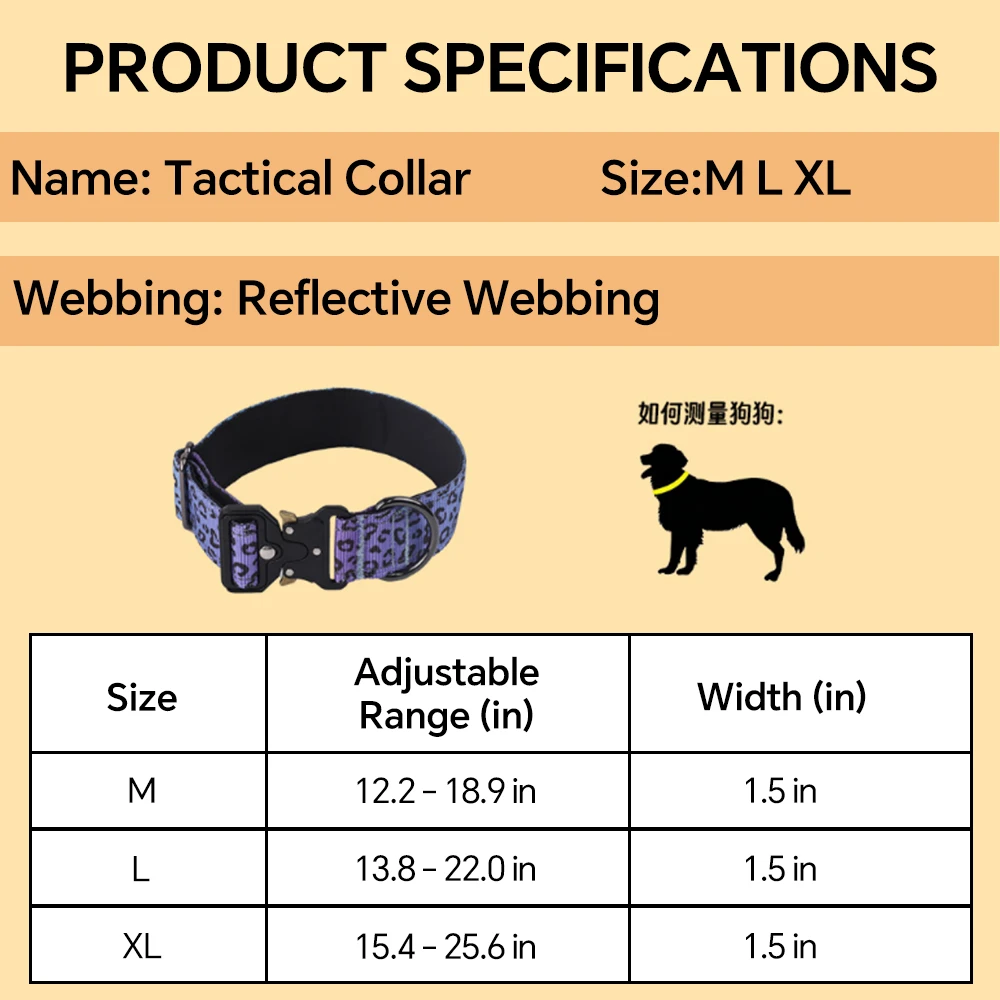
This is the game-changer for online sellers and boutique brands. We have built our entire factory—all three of our production lines—to specifically serve your needs. We understand that you cannot afford to tie up thousands of dollars in a single, unproven design. That is why we pioneered the "lightweight customization" model. Our low 50-piece MOQ is a strategic weapon for you. It allows you to be agile and responsive to the market. You can launch multiple designs, test different patterns, and see what your customers actually want to buy before you invest heavily in inventory. This turns product development from a high-stakes gamble into a series of small, smart, data-driven decisions. It is the single most powerful tool we offer to help you grow your brand safely and profitably.
Your Launch Strategy: Made Possible by Low MOQs
See how our model empowers you to launch and grow a brand, even with a modest budget.
| Your Goal | The Old Factory Way (High MOQ) | The qqpets Way (Low MOQ) |
|---|---|---|
| Launch a New Brand | Requires a huge investment to meet a 500-1000 piece MOQ for just one design. Very high risk. | Launch 5-10 different designs with the same budget. Test them all. |
| Offer Seasonal Items | Impossible. The order size is too large for a limited-time product. | Easy. Order a small batch of 50 holiday-themed collars. Sell out and move on. |
| Expand Your Line | Slow and risky. You must be 100% sure a new design will sell before committing. | Fast and data-driven. Launch several new ideas, see which one gets traction, then reorder the winner. |
This flexible, low-risk model means you can finally build the brand you have been dreaming of. Ready to start designing? Contact our expert team today and let's turn your vision into a reality.
Conclusão
To manufacture collars that compete with Custom Catch, build your own brand using a factory's free design tools, premium materials, and an affordable low-MOQ model to launch unique product lines.
"What is B2B Marketing? | West Virginia University", https://marketingcommunications.wvu.edu/professional-development/marketing-communications-today/marketing-communications-today-blog/2023/09/20/what-is-b2b-marketing. A source on business-to-consumer and business-to-business market structures can clarify the strategic distinction between selling individualized products to end consumers and developing product lines for wholesale or brand channels. Evidence role: definition; source type: education. Supports: A collar business can be framed as either a B2C personalization model or a B2B brand-building model.. Scope note: This would define the business models; it would not prove that one model is universally superior for collar manufacturing. ↩
"The Perils of Personalized Pricing - Yale Insights", https://insights.som.yale.edu/insights/the-perils-of-personalized-pricing. Consumer research on product personalization and uniqueness can support the claim that customized or personalized products may increase perceived value or consumer preference. Evidence role: expert_consensus; source type: paper. Supports: Customers often value uniqueness and personalization in products.. Scope note: The evidence would support consumer response to personalization generally, not necessarily demand for personalized dog collars. ↩
"How Visual Brand Identity Shapes Consumer Response", https://www.academia.edu/10743053/How_Visual_Brand_Identity_Shapes_Consumer_Response. Branding literature on visual identity and product design supports the view that consistent design elements can create brand recognition beyond individualized product features. Evidence role: expert_consensus; source type: paper. Supports: A custom feel can be created through brand-level design rather than only through individual customer personalization.. Scope note: The evidence would be contextual and would not show that brand-level design always outperforms personalization in pet collars. ↩
"The Efficacy of Prototyping Under Time Constraints", https://hci.stanford.edu/publications/2009/PrototypingEfficacy-CC09/PrototypingEfficacy-CC09.pdf. Research on digital prototyping and three-dimensional visualization supports the role of 3D tools in evaluating product appearance and design alternatives before physical production. Evidence role: mechanism; source type: paper. Supports: 3D design tools can help brands create and evaluate product designs before production.. Scope note: This supports the general design-process benefit of 3D tools, not the capabilities of the article’s specific mockup system. ↩
"Effects of Design Aesthetics on the Perceived Value of a Product", https://pmc.ncbi.nlm.nih.gov/articles/PMC8359925/. Studies of visual brand identity indicate that distinctive and consistent visual cues, such as color, form, and design style, contribute to brand recognition and differentiation. Evidence role: general_support; source type: paper. Supports: A distinct aesthetic helps make a brand memorable and recognizable.. Scope note: Such studies usually address branding broadly and may not examine dog collars specifically. ↩
"(PDF) Supply-chain configurations for mass customization", https://www.academia.edu/17525196/Supply_chain_configurations_for_mass_customization. Research on mass customization and order fulfillment describes how individualized production can increase operational complexity compared with batch production of standardized stock keeping units. Evidence role: mechanism; source type: paper. Supports: Customer-level personalization requires one-by-one fulfillment and is more operationally complex than batch production.. Scope note: The evidence would support the general operations principle, not the specific workflow of any collar brand. ↩
"Weave structures of polyester fabric affect the tensile strength ...", https://pmc.ncbi.nlm.nih.gov/articles/PMC11756394/. Materials references on polyester fibers and webbing can support that polyester is widely used in straps and textile applications because of its tensile strength, abrasion resistance, and dimensional stability. Evidence role: general_support; source type: education. Supports: High-density polyester webbing can provide strength and durability while remaining suitable for wearable textile products.. Scope note: The source would support general material properties, not the specific tensile rating or comfort of a particular collar webbing. ↩
"Working Capital Management, Corporate Performance ... - PMC", https://pmc.ncbi.nlm.nih.gov/articles/PMC4121159/. Operations and inventory-management literature supports that smaller order quantities reduce inventory exposure and committed working capital, although they may increase unit costs or ordering frequency. Evidence role: mechanism; source type: paper. Supports: Low MOQs can reduce upfront inventory risk for small brands.. Scope note: The evidence would support the general financial logic of low MOQs, not the specific MOQ offered by any factory. ↩