 CS
CS  EN
EN  FR
FR  RU
RU  DE
DE  AR
AR  ES
ES  PT
PT  IT
IT  NL
NL  PL
PL  SL
SL  ET
ET  RO
RO  EL
EL  LV
LV 
You have a cool idea for a custom dog collar, but turning that idea into a real product seems complex and overwhelming. You're worried about high costs, finding a designer, and the risk of getting it wrong, so your project never even starts.
You turn your idea into a product by following a streamlined, three-step factory-direct process1: first, instantly visualize your design using digital tools2; second, validate it with a rapid physical sample3; and third, scale production affordably with a low MOQ4.
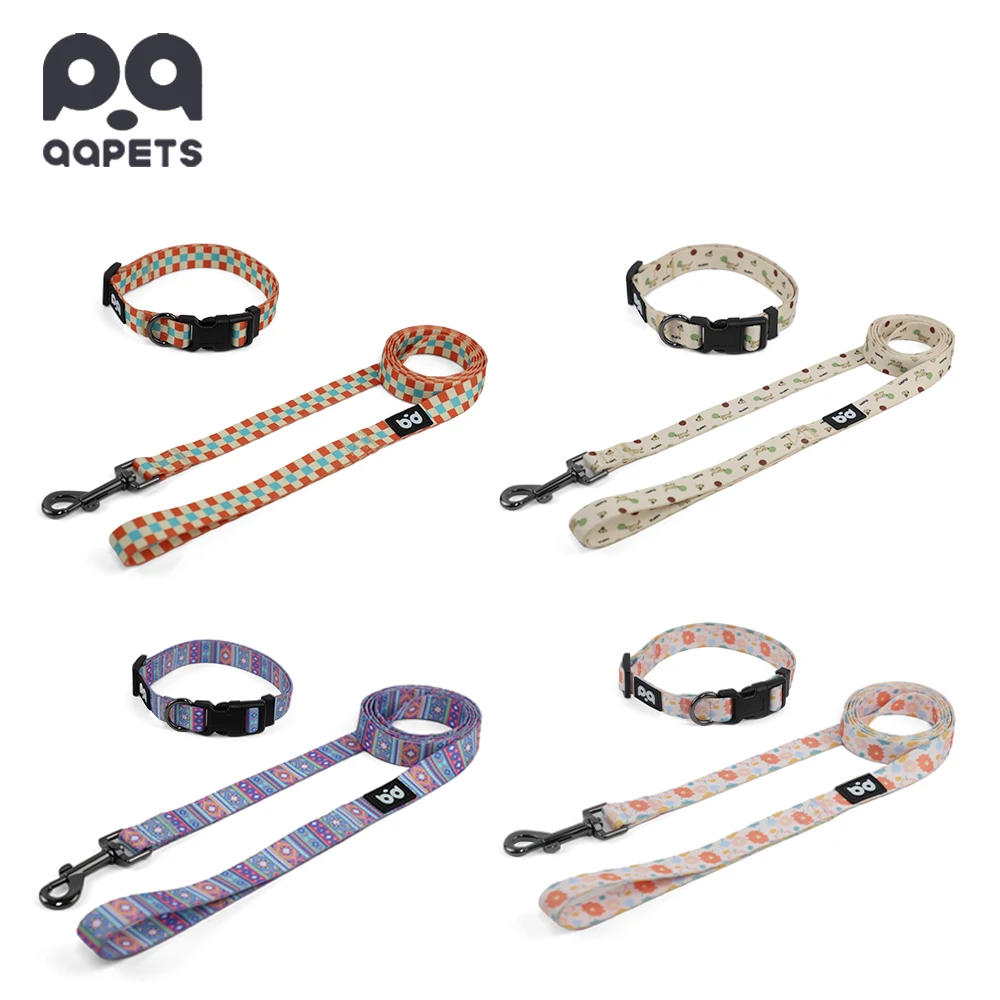
My name is Cathy, and as a specialist at qqpets, the industry expert in pet traction customization, I speak with aspiring brand owners every day. They all have incredible ideas but are stopped by the same wall of confusion. The traditional path from idea to product is full of expensive designers, slow communication with middlemen, and scary financial risks. It feels like a mountain you can't climb. But what if I told you that the entire journey has been redesigned for you? We have created a direct path from your mind to the market. Let me walk you through the simple, modern process for bringing your cool custom dog collars project to life.
How do you turn a simple idea into a professional design?
You're not a graphic designer, and the thought of trying to create a professional pattern is intimidating. You're concerned that hiring a designer will be expensive and slow, and your vision might get lost in translation.
You transform your idea into a professional design instantly, and for free, by using an advanced online tool. Our 3D Mockup System gives you the power of a design studio right in your web browser.
This is the very first step, and for most people, it's the biggest hurdle. The "idea" phase is exciting, but the "design" phase is where progress grinds to a halt. We recognized this as the single biggest pain point for brands like yours. So, we didn't just try to make it easier; we completely revolutionized it. Our system is built to ensure that you, the brand visionary, are in complete control of the creative process, without needing any technical skills5. This is where our "Mockup in seconds" promise begins.
AI: Your Free, 24/7 In-House Designer
Imagine having a world-class designer on call, ready to bring any idea to life instantly. That's what our integrated AI tool does.
- Simple Prompts, Amazing Results: You just type what you're thinking. For example, "a pattern of happy golden retrievers in sunglasses," "a cool 1980s Memphis design with geometric shapes," or "a sophisticated dark blue floral pattern." The AI generates dozens of unique, high-quality Vlastní vzory for you to choose from. These designs are original and exclusively for you.
- Endless Creativity: You can refine the results, try new ideas, and experiment without any cost or waiting. This allows you to explore creative directions you might never have considered.
Total Design Freedom
The AI is just one path. Our system is a complete creative suite.
- Upload Your Own Art: If you already have a design, you can upload it directly and see it on a product in seconds.
- Massive Free Library: You also get access to our library of over a thousand professionally created patterns, all ready to be used for your brand, completely free of charge.
You can then apply your chosen design to a realistic 3D model of a collar, rotate it 360 degrees6, and change hardware colors to perfect the final look.
| The Old Way (With Middlemen) | The qqpets Factory Way |
|---|---|
| Find and hire a freelance designer. | Use our free AI or pattern library. |
| Wait days for initial concepts. | Get dozens of ideas in seconds. |
| Slow back-and-forth email revisions. | Make real-time adjustments on a 3D model. |
| Hope the 2D file looks good on a 3D product. | See exactly how it will look from every angle. |
| High cost and slow process. | No cost and an instant process. |
How do you know the product will be right before a big order?
The 3D mockup looks perfect on your screen, but a new fear sets in. What will the actual collar feel like? Will the colors be as vibrant? Ordering thousands of units based on a digital image feels like a huge gamble.
You eliminate this risk completely by validating your design with a physical, production-grade sample. Our integrated system allows us to create and ship this crucial sample to you in just three days.
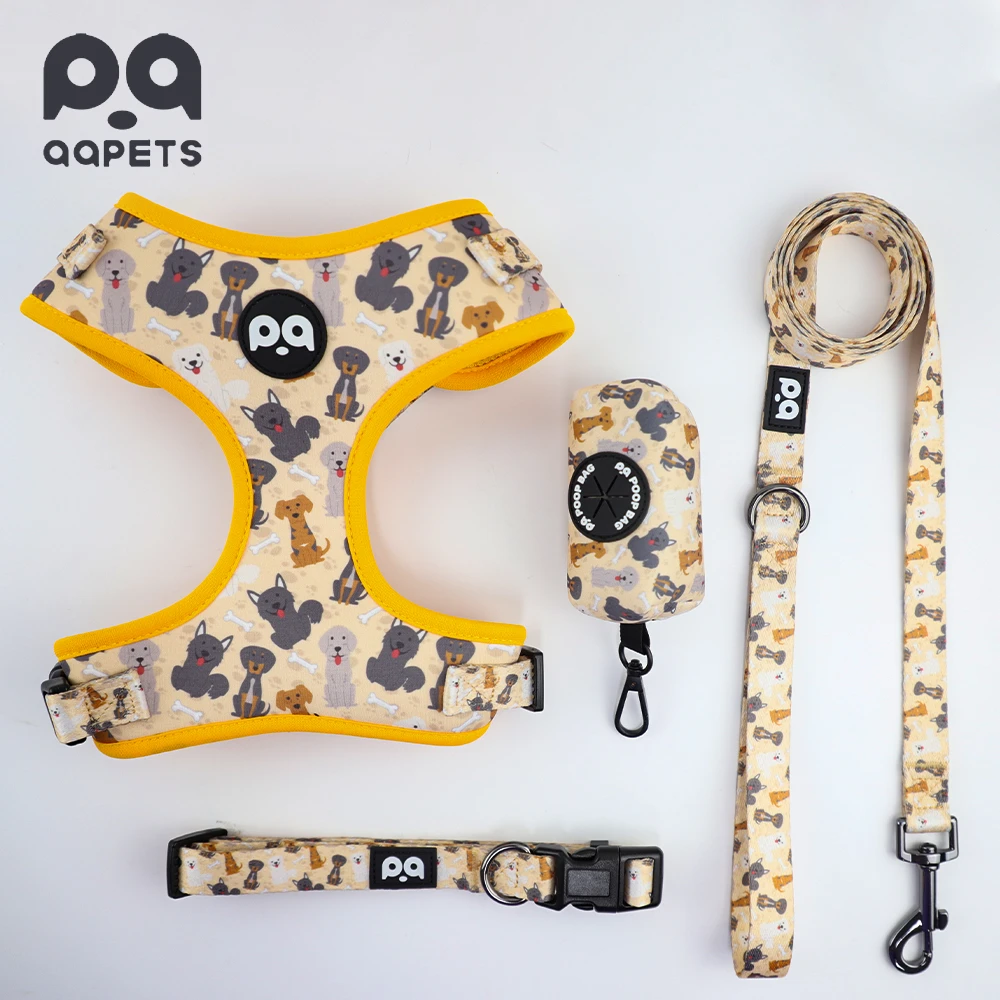
This step is where trust is built. A digital picture is a promise, but a physical sample is proof7. It’s the bridge between your idea and your final product. For a trading company, creating a sample is a complicated process of coordinating with a separate, often unknown, factory. It can take weeks, and the quality can be unpredictable. For us, it's the most natural next step. Our "Sample in 3 Days" promise is a direct demonstration of our factory's efficiency and integration.
The Sample Is a Test of the Entire System
Receiving a fast, high-quality sample tells you more than just what the collar looks like. It proves several critical things about your manufacturing partner:
- System Integration: It shows that our digital design system is perfectly connected to our production machinery. What you designed is what we made.
- Quality Commitment: The quality of that single sample—the vibrant printing, the durable feel of the webbing, the solid click of the buckle, the clean stitching—is a direct reflection of the quality of our mass production line.
- Speed and Efficiency: Our ability to produce it so quickly proves we control our own process and can meet deadlines.
What to Look For in Your Sample
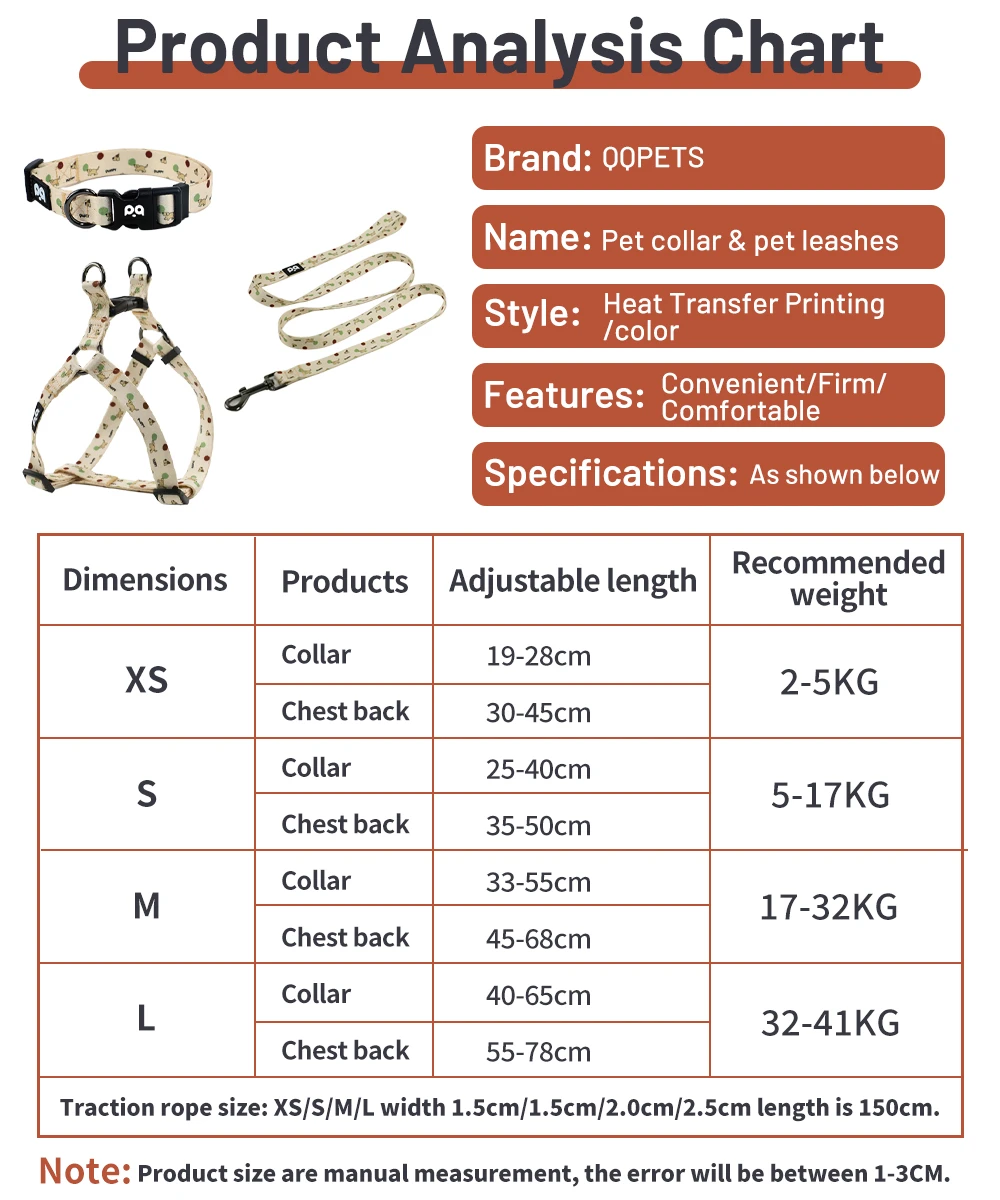
When your sample arrives, you can confidently check for the key markers of a "cool" and high-quality product. You can feel the soft, yet durable high-density webbing8. You can see how the dye-sublimation printing makes the pattern a permanent part of the fabric9. You can test the strength of the welded D-ring and the secure buckle. This physical piece of evidence gives you the 100% confidence needed to move forward to the final step: mass production.
How do you scale from one sample to a product line?
You love the sample, and you're ready to launch. But the thought of ordering thousands of pieces is financially impossible for your growing brand. You want to offer variety, not bet your entire budget on a single design.
You scale intelligently by leveraging a modern production model built for online sellers. Our factory-direct pricing and extremely low MOQ of just 50 pieces remove the financial risk and empower you to launch a full collection.
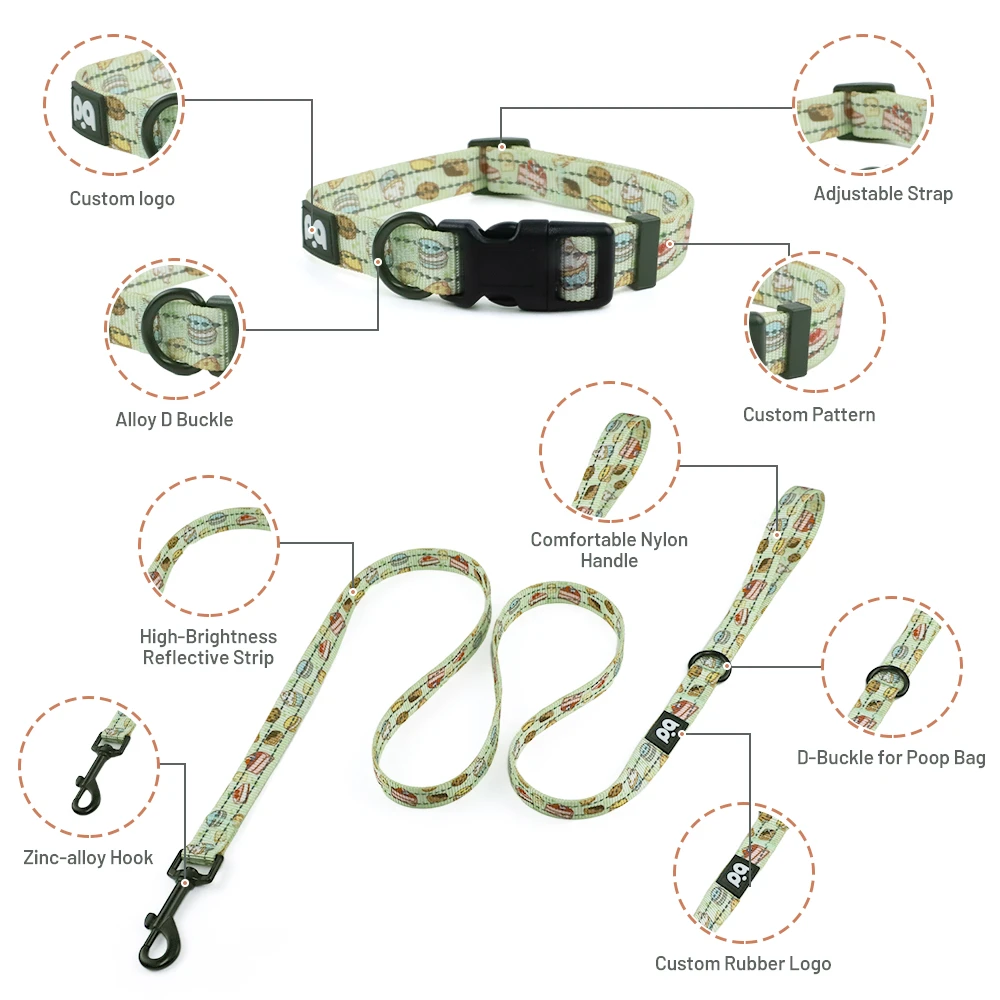
This is the final, crucial step that turns your idea into a real business. Traditional manufacturing was not built for Shopify sellers or boutique online brands; it was built for giant corporations. The high MOQs10 were designed to keep small players out. We have flipped that model on its head. Our success is directly tied to the success of brands like yours, so we have engineered our entire production and pricing structure to fuel your growth, not block it.
The Strategic Power of a Low MOQ
An MOQ of 50 pieces per size/design changes everything. It's the key that unlocks strategic agility.
- Launch a Collection: Instead of ordering 1,000 units of one collar, you can launch 20 different cool designs with the same investment. This diversifies your risk and maximizes your chances of having a viral hit.
- Test and Learn: You can treat your first order as market research. See which patterns your customers love and buy the most. Then, you can place larger, more confident reorders on the proven winners.
- Stay Trendy: This agility allows you to quickly jump on new trends. See a new color or style taking off on social media? You can go from idea to product in your store in just a few weeks.
The Financial Advantage of Factory-Direct
Every middleman you go through adds a layer of cost11. That's their profit, taken directly from your margin. By working directly with us, you eliminate those commissions. This means a lower cost per unit, which gives you incredible flexibility. You can offer a more competitive retail price, increase your advertising budget, or simply enjoy healthier profits to reinvest in your brand. This, combined with our professional customer service and stable, reliable delivery times, creates a seamless and profitable path from your first cool idea to a thriving product line.
Ready to take the first step and turn your idea into a real product? Contact our expert team today or start designing right now on our 3D mockup system.
Závěr
Go from idea to product by designing instantly with our 3D tools, validating with a 3-day sample, and launching a full collection affordably with our low MOQ factory model.
"Navigating new product development: Uncovering factors and overcoming ...", https://pmc.ncbi.nlm.nih.gov/articles/PMC10788447/. New product development literature commonly describes iterative movement from concept development to prototyping/testing and then commercialization, which provides contextual support for a staged idea-to-product workflow. Evidence role: historical_context; source type: paper. Supports: A custom dog collar idea can be turned into a product through a staged process of visualization, sampling, and production scaling.. Scope note: The source would support the general staged process, not this company’s specific factory-direct implementation. ↩
"Visualization of Surface Accuracy for Virtual Prototyping", https://repositories.lib.utexas.edu/server/api/core/bitstreams/da94f71c-e098-49a4-95df-8dae12baadd3/content. Research on computer-aided design and virtual prototyping supports the use of digital visualization to evaluate product form and design alternatives before physical production. Evidence role: mechanism; source type: paper. Supports: Digital tools can help visualize a custom product design before making a physical item.. Scope note: The evidence would support digital visualization generally, not the speed or specific capabilities of the named mockup system. ↩
"(PDF) Validation-Driven Design in the Early Phase of Product Development", https://www.researchgate.net/publication/335628167_Validation-Driven_Design_in_the_Early_Phase_of_Product_Development. Product development research describes physical prototypes as tools for testing, learning, and reducing uncertainty before committing to larger-scale production. Evidence role: expert_consensus; source type: paper. Supports: A physical sample can validate a product design before a larger production order.. Scope note: The source would support the role of physical samples in validation generally, not a specific three-day sampling timeline. ↩
"[PDF] Raw Material Minimum Order Quantity Optimization - DSpace@MIT", https://dspace.mit.edu/bitstream/handle/1721.1/121302/1240293813-MIT.pdf?sequence=1. Operations and inventory-management sources define minimum order quantity as a supplier-imposed purchase threshold and explain that lower order quantities can reduce upfront inventory commitment for buyers. Evidence role: definition; source type: education. Supports: A low MOQ can make production scaling more accessible by reducing the buyer’s initial order commitment.. Scope note: The source would explain the economic logic of MOQ and inventory commitment, not verify this supplier’s pricing or affordability. ↩
"Developing a Framework for Intuitive Human-Computer Interaction - PMC", https://pmc.ncbi.nlm.nih.gov/articles/PMC4278577/. Human-computer interaction and design-tool research notes that template-based and visual interfaces can lower the technical skill required for non-specialists to participate in design tasks. Evidence role: general_support; source type: paper. Supports: Modern visual design tools can reduce the technical skill barrier for non-designers.. Scope note: This would support the general usability principle, not prove that a particular web tool requires no technical skills. ↩
"Content Analysis of Three-Dimensional Model ... - PMC", https://pmc.ncbi.nlm.nih.gov/articles/PMC11207322/. Virtual prototyping literature describes interactive three-dimensional models as a way to inspect products from multiple viewpoints during design review. Evidence role: mechanism; source type: paper. Supports: Interactive 3D product models can help users inspect a design from multiple angles before production.. Scope note: The evidence would support 3D inspection generally, not verify that the named system has a 360-degree rotation feature. ↩
"Evaluation of virtual prototypes: literature and empirical findings", https://www.cambridge.org/core/journals/proceedings-of-the-design-society/article/evaluation-of-virtual-prototypes-literature-and-empirical-findings/1AE79920B55F2AD7ECB7589890E90C07. Prototyping research characterizes physical prototypes as tangible representations used to test product attributes, communicate design intent, and identify issues that may not be evident in drawings or digital models. Evidence role: expert_consensus; source type: paper. Supports: Physical samples provide tangible validation beyond a digital mockup.. Scope note: The source would support the general value of physical prototypes, not the rhetorical distinction between a promise and proof. ↩
"Nylon vs Polyester vs Polypropylene Webbing | LenZip", https://lenzip.com/nylon-polyester-or-polypropylene-which-reigns-supreme/. Textile and materials references describe woven synthetic webbing, commonly made from nylon or polyester, as a load-bearing material used where tensile strength and abrasion resistance are important. Evidence role: definition; source type: education. Supports: High-density synthetic webbing can be an appropriate durable material for pet collars.. Scope note: The source would support the general properties of synthetic webbing, not the measured strength or durability of this specific collar material. ↩
"Dye Sublimation Vs Screen Printing Differences Explained - Canvas ETC", https://www.canvasetc.com/printed-cotton-fabric-dye-sublimation-vs-screen-printing/?srsltid=AfmBOooR5QYe2hi0Axq6RXO9zCMMJ_xjS9XT0oQ7pPjygwXUmHtFB8fj. Technical sources on dye-sublimation printing explain that sublimation dyes diffuse into polyester fibers under heat, which supports the claim that the image becomes embedded in the fabric rather than sitting only on the surface. Evidence role: mechanism; source type: research. Supports: Dye-sublimation printing embeds color into compatible synthetic fabric fibers.. Scope note: Durability still depends on fabric composition, dye chemistry, processing conditions, and use; the source would not prove every printed collar is permanent under all conditions. ↩
"(PDF) Analysis of a Production Order Quantity Model With Declining Unit ...", https://www.academia.edu/77150038/Analysis_of_a_Production_Order_Quantity_Model_With_Declining_Unit_Cost. Supply-chain and operations sources explain that suppliers often set minimum order quantities to cover setup costs, production economies of scale, and transaction costs. Evidence role: mechanism; source type: education. Supports: High minimum order quantities are commonly linked to manufacturing economics such as setup costs and economies of scale.. Scope note: The evidence would explain why MOQs exist in manufacturing generally, not establish that they were designed to exclude small brands. ↩
"Determinants of Margins in the Distribution Channel: An Empirical ...", https://www.gsb.stanford.edu/faculty-research/working-papers/determinants-margins-distribution-channel-empirical-investigation. Distribution-channel literature describes intermediaries as adding markups or margins for services such as aggregation, logistics, and sales, which can increase the final transaction price relative to direct purchasing. Evidence role: mechanism; source type: paper. Supports: Intermediaries in a supply chain commonly add margins that can affect the buyer’s cost.. Scope note: Intermediaries may also create efficiencies or reduce other costs, so the evidence should be used as contextual support rather than proof that direct sourcing is always cheaper. ↩