 ET
ET  EN
EN  FR
FR  RU
RU  DE
DE  AR
AR  ES
ES  PT
PT  IT
IT  NL
NL  PL
PL  SL
SL  RO
RO  CS
CS  EL
EL  LV
LV 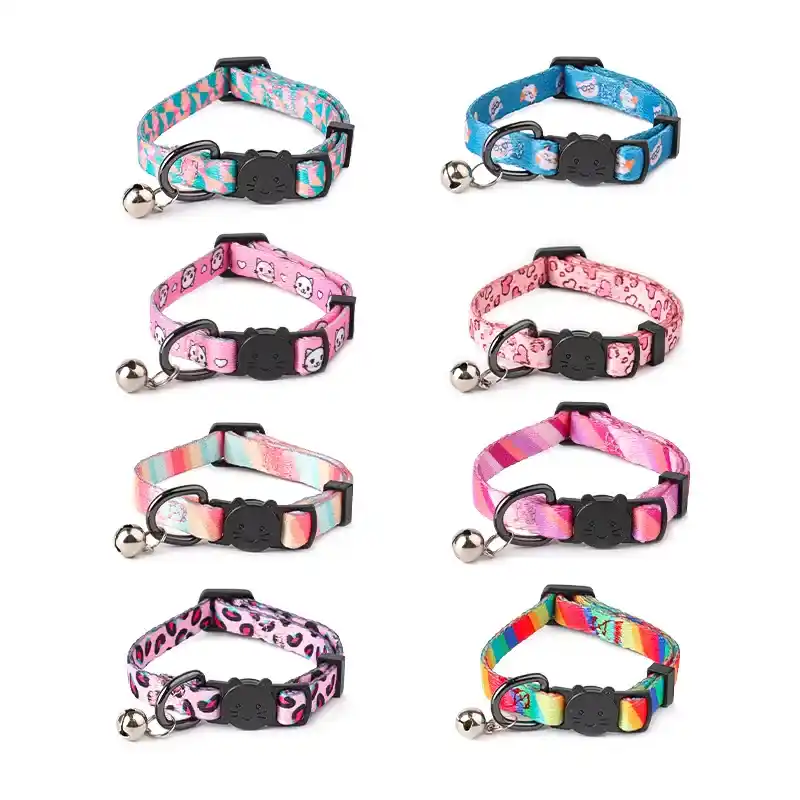
You want to offer a complete set, unifying your custom dog collar and harness into a single, premium package. However, the samples arrive, and the small details are all wrong—the buckle finish doesn't match, and the branding looks inconsistent.
True unification, from buckles to branding, is only possible when every component is controlled through a single, integrated factory system1. This ensures that the hardware, patterns, and logos are identical, creating a flawless and professional-looking set.
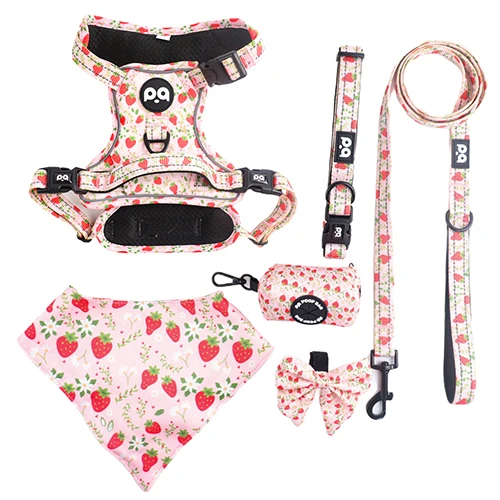
As a pet product customization expert at qqpets, my job is to solve this exact problem for brand owners. Many Shopify and Amazon sellers try to piece together a collection by sourcing from different places, or even different departments within the same factory. The result is always a compromise. A "close enough" match undermines customer trust and makes your brand look amateur. We built our entire process to prevent this, giving you the power to create perfectly unified collections with the click of a button.
Why does matching hardware matter more than you think?
You've spent weeks perfecting a pattern, only to have the samples arrive with mismatched hardware. The collar has a shiny D-ring, but the harness has a matte one. This small detail makes the entire "set" feel cheap and thrown together, instantly devaluing your brand.
Matching hardware is critical because it provides a consistent tactile experience of quality2. Using the same buckle model, D-ring material, and finish across both products reinforces your brand's attention to detail and creates a premium feel that customers notice every single day.
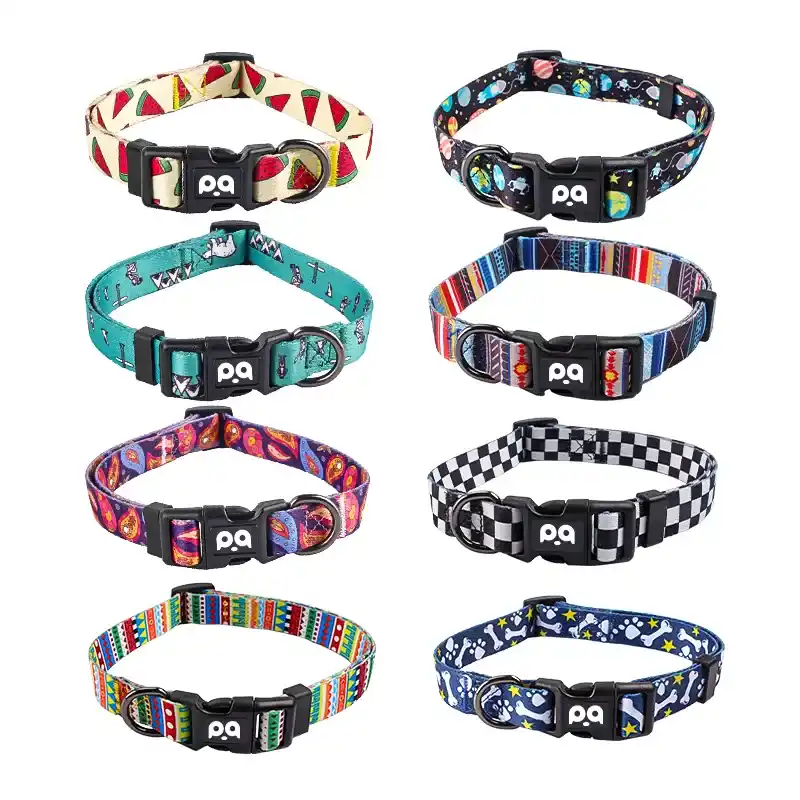
Think about your customer's daily routine. They handle the buckles and clips on the collar and harness every single day. This is a primary physical touchpoint with your brand3. If the hardware feels different or looks mismatched, it sends a message of carelessness. On the other hand, if the weight, finish, and "click" of the buckle are identical on both items, it creates a powerful, subconscious feeling of quality and completeness4. This is the kind of detail that turns a one-time buyer into a loyal fan. We offer a library of hardware components so you can orchestrate this perfect harmony.
The Tactile Signature of Your Brand
Your hardware choice is as much a part of your brand identity as your logo. It communicates durability, style, and value without saying a word5.
- The Problem of "Almost": Many factories offer "matching sets" where the hardware is sourced from different suppliers6. This results in slight variations in color (e.g., "rose gold" that is pinker on one item), weight, and finish that customers can feel.
- The Solution of "Exact": Our 3D Mockup System acts as your component library. You don't just choose "black buckle"; you choose a specific model, like "BK-07 Heavy Duty," and apply that exact component to both the collar and harness in your digital design.
- Verification is Key: This digital precision is then backed by our "Mockup in seconds. Sample in 3 Days" promise. You get a physical sample7 of your exact unified set to feel the consistent quality of the hardware in your own hands before committing to a full production run.
| Aspect | The Disjointed Way | The Unified qqpets Way |
|---|---|---|
| Selection | Vague choices like "metal buckle." | Select a specific model number (e.g., "BK-07"). |
| Finish | Inconsistent batches lead to color variation. | Same PVD coating/finish8 is applied from one source. |
| Result | A mismatched set that feels cheap. | A perfectly unified set with a premium feel. |
How do you ensure your branding is consistent on different products?
You have a beautiful logo and a unique pattern, but applying them is a challenge. The pattern looks stretched on the wide harness webbing, and your logo looks tiny and lost on the collar. The branding message feels inconsistent and unprofessional.
Consistent branding is achieved by using a single, high-resolution digital master file9 for your pattern and logo. This file is then processed by an intelligent system that automatically scales the design to fit different product widths and shapes without any distortion10, guaranteeing a cohesive brand identity.
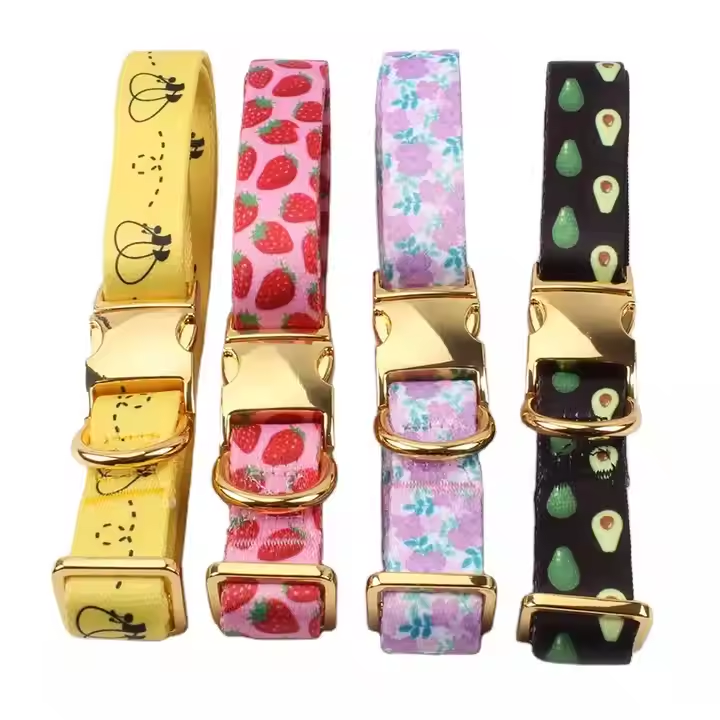
This is where most brands fail at the final hurdle. They send a simple image file to a factory, and an operator manually resizes it, which often leads to poor-quality results11. A pattern designed for a 1-inch collar will not look right on a 2-inch harness chest plate unless it is scaled correctly. The solution is to remove the manual guesswork. Our system uses your Kohandatud mustrid as a master blueprint. This ensures your brand's visual identity is perfectly preserved, no matter the size or shape of the product it's applied to. This level of precision is essential for building a recognizable and trusted brand12.
Your Brand Identity, Perfectly Preserved
Your visual branding is your most valuable asset. We provide the tools to deploy it with absolute consistency.
- AI-Powered Exclusivity: Don't have a pattern? No problem. On our 3D Mockup System, you can use our AI Pattern Generator. Simply type your idea—"a pattern of watercolor paw prints and tennis balls"—and create an exclusive design in seconds. This design becomes your digital master file.
- Intelligent Application: You can then apply this master file to a collar, a harness, and a leash. Our system automatically ensures the pattern's scale and resolution are perfect for each item. The same goes for your logo—choose a PVC patch or a woven label, and the system will show you exactly how it looks on each product.
- Low-Risk Launch: This high-level customization is accessible to everyone. With a low MOQ of just 50 pieces per style, you can launch a complete, perfectly unified collection without needing a massive budget. Test the market with a small batch, knowing that every piece is a perfect representation of your brand.
Ready to build a brand where every detail is in perfect harmony? Contact our expert team today.
Kokkuvõte
Unifying your collection from buckles to branding is simple with an integrated system. We provide the digital tools and flexible manufacturing to ensure your custom dog collar and harness sets are perfectly consistent.
"A perspective on Quality-by-Control (QbC) in pharmaceutical ... - PMC", https://pmc.ncbi.nlm.nih.gov/articles/PMC9948678/. Quality-management standards describe process control and control of externally provided products as mechanisms for reducing variation and improving consistency across production outputs; this supports the general logic behind integrated manufacturing control, not the specific performance of any one factory. Evidence role: general_support; source type: institution. Supports: True unification of collars and harnesses is more reliable when hardware, patterns, and logos are controlled through one integrated production system.. Scope note: Contextual support only; the source would not verify qqpets’ internal system or outcomes. ↩
"Hand-Feel Touch Cues and Their Influences on Consumer ... - PMC", https://pmc.ncbi.nlm.nih.gov/articles/PMC6678767/. Research on haptic product perception shows that tactile cues such as texture, weight, and material feel can influence consumers’ judgments of product quality; this supports the claim that consistent hardware feel can contribute to perceived quality. Evidence role: mechanism; source type: paper. Supports: Matching hardware can provide a consistent tactile experience that reinforces perceived product quality.. Scope note: The evidence is about consumer perception generally and may not be specific to pet collars or harnesses. ↩
"Personalized touchpoints and customer experience: A conceptual ...", https://www.sciencedirect.com/science/article/pii/S0148296324001450. Customer-experience literature defines touchpoints as points of interaction between a customer and a brand across the customer journey, supporting the characterization of repeatedly handled buckles and clips as brand touchpoints. Evidence role: definition; source type: paper. Supports: Buckles and clips handled during daily use can be understood as physical brand touchpoints.. Scope note: The source would support the touchpoint concept broadly, not prove that hardware is the primary touchpoint for every buyer. ↩
"Hand-Feel Touch Cues and Their Influences on Consumer ... - PMC", https://pmc.ncbi.nlm.nih.gov/articles/PMC6678767/. Studies in sensory marketing and haptic perception report that nonvisual sensory cues can shape product evaluations and quality judgments, providing contextual support for the idea that consistent buckle feel may influence perceived quality. Evidence role: mechanism; source type: paper. Supports: Consistent tactile and auditory hardware cues may affect perceived product quality and completeness.. Scope note: The source would not directly measure subconscious responses to dog-collar buckles. ↩
"Package design as a branding tool in the cosmetic industry - PMC", https://pmc.ncbi.nlm.nih.gov/articles/PMC9123395/. Product-design research links material, form, and aesthetic cues to consumer inferences about product meaning, quality, and value, supporting the claim that hardware choices can communicate brand attributes nonverbally. Evidence role: expert_consensus; source type: paper. Supports: Hardware design choices can communicate brand attributes such as durability, style, and value.. Scope note: The evidence would support design communication generally rather than proving a specific buckle communicates specific values. ↩
"Ensuring Product Quality, Consistency and Patient Supply over Time ...", https://pmc.ncbi.nlm.nih.gov/articles/PMC6182491/. Supply-chain quality literature discusses how supplier selection and supplier-quality management affect product conformance and variability, supporting the concern that components obtained from different suppliers may vary in specifications or finish. Evidence role: general_support; source type: paper. Supports: Using hardware from different suppliers can increase the risk of variation in color, weight, finish, or specifications.. Scope note: This would not establish that all multi-supplier pet-product sets have visible mismatch; it supports the risk mechanism. ↩
"Pre-Production Sample Order Terms: A Complete Guide - Techpacker", https://techpacker.com/blog/manufacturing/pre-production-sample-order-terms-a-complete-guide/. Manufacturing and product-development sources describe prototypes or pre-production samples as tools for verifying design, materials, and functionality before full-scale production, supporting the role of samples in checking component consistency. Evidence role: general_support; source type: education. Supports: A physical sample allows buyers to verify hardware quality and consistency before full production.. Scope note: This supports the general value of sampling but not the stated three-day turnaround or sample accuracy of a specific company. ↩
"Physical vapor deposition - Wikipedia", https://en.wikipedia.org/wiki/Physical_vapor_deposition. Materials-science references describe physical vapor deposition as a coating process used to alter surface properties such as hardness, wear resistance, and appearance, supporting the relevance of a shared coating process to consistent hardware finish. Evidence role: mechanism; source type: encyclopedia. Supports: A common PVD coating or finish process can be relevant to maintaining consistent hardware appearance and surface properties.. Scope note: The source would explain PVD generally, not confirm the coating process used by qqpets or any particular supplier. ↩
"Identity Kit | Marketing and Communications", https://news.seas.upenn.edu/identity-kit/. Digital-asset-management and brand-governance literature identifies controlled master assets and standardized files as ways to maintain consistency across brand applications, supporting the use of a single high-resolution master file for repeated branding outputs. Evidence role: general_support; source type: institution. Supports: Using one controlled, high-resolution master file can help maintain consistency when applying logos and patterns across products.. Scope note: The support is about digital asset control generally, not the specific software workflow described in the article. ↩
"SVG - Wikipedia", https://en.wikipedia.org/wiki/SVG. Technical references on vector graphics and scalable image formats explain that vector images can be resized without the pixelation associated with raster images, supporting the need for appropriate file formats and scaling methods to avoid distortion. Evidence role: mechanism; source type: encyclopedia. Supports: Appropriate digital graphics methods can scale artwork across product sizes while avoiding distortion or quality loss.. Scope note: The source would support the graphics principle, not prove that an automated pet-product mockup system always scales correctly. ↩
"Image scaling - Wikipedia", https://en.wikipedia.org/wiki/Image_scaling. Image-processing references explain that resizing raster images requires interpolation and can introduce artifacts such as blurring, aliasing, or pixelation, supporting the warning that improper manual resizing may degrade output quality. Evidence role: mechanism; source type: education. Supports: Manual or improper resizing of artwork can reduce print or production quality.. Scope note: The source would not show that manual resizing is always poor; quality depends on the original file, method, and operator skill. ↩
"Building trust in sustainable brands: Revisiting perceived value ...", https://www.sciencedirect.com/science/article/pii/S2773032825000100. Brand-management research associates consistent brand presentation and coherent identity cues with brand recognition and consumer trust, supporting the article’s claim that consistent visual application contributes to recognizability and trust. Evidence role: expert_consensus; source type: paper. Supports: Consistent visual identity across products can help build brand recognition and trust.. Scope note: The evidence would support a general branding relationship, not guarantee trust for any individual pet-product brand. ↩