 ET
ET  EN
EN  FR
FR  RU
RU  DE
DE  AR
AR  ES
ES  PT
PT  IT
IT  NL
NL  PL
PL  SL
SL  RO
RO  CS
CS  EL
EL  LV
LV 
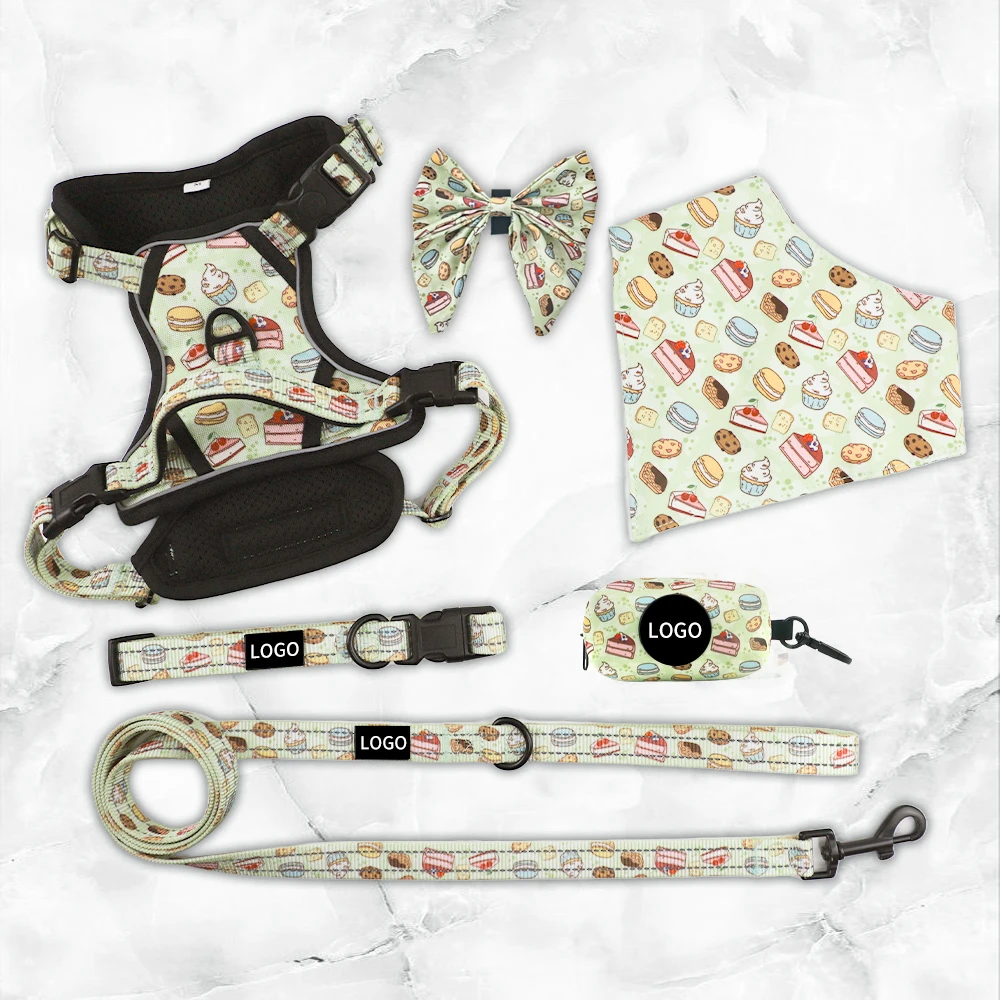
You want to launch a line of awesome custom dog collars, but the process seems overwhelming and expensive1. This creative frustration stops great brands before they even start. So, how do we help brands create their own awesome custom dog collars and turn that frustration into success?
We help brands by providing a revolutionary, technology-driven platform2 that makes the entire customization process simple, fast, and affordable. We give you free, powerful design tools and combine them with a flexible, low-risk manufacturing system, empowering your creativity from idea to reality.
My name is Cathy, and I am a custom pet product expert here at qqpets. I speak with so many passionate online entrepreneurs who have a clear vision for their brand but get stuck at the first hurdle: the factory. They think creating custom products is a complex, mysterious process reserved for huge companies. But we've built our entire factory around a different belief. We believe our job is to make your creative process easy. Therefore, we've turned the old, difficult method upside down.
What stops most brands from creating custom designs?
You have a brilliant idea for a collar pattern. But then the doubts creep in. You don't have design software. You can't afford a graphic artist. You dread the thought of slow, confusing communication with a factory overseas. The entire process just feels too hard.
The primary barriers are cost, complexity, and risk3. Traditional manufacturing makes custom design expensive4, the prototyping process slow and inaccurate5, and the financial commitment of high minimum order quantities (MOQs) far too risky6 for a new or growing brand.
We recognized these barriers as the main reason so many great brands fail to launch. So, we systematically destroyed them with technology. Our philosophy is simple: you should spend your time on creativity, not on fighting with a difficult production process. This process is designed to be simple. Every step has been optimized for clarity. Your creative vision can be brought to life without friction. Our entire workflow was built to serve online brand sellers who need to be fast, unique, and agile.
Dismantling the Barriers to Creativity
We replaced the old, slow, and expensive steps with free, instant technology.
| Barrier | The Old, Difficult Way | The qqpets Way: Simple & Fast |
|---|---|---|
| 1. The Design Idea | You need to hire a designer or be an expert in Adobe Illustrator. This costs time and money. | Free AI Pattern Generator7. You just type your idea (e.g., "Corgis wearing sunglasses on a beach") and get a unique pattern. |
| 2. The Prototype | Wait weeks for a 2D PDF mockup, then weeks more for a physical sample that might be wrong. | Free, Instant 3D Mockup8. See your design on a photorealistic collar in seconds. What you see is what you get. |
| 3. The Financial Risk | Factories demand a huge MOQ (1,000+ pieces), forcing a massive, risky investment in one design. | Low MOQ of 50 Pieces9. You can affordably launch a whole collection of designs to see what sells best. |
How do we turn your idea into a real product in days?
Okay, so the barriers are gone. But it can still feel like a huge leap from a design on your screen to a high-quality product in your hands. You need a clear, predictable path from your creative spark to a physical item ready to ship.
The solution is a transparent, step-by-step process powered by our integrated technology platform. This system is designed to be so intuitive that anyone can use it to create a professional-quality product line. This is the engine behind our core promise: "Mockup in seconds. Sample in 3 Days10."
This is how we put you, the brand owner, in complete control of the creative process. It starts with our powerful and exclusive 3D Mockup System, which is the heart of our collaboration with you.
Your Creative Workflow, Powered by Us
We guide you through a simple, three-step journey from imagination to creation.
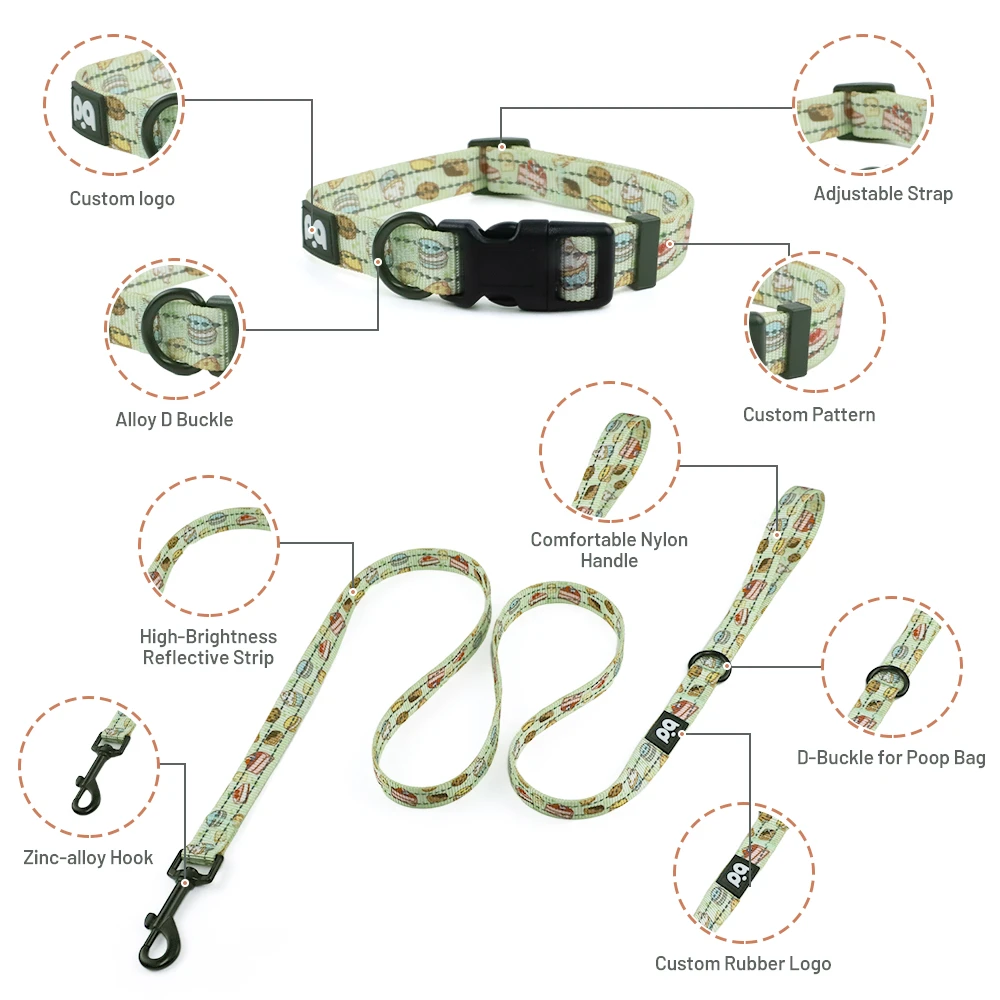
- Step 1: Generate Your Vision with AI. This is where the magic begins. Forget blank pages. Go to our design system and use our AI Pattern Generator. Describe any pattern you can imagine. Create endless Kohandatud mustrid for free until you find the perfect one for your brand. This is differentiation made easy.
- Step 2: Visualize in 3D, Instantly. With one click, apply your newly created pattern to a high-quality 3D model of a dog collar. Rotate it 360 degrees. Zoom in on the buckle. Change the webbing color. You are the director, and you get a perfect digital prototype11 in seconds, for free.
- Step 3: Sample & Produce with Confidence. Once you approve your perfect 3D mockup, our ISO 9001 certified factory12 gets to work. Because the digital model is so accurate, we can create a physical sample in as little as 3 days. With a low MOQ of just 50 pieces, you can quickly move to full production.
If you are ready to stop dreaming and start creating, I personally invite you to contact our expert team today. We are here to help you build something awesome.
Kokkuvõte
We help brands create awesome custom dog collars by removing the traditional barriers of cost and complexity. Our free design tools and flexible, low-risk manufacturing process empower you to bring your unique vision to life.
"Navigating new product development: Uncovering factors and overcoming ...", https://pmc.ncbi.nlm.nih.gov/articles/PMC10788447/. Research on new product development and product customization documents that tooling, prototyping, supplier coordination, and design iteration can increase cost and managerial complexity, providing contextual support for the claim that launching custom products may feel expensive and difficult. Evidence role: general_support; source type: paper. Supports: Launching a line of custom dog collars can seem overwhelming and expensive for brands.. Scope note: The source is likely to address product development generally rather than custom dog collars specifically. ↩
"The relationship between mass customization and sustainable ...", https://pmc.ncbi.nlm.nih.gov/articles/PMC10950661/. Studies of digital manufacturing and mass customization describe how integrated design, visualization, and production technologies can reduce coordination friction and support customized product development. Evidence role: mechanism; source type: paper. Supports: A technology-driven platform can simplify and accelerate the customization process.. Scope note: Such sources support the general mechanism of technology-enabled customization, not the specific performance of this platform. ↩
"Navigating new product development: Uncovering factors and ...", https://pmc.ncbi.nlm.nih.gov/articles/PMC10788447/. Entrepreneurship and operations research identifies development cost, operational complexity, demand uncertainty, and inventory exposure as common constraints for small firms bringing new products to market. Evidence role: expert_consensus; source type: paper. Supports: Cost, complexity, and risk are primary barriers for new or growing brands creating custom designs.. Scope note: The evidence would be general to small business and manufacturing contexts rather than pet accessories alone. ↩
"Product variety and manufacturing complexity in assembly systems and ...", https://ykoren.engin.umich.edu/wp-content/uploads/sites/122/2014/05/Product-variety-and-manufacturing-complexity-in-assembly-systems-and-supply-chains.pdf. Manufacturing literature on customization notes that traditional production systems can incur higher setup, coordination, and changeover costs when product variety increases. Evidence role: mechanism; source type: paper. Supports: Traditional manufacturing can make custom design expensive.. Scope note: The source may discuss manufacturing systems broadly and may not quantify costs for collar production. ↩
"Digital prototyping", https://en.wikipedia.org/wiki/Digital_prototyping. Research comparing physical prototyping with virtual prototyping reports that physical sample iterations can be time-consuming and that digital models are used to detect design issues earlier in development. Evidence role: mechanism; source type: paper. Supports: Traditional prototyping can be slow and may require repeated iterations to correct inaccuracies.. Scope note: This supports the general prototyping mechanism and may not prove that all traditional pet-product prototypes are inaccurate. ↩
"Chapter 3 Inventory Management", https://www.bauer.uh.edu/egardner/3301H%20Operations%20Management/OM%20Text/3INVENTORY%20MANAGEMENT-1.pdf. Operations and inventory-management research shows that large order quantities increase inventory investment and exposure to demand uncertainty, which is especially consequential for firms testing new products. Evidence role: mechanism; source type: paper. Supports: High minimum order quantities can create financial risk for new or growing brands.. Scope note: The source will support the inventory-risk principle rather than the exact MOQ threshold used in the article. ↩
"[2303.07909] Text-to-image Diffusion Models in Generative AI: A Survey", https://arxiv.org/abs/2303.07909. Research on text-to-image generative models shows that prompt-based systems can synthesize novel visual designs from natural-language descriptions, providing technical context for an AI pattern-generation workflow. Evidence role: mechanism; source type: paper. Supports: AI tools can generate visual patterns from text prompts.. Scope note: This would support the underlying AI capability in general, not the output quality or uniqueness of any specific generator. ↩
"A Content Analysis of 3D Virtual Prototyping and Zero-Waste Design ...", https://scholarworks.calstate.edu/downloads/sn00b389v. Virtual prototyping and 3D visualization research describes how three-dimensional product models allow users to inspect geometry, appearance, and design alternatives before physical production. Evidence role: mechanism; source type: paper. Supports: 3D mockups help users visualize customized products before production.. Scope note: The evidence supports 3D visualization as a design-review method, not the photorealism or exact speed of this particular mockup tool. ↩
"Lean startup", https://en.wikipedia.org/wiki/Lean_startup. Inventory and lean-startup literature supports the principle that smaller initial production batches reduce upfront capital commitment and allow market feedback before scaling inventory. Evidence role: mechanism; source type: paper. Supports: A low minimum order quantity can reduce launch risk and help brands test multiple designs.. Scope note: This supports the risk-reduction logic of a low MOQ but does not independently verify that 50 pieces is the company’s actual minimum. ↩
"Custom Webbing Lead Time & Cost: Design & Tooling | ACW", https://acw1.com/custom-webbing-lead-time/. Evidence for this claim would need production records, service-level documentation, or audited operational data showing that physical samples can be produced within three days under specified conditions. Evidence role: case_reference; source type: other. Supports: Physical samples can be produced in as little as three days.. Scope note: A neutral external source may only verify general rapid prototyping feasibility; direct proof of the stated three-day turnaround would require company-specific documentation. ↩
"Digital prototyping", https://en.wikipedia.org/wiki/Digital_prototyping. Engineering design literature explains that digital prototypes can substitute for some early physical prototypes by enabling visualization, simulation, and design review before fabrication. Evidence role: definition; source type: paper. Supports: A digital prototype can be used as an early representation of a product before physical sampling.. Scope note: Digital prototypes do not eliminate the need for physical validation in all product categories. ↩
"ISO 9000 family", https://en.wikipedia.org/wiki/ISO_9000_family. ISO describes ISO 9001 as an international standard for quality management systems, supporting the meaning of the certification claim as a quality-management framework. Evidence role: definition; source type: institution. Supports: ISO 9001 certification refers to compliance with an international quality management system standard.. Scope note: ISO information explains the standard but does not verify that the specific factory currently holds a valid certificate. ↩