 ET
ET  EN
EN  FR
FR  RU
RU  DE
DE  AR
AR  ES
ES  PT
PT  IT
IT  NL
NL  PL
PL  SL
SL  RO
RO  CS
CS  EL
EL  LV
LV 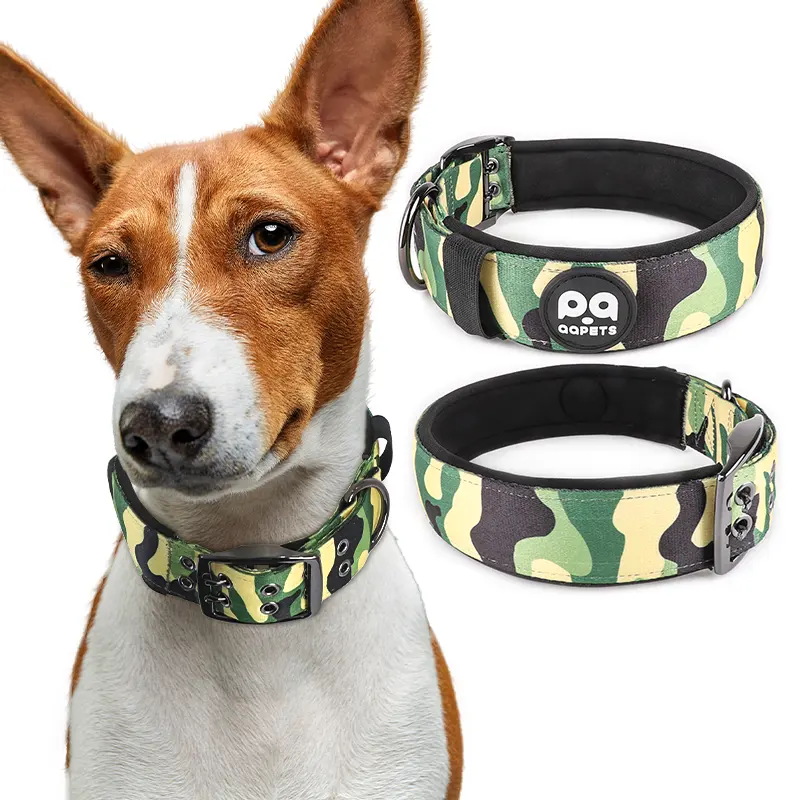
You want to launch a line of the best custom thick dog collars, but the process feels overwhelming. You're facing the risk of high order quantities, long design timelines, and creating a product that fails to stand out in a crowded market1.
Creating your brand's line of thick dog collars is a three-step process: first, define your unique brand look2 with custom patterns; second, select fail-proof components for safety; and third, partner with a factory that uses digital tools to make the process fast, visual, and low-risk.
My name is Cathy, and as a pet traction customization expert at qqpets, I've seen many online brands get stuck. They have a great vision but are held back by the traditional, slow, and expensive manufacturing process. They either settle for generic, off-the-shelf products or abandon their creative ideas altogether. We built our factory specifically to solve this problem, transforming customization from a complex challenge into a simple, creative, and profitable opportunity for your brand.
How can you create a unique design that stands out from competitors?
You look at the market for thick dog collars and see a sea of the same plain colors. It feels impossible for your brand to look different, forcing you to compete on price alone and making it difficult to build a loyal following.
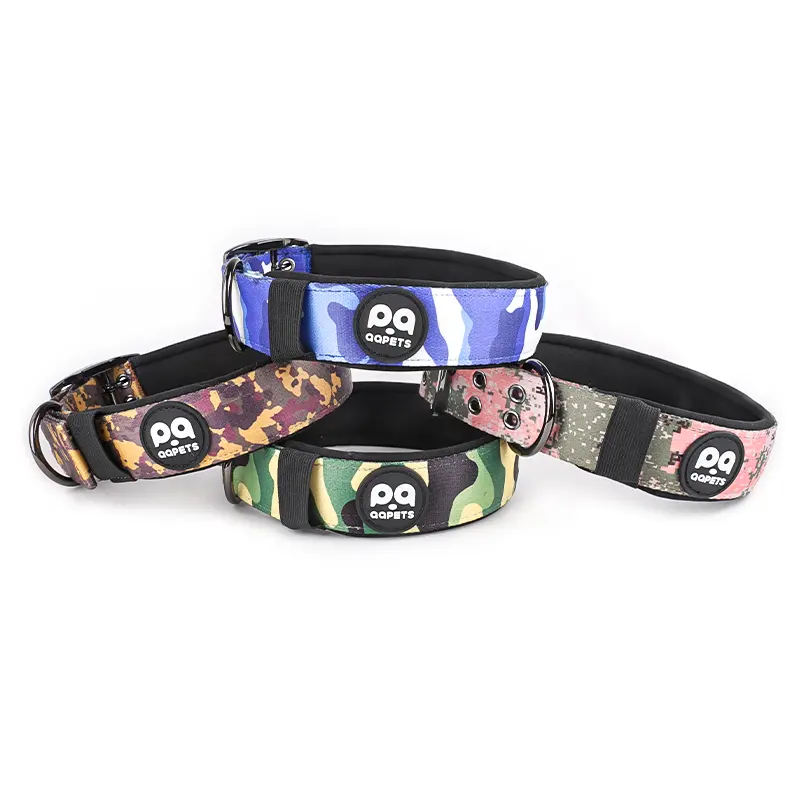
You create a unique design by moving beyond basic colors and embracing Kohandatud mustrid3. A partnership with a factory that offers digital design tools, like an AI pattern generator4, allows you to create exclusive artwork effortlessly, turning a simple collar into your brand's signature product.

A custom pattern is the soul of your brand's identity. It's the visual element that makes a customer choose your collar over dozens of others. Instead of just picking "blue," you can have a collar that features "blue ocean waves," "blue retro geometrics," or "blue mountain silhouettes." This is the key to differentiation. The old way to achieve this was slow and costly, requiring you to hire a graphic designer. We've simplified this. Our system includes an AI Pattern Generator where you can just type your ideas—like "vintage floral print" or "modern tribal design"—and get a unique pattern in seconds5. This allows you to create an entire collection where each design is a new product, giving you a massive competitive edge.
Brand Differentiation: Old vs. New
| Method | The Old Way (Traditional Factory) | The New Way (qqpets) |
|---|---|---|
| Disainiprotsess | Hire an expensive designer, wait for drafts. | Use free AI tools to generate patterns instantly. |
| Visuals | Basic 2D sketches, lots of guesswork. | See your pattern on a photorealistic 3D model6 in seconds. |
| Exclusivity | Risky; another brand could use a similar design. | Your AI-generated pattern is unique to your brand. |
How do you select the right materials and hardware without being an expert?
You know a thick collar for a large dog must be strong, but the technical details are confusing. Terms like "load-rated buckles" and "reinforced bar-tack stitching7" sound important, but you fear making a costly mistake by choosing the wrong components.
You select the right materials by partnering with a specialist factory that provides a curated menu of pre-engineered, "fail-proof" options. This allows you to choose components based on safety and style without needing a degree in engineering.
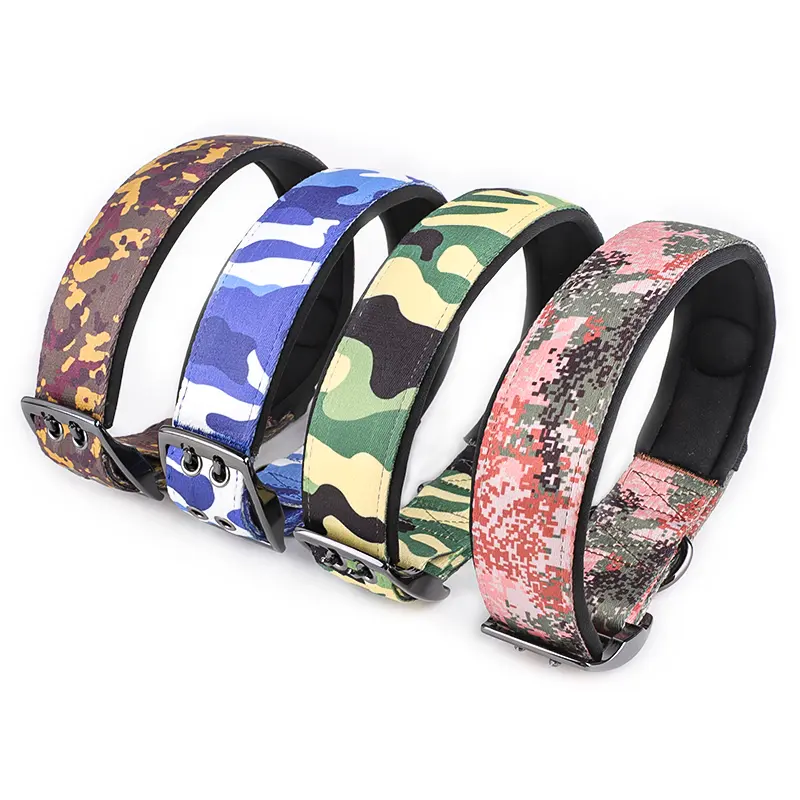
As pet traction customization experts, we've already done the heavy lifting for you. We have sourced and tested the best hardware and materials specifically for heavy-duty applications. We've integrated these expert choices directly into our free 3D Mockup System. When you design your collar, you won't see a confusing list of specifications. Instead, you'll see simple, visual choices like "Standard Duty Buckle" vs. "Heavy Duty Metal Buckle." When you choose the heavy-duty option, our system automatically applies the correct reinforced stitching patterns in the 3D model. This process ensures that your design choices are automatically translated into a product with guaranteed structural integrity8, giving you and your customers complete peace of mind.
How do you launch your collar line quickly and with minimal financial risk?
You have a perfect design, but the thought of ordering thousands of units from a traditional factory is terrifying. Your cash would be tied up for months in an untested product, and you'd miss out on the ability to react to new trends.
You launch quickly and with low risk by adopting a "lightweight customization" model. This is possible when you partner with a factory that combines rapid digital prototyping with an extremely low Minimum Order Quantity (MOQ).
This is the core of our promise to online brands: "Mockup in seconds. Sample in 3 Days." Our digital process eliminates weeks of back-and-forth communication. But the real game-changer is what comes next. Once your design is finalized and your sample is approved, you don't have to place a massive, risky order. Our MOQ is just 50 pieces per size/design. For Shopify sellers and boutique shop owners, this is revolutionary. You can launch with five different unique patterns for the same cost as one large order of a single, boring color from another supplier. This allows you to test the market, see which designs sell best, and build your brand through variety and innovation, not just volume. It's the smartest way to grow.
Ready to create your brand's next bestseller? I invite you to contact our expert team today and see how easy it can be.
Kokkuvõte
Creating your best thick dog collar line is simple with a modern partner. Use our digital tools for unique design, select expert-vetted materials, and launch fast with our low-risk production.
"Dog Collars Market Size, Share, and Forecast 2031", https://www.techsciresearch.com/report/dog-collars-market/21412.html. Pet-industry market data document substantial spending and product activity in companion-animal supplies, providing contextual support for the claim that new collar lines enter a competitive retail environment. Evidence role: statistic; source type: institution. Supports: The market for dog collars is crowded and competitive.. Scope note: Such data usually describe the broader pet-products market rather than the dog-collar segment alone. ↩
"The Impact of Visual Brand Identity on Consumer Response in Rebranding", https://digitalcommons.usf.edu/etd/10941/. Marketing research on differentiation and brand identity supports the view that distinctive visual attributes can help consumers recognize and distinguish one brand from another. Evidence role: expert_consensus; source type: paper. Supports: A distinctive visual look can help a dog-collar brand stand out.. Scope note: This supports the general branding mechanism, not the performance of any specific dog-collar design. ↩
"The relationship between mass customization and sustainable ...", https://pmc.ncbi.nlm.nih.gov/articles/PMC10950661/. Research on product customization and mass customization finds that customizable product attributes can increase perceived fit and differentiation, giving contextual support to the use of custom patterns as a branding tool. Evidence role: general_support; source type: paper. Supports: Custom patterns can help differentiate a product line from standard-color alternatives.. Scope note: The evidence is about customization broadly and may not directly study pet collars. ↩
"[2303.07909] Text-to-image Diffusion Models in Generative AI: A Survey", https://arxiv.org/abs/2303.07909. Technical literature on text-to-image generative models shows that AI systems can synthesize images from natural-language prompts, supporting the mechanism behind prompt-based pattern creation. Evidence role: mechanism; source type: paper. Supports: An AI pattern generator can create visual pattern concepts from text prompts.. Scope note: This supports the capability of generative AI in general, not the uniqueness or legal exclusivity of any generated pattern. ↩
"SKETCH2PROTOTYPE: RAPID CONCEPTUAL DESIGN ...", https://decode.mit.edu/assets/papers/Sketch2Prototype.pdf. Research on generative design and text-to-image systems indicates that such tools can rapidly produce multiple visual outputs from prompts, supporting the claim of faster ideation compared with manual drafting. Evidence role: mechanism; source type: paper. Supports: AI-assisted tools can accelerate the creation of pattern concepts.. Scope note: Generation speed depends on the specific system, hardware, and workflow; the source would not verify this factory’s exact processing time. ↩
"3D visualization design of digital intelligent landscape environment ...", https://pmc.ncbi.nlm.nih.gov/articles/PMC12106811/. Studies of virtual product presentation and 3D visualization find that interactive or realistic product imagery can improve consumers’ understanding of product appearance, supporting the use of 3D mockups for visual evaluation. Evidence role: mechanism; source type: paper. Supports: Photorealistic 3D models can help users evaluate product appearance before production.. Scope note: This supports visualization benefits generally and does not prove that a specific mockup system eliminates design errors. ↩
"How many bar tacks for sewn webbing loops?", https://www.facebook.com/groups/slackchat/posts/2608439149229946/. Textile and sewn-product engineering sources describe bar-tack stitching as a reinforcement method used at stress points in straps and webbing, supporting its relevance for durable collar construction. Evidence role: mechanism; source type: education. Supports: Reinforced bar-tack stitching can strengthen stress points in webbing products.. Scope note: The source may address sewn straps or safety gear generally, not dog collars specifically. ↩
"ASTM D1683 - Seam Strength Testing", https://www.universalgripco.com/astm-d1683. Product-testing standards for textile straps, buckles, and seams describe tensile and breaking-strength tests used to evaluate structural performance, supporting the need for testing rather than visual inspection alone. Evidence role: mechanism; source type: institution. Supports: Structural integrity of collar components should be supported by appropriate strength testing.. Scope note: A standard can show how integrity is assessed, but it cannot verify the structural integrity of this manufacturer’s products without specific test results. ↩