 FR
FR  EN
EN  RU
RU  DE
DE  AR
AR  ES
ES  PT
PT  IT
IT  NL
NL  PL
PL  SL
SL  ET
ET  RO
RO  CS
CS  EL
EL  LV
LV 
You're tired of chasing fast-fashion trends that fade in a season. You want to build a brand with lasting value, but you're worried that the customs dog harness you create today will look dated and irrelevant by tomorrow.
A harness becomes a classic through a deliberate fusion of three core elements: timeless form, uncompromising quality, and a unique aesthetic that tells a story. It is not something that is found, but something that is carefully built.
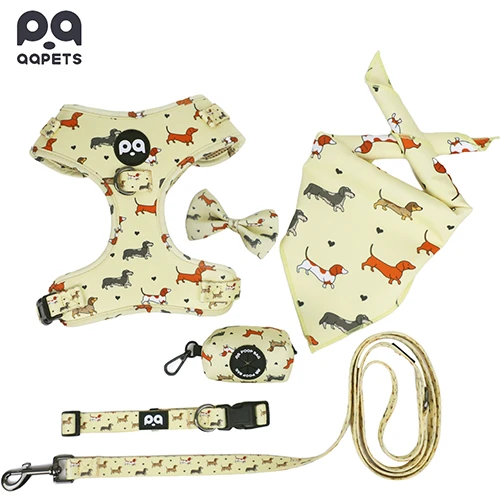
In my role as a pet industry customization expert at qqpets, I've seen countless brands rise and fall with fleeting trends. A classic product, however, becomes a reliable source of revenue and brand identity for years1. It's the product customers return to again and again. Many brand owners believe creating a "classic" is a matter of luck, but I am here to tell you it's a science. It's a repeatable process2, and we have built our entire factory around perfecting it for our partners.
Is timeless quality more than just strong stitching?
You ordered a sample that looked great in photos, but when it arrived, the material felt cheap and the buckle felt flimsy. You're now terrified that your full production run will be plagued by quality issues that lead to angry customers.
Yes, timeless quality is a comprehensive system that goes far beyond surface appearances. It is a verifiable guarantee built on certified materials, premium hardware, and a documented, multi-stage inspection process3 that ensures every single product meets a high standard of safety and durability4.
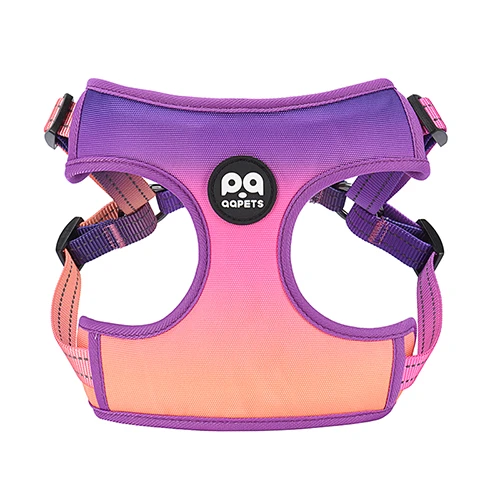
The anxiety over quality is the number one thing that keeps brand owners up at night. A single bad batch can ruin a brand's reputation5. This is why a "classic" product must be built on a foundation of absolute trust in its physical integrity. It’s the satisfying "click" of a strong buckle, the feel of dense, smooth webbing, and the confidence a customer feels knowing their pet is secure. A top-tier factory doesn't just promise this; they provide proof.
The Anatomy of Enduring Quality
A classic product must feel exceptional from the moment it's unboxed. Here are the non-negotiable components we build into every harness.
- The Core Fabric: We start with high-density, colorfast webbing6. It’s not just about strength; it's about resistance to fading and fraying7. We provide material certifications (like SGS or OEKO-TEX)8 so you can be confident that the materials are not only durable but also safe for pets.
- The Critical Hardware: A harness is only as strong as its weakest point9. We use premium, load-rated D-rings and buckles10. The quality of these components is a sensory experience—it communicates security and value to the end-user every time they put the harness on their dog.
- The Inspection Protocol: A classic is consistent. Our quality is not a matter of chance; it's the result of a rigorous process.
| Production Stage | Quality Control Checkpoint |
|---|---|
| Material Intake | Verify certifications, check for color consistency and flaws. |
| Printing/Sublimation | Ensure pattern clarity and color accuracy against the approved design. |
| Sewing & Assembly | Inspect stitch density, back-tacking for strength11, and correct assembly. |
| Final Inspection | A final check of the finished product for function and aesthetics before packing. |
How can you create a classic look that is uniquely yours?
You want to create a product with timeless appeal, but you don't want it to be boring or generic. You're struggling to find the balance between a classic form and a design that makes your brand stand out.
You achieve this by taking a classic, proven harness silhouette and infusing it with your brand's unique DNA through signature Modèles personnalisés. This process allows you to create an iconic look that is instantly recognizable as yours, built upon a foundation that is universally loved.
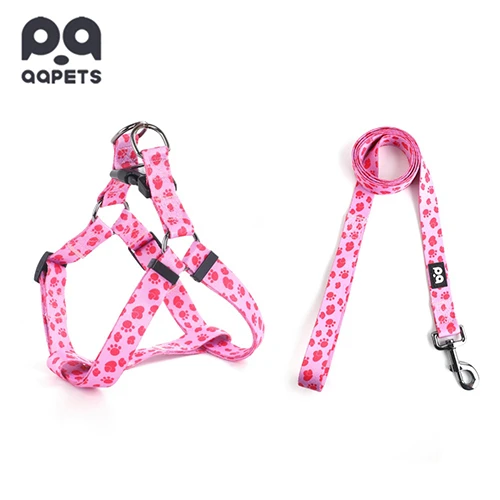
Think of the most iconic fashion brands in the world. They often use very simple, classic silhouettes—a handbag, a trench coat—but apply a signature pattern or color that makes it unmistakably theirs. This is the exact strategy we enable for our brand partners. We provide the perfect "canvas" in the form of hundreds of proven harness styles, and then we provide you with the world's most advanced tools to paint your masterpiece.
Your Platform for Creating a Signature Classic
Our technology is designed to make you a world-class designer.
- 1. Start with a Proven Foundation: Choose from our library of over 100 classic harness styles. Whether it's a no-pull front-clip harness12 or an everyday Y-harness, we have the perfect, field-tested silhouette to start with.
- 2. Design Your Signature Pattern: This is where you make it yours. Use our 3D Mockup System to explore our library of over 1,000 free patterns, or use our revolutionary AI Pattern Generator. Simply type in your creative vision—"minimalist art deco lines in gold and black"—and watch the AI create a completely unique pattern for you.
- 3. Visualize and Validate, Instantly: Our promise of "Mockup in seconds. Sample in 3 Days" removes all the risk and guesswork. You can see your classic creation in photorealistic 3D immediately. Then, you can hold a physical sample in your hands to approve the colors, feel, and overall quality before committing to a full order. And with a low MOQ of just 50 pieces, you can test your new classic with minimal risk.
Ready to build your brand's next classic? Contact our expert team today.
Conclusion
A truly classic custom harness is born from the fusion of guaranteed quality and unique, signature design. Our technology and manufacturing process make creating your own timeless classic simple, fast, and risk-free.
"The Impact of Brand Equity on Customer Acquisition, ...", https://business.columbia.edu/sites/default/files-efs/pubfiles/4920/impact%20of%20brand%20equity.pdf. Brand-equity scholarship describes established brands as assets that can sustain customer loyalty and revenue over time; this supports the general proposition that enduring products can contribute to long-term brand identity, though it does not evaluate this specific harness category. Evidence role: expert_consensus; source type: paper. Supports: A classic product can become a reliable source of revenue and brand identity for years.. Scope note: Contextual support from branding literature, not direct evidence about dog harness sales. ↩
"Navigating new product development: Uncovering factors and ...", https://pmc.ncbi.nlm.nih.gov/articles/PMC10788447/. Design and product-development literature treats successful new product development as a structured process involving concept generation, prototyping, testing, and iteration; this supports the idea that product success can be systematized, although it does not prove that any product can be made “classic” by process alone. Evidence role: general_support; source type: paper. Supports: Creating a classic product is a repeatable process rather than merely a matter of luck.. Scope note: Supports process discipline in product development, not a guaranteed formula for creating classics. ↩
"[PDF] ISO 9001 Quality System Manual, Revision F - eGrove", https://egrove.olemiss.edu/cgi/viewcontent.cgi?article=2806&context=aicpa_guides. Quality-management standards such as ISO 9001 emphasize documented procedures, control of externally provided materials, and inspection or verification activities as part of consistent product quality; this supports the role of documented material and inspection controls, though it does not certify any individual harness manufacturer. Evidence role: expert_consensus; source type: institution. Supports: Timeless quality depends on certified materials, premium hardware, and a documented, multi-stage inspection process.. Scope note: Supports quality-management principles generally, not the quality of the article’s named supplier. ↩
"Testing & Certification | CPSC.gov", https://www.cpsc.gov/Business--Manufacturing/Testing-Certification. Pet-product safety guidance and consumer-product testing frameworks generally link material selection, mechanical integrity, and inspection to product safety and durability; this provides contextual support for evaluating harness safety and durability, but it is not a direct pass/fail assessment of the specific product described. Evidence role: general_support; source type: government. Supports: A documented inspection process helps ensure a high standard of product safety and durability.. Scope note: General product-safety support rather than a specific harness safety test result. ↩
"[PDF] Brand Reputation and Product Recall - Scholar Commons", https://scholarcommons.sc.edu/cgi/viewcontent.cgi?article=1454&context=etd. Research on product-harm crises finds that defective or unsafe products can damage consumer trust and brand evaluations; this supports the reputational-risk claim, although the severity varies by brand, product category, and response strategy. Evidence role: expert_consensus; source type: paper. Supports: A single bad batch can seriously damage a brand’s reputation.. Scope note: The evidence concerns product-harm crises broadly, not dog harness manufacturing specifically. ↩
"Colour fastness - Wikipedia", https://en.wikipedia.org/wiki/Colour_fastness. Textile-testing standards and textile-engineering references define colorfastness as resistance to color change or transfer under conditions such as washing, rubbing, and light exposure; this supports the relevance of colorfast webbing to durable textile products, while not verifying the performance of any particular webbing batch. Evidence role: definition; source type: institution. Supports: High-density, colorfast webbing is relevant to harness durability and appearance retention.. Scope note: Defines and contextualizes colorfastness; it does not test the article’s materials. ↩
"[PDF] Case Study of Durability, Abrasion Resistance, and Colorfastness to ...", https://ir.library.illinoisstate.edu/cgi/viewcontent.cgi?article=1001&context=urs2021fcs. Textile-performance literature identifies abrasion resistance, seam integrity, and colorfastness as measurable properties affecting textile durability and appearance over time; this supports the relevance of fading and fraying resistance, though it does not establish that the described harness meets any threshold. Evidence role: mechanism; source type: education. Supports: Resistance to fading and fraying is an important component of durable harness materials.. Scope note: Supports the material-performance mechanism, not a specific product test result. ↩
"Oeko-Tex - Wikipedia", https://en.wikipedia.org/wiki/Oeko-Tex. OEKO-TEX Standard 100 is an independent textile certification for substances tested for human ecological safety, and SGS provides inspection and testing services across consumer goods; this supports the role of third-party material certifications, though such certifications do not by themselves prove overall pet-harness safety or durability. Evidence role: definition; source type: institution. Supports: Material certifications such as SGS or OEKO-TEX can provide evidence about textile safety or testing status.. Scope note: Certification scope is material-related and may not cover finished-product mechanical safety for pets. ↩
"[PDF] Understanding Series and Parallel Systems Reliability", https://web.cortland.edu/matresearch/SerieslParallelSTART.pdf. Engineering reliability principles recognize that a system’s performance can be constrained by the failure of critical components, often expressed through weakest-link models; this supports the general logic that harness safety depends on buckles, rings, stitching, and webbing together, not any single component alone. Evidence role: mechanism; source type: paper. Supports: A harness is only as strong as its weakest point.. Scope note: Applies a general engineering principle; it is not a harness-specific failure analysis. ↩
"[PDF] Seat Belt Assembly Tensile Test Procedure Development - ROSA P", https://rosap.ntl.bts.gov/view/dot/56176/dot_56176_DS1.pdf. Mechanical hardware standards and testing practices use rated loads or breaking-strength values to indicate the forces components can withstand under specified conditions; this supports the relevance of load-rated D-rings and buckles, while not verifying the rating of any component used by the article’s supplier. Evidence role: definition; source type: institution. Supports: Load-rated D-rings and buckles are relevant to harness strength and safety.. Scope note: Explains the meaning and relevance of load ratings; it does not validate the supplier’s hardware. ↩
"Impact of stitch density on seam strength, seam elongation, and ...", https://www.academia.edu/59045054/Impact_of_stitch_density_on_seam_strength_seam_elongation_and_seam_efficiency. Technical sewing and textile references describe stitch density, seam construction, and reinforcement such as back-tacking or bartacking as factors affecting seam strength; this supports the inclusion of these checkpoints in harness quality control, though exact strength depends on materials, thread, and test conditions. Evidence role: mechanism; source type: education. Supports: Inspecting stitch density and back-tacking is relevant to the strength of a sewn harness.. Scope note: General seam-strength support; does not provide a measured strength result for the article’s harnesses. ↩
"Dog Pulling on the Leash: Effects of Restraint by a Neck Collar ...", https://pmc.ncbi.nlm.nih.gov/articles/PMC8450523/. Veterinary and animal-behavior sources commonly describe front-attachment harnesses as equipment that can help redirect a dog’s forward momentum during leash walking; this supports the functional rationale for front-clip harnesses, although training outcomes depend on fit, handling, and the individual dog. Evidence role: expert_consensus; source type: education. Supports: A no-pull front-clip harness is a recognized harness style intended to help manage pulling.. Scope note: Supports the general function of front-clip harnesses, not the performance of a specific product design. ↩