 FR
FR  EN
EN  RU
RU  DE
DE  AR
AR  ES
ES  PT
PT  IT
IT  NL
NL  PL
PL  SL
SL  ET
ET  RO
RO  CS
CS  EL
EL  LV
LV 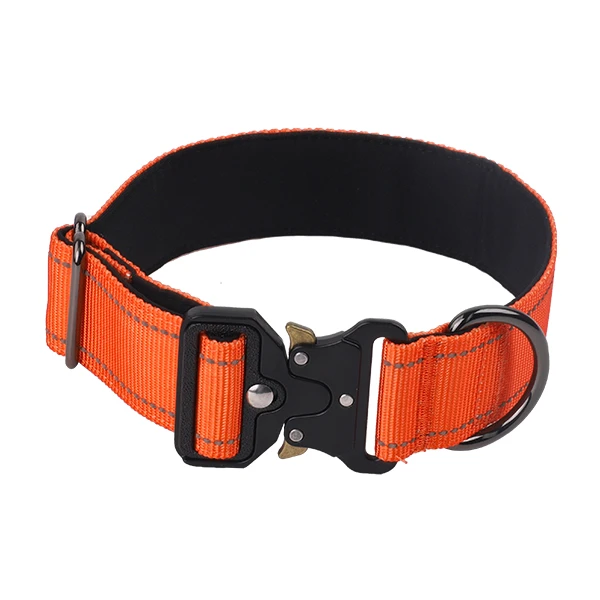
Your dog harnesses are great, but they look just like everyone else's. In a crowded online marketplace, a unique pattern isn't enough to make you stand out.1 A unique custom dog harness buckle feels like a small detail, but it's what separates a generic item from a memorable brand.
A custom buckle elevates your brand by acting as a signature of quality2. It builds customer trust3, justifies a premium price4, and turns everyday use into a daily reminder of your brand, creating powerful customer loyalty.
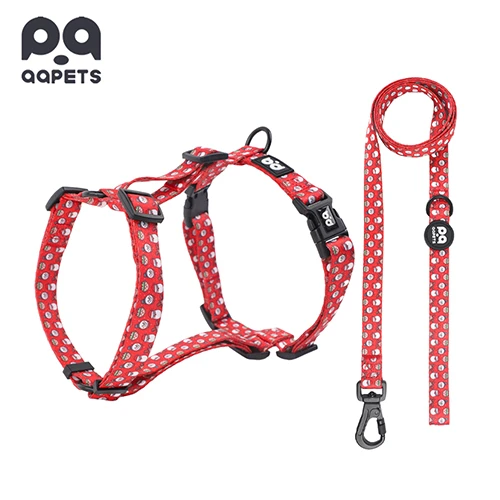
As a custom pet gear expert at qqpets, I've seen countless online brands struggle with this exact problem. They invest heavily in beautiful Modèles personnalisés but then finish their product with a standard, off-the-shelf buckle. The final product ends up sending a mixed message. The pattern says "premium and unique," but the generic hardware says "mass-produced and cheap."5 This small detail can undermine your entire brand perception. That's why we've focused on making hardware customization not just possible, but easy and affordable for brands of all sizes.
How does a custom buckle build trust and perceived value?
You're losing sales to cheaper competitors. Customers see your harness next to a similar one for half the price, and because they both use the same generic buckle, they assume the quality is the same. Your brand gets lost in the race to the bottom.
A custom-branded buckle instantly communicates a higher level of care and investment. It's a physical signal that your product is not generic, which builds customer trust and allows you to command a higher price with confidence.
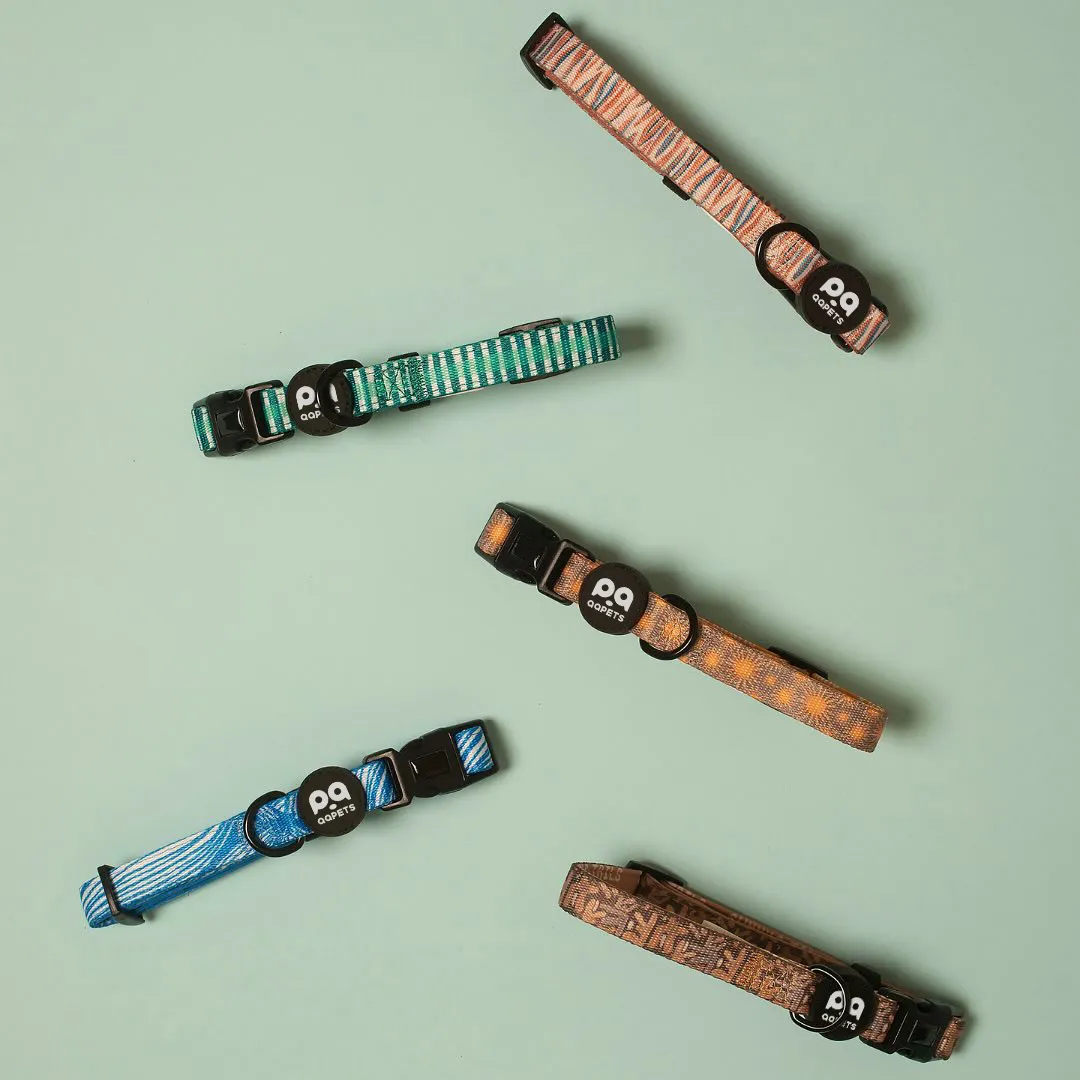
This is all about customer perception. When a shopper sees a product with custom details, their brain automatically makes a connection6: "This brand cares about the little things, so they probably care about the big things too, like stitching and material quality." This is a powerful psychological advantage. A custom buckle is a deliberate choice, not a default option. It's a statement that you are a serious brand, not just a reseller. This small component changes the entire conversation from "Which one is cheaper?" to "Which one is the better brand?"
The Tangible Mark of Quality
A branded buckle works on multiple levels to boost your brand's status.
- The "Click" of Confidence: Think about the daily user experience. A solid, well-made buckle with a custom logo has a more satisfying feel and sound when it clicks shut.7 This tactile feedback reinforces the feeling of quality every single day.
- Visual Justification for Price: In an online store, visuals are everything.8 A crisp, clear photo of your branded buckle is proof of premium quality that a customer can see9. It helps them understand why your product is worth more than the cheaper alternative.
- Building Your Brand Instantly: We've made this incredibly easy. On our 3D Mockup System, you can upload your logo and visualize it on a buckle in real-time. This "Mockup in seconds. Sample in 3 Days" process means you can hold a premium, branded product in your hands faster than you ever thought possible.
| Feature | Generic Harness | Your Branded Harness |
|---|---|---|
| First Impression | Looks like other products | Instantly recognizable and unique |
| Perceived Quality | Assumed to be standard or cheap | Assumed to be high-quality and durable |
| Price Justification | Hard to justify a higher price | Premium price feels fair and logical |
| Brand Recall | Forgettable | Memorable and professional |
How does a branded buckle turn a single sale into a loyal customer?
A customer buys your harness and loves it. A month later, their friend asks where they got it. The customer replies, "I don't know, I got it on Amazon." You just lost a referral because your brand was completely forgettable.
A branded buckle puts your logo directly into your customer's hands twice a day, every day. This constant interaction acts as effortless marketing10, burning your brand name into their memory and making them far more likely to buy from you again and recommend you to others.
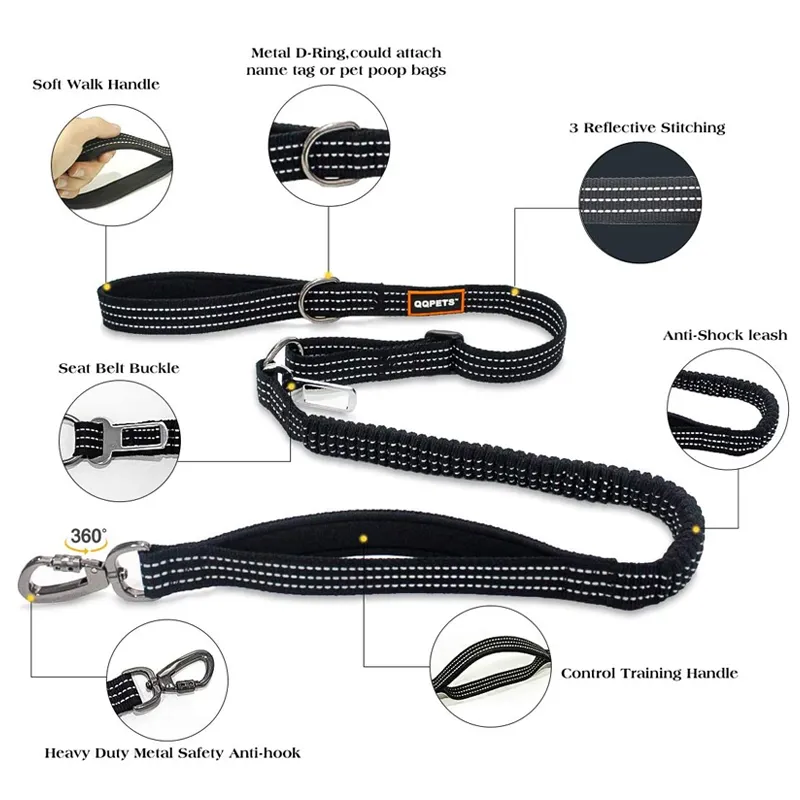
This is the secret to building a long-term, sustainable brand. You're moving beyond a simple transaction and creating a relationship. The buckle becomes a marketing touchpoint. Every time the owner takes their dog for a walk, they perform a tiny ritual: they pick up the harness and click the branded buckle. Click on, click off. Your logo is seen and touched. This repeated exposure, known as the "mere-exposure effect11," builds familiarity and trust. Your brand becomes "that great harness brand" in their mind, not just another random purchase.
From a Product to a Brand Ecosystem
This single branded detail is the foundation for building a whole world around your brand.
- Creating a Collection: Once a customer trusts the branded buckle on your harness, they will actively look for that same logo when they need a matching leash or collar12. It makes upselling and cross-selling almost effortless.
- The Power of AI + 3D: Our system makes it simple to build out this ecosystem. You can use our AI Pattern Generator to create a unique pattern, then apply that pattern and your branded buckle across a full range of products—harnesses, collars, leashes, and accessories—all within our 3D Mockup System. You can create a complete, cohesive collection in minutes.
- Low-Risk, High-Reward: Because we are a direct factory with low MOQs (starting at just 50 pieces per style/color), you can launch a fully branded collection without a massive financial risk. Test the market, build your brand, and scale with a partner who understands your needs.
Ready to see how a small detail can make a huge impact on your brand? Contact our expert team today.
Conclusion
A unique custom buckle transforms your product from a generic item into a premium brand statement. It builds trust, justifies your price, and creates loyal customers who remember and recommend you.
"Visual Design Cues Impacting Food Choice: A Review and Future ...", https://pmc.ncbi.nlm.nih.gov/articles/PMC7589873/. Research on online retail differentiation indicates that consumers rely on multiple product and brand cues, not only surface decoration, when evaluating alternatives in crowded digital assortments. Evidence role: general_support; source type: paper. Supports: A product pattern alone may be insufficient for differentiation in a crowded online marketplace.. Scope note: This supports the broader differentiation problem in e-commerce, but it does not specifically test dog harness patterns or buckles. ↩
"Role of Extrinsic Cues in the Formation of Quality Perceptions - PMC", https://pmc.ncbi.nlm.nih.gov/articles/PMC9359923/. Branding and signaling research treats visible brand identifiers as cues that can reduce uncertainty and communicate expected quality to consumers. Evidence role: mechanism; source type: paper. Supports: A custom buckle can function as a visible brand cue that signals quality.. Scope note: The evidence would support the role of visible branding as a quality signal generally, not prove that every custom buckle is interpreted as higher quality. ↩
"How Brand Knowledge Affects Purchase Intentions in Fresh Food E ...", https://pmc.ncbi.nlm.nih.gov/articles/PMC10451841/. Studies of brand credibility and brand trust find that credible, consistent brand signals are associated with stronger consumer trust and purchase intentions. Evidence role: expert_consensus; source type: paper. Supports: A custom-branded buckle may help build customer trust by serving as a consistent brand signal.. Scope note: This supports the relationship between brand signals and trust broadly, not a direct causal test of branded dog harness buckles. ↩
"Impact of Perceived Product Value on Customer-Based Brand Equity", https://pmc.ncbi.nlm.nih.gov/articles/PMC9280421/. Brand equity research shows that stronger perceived quality and brand associations can increase consumers' willingness to pay price premiums. Evidence role: mechanism; source type: paper. Supports: Custom branded elements can contribute to perceived brand equity that helps justify a premium price.. Scope note: This supports premium pricing through brand equity generally; it does not establish a specific price premium for customized pet products. ↩
"Role of Extrinsic Cues in the Formation of Quality Perceptions - PMC", https://pmc.ncbi.nlm.nih.gov/articles/PMC9359923/. Consumer research on extrinsic product cues indicates that visible design and material cues can shape perceived quality even before functional use. Evidence role: mechanism; source type: paper. Supports: Generic-looking hardware may influence consumers to infer lower or less distinctive product quality.. Scope note: The evidence would support consumer inference from product cues generally, but the phrase “mass-produced and cheap” remains an interpretive marketing claim. ↩
"Halo Effect and Source Credibility in the Evaluation of Food ... - PMC", https://pmc.ncbi.nlm.nih.gov/articles/PMC8621627/. The halo effect literature describes how a salient positive attribute can influence broader judgments about unrelated product or brand attributes. Evidence role: mechanism; source type: paper. Supports: Shoppers may infer broader quality from a visible custom detail through a halo-effect mechanism.. Scope note: This supports the psychological mechanism of attribute spillover; it does not prove that a custom buckle specifically causes assumptions about stitching or material quality. ↩
"Hand-Feel Touch Cues and Their Influences on Consumer ... - PMC", https://pmc.ncbi.nlm.nih.gov/articles/PMC6678767/. Sensory marketing and haptics research shows that tactile and auditory product cues can affect consumer evaluations of quality and satisfaction. Evidence role: mechanism; source type: paper. Supports: The feel and sound of a buckle can influence perceived product quality and user satisfaction.. Scope note: This supports the relevance of touch and sound cues generally, not the specific acoustic or tactile properties of any buckle design. ↩
"The Effect of Product Image Dynamism on Purchase Intention ... - PMC", https://pmc.ncbi.nlm.nih.gov/articles/PMC8214574/. E-commerce research finds that product images and visual presentation are major information cues in online purchase decisions where physical inspection is unavailable. Evidence role: expert_consensus; source type: paper. Supports: Visual presentation is especially important in online retail because customers cannot physically inspect products before purchase.. Scope note: The wording “everything” is rhetorical; evidence would support the importance of visuals, not that visuals are the only factor in online purchasing. ↩
"Effect of Product Presentation Videos on Consumers' Purchase ...", https://pmc.ncbi.nlm.nih.gov/articles/PMC8891234/. Research on visual product presentation in online retail indicates that high-quality images help consumers evaluate product attributes and reduce uncertainty before purchase. Evidence role: mechanism; source type: paper. Supports: A clear image of a branded buckle can help customers evaluate the product’s perceived quality online.. Scope note: This supports the role of visible product evidence online, but it does not prove that a buckle photo alone establishes premium quality. ↩
"The Influences of Brand Awareness on Consumers' Cognitive Process", https://pmc.ncbi.nlm.nih.gov/articles/PMC7303260/. Marketing exposure research indicates that repeated brand encounters can increase brand salience and memory accessibility over time. Evidence role: mechanism; source type: paper. Supports: Repeated daily interaction with a visible logo can reinforce brand memory.. Scope note: This supports repeated exposure as a branding mechanism, but it does not quantify the effect of interacting with a dog harness buckle twice daily. ↩
"Mere-exposure effect - Wikipedia", https://en.wikipedia.org/wiki/Mere-exposure_effect. The mere-exposure effect, first demonstrated in experimental psychology, describes the tendency for repeated exposure to a stimulus to increase familiarity and liking. Evidence role: definition; source type: paper. Supports: Repeated exposure to a brand logo can build familiarity through the mere-exposure effect.. Scope note: The concept supports the plausibility of familiarity effects, but it does not by itself prove increased trust or repurchase for a specific pet product. ↩
"Practices of brand extensions and how consumers respond to ... - PMC", https://pmc.ncbi.nlm.nih.gov/articles/PMC8831008/. Brand extension and loyalty research finds that favorable brand associations can transfer to related products, making consumers more receptive to purchasing additional items under the same brand. Evidence role: mechanism; source type: paper. Supports: A trusted brand marker on one product can encourage interest in related products carrying the same logo.. Scope note: This supports receptiveness to related branded products generally, not guaranteed cross-selling behavior for harness, leash, and collar collections. ↩