 FR
FR  EN
EN  RU
RU  DE
DE  AR
AR  ES
ES  PT
PT  IT
IT  NL
NL  PL
PL  SL
SL  ET
ET  RO
RO  CS
CS  EL
EL  LV
LV 
You have a vision for a unique line of custom bandana collars for dogs, but the process of getting your own patterns printed feels overwhelming. You are stuck trying to figure out design software, finding a reliable printer, and worrying about the final quality.
You can easily print your own patterns by partnering with a modern factory that provides free AI design tools, instant 3D mockups, and a risk-free sampling process. This streamlined system turns your ideas into high-quality, sellable products.
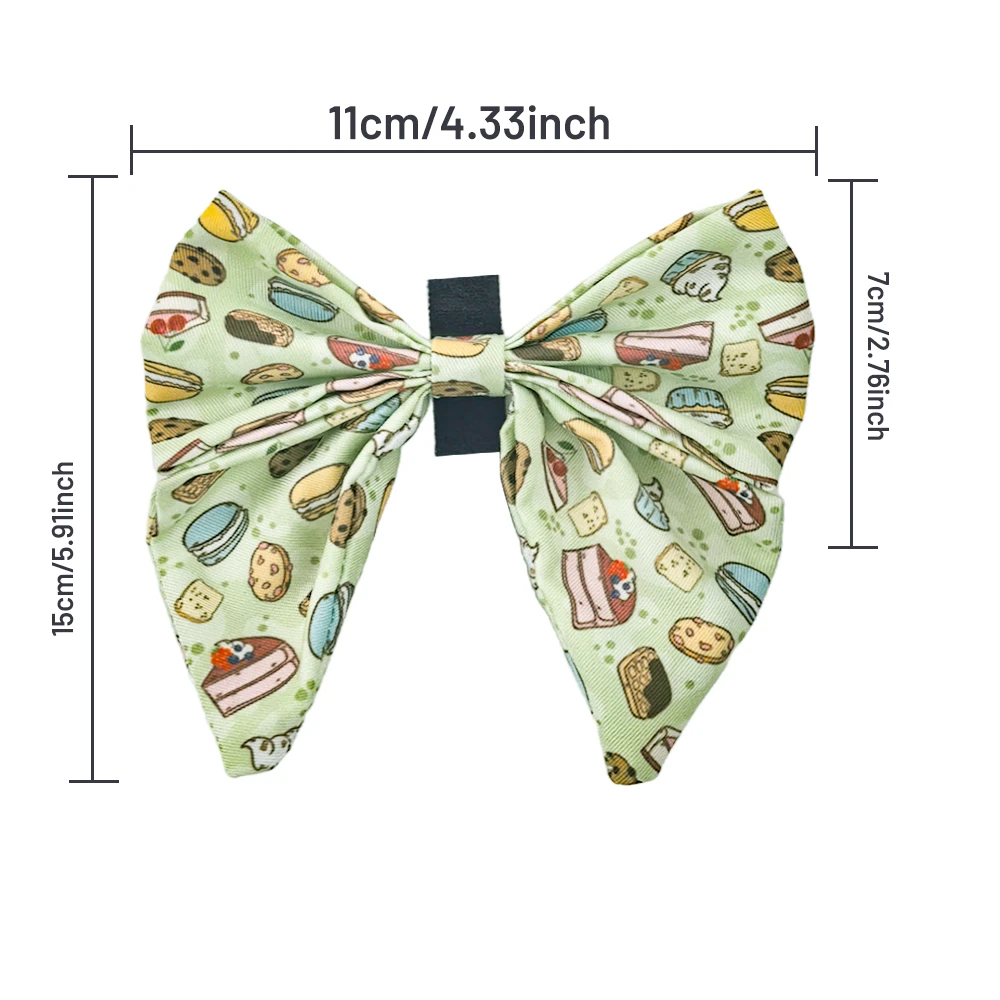
My name is Cathy, and I am a customization expert here at qqpets. I speak with creative entrepreneurs every day who have amazing ideas for their brands but feel blocked by the technical side of manufacturing. The dream of launching a collection of dog bandana collars with your own exclusive patterns can quickly turn into a nightmare of confusing file formats, color mismatches, and expensive mistakes. My goal today is to show you a completely new way forward. It is a path where you are in complete creative control, where technology works for you, and where you can launch your brand with confidence and without a huge financial gamble.
How can you create endless unique bandana patterns without being a designer?
You want your bandana collars to be truly special, featuring patterns that no one else has. However, you are not a graphic designer, and the cost and time involved in hiring one to create dozens of options is a major barrier for your brand.
You can instantly become your own in-house designer using our factory's free, integrated AI pattern generator. Simply describe your ideas in plain text1, and our system will create unique, exclusive Modèles personnalisés for you, which can be applied to a 3D model of your bandana collar in seconds.
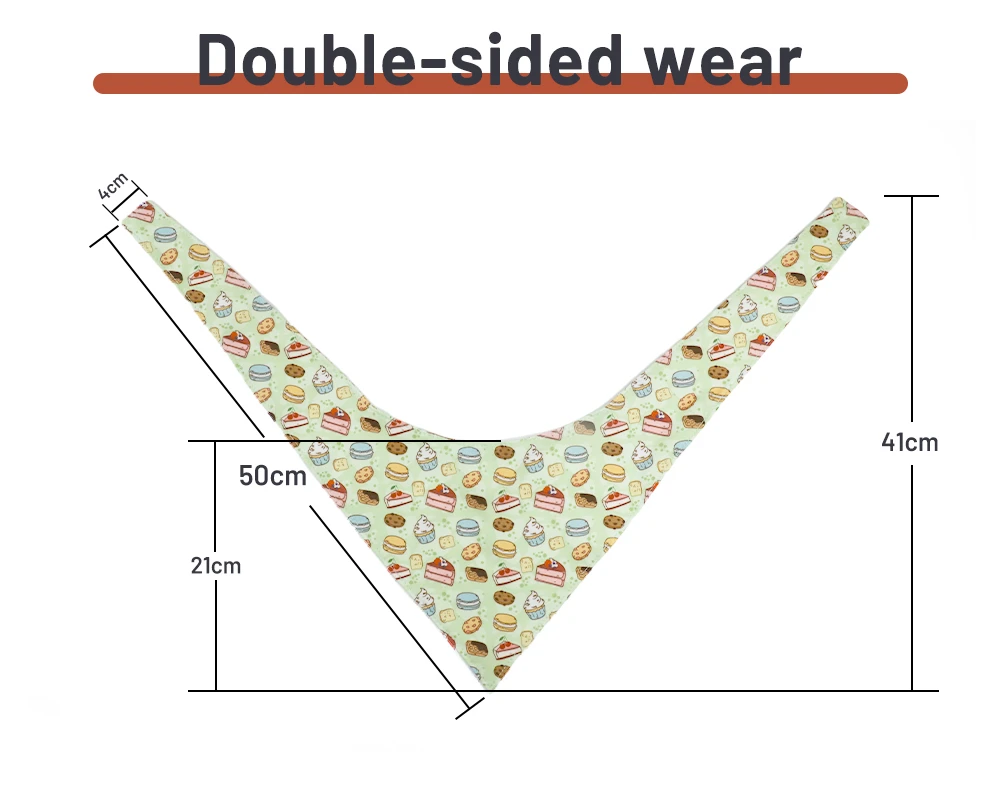
This is the first revolutionary step in our "Mockup in seconds" promise. The old manufacturing model forced you to either choose from a tired library of generic stock patterns or invest heavily in professional design services. This limited your creativity and hurt your ability to stand out. Our philosophy is different: we believe a new pattern creates a new product. Therefore, we have invested in technology that puts an infinite design studio at your fingertips. We have removed the traditional barriers of technical skill and high cost, making your own imagination the only limit to your brand's potential.
Your Personal AI Pattern and 3D Mockup Studio
Notre 3D Mockup System is your free, all-in-one creation tool, and it is incredibly simple to use. Imagine you want to create a summer collection. You could go to our AI generator and type in a prompt like, "Create a seamless pattern of watercolor lemons and blue stripes." Within moments, the AI will present you with several original, high-resolution patterns that are yours and yours alone. You can then select our bandana collar model and immediately apply your new lemon pattern. The customization does not stop there. You can then upload your brand's logo, choose its placement, select the color of the collar's webbing and buckle, and see it all come together. You will be viewing a dynamic, photorealistic 3D model2, not a flat, lifeless image. You can rotate it 360 degrees, zoom in on the details, and ensure your vision is perfect before taking the next step.
| The Old, Complicated Way | The qqpets Smart Factory Way |
|---|---|
| Choose a generic, uninspired stock pattern. | Generate infinite, exclusive patterns with our AI. |
| Pay a designer for one concept and wait days. | Design unlimited options yourself, for free, in seconds. |
| Get a flat 2D proof and hope it looks right. | Interact with a live 3D model of your exact product. |
| Guess how the final printed product will look. | See a photorealistic preview from every angle. |
How do you ensure your printed pattern looks perfect before ordering hundreds?
Your 3D digital mockup looks fantastic, but a crucial question remains. A pattern's quality is all in the printing. How can you be sure the colors will be as vibrant as they are on screen, that the lines will be sharp, and that the fabric will feel good before you commit to a large inventory order?
We eliminate this risk completely with our "Sample in 3 Days" promise. After you approve your 3D design, we use it to produce a full, production-grade physical sample. You get to see, feel, and approve the actual printed bandana collar, verifying the print quality and colors with your own eyes.

For a product defined by its visual appeal, like a printed bandana collar, a digital proof is only half the story3. The vibrancy of the colors, the sharpness of the print, and the feel of the fabric are what your customers will experience. You need to be confident in that experience. This physical sample is your guarantee of quality. It is not a rough prototype; it is a finished product made using the exact dye-sublimation printing process4, the same soft-but-durable polyester fabric5, and the same robust hardware that will be used in your full production run. We want you to inspect it closely. Compare the colors to your screen. Check the print for any blurriness. Feel the fabric. This step is designed to give you 100% confidence.
Your Pre-Production Print Quality Checklist
When your sample arrives, it is your opportunity to be the ultimate quality control inspector. We take printing seriously, and we want you to confirm that we have met every standard.
- Color Vibrancy and Accuracy: The most important check. The printed colors on the fabric should be rich, saturated, and a close match to what you approved in the 3D mockup. Our advanced dye-sublimation process infuses the ink directly into the fabric fibers6, resulting in brilliant, permanent color.
- Print Sharpness: Look closely at the edges of your pattern. The lines should be crisp and clean, with no "bleeding" or blurriness between colors. This is a key indicator of a high-quality printing process.
- Fabric Feel and Durability: The bandana itself should be soft to the touch yet feel durable. The printing process should not make the fabric stiff or rough.
- Overall Construction: Check the stitching that attaches the bandana to the collar webbing and inspect the quality of the buckle and D-ring.
This physical inspection is the vital link that turns a beautiful design into a high-quality, trustworthy product for your brand.
| Key Print Quality Attribute | What to Inspect on Your Sample | Why It Is Crucial for a Premium Product |
|---|---|---|
| Color Fidelity | Compare fabric colors to your digital design. | Ensures your product matches your brand's aesthetic and customer expectations. |
| Print Definition | Look for sharp lines and zero color bleed. | This separates a professional product from a cheap, low-quality imitation. |
| Fabric Hand-Feel | Ensure the fabric is soft and the print isn't stiff. | The comfort of the pet is paramount and affects customer satisfaction. |
| Wash Durability | Check that the print remains vibrant after a wash. | Our dye-sublimation print is permanent and will not fade, crack, or peel7. |
How can you launch a whole collection of bandana designs without a huge budget?
You have used AI to create a dozen amazing patterns, and you have approved a perfect physical sample. You are ready to sell. But now you hit the final, and highest, wall: traditional manufacturers demand a minimum order of thousands of pieces for each unique pattern, requiring a massive investment that is impossible for a growing business.
We have demolished that wall with our "lightweight customization" manufacturing model. You can go into production with a minimum order quantity (MOQ) as low as just 50 pieces per unique pattern. This allows you to launch a diverse, exciting collection with the quality of a major brand but without the financial risk.
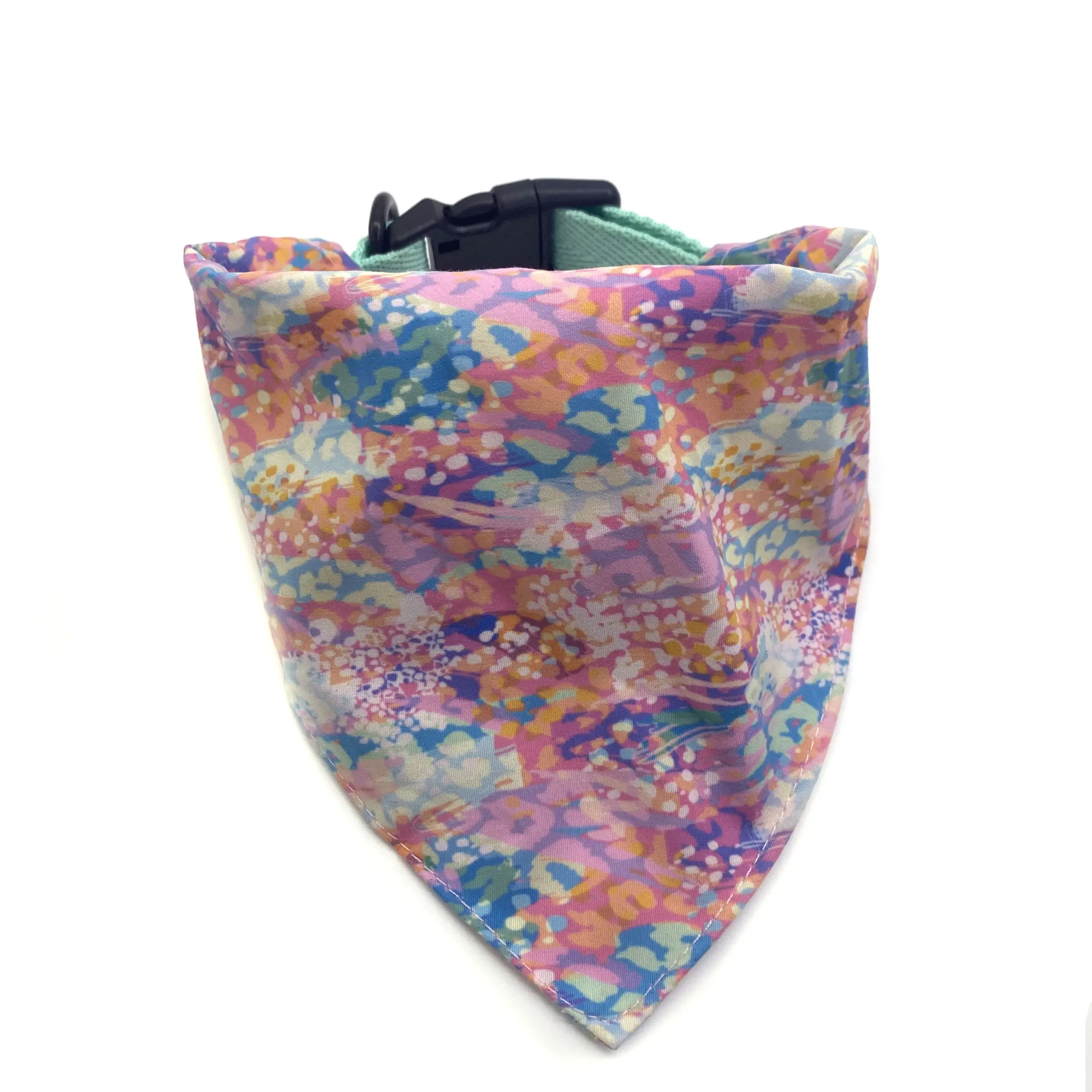
This flexible MOQ is the key that unlocks growth for online sellers, boutique owners, and subscription box companies. We have built our factory systems around your needs. We understand that agility is your greatest strength. Our low MOQ means you do not have to guess what will sell best. You can launch a full collection for every season—spring florals, summer fruits, autumn plaids, holiday themes—and see what your customers love. You can test new, bold ideas without fear8. This capability allows you to keep your product line fresh and exciting, something your larger, slower competitors simply cannot do. Furthermore, this entire scalable process is underpinned by our rigorous, ISO 9001 certified quality system.
Scaling Your Brand with Flexibility and Control
Our low MOQ is your entry point, but our quality system is what enables you to scale. Once you place your order, whether for 50 pieces or 5,000, your approved sample becomes the unwavering "gold standard" for our production line. A comprehensive technical file is created, documenting every detail: the exact fabric type, the precise Pantone color codes9 for the print, the model number of the buckle, and the exact placement of your logo. Our independent quality control team then audits the production at multiple stages, comparing each batch against the gold standard sample. This ensures the 1,000th bandana collar is identical in every way to the first one you approved. You will have a dedicated, English-speaking account manager to provide updates and answer any questions. This unique combination of creative freedom, low risk, and guaranteed quality is the modern formula for building a successful pet brand. Ready to start creating? Contact our expert team today.
Conclusion
Print your own patterns by using our AI to design, verifying the print with a 3-day sample, and using our low MOQ of 50 pieces to launch your custom bandana collar collection.
"An Exploration of Default Images in Text-to-Image Generation - arXiv", https://arxiv.org/html/2505.09166v2. Text-to-image generative models are designed to synthesize images from natural-language prompts, supporting the feasibility of creating visual pattern concepts from plain-text descriptions. Evidence role: mechanism; source type: paper. Supports: Users can generate visual pattern ideas by describing them in plain text.. Scope note: This supports the general AI capability, not the exclusivity, commercial rights, or output quality of any specific factory tool. ↩
"How 3D Virtual Reality Stores Can Shape Consumer ...", https://www.sciencedirect.com/science/article/abs/pii/S1094996819300921. Research on interactive 3D product presentation indicates that 3D visualization can improve consumers’ understanding of product appearance and spatial attributes compared with static images. Evidence role: general_support; source type: paper. Supports: Interactive 3D mockups can help users evaluate a customized product before production.. Scope note: The evidence is contextual for product visualization generally and does not verify the fidelity of the specific mockup system described. ↩
"Color Management: Importance in Digital Printing - Barbieri electronics", https://barbierielectronics.com/color-management/. Color-management literature notes that displayed colors and printed colors can differ because screens emit light while printed materials reflect light and depend on substrates, inks, and device calibration. Evidence role: mechanism; source type: education. Supports: A digital preview alone may not fully predict the final printed appearance of a textile product.. Scope note: This explains why digital proofs may not perfectly predict textile prints; it does not assess the accuracy of the article’s specific proofing workflow. ↩
"Understanding Disperse Dyes: Mechanisms, Applications, and ...", https://www.alfa-chemistry.com/dyes/resources/understanding-disperse-dyes-mechanisms-applications-and-innovation-in-synthetic-textile-chemistry.html. Technical descriptions of dye-sublimation printing explain that disperse dyes are transferred by heat and can diffuse into polyester fibers, which supports its use for printed polyester textiles. Evidence role: mechanism; source type: education. Supports: Dye-sublimation is a textile printing process suitable for transferring designs onto polyester fabric.. Scope note: This supports the general printing mechanism, not the performance of any individual manufacturer’s process controls. ↩
"Martindale Test: The Gold Standard for Textile Abrasion (10K+ Cycles)", https://begoodtex.com/blog/martindale-ceshi-fangzhipin-naimoxing/?srsltid=AfmBOopKKx843AVy0nMcQTjwh-OmvFZ4PGzggEB0VlD6LJ2Pudr_8h3F. Textile references describe polyester fibers as having high strength, abrasion resistance, and dimensional stability, supporting their common use in durable consumer textile products. Evidence role: general_support; source type: encyclopedia. Supports: Polyester fabric can be a durable material choice for printed pet accessories.. Scope note: The source can support polyester’s general durability characteristics but not the softness or durability of the specific fabric selected for these collars. ↩
"High-efficiency dispersant-free polyester dyeing using D5 non ...", https://www.sciencedirect.com/science/article/abs/pii/S0143720821001704. Dye-sublimation accounts describe the dye changing phase under heat and bonding or diffusing into polyester fibers, which distinguishes it from surface-layer printing methods. Evidence role: mechanism; source type: research. Supports: Dye-sublimation colorant becomes incorporated into polyester fibers rather than merely sitting as a surface coating.. Scope note: The wording “directly into” is a simplified description; the exact penetration and fixation depend on dye chemistry, fabric, temperature, and process conditions. ↩
"High Washing Fastness Disperse Dyes for Textiles - Haohua Chemical", https://www.haohuachemical.com/high-washing-fastness-disperse-dyes.html. Studies and textile-printing references commonly report that sublimation printing on polyester can have good wash fastness and avoids cracking or peeling associated with applied surface films. Evidence role: general_support; source type: paper. Supports: Dye-sublimation prints on polyester are generally more resistant to peeling and cracking than surface-applied prints and can have good wash durability.. Scope note: This supports typical performance tendencies, not an absolute guarantee; fading can still occur under severe washing, UV exposure, abrasion, or poor process control. ↩
"Evaluation of a Product Development Process through ...", https://scholarsjunction.msstate.edu/cgi/viewcontent.cgi?article. Lean product-development literature emphasizes testing assumptions with small experiments or minimum viable products to reduce uncertainty before scaling investment. Evidence role: expert_consensus; source type: education. Supports: Smaller production runs can help businesses test market demand before committing to large inventory investments.. Scope note: The evidence supports the general principle of small-scale market testing, not guaranteed sales success for bandana collar patterns. ↩
"Pantone Color Systems | Universal Language of Color", https://www.pantone.com/na/en-us/color-systems/pantone-color-systems-explained?srsltid. Color-standardization references describe Pantone systems as standardized color-identification tools used to communicate color specifications across design and production workflows. Evidence role: definition; source type: encyclopedia. Supports: Pantone color codes can be used to document and communicate target colors in production specifications.. Scope note: This supports the role of Pantone as a color-communication system, not the accuracy of color reproduction in any specific textile print run. ↩