
 FR
FR  EN
EN  RU
RU  DE
DE  AR
AR  ES
ES  PT
PT  IT
IT  NL
NL  PL
PL  SL
SL  ET
ET  RO
RO  CS
CS  EL
EL  LV
LV 
Have you ever felt like you’re being yanked off your feet during a peaceful stroll with your pooch? If so, you’re not alone! Let’s us diving into whether your dog’s harness is turning them into a neighborhood sled dog.
Indeed, dogs can pull harder with a harness because it distributes pressure across a broader area of their body, making it more comfortable for them to pull.
Let’s get into the nitty-gritty of why harnesses might be giving your furry friend a little too much leverage and how you can regain control.
Why Dog Harness Encourage Pulling?
Harnesses, especially those that clip on the back, can inadvertently teach dogs to pull. The design allows them to use their body weight to pull forward, much like sled dogs pulling a sled. This is because the harness doesn’t cause discomfort or restrain them as a collar might when they start to pull.
Quels sont les différents types de harnais ?
There are mainly two types of dog harnesses: front-clip and back-clip. The back-clip harnesses are typically the culprits in making it easier for dogs to pull because of the reasons mentioned above. Front-clip harnesses, however, can help reduce pulling as they direct the dog’s body towards you when they try to pull, making it physically awkward to pull.
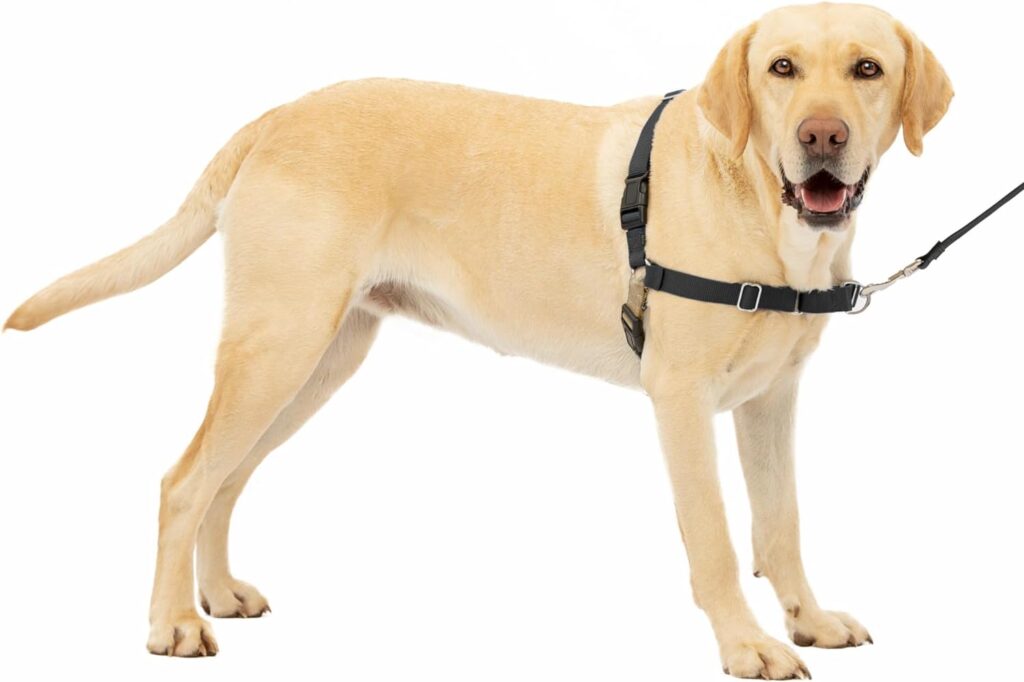
This harness is designed with a front-clip attachment, which effectively discourages pulling by redirecting the dog’s forward momentum towards you whenever they try to pull. This interruption in their path makes it difficult for them to pull strongly or gain speed, and over time, the dog learns that pulling is counterproductive.
How Can You Train Your Dog Not to Pull?
Training is key! Regardless of the type of harness, training your dog to walk nicely beside you is crucial. You can start by practicing in a low-distraction area:
- Use Short Leash: Keep the leash short but loose. This gives you control without putting constant pressure on your dog.
- Stop Technique: When your dog begins to pull, stop walking. Stand still until the leash slackens. Once your dog comes back to you or turns to look at you, praise them and continue walking.
- Changement de direction : Another technique is to change direction suddenly. This teaches your dog to pay attention to where you are going rather than bulldozing ahead.
Are There Alternatives to Using a Harness?
Yes, if you find that harnesses aren’t working for your dog, you might consider other training tools like head collars or martingale collars, which provide different kinds of control and feedback. However, these should be used under the guidance of a professional to ensure they are used safely.
Conclusion
While a harness can give your dog the mechanical advantage to pull, with the right training techniques, fit, and type of harness, you can enjoy tug-free walks. It’s all about finding what works best for you and your furry friend!
QQPETS est le principal fabricant de harnais pour chiens en gros, de harnais réglables pour chiens et d'autres articles que les gens peuvent utiliser lorsqu'ils promènent leurs chiens. Notre objectif est de faciliter les promenades des propriétaires d'animaux de compagnie en leur fournissant des accessoires de valeur. Nous offrons une variété de services de personnalisation, y compris des logos personnalisés, des graphiques personnalisés, des produits personnalisés et plus encore. Si vous souhaitez créer votre entreprise de produits pour chiens, consultez notre site Web et contactez-nous dès aujourd'hui.
FAQ about how to get your dog to stop pulling
- Pourquoi un harnais fait-il tirer mon chien plus qu'il ne le fait moins ?
- A harness can encourage pulling because it’s more comfortable than a collar and doesn’t cause discomfort when the dog pulls, giving them little reason to stop.
- Quel est le meilleur type de harnais pour empêcher mon chien de tirer ?
- Un harnais à pinces avant est idéal car il redirige l'élan de votre chien vers vous lorsqu'il commence à tirer, ce qui le gêne pour continuer à tirer.
- Comment puis-je apprendre à mon chien à ne plus tirer lorsqu'il utilise un harnais ?
- Mettez en œuvre la technique du "stop-and-go" : arrêtez-vous chaque fois que votre chien tire, et ne continuez à marcher que lorsque la laisse est détendue.
- L'ajustement du harnais peut-il influencer la force de traction de mon chien ?
- Yes, an improperly fitted harness can be uncomfortable or allow too much freedom, both of which can increase pulling. Ensure the harness fits snugly but doesn’t restrict your dog’s movement.
- Que dois-je faire si mon chien commence à tirer au milieu d'une promenade ?
- Arrêtez immédiatement de marcher, rappelez votre chien à vos côtés, demandez-lui de s'asseoir et ne reprenez la marche qu'une fois qu'il s'est calmé.
- Existe-t-il un moyen d'utiliser efficacement les friandises pour réduire l'arrachage ?
- Oui, utilisez des friandises pour récompenser votre chien lorsqu'il marche à vos côtés avec une laisse lâche ; cela renforce le comportement que vous voulez encourager.
- Quelles sont les erreurs les plus courantes à éviter lorsque l'on essaie d'empêcher son chien de tirer ?
- Avoid continuously pulling back on the leash, which can trigger your dog’s opposition reflex and make them pull harder.
- Combien de temps faut-il pour apprendre à mon chien à ne pas tirer sur un harnais ?
- Depending on the consistency of training and your dog’s temperament, it may take several weeks to a few months of consistent reinforcement.
- Should I use a different type of walking gear if the harness doesn’t help?
- If a harness isn’t effective, you might consider trying a head collar, which provides more control over your dog’s head and can discourage pulling.
- Comment puis-je savoir si mon chien est plus à l'aise avec un harnais ou un collier ?
- Observe your dog’s behavior and body language. If they seem less stressed and more responsive to commands with a harness, it’s likely more comfortable for them.