 IT
IT  EN
EN  FR
FR  RU
RU  DE
DE  AR
AR  ES
ES  PT
PT  NL
NL  PL
PL  SL
SL  ET
ET  RO
RO  CS
CS  EL
EL  LV
LV 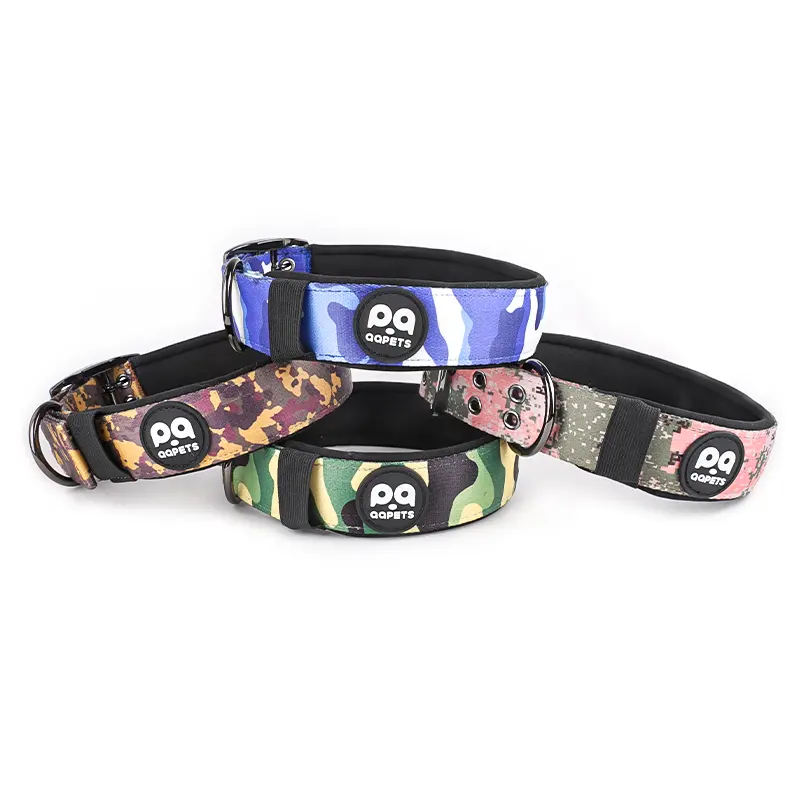
You want to brand your durable 2-inch dog collars, but the options seem limited and cheap. You fear your logo will look unprofessional or wear off quickly, seriously damaging your brand's premium image.
You add your brand by choosing the right method for your aesthetic—integrating your logo into a custom pattern, adding a sophisticated woven label, or using a durable PVC patch. A direct-factory partner makes these professional options accessible and affordable.
My name is Cathy, and as a customization expert at qqpets, I've seen many brands create amazing heavy-duty collars, only to stumble at the final, crucial step: branding. A cheap, poorly applied logo can completely ruin an otherwise perfect product, especially on a premium item like a 2-inch collar designed for large dogs. The good news is that professional branding isn't complicated or expensive when you have the right factory partner. Your logo is your identity. It deserves to be showcased with quality. As a direct factory, we offer multiple ways to integrate your brand seamlessly, turning your collar into a true representation of your quality promise. Let's explore the best options together so you can make a choice that perfectly aligns with your brand.
Can you seamlessly integrate your logo into the collar's design?
You want your logo to be part of the collar's very fabric, not just a sticker or an add-on. You're worried about print quality, matching your exact brand colors, and getting the placement just right on the wide webbing.
Yes, by using the dye-sublimation printing process1. This advanced method infuses your logo and any custom pattern directly into the webbing fibers. Our 3D Mockup System then lets you precisely place your logo and visualize the final, seamless result in seconds, ensuring perfect branding.
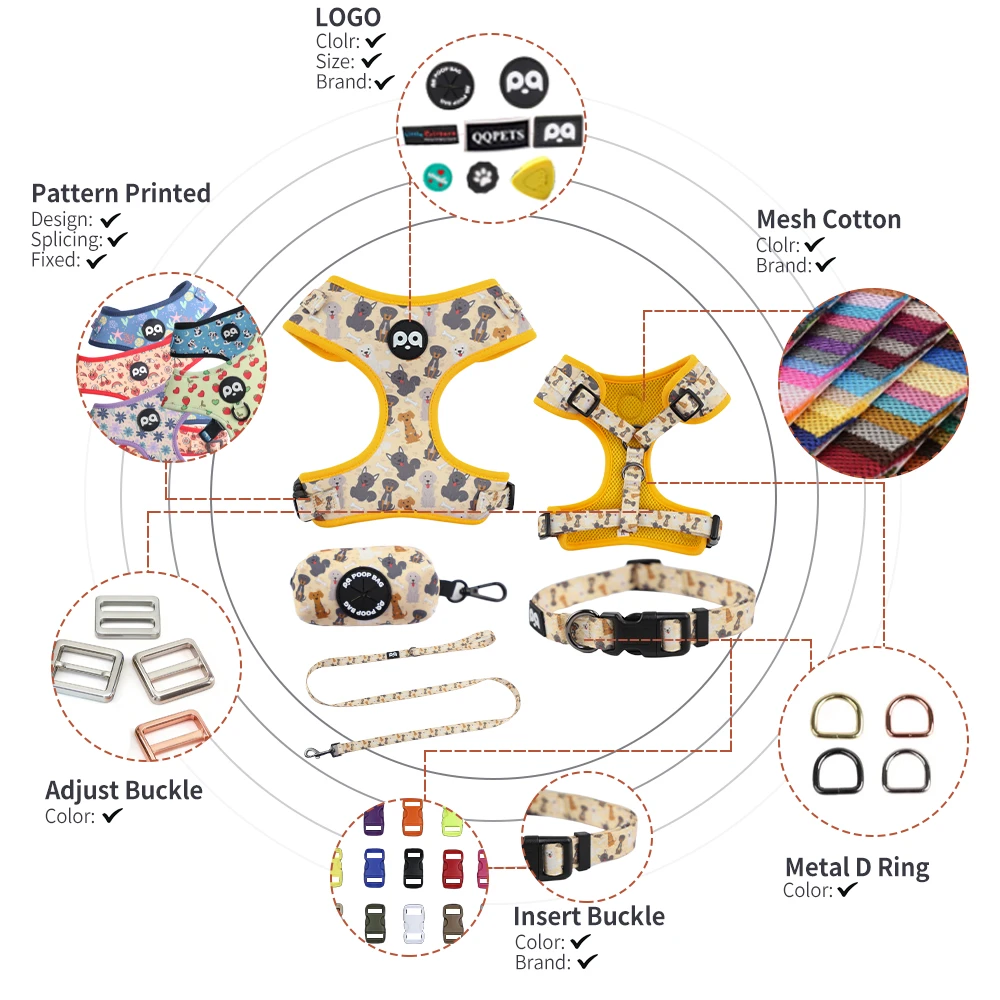
This is the most modern and creatively flexible way to brand your collars. Dye-sublimation is not a surface print that sits on top of the material2; the ink is turned into a gas that permanently bonds with the polyester fibers3 of the webbing. The result is a design that will never crack, peel, or fade4. It becomes part of the collar itself, so it's as durable as the webbing. This method turns the entire 2-inch width of the collar into your personal canvas.
Full Creative Control with Digital Tools
This approach gives you complete authority over your brand's visual identity.
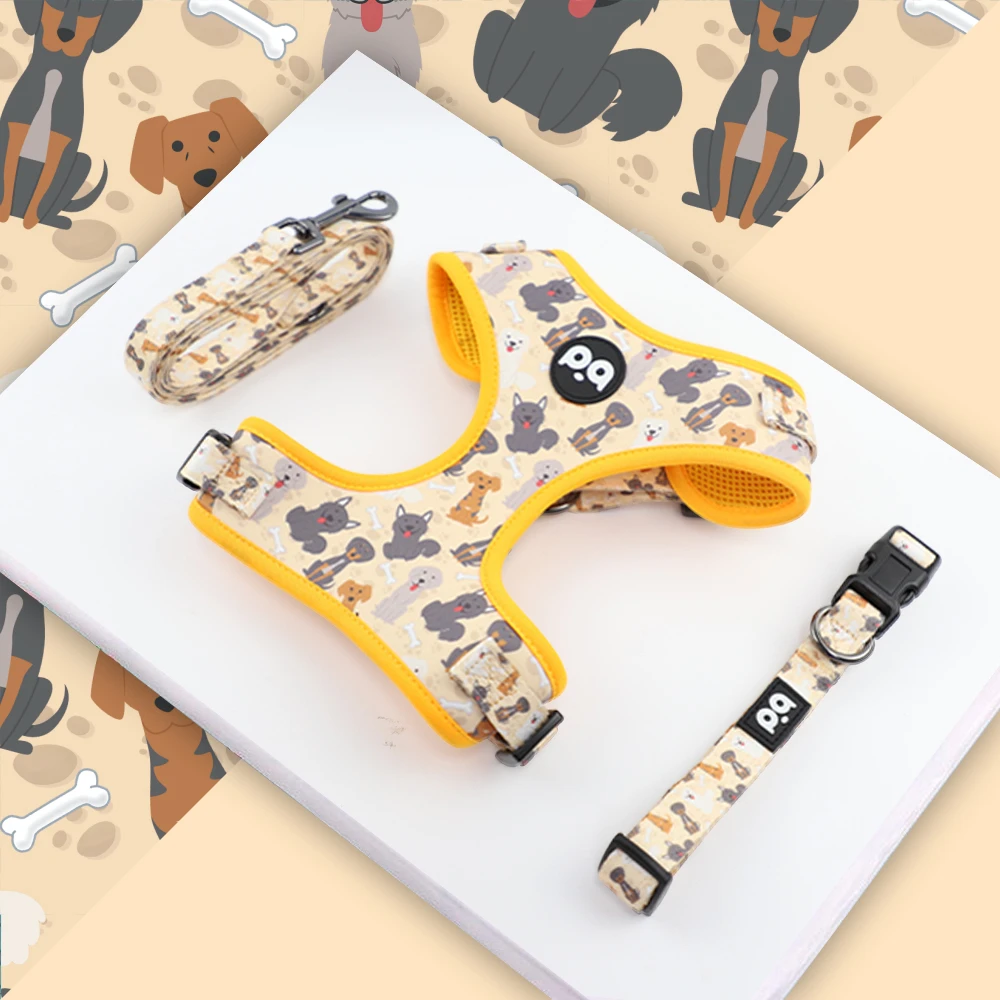
- Logo as the Star: You can create a "step-and-repeat" pattern where your logo is the main design element, covering the entire collar. This is excellent for brand recognition.
- Subtle and Sophisticated: Alternatively, you can place your logo discreetly in one or two key spots within a larger, more complex pattern. This gives the collar a designer feel. You can even use our AI tool to generate a unique background pattern that complements your logo. For example, you could prompt, "a subtle geometric pattern using my brand's hex codes #A1B2C3 and #D4E5F6."
- Visualize Before Production: This is where our "Mockup in seconds" promise truly shines. Upload your logo to our 3D system. Drag and drop it onto the 2-inch collar model. Resize it, rotate it, and repeat it until it looks perfect. You see exactly how it will be produced, eliminating all guesswork and communication errors that are common with middlemen. This instant visualization process ensures your brand guidelines are met perfectly.
This method is ideal for brands that are colorful, modern, or want to integrate their identity into the entire aesthetic of the product. The branding is not an addition; it is the design.
| Feature | Integrated Dye-Sublimation | Traditional Screen Printing5 |
|---|---|---|
| Durata | Permanent, will not crack or peel. | Sits on the surface, can crack/fade6. |
| Detail | Photographic quality, unlimited colors. | Limited colors, less detail possible. |
| Feel | Completely smooth, part of the fabric. | Can feel slightly raised or stiff. |
| Creative Control | Full collar design, precise placement in 3D. | Limited to a small, pre-set area. |
How can you add a sophisticated, fabric-like brand label?
You want a classic, high-end branding touch, similar to the label on a designer pair of jeans or a quality jacket. You're concerned about sourcing high-quality woven labels and ensuring they are attached securely and perfectly straight on every single collar.
You achieve this by using custom woven labels. We source high-density woven labels that render your logo in sharp detail, and then our skilled workers expertly stitch them onto the collar. This method adds a tactile, premium feel and is a traditional mark of quality that customers instantly recognize7.
A woven label communicates craftsmanship. Unlike a printed logo, a woven label has texture and depth because your logo is physically woven from threads8. It’s a small detail that makes a big impact on a customer's perception of quality. For a robust 2-inch collar, a well-placed woven label can elevate the product from simply "strong" to "strong and refined." The challenge for most brands is the logistics: finding a separate label manufacturer, ordering thousands of labels, shipping them to the collar factory, and hoping they are attached correctly.
A Streamlined, Factory-Direct Solution
As your direct factory partner, we handle all of that for you. It's a single, integrated process.
- Sourcing the Best Quality: We work with specialized suppliers to create high-definition woven labels that capture the fine details of your logo. You can choose the exact size, shape (square, rectangle, circle), and fold style (flat, center-fold).
- Expert Attachment: Our workers are trained to attach these labels with precision. They are stitched securely with heavy-duty thread, ensuring they are perfectly straight and will not detach, even with rough use. This precision is part of our ISO 9001 certified quality control.
- Affordable at Low Volume: Because we have established relationships and processes, we can offer this premium branding option even with our low MOQ of just 50 pieces. You don't have to order thousands of labels or collars to get this professional look.
A woven label is perfect for heritage brands, minimalist designs, or any brand that wants to convey a sense of timeless quality and attention to detail. Getting a "Sample in 3 Days" with your woven label attached allows you to feel the quality and approve the placement before committing to a full production run.
| Aspect | Etichetta tessuta | Printed-on-Fabric Label |
|---|---|---|
| Perceived Value | High, associated with premium goods. | Standard, can look generic. |
| Texture | Tactile, threads have depth. | Flat and smooth. |
| Durata | Extremely durable, part of the sewing. | Can fade over time with washing. |
| Il migliore per | Classic, heritage, minimalist brands. | Basic branding, informational tags. |
What's the best option for a rugged, modern 3D logo?
Your brand has a modern, rugged, or tactical aesthetic. You want a logo that physically pops off the collar with a 3D effect, but you're afraid it will be made of cheap rubber that cracks or gets torn off during a dog's rough play.
The best option is a custom PVC logo patch. These soft, flexible patches render your logo in a tactile 3D format that is both visually striking and incredibly durable. We securely stitch them onto the collar through a built-in sewing channel, making them a permanent part of the product.
A PVC patch is the perfect branding choice to complement the tough, heavy-duty nature of a 2-inch dog collar. It’s a statement. It tells the customer that this product is built to last, and the brand behind it is confident and modern. These patches are waterproof, resistant to dirt, and easy to clean9, making them ideal for an outdoor or active dog brand. The key to a professional look is the quality of the patch itself and, most importantly, the attachment method. A glued-on patch will inevitably fail10.
Engineered for Durability
Our approach ensures your 3D logo is as tough as the collar it's on.
- Custom Mold Creation: We create a custom mold based on your logo design. This allows for multiple layers and precise color separation, creating a clean, sharp 3D effect that makes your brand stand out.
- Integrated Sewing Channel: The most important feature is that the patch is designed from the start to be sewn on. A small channel is molded into the perimeter of the patch. This allows us to use our industrial sewing machines to stitch directly through the patch and the thick webbing underneath.
- Secure and Permanent: This stitched attachment method means the patch is mechanically bonded to the collar. It cannot be peeled off, it will not lift at the corners, and it will withstand the same forces as the rest of the collar.
This branding option is a perfect match for brands focused on tactical gear, outdoor adventure, or any company wanting to project an image of strength and modernity. If you're ready to see how your logo would look as a 3D patch, contact our expert team today. We can guide you through the process and get a sample in your hands fast.
Conclusione
You add your brand to 2-inch collars by choosing an integrated pattern, a premium woven label, or a rugged PVC patch. Our factory makes all these professional options easy.
"(PDF) Pad Thermosol Dyeing Polyester with Disperse Dyes", https://www.academia.edu/2532334/Pad_Thermosol_Dyeing_Polyester_with_Disperse_Dyes. A technical source on dye-sublimation printing explains that disperse dyes are transferred by heat and are especially suited to polyester substrates, supporting the article’s identification of dye sublimation as a method for decorating polyester collar webbing. Evidence role: definition; source type: education. Supports: Dye-sublimation printing can be used to integrate a logo or pattern into polyester collar webbing.. Scope note: This supports the process generally, not the quality of any specific factory’s implementation. ↩
"Best fabric for sublimation printing? - Facebook", https://www.facebook.com/groups/1655261694953377/posts/2277447619401445/. A textile-printing source comparing sublimation and surface printing can support that sublimation dyes penetrate polyester fibers rather than forming a separate surface layer. Evidence role: mechanism; source type: research. Supports: Dye sublimation differs from surface printing because the colorant is incorporated into the polyester substrate rather than simply sitting on top.. Scope note: The comparison is general and does not prove that every sublimated collar print avoids all surface residue or coating effects. ↩
"Understanding Disperse Dyes: Mechanisms, Applications, and ...", https://www.alfa-chemistry.com/dyes/resources/understanding-disperse-dyes-mechanisms-applications-and-innovation-in-synthetic-textile-chemistry.html. Textile-printing references describe sublimation transfer as a heat-driven process in which disperse dye vapor diffuses into polyester fibers, supporting the mechanism described here. Evidence role: mechanism; source type: paper. Supports: In dye sublimation, dye vapor diffuses or bonds into polyester fibers rather than remaining only on the surface.. Scope note: The source would explain the physical mechanism; it may not use the phrase “permanently bonds” in the same commercial sense. ↩
"Dye Sublimation Printing: 5 Things to Know for 2026 - ITNH", https://itnh.com/blog/dye-sublimation-printer-need-to-know/?srsltid=AfmBOoq52Qrt4igSmCbO5nV8_2t3OL3FWGxuwgAOigK9WPSChHij8ZSL. Independent textile-printing references note that sublimation prints on polyester are resistant to cracking and peeling because the dye is incorporated into the fibers, and that colorfastness depends on dye, fabric, exposure, and laundering conditions. Evidence role: general_support; source type: research. Supports: Sublimation prints on polyester are generally more resistant to cracking and peeling than surface-applied prints.. Scope note: The word “never” is stronger than most evidence can support; sources can substantiate relative resistance, not absolute immunity to fading or wear. ↩
"Screen printing - Wikipedia", https://en.wikipedia.org/wiki/Screen_printing. Technical descriptions of screen printing explain that ink is deposited through a mesh stencil onto a substrate surface, supporting the article’s characterization of screen printing as a surface-applied decoration method. Evidence role: definition; source type: encyclopedia. Supports: Screen printing applies ink to the surface of a material through a mesh stencil.. Scope note: This defines the process generally and does not by itself establish the durability of any particular screen-printed collar. ↩
"How to Wash and Care for Screen Printed Shirts to Prevent Cracking ...", https://undergroundshirts.com/blog/how-to-wash-and-care-for-screen-printed-shirts-to-prevent-cracking-and-fading. Textile-care and printing references discussing surface-applied polymer inks can support that printed layers may crack or lose color through flexing, abrasion, washing, or ultraviolet exposure. Evidence role: general_support; source type: research. Supports: Surface-applied prints can crack or fade under wear, washing, flexing, or UV exposure.. Scope note: Durability varies widely by ink chemistry, curing, substrate, and use conditions; the evidence would support possibility rather than inevitability. ↩
"Role of Extrinsic Cues in the Formation of Quality Perceptions", https://pmc.ncbi.nlm.nih.gov/articles/PMC9359923/. Consumer-research literature on apparel labels and extrinsic quality cues can support that labels, branding, and material cues influence perceived product quality. Evidence role: expert_consensus; source type: paper. Supports: Labels and branding details can function as consumer cues for perceived quality.. Scope note: Such studies usually address apparel or consumer goods broadly, so the support is contextual rather than direct proof about dog collars. ↩
"Custom Woven Labels for Clothing", https://www.kklabels.com/woven-labels.html. Textile-label references describe woven labels as labels produced by interlacing colored yarns or threads to form text and graphics, supporting the article’s explanation of how woven logos are made. Evidence role: definition; source type: education. Supports: A woven label forms a logo or text by weaving threads rather than printing ink on a surface.. Scope note: This supports the construction method, not the aesthetic quality of a particular label. ↩
"Polyvinyl chloride - Wikipedia", https://en.wikipedia.org/wiki/Polyvinyl_chloride. Materials references on polyvinyl chloride describe PVC as a water-resistant polymer with broad use in durable, washable goods, supporting the general claim that PVC patches can resist moisture and be cleaned easily. Evidence role: general_support; source type: encyclopedia. Supports: PVC is generally water-resistant and suitable for durable, washable applications.. Scope note: Specific dirt resistance and cleanability depend on the patch formulation, surface texture, pigments, and use conditions. ↩
"Enhancing Fatigue Life and Strength of Adhesively Bonded Composite ...", https://pmc.ncbi.nlm.nih.gov/articles/PMC10573937/. Engineering and textile-joining sources comparing adhesive bonding with stitched or sewn attachments can support that adhesive joints are vulnerable to peel, flexing, moisture, and surface-preparation variables, while sewn joints provide mechanical attachment. Evidence role: mechanism; source type: paper. Supports: Adhesive attachment can be less reliable than mechanical stitching for flexible textile products exposed to peel, flexing, and outdoor use.. Scope note: “Inevitably” is too absolute; evidence can support increased failure risk under demanding conditions, not guaranteed failure in every case. ↩