 IT
 EN
 FR
 RU
 DE
 AR
 ES
 PT
 NL
 PL
 SL
 ET
 RO
 CS
 EL
 LV
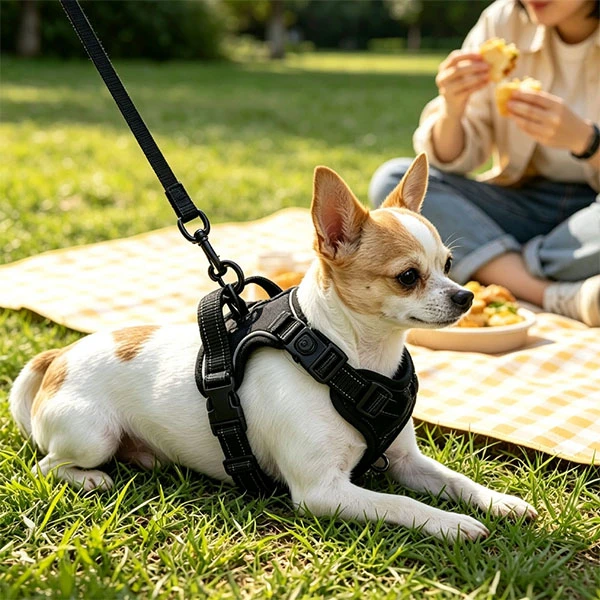
You're ready to scale your pet brand, but the thought of placing a large order for custom dog collars in bulk is overwhelming. You're worried about the high costs, the risk of getting stuck with poor-quality inventory, and the complexity of dealing with manufacturers.
The key to ordering in bulk successfully is to follow a structured process. This involves deeply understanding your customization options, vetting your manufacturer on critical criteria like MOQ and quality control1, and approving a physical sample2 before you ever commit to a large-scale order.
My name is Cathy, and as a pet traction customization expert at qqpets, I speak with brand builders every single day. I've seen firsthand how the leap from small-batch production to bulk ordering can feel like a huge, intimidating step. Many entrepreneurs are held back by the fear of making a costly mistake. They worry about investing thousands of dollars only to receive products that don't match their vision or, worse, are unsafe for pets. This guide was created to demystify the entire process. I want to give you a clear, step-by-step roadmap that removes the fear and replaces it with confidence. Ordering in bulk shouldn't be a barrier to your brand's growth; it should be the engine that drives it.
Why Should Pet Brands Order Custom Dog Collars in Bulk?
You're currently buying collars in small quantities, and it seems to be working. You might wonder why you should take on the risk and complexity of ordering in bulk.
Ordering in bulk is the strategic move that transitions your business from a hobby into a scalable brand. It unlocks critical advantages in profitability, brand consistency, and supply chain stability that are impossible to achieve with small-batch orders.
Moving to bulk ordering is a fundamental shift in your business strategy. While it requires a larger upfront investment, the long-term benefits are what separate successful brands from those that fail to grow.
- Drastically Lower Unit Costs: The number one reason to order in bulk is economies of scale3. The cost to produce one collar is significantly higher than the cost per collar to produce 500. This lower per-unit cost directly translates into healthier profit margins for your brand, giving you more capital to reinvest in marketing and growth.
- Total Brand Consistency: When you order in bulk from a single factory run, every single collar is identical. The colors, the stitching, and the logo placement are all perfectly consistent. This level of quality control is essential for building a professional brand image and customer trust.
- -Stable and Reliable Inventory4: Constantly running out of stock kills business momentum and frustrates customers. Bulk ordering ensures you have a stable supply of your products, allowing you to run marketing campaigns confidently and fulfill orders without delay.
What Customization Options Are Truly Available for Bulk Orders?
You hear the word "custom," but it often just means choosing between a few pre-set colors. You're worried you'll never be able to create a product that is genuinely unique to your brand's vision.
True customization means you control every element of the product. With a modern manufacturing partner, you can dictate the material, the hardware finish, the style of the logo, and—most importantly—create completely original, one-of-a-kind patterns.
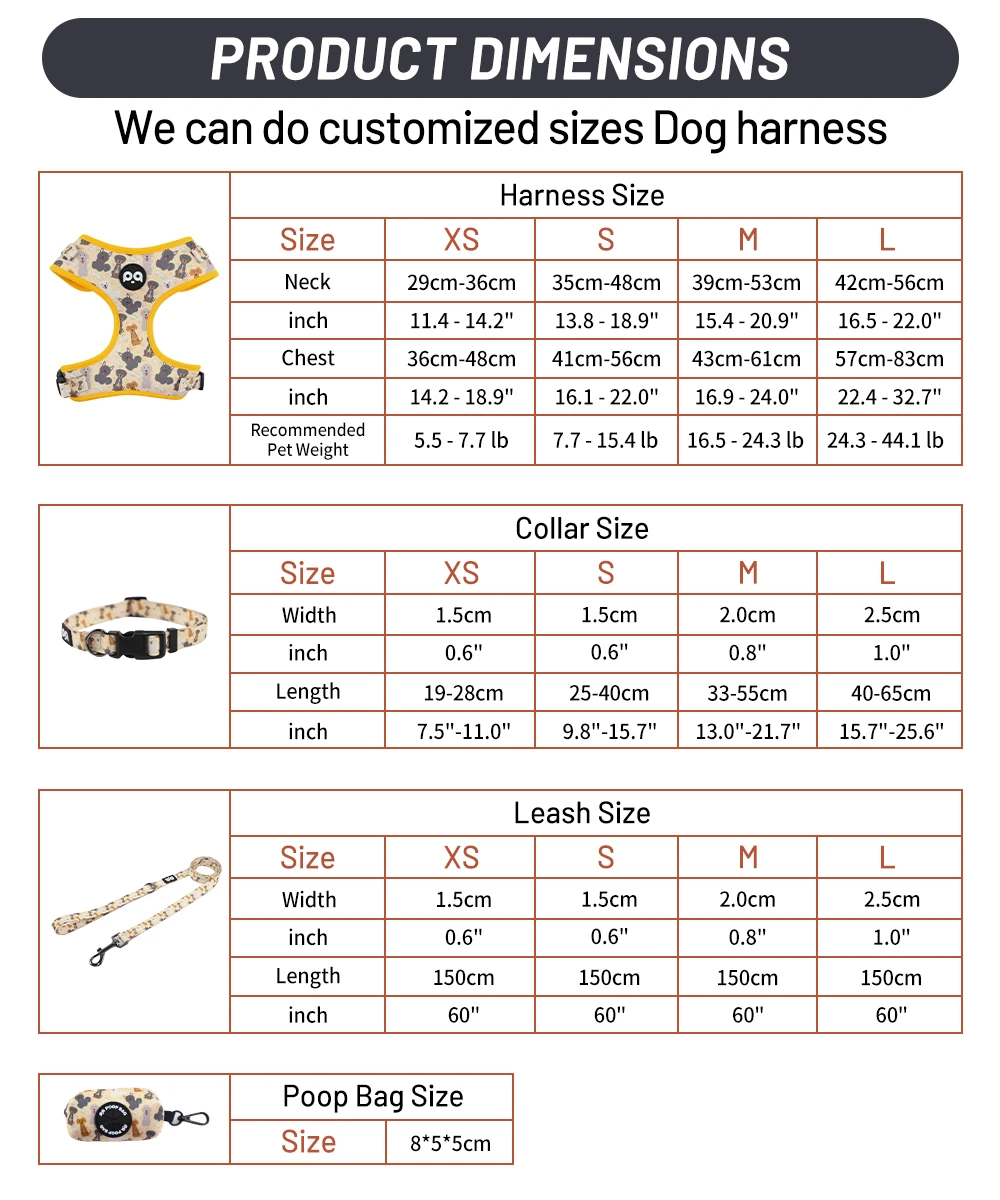
This is where you move from being a reseller to a brand creator. A factory partner like qqpets doesn't just offer you a menu; we give you the entire kitchen. We are a pet traction customization expert focused on bringing your specific vision to life. This includes everything from the core components to the finishing touches. You can design a complete, cohesive collection where every item shares your unique brand DNA.
- Unique Patterns: Don't just pick a pattern, invent one. Our AI tools let you create anything.
- Specific Materials: Choose from durable polyester for vibrant prints or neoprene padding for extra comfort.
- Hardware Finishes: Select from classic silver, modern matte black, or premium rose gold to match your brand's aesthetic.
- Logo Application: Decide between a traditional woven label or a contemporary 3D PVC logo.
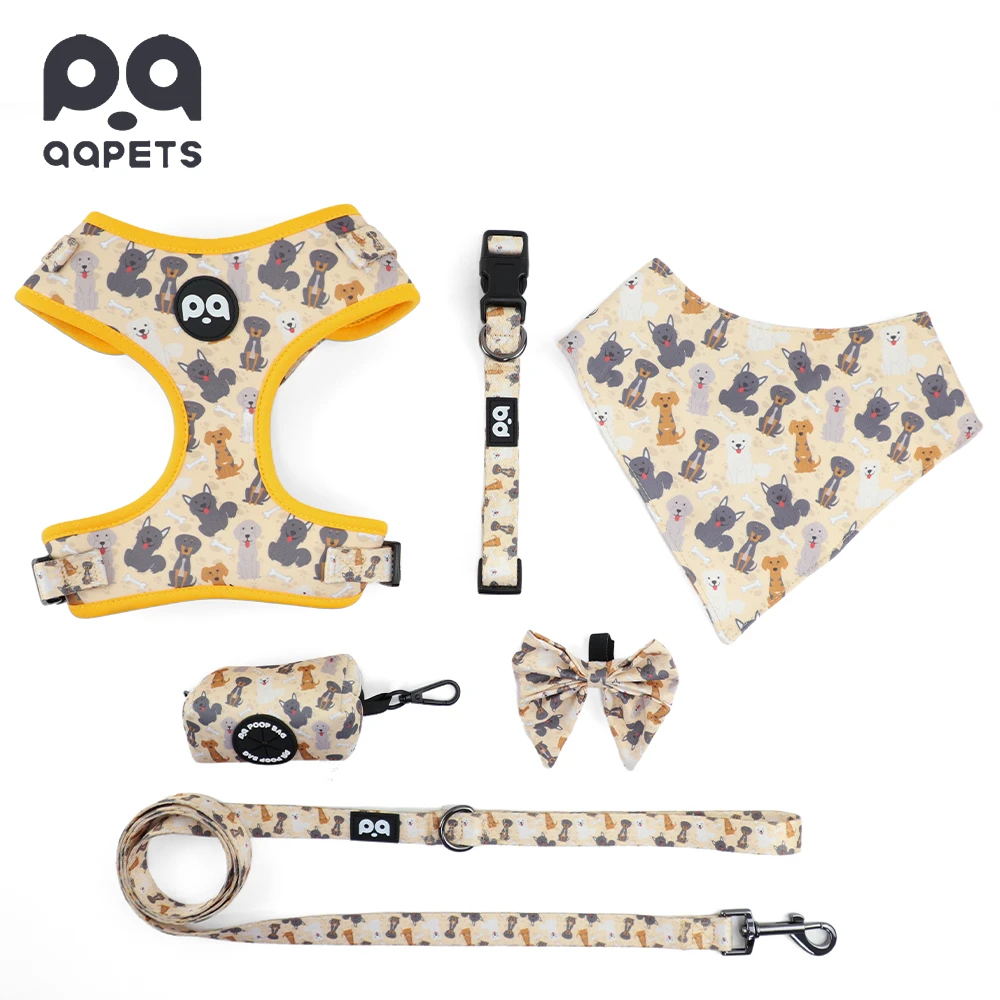
- Matching Sets: The ultimate branding statement. We can apply your custom design consistently across an entire product family: collars, leashes, harnesses, bow ties, and even poop bag holders. This creates powerful up-sell opportunities and a professional brand presentation.
How Do You Choose the Best Materials and Hardware?
You know you need durable materials, but you're not a materials engineer. You're worried about choosing a material that fades quickly or hardware that rusts, leading to unhappy customers and negative reviews.
The best approach is to match the material to the collar's intended use and design. High-density polyester5 is the top choice for vibrant, custom patterns, while hardware choices should prioritize safety and durability, such as using welded D-rings6.
The materials you choose define your product's performance and feel. It's a critical decision that impacts everything from durability to the comfort of the dog wearing it.
Tertiary Heading: Comparing Common Collar Materials
| Materiale | Key Characteristics | Best Use Case for Your Brand |
|---|---|---|
| High-Density Polyester | Extremely durable, holds color exceptionally well, excellent for high-resolution printing. | The All-Rounder. This is our most recommended material. It is the perfect canvas for the unique, vibrant custom patterns you will create. It is strong, fade-resistant, and comfortable. |
| Nylon7 | Very strong, abrasion-resistant, often has a slight sheen. | For a Rugged Look. A great choice for solid-color collars or simple designs where ultimate strength is the top priority. Can be slightly stiffer than polyester. |
| Neoprene Padding8 | Soft, cushioned, water-resistant neoprene lining on the inside of the collar. | For Premium Comfort. Adding a neoprene lining to a polyester or nylon collar is an excellent up-sell. It adds a layer of soft padding, which is great for dogs with sensitive skin. |
For hardware, safety is the primary concern. Always insist on welded D-rings. Unwelded rings can be pulled open by a strong dog, which is a major safety failure. The choice between a plastic or metal buckle often comes down to brand positioning and the size of the collar.
How Can You Understand MOQ and Bulk Pricing?
You've heard horror stories about manufacturers requiring a Minimum Order Quantity (MOQ)9 of thousands of units. You're a growing brand, and tying up that much cash in a single design feels impossible and incredibly risky.
You must find a manufacturer whose business model is designed to support growing brands. Seek out a factory that offers "lightweight customization"—a very low MOQ that allows you to order in bulk without taking on massive financial risk.
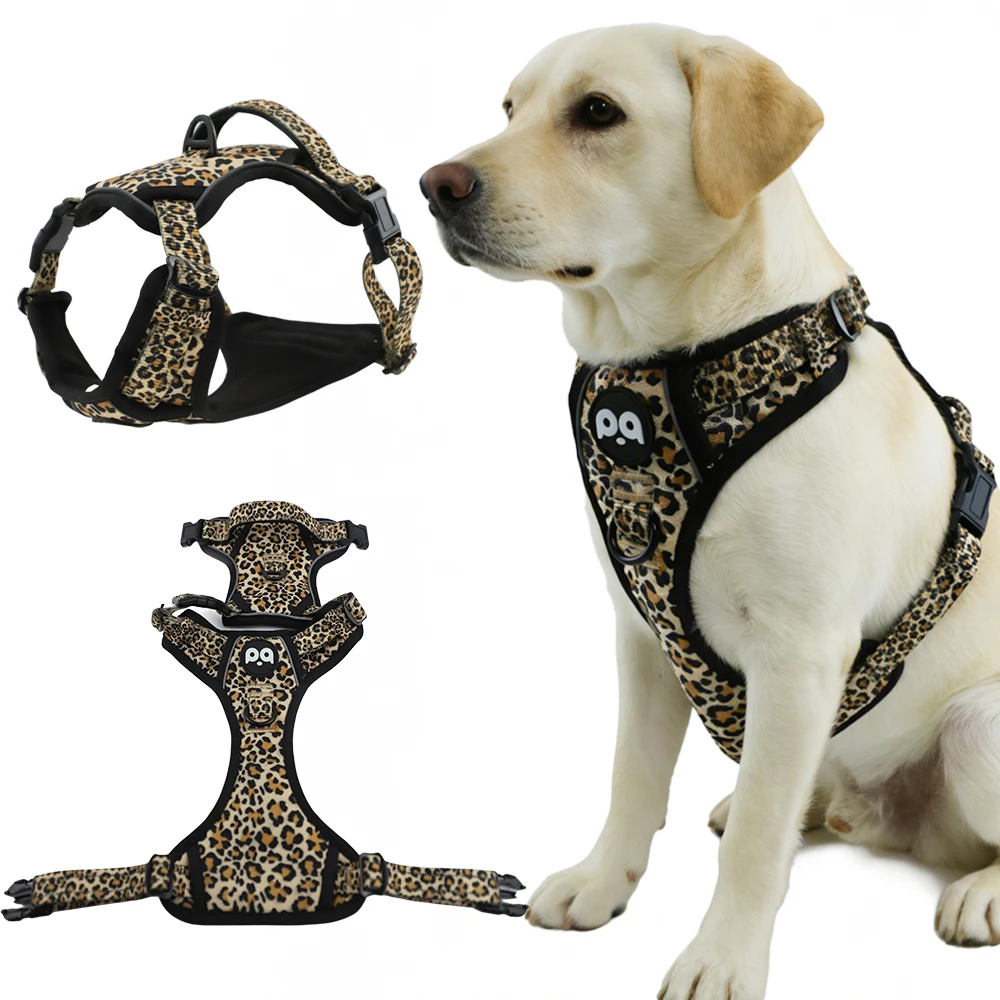
The MOQ is often the biggest barrier for new and growing pet brands. A high MOQ forces you to bet big on a small number of designs. If one of those designs doesn't sell well, you're left with a huge amount of dead stock10 and wasted capital. We recognized this problem and built our factory around the solution. At qqpets, we offer an industry-leading low MOQ of just 50 pieces per design/size. This completely changes the game. Instead of ordering 2,000 units of one design, you can order 200 units of ten different designs. This allows you to:
- Launch a wider, more diverse product collection from day one.
- Test new patterns and colors to see what resonates with your audience.
- Order seasonal or holiday-themed collections without fear.
- Manage your cash flow much more effectively.
This low MOQ model is how we empower brands to be more creative, agile, and ultimately, more profitable.
How Do You Customize Logos, Patterns, and Colors?
You have a strong brand identity in your mind, but you're not a graphic designer. You're struggling to translate your ideas for patterns and logos into a professional, production-ready format.
You can now use powerful, user-friendly technology to act as your in-house designer. With our free tools, you can generate original patterns with AI, apply them to 3D models, and perfect your branding in a matter of minutes.
This is the most exciting part of the process, and we've made it incredibly simple. You no longer need to hire expensive freelance designers or struggle with complex software to create a world-class product line. Our exclusive 3D Mockup System gives you everything you need.
- Generate Infinite Patterns: Access our AI Pattern Generator. Simply type in what you want to see—"a pattern of Boston Terriers wearing sunglasses," "a retro 70s floral design," "a minimalist black and white wave pattern"—and our system will create unique, high-resolution designs for you instantly.
- Visualize in Seconds: Choose your favorite pattern and watch as our system applies it to a photorealistic 3D model of a dog collar. Our "Mockup in seconds" feature lets you see exactly how your product will look.
- Perfect Your Brand: Add your logo, choosing from different styles like woven or PVC. Adjust the hardware color. Match the webbing color to your brand's specific PMS color code. You have total creative control, and it's all visual and intuitive.
Why is Quality Control Before Mass Production So Important?
You've approved a digital mockup, and it looks perfect. You may be tempted to save time and money by skipping the physical sample and going straight to the main order.
A digital mockup can't tell you how a collar feels, how the buckle functions, or how strong the stitching is. Skipping the physical sample step is the single biggest risk you can take when ordering in bulk.
The physical sample is your insurance policy. It's the moment where your digital design becomes a real, tangible product that you can hold, test, and approve. This step is non-negotiable for any serious brand. At qqpets, we've made this crucial step as fast as possible with our "Sample in 3 Days" policy. When your sample arrives, you must become a quality inspector. Check these things:
- Stitching Integrity: Pull on the seams, especially around the D-ring and buckle. The stitching should be tight, clean, and reinforced11.
- Hardware Function: Open and close the buckle multiple times. It should click securely and feel robust. Check the finish for any imperfections.
- Print Quality & Feel: Is the color vibrant and accurate? Is the pattern sharp? How does the material feel? Is it soft enough for a dog to wear comfortably?
Only after you have personally approved this physical sample should you ever give the green light for mass production.
How Do You Choose a Reliable Dog Collar Manufacturer?
You've searched online and found dozens of potential suppliers. They all have websites with nice pictures, and they all claim to have high quality. You don't know how to tell the good ones from the bad ones.
You must evaluate potential partners against a clear checklist of business practices. Look for a true factory, not a middleman, that offers a low MOQ, provides advanced design tools, and has a transparent sampling process.
Choosing your manufacturer is the most important decision your brand will make. Use this checklist to vet them:
- Are they a direct factory? Ask for their business license or certifications (like BSCI12). A direct factory means better pricing, communication, and control. We are a direct, certified factory.
- What is their MOQ? If it's in the thousands, they are not set up for growing brands. Look for a low MOQ like our 50-piece minimum.
- What are their design capabilities? Do they offer true customization, or just a limited menu? Ask to see their design tools. Our AI and 3D system is a key differentiator.
- Do they have a fast and affordable sampling policy? A commitment to fast sampling ("Sample in 3 Days") shows they are confident in their quality and want to earn your trust.
- How is their communication? Are they responsive, professional, and helpful? A good partner will feel like an extension of your team.
Ready to see how easy the process can be with the right partner? Contact our team today and let's start building your brand.
Conclusione
Ordering custom dog collars in bulk is a straightforward process when you have a reliable partner. By prioritizing customization, verifying quality with samples, and leveraging a low MOQ, you can confidently scale your pet brand.
"Consistency in Manufacturing: The key to quality and ...", https://nwicc.edu/consistency-in-manufacturing-the-key-to-quality-and-innovation-at-ncc/. Quality-management standards and manufacturing guidance describe inspection and process control as methods for reducing defects and improving product consistency, supporting the article’s emphasis on quality control in bulk production. Evidence role: expert_consensus; source type: institution. Supports: Quality control is important for maintaining consistency and reducing defects in bulk manufactured products.. Scope note: The source would support quality-control principles broadly, not prove this specific factory’s practices. ↩
"Development of Functional Rapid Prototyping for the ...", https://scholarworks.uni.edu/cgi/viewcontent.cgi?article=4828&context=grp. Product-development literature treats prototypes and pre-production samples as tools for evaluating form, fit, function, and manufacturability before full-scale production, supporting the article’s claim that physical samples reduce bulk-order risk. Evidence role: expert_consensus; source type: education. Supports: A physical sample allows evaluation of product qualities that cannot be fully verified from a digital mockup.. Scope note: The source would support sampling and prototyping practices generally, not prove that every collar order requires the same sampling protocol. ↩
"How to Use Economies of Scale", https://www.phoenix.edu/articles/business/how-to-use-economies-of-scale.html. Operations-management literature defines economies of scale as reductions in average unit cost as production volume increases, supporting the article’s claim that larger production runs can lower per-collar costs. Evidence role: definition; source type: education. Supports: Bulk ordering lowers per-unit costs because of economies of scale.. Scope note: The source would support the general production-cost mechanism, not the exact savings for custom dog collars. ↩
"The Impact of Stockouts on Customer Loyalty to Lean Retailers", https://scholarworks.waldenu.edu/dissertations/1011/. Supply-chain research links stockouts with lost sales and reduced customer satisfaction, providing general support for the claim that reliable inventory helps maintain business momentum and order fulfillment. Evidence role: general_support; source type: paper. Supports: Maintaining adequate inventory reduces stockout-related disruption and customer frustration.. Scope note: The evidence would be general retail or supply-chain evidence rather than pet-product-specific proof. ↩
"An Economical Dyeing Process for Cotton, Polyester and ...", https://jtatm.textiles.ncsu.edu/index.php/JTATM/article/download/682/727. Textile references describe polyester fibers as durable, resistant to many forms of stretching and abrasion, and suitable for dyeing or printing, providing contextual support for using polyester in printed pet collars. Evidence role: general_support; source type: education. Supports: High-density polyester is a durable material suitable for vibrant printed collar designs.. Scope note: The evidence would describe polyester as a material class and may not test the specific high-density webbing used in dog collars. ↩
"Best Hardware for Pet Accessories: A Professional Maker's ...", https://hab-to.com/blogs/leather-hour-blog/best-hardware-for-pet-accessories-a-professional-maker-s-guide?srsltid=AYCX9vIiL1au_q-Hd266c30DcX0D8au4-6Ws2VBccbSyigA9wd8a1Dbo. Mechanical-design and safety-testing sources distinguish welded or closed rings from open split rings under load, supporting the article’s safety rationale that load-bearing leash-attachment hardware should resist deformation and separation. Evidence role: mechanism; source type: research. Supports: Welded D-rings provide safer load-bearing attachment points than unwelded rings that may open under force.. Scope note: A general mechanical source would explain the load-bearing principle; direct dog-collar failure data may be limited. ↩
"Polyamides or Nylons (PA)", https://books.byui.edu/plastics_materials_a/polyamides_or_nylons. Textile and materials references identify nylon as a strong synthetic polymer with good abrasion resistance, supporting the article’s description of nylon as a rugged collar material. Evidence role: general_support; source type: encyclopedia. Supports: Nylon is strong and abrasion-resistant, making it suitable for rugged collar designs.. Scope note: The source would support nylon’s general material properties, not the performance of every nylon collar construction. ↩
"Neoprene", https://en.wikipedia.org/wiki/Neoprene. Materials references describe neoprene as a synthetic rubber valued for cushioning, flexibility, and water resistance, supporting the article’s claim that neoprene can add comfort and moisture resistance to collar interiors. Evidence role: general_support; source type: encyclopedia. Supports: Neoprene padding is soft, cushioned, and water-resistant.. Scope note: The evidence would support neoprene’s general properties, not clinical claims about preventing irritation in dogs. ↩
"Raw Material Minimum Order Quantity Optimization", https://dspace.mit.edu/entities/publication/e43f520c-9951-4e8d-b867-36c7afb5234c. Supply-chain and operations sources define minimum order quantity as the smallest quantity a supplier will accept for an order, supporting the article’s explanation of MOQ as a key constraint in bulk purchasing. Evidence role: definition; source type: education. Supports: MOQ is a supplier-imposed minimum order size that can shape purchasing decisions.. Scope note: The source would define MOQ generally and would not validate any particular supplier’s minimum quantity. ↩
"A comparison of inventory carrying cost in literature and in ...", https://dr.lib.iastate.edu/bitstreams/8d2b0874-381d-4752-b619-a8d340042d5d/download. Inventory-management literature describes excess or obsolete inventory as tying up working capital and creating carrying or markdown costs, supporting the article’s warning that unsold designs can become dead stock. Evidence role: general_support; source type: paper. Supports: Large orders of poorly selling designs can create excess inventory and waste capital.. Scope note: The evidence would support the inventory-risk mechanism broadly, not quantify risk for pet collar designs. ↩
"Evaluation of Sewing Performance of Leather, Denim and ...", https://www.academia.edu/67099151/Evaluation_of_Sewing_Performance_of_Leather_Denim_and_PVC_Coated_Fabric_Based_on_Seam_Puckering_Seam_Strength_and_Seam_Efficiency. Textile-seam testing standards and sewn-product quality references explain that seam construction and reinforcement affect seam strength and failure resistance, supporting the article’s inspection advice for collar stitching. Evidence role: mechanism; source type: institution. Supports: Reinforced stitching around load-bearing collar areas is important for product strength and safety.. Scope note: The evidence would support seam-strength principles; collar-specific strength depends on thread, stitch pattern, and construction details. ↩
"amfori BSCI", https://de.wikipedia.org/wiki/Amfori_BSCI. Amfori documentation describes BSCI as a social compliance system for assessing labor conditions and supply-chain responsibility, supporting the article’s use of BSCI as an example of a manufacturer certification to request. Evidence role: definition; source type: institution. Supports: BSCI is a recognized social compliance framework that buyers may use when vetting suppliers.. Scope note: BSCI participation concerns social compliance auditing and does not by itself verify product quality or safety. ↩