 IT
IT  EN
EN  FR
FR  RU
RU  DE
DE  AR
AR  ES
ES  PT
PT  NL
NL  PL
PL  SL
SL  ET
ET  RO
RO  CS
CS  EL
EL  LV
LV 
As a brand owner, you know that the word "pitbull" implies strength. When you sell a custom dog harness for pitbulls, your customers aren't just buying a walking aid; they are buying a promise of safety and control. A harness failure is a brand's worst nightmare. So, how does a factory test the strength of its harnesses to ensure they can handle the power of these magnificent dogs1? The answer separates a trustworthy partner from a risky liability.
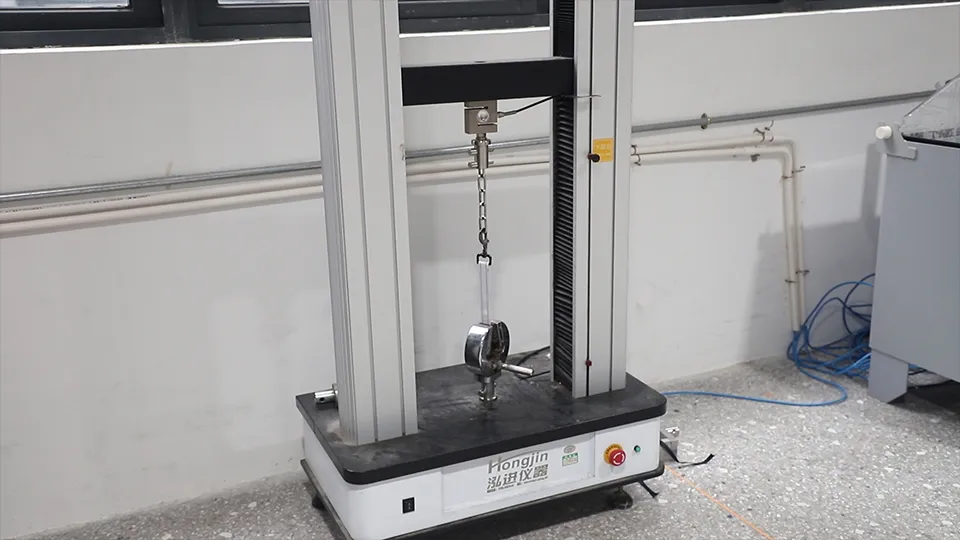
A reliable factory tests the strength of a harness not as a single event, but as a systematic, multi-stage process2. This includes using specialized machinery to test the tensile strength of the raw webbing3, cycle-testing buckles for durability4, and applying static and dynamic loads to finished harnesses5 to verify the integrity of the stitching and overall construction.
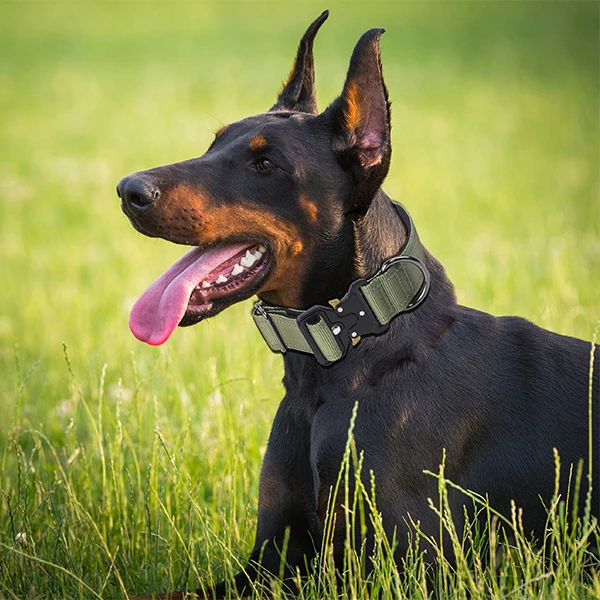
My name is Cathy, and as a customization expert at qqpets, I believe that transparency is the foundation of trust. The strength of your product shouldn't be a mystery or a marketing claim; it should be a verifiable fact. For our partners—global online brand sellers like you—this verification is not just about peace of mind. It is a critical component of building a reputable and successful brand that customers will trust with the safety of their beloved pets. This process, therefore, is not a secret we keep, but a strength we are proud to share. Let's pull back the curtain and look at the engineering behind a truly "pitbull-proof" harness.
Beyond a simple pull test: What does 'certified testing' really mean?
You're worried that a factory might just pull on a harness by hand and call it "tested." This creates a huge risk for your brand, as there's no real data or guarantee behind the claim. You need a process you can trust and stand behind.
"Certified testing" means following a documented, repeatable, and audited Quality Management System6, like ISO 90017. It ensures every component and every finished product is subjected to the same rigorous, scientific tests, guaranteeing consistent strength across your entire order, not just on a single "golden sample."
The difference between a casual claim of "strength" and a certified process is everything. At our factory, our ISO 9001 certification isn't just a logo on our website; it is the rulebook that governs our entire production floor. It dictates a precise, three-stage testing protocol for every harness designed for strong breeds like pitbulls. This protocol is designed to find and eliminate any potential point of failure before it ever leaves our facility.
The Three Stages of Certified Strength Verification
This is how we build a harness you can sell with absolute confidence.
-
Stage 1: Raw Material Qualification Before we even think about sewing, the raw materials are put to the test. A sample from every batch of nylon webbing8 is placed into a digital tensiometer. This machine pulls the webbing with a measured amount of force until it breaks. We have a strict minimum tensile strength requirement9 that far exceeds the pulling force of even the strongest pitbull. If the material doesn't meet this standard, the entire batch is rejected.
-
Stage 2: Component Stress-Testing A harness is only as strong as its weakest link. That's why the hardware is tested independently. The plastic buckles are placed in a machine that opens and closes them thousands of times10 to simulate years of use and ensure they don't fatigue or crack. The metal D-rings are subjected to a static load test11, where we apply hundreds of pounds of force to ensure they won't deform or break under the sudden strain of a lunging dog.
-
Stage 3: Assembled Product Verification Finally, we test the finished product. We randomly select completed harnesses from a production run and mount them onto a testing rig. We apply both static force (a sustained, heavy pull) and dynamic force (a sudden, hard jerk) to simulate real-world scenarios. This final test specifically targets the integrity of the stitching—especially our reinforced box-X stitching at all critical load points12—to ensure the construction is as strong as the materials it's made from.
How can this proven strength become your brand's unique selling point?
Your product is now verifiably strong and safe. The problem is, your competitor's harness—which might not be tested at all—looks almost identical. You are stuck selling a superior product that looks like a basic commodity, forcing you to compete on price alone.
The solution is to wrap that proven engineering in an unmissable, unique design. A modern factory partner doesn't just provide a strong product; they provide the tools to make that strong product uniquely yours, turning a safe commodity into a premium, high-desire brand item.
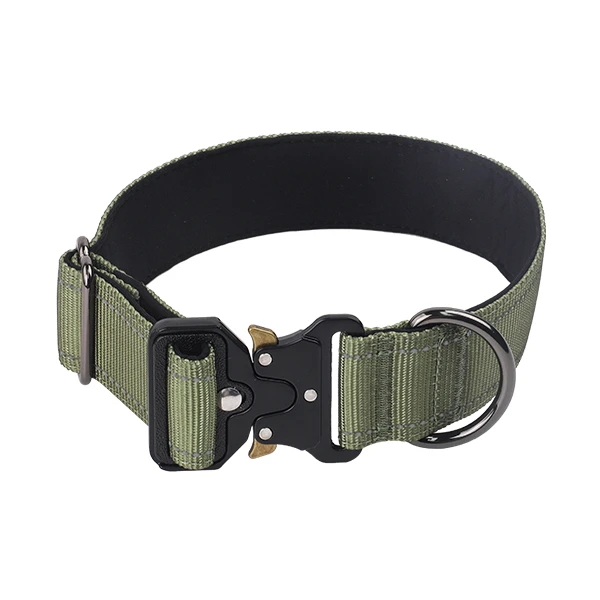
This is the second, and equally important, half of our mission at qqpets. We provide the certified strength and then empower you to make it beautiful. This is encapsulated in our promise to online sellers: "Mockup in seconds. Sample in 3 Days."
We have built a powerful digital ecosystem specifically for you. The star of this system is our revolutionary, free-to-use 3D Mockup System. It allows you to take a harness chassis that you know is strength-tested and instantly transform it into a unique piece of art.
- Become the Designer: Don't have a design? No problem. Use our integrated AI Pattern Generator. Simply type what you want to see—"a pattern of smiling blue-nosed pitbulls in a pop-art style," for example—and the AI creates a production-ready Modello personalizzato just for you. This is differentiation on a whole new level.
- Launch with Confidence and Variety: With our "lightweight customization" model, you can order as few as 50 pieces per design and size. This means you can launch a whole collection of verifiably strong pitbull harnesses, each with a different unique pattern, without a huge upfront investment. Test the market, see what sells, and scale with confidence.
- Build Your Brand World: That unique pattern isn't just for harnesses. You can apply it to matching collars, leashes, and accessories with a few clicks, creating a cohesive brand that encourages repeat business and higher customer lifetime value.
The journey from a raw material test to a thriving online brand is a direct path at qqpets. Our professional team is ready to guide you. If you're ready to build a brand based on proven safety and unlimited design, I invite you to contact our expert team today.
Conclusione
A factory tests a pitbull harness not with a single pull, but with a certified, multi-stage system. By partnering with a factory that proves this strength and gives you the tools to make it visually unique, you can build a brand that is both trusted for safety and loved for its style.
"Pitbull Power: Unleashing Sports Potential - Grinnell CS", https://cs.grinnell.edu/lunar-note/pitbull-power-unleashing-sports-potential-1767648361. A veterinary or canine morphology source can support the contextual claim that pit bull-type dogs are typically muscular, medium-to-large dogs capable of exerting substantial physical force; this does not quantify the pulling force of any individual dog. Evidence role: general_support; source type: education. Supports: Pitbull-type dogs are strong enough that harness strength is a meaningful safety consideration.. Scope note: Pit bull is often used as a category rather than a single standardized breed, so evidence may be contextual rather than breed-specific. ↩
"Stages Of Quality Control - NYU Shibboleth", https://shibboleth.idm.home.nyu.edu/stages-of-quality-control. A quality-assurance or manufacturing engineering source can support that product reliability is commonly evaluated through staged controls, including incoming material checks, component testing, and finished-product verification; this is a general manufacturing principle rather than proof of one factory’s process. Evidence role: expert_consensus; source type: education. Supports: Reliable harness strength testing should be conducted through a systematic, multi-stage quality-control process.. Scope note: The source would support the general QA structure, not verify that the named factory follows it. ↩
"ASTM D6775 - Textile Webbing Tensile Test Equipment", https://www.universalgripco.com/astm-d6775. Textile testing standards describe tensile-strength testing as a method for measuring the breaking force or elongation of webbing and similar textile materials, supporting the relevance of raw webbing tensile tests for harness strength assessment. Evidence role: mechanism; source type: institution. Supports: Testing raw webbing tensile strength is a valid way to assess whether harness material can withstand pulling loads.. Scope note: A standard explains how tensile strength is measured but does not establish the appropriate pass/fail value for pitbull harnesses. ↩
"[PDF] TP-209-08 - NHTSA", https://www.nhtsa.gov/sites/nhtsa.gov/files/documents/tp-209-08_tag.pdf. Durability and fatigue-testing literature supports the use of repeated operating cycles to evaluate whether components such as closures, latches, or buckles maintain function after repeated use; this supports the method but not a specific cycle count for pet harness buckles. Evidence role: mechanism; source type: research. Supports: Repeated cycle testing is an appropriate method for assessing buckle durability.. Scope note: Evidence is likely to be general to mechanical components or fastening hardware rather than specific to dog-harness buckles. ↩
"(PDF) Comparison Between Dynamic and Static Pile Load Testing", https://www.academia.edu/15344383/Comparison_Between_Dynamic_and_Static_Pile_Load_Testing. Engineering sources distinguish static loads from dynamic or impact loads and explain that both can affect structural performance, supporting the use of sustained and sudden-load tests for assembled harnesses. Evidence role: mechanism; source type: education. Supports: Applying both static and dynamic loads to finished harnesses is relevant to assessing real-world performance.. Scope note: General load-testing principles do not specify exact loads or acceptance criteria for dog harnesses. ↩
"ISO 9001:2015 - Quality management systems — Requirements", https://www.iso.org/standard/62085.html. ISO 9001 and certification-body materials support that quality management systems rely on documented procedures, repeatable controls, internal audits, and external certification audits; this supports the governance framework rather than proving product performance. Evidence role: definition; source type: institution. Supports: A certified QMS involves documented, repeatable, and audited processes.. Scope note: A QMS framework can improve consistency but does not by itself demonstrate that every harness meets a particular strength threshold. ↩
"ISO 9001:2015 - Quality management systems — Requirements", https://www.iso.org/standard/62085.html. ISO describes ISO 9001 as a quality management standard requiring organizations to establish documented processes, monitor performance, and pursue consistent conformity to customer and regulatory requirements. Evidence role: definition; source type: institution. Supports: ISO 9001 is relevant to documented and repeatable quality management in manufacturing.. Scope note: ISO 9001 certifies a management system, not the strength or safety of a specific harness model. ↩
"6.2.1. What is Acceptance Sampling?", https://www.itl.nist.gov/div898/handbook/pmc/section2/pmc21.htm. Acceptance-sampling and incoming-inspection guidance supports batch or lot sampling as a common method for verifying material conformity before production; it does not confirm that sampling every batch is universally required. Evidence role: general_support; source type: government. Supports: Sampling material batches before production is a recognized quality-control practice.. Scope note: Sampling plans vary by risk, industry, and contract requirements. ↩
"D6775 Standard Test Method for Breaking Strength and ...", https://www.astm.org/d6775-13r17.html. Textile webbing standards and material specifications support the practice of setting minimum breaking-strength requirements for load-bearing webbing; such standards explain the concept but may not prescribe a pitbull-harness-specific threshold. Evidence role: mechanism; source type: institution. Supports: Load-bearing webbing can be qualified against a specified minimum tensile or breaking strength.. Scope note: The cited source would support minimum-strength specification practices, not the factory’s chosen numerical requirement. ↩
"Fatigue Testing of Wearable Sensing Technologies - PMC - NIH", https://pmc.ncbi.nlm.nih.gov/articles/PMC8347841/. Accelerated durability testing literature supports repeated actuation as a way to reveal wear, fatigue, or failure in mechanical components over simulated service life; the exact number of cycles must be justified by the product’s intended use. Evidence role: mechanism; source type: research. Supports: Repeated opening-and-closing cycles can be used to assess buckle fatigue and durability.. Scope note: The evidence would support cyclic testing in principle, not the sufficiency of “thousands” of cycles for all harness designs. ↩
"Mechanical Test Lab", https://www.me.washington.edu/shops/mechanical-test-lab. Mechanical testing references define static load testing as applying a controlled sustained load to evaluate deformation, strength, or failure behavior, supporting its use for hardware such as D-rings. Evidence role: definition; source type: education. Supports: A static load test can assess whether harness hardware deforms or fails under sustained force.. Scope note: A general static-load source does not establish the correct load level for dog-harness D-rings. ↩
"Sewing a Box X Stitch in Webbing & Breaking Strength Formula", https://www.youtube.com/watch?v=wf6buu7PqT4. Sources on load-bearing sewn joints and stitch-pattern performance can support that reinforced stitch patterns, including box or box-X configurations, are used to distribute loads and improve seam strength; this does not prove that any specific harness seam will pass a given load test. Evidence role: mechanism; source type: paper. Supports: Reinforced box-X stitching is relevant to improving strength at load-bearing attachment points.. Scope note: Support may come from sewing engineering, parachute, outdoor gear, or textile-joint studies rather than dog-harness-specific research. ↩