 IT
IT  EN
EN  FR
FR  RU
RU  DE
DE  AR
AR  ES
ES  PT
PT  NL
NL  PL
PL  SL
SL  ET
ET  RO
RO  CS
CS  EL
EL  LV
LV 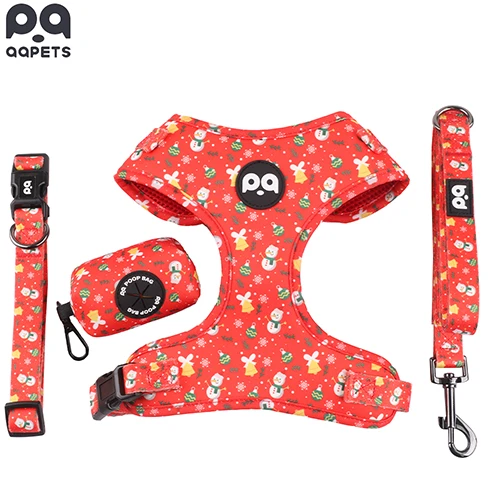
You want to offer your customers a complete, stylish look by creating a perfectly matched custom dog collar and harness. The problem is, "matching" is harder than it sounds. You order samples, and the harness blue is a shade darker than the collar blue, and the pattern looks bigger on one than the other.1
Creating a perfectly matched set requires a single, unified production process2. This is achieved by using one factory that applies the exact same digital pattern file, color codes, and hardware components3 across both products, guaranteeing absolute consistency from screen to reality.
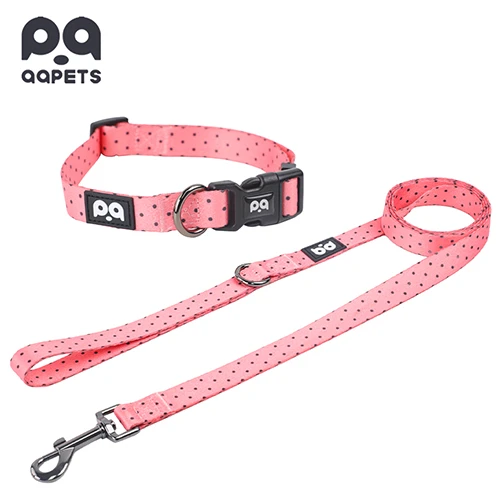
As a specialist in pet product customization at qqpets, I see this frustration from brand owners every single day. They try to coordinate between two different suppliers, or even two different production lines at the same factory, and the result is chaos. A "nearly matched" set looks cheap and tells the customer that your brand doesn't care about the details. This is precisely why we've engineered our entire factory process around a single-source digital system. Our goal is to make creating a flawless, matching collection not just possible, but incredibly simple for online sellers like you.
How do you guarantee the pattern is identical on both items?
You've finally approved a stunning pattern for your new collection. Weeks later, your samples arrive. The pattern on the 1-inch collar webbing looks great, but on the 2-inch harness webbing, it's stretched and pixelated. The colors also look faded on the harness material. It's a disaster.
The only way to guarantee a pattern is identical is to use a single, vector-based digital file4 as the source for all products. This file is then applied within a unified system that automatically scales the design perfectly for different webbing widths and product shapes5, ensuring consistency.
This is a technical problem that plagues many brands. The issue arises when factories use separate, disconnected processes for different products. The team printing collars isn't talking to the team printing harnesses. They might use different machines, different ink batches6, or simply resize a low-quality JPG file incorrectly7. As a brand owner, you can't afford that kind of inconsistency. A truly modern manufacturing partner eliminates this risk by building the process around a central digital asset—your design. This ensures what you approve on your screen is precisely what gets produced, every single time, across every single product in your collection.
One Design File to Rule Them All
We call this concept a "single source of truth8." Your approved design is the master file, and our system is built to execute it flawlessly, no matter the product.
- The Power of AI + 3D: Our system gives you unprecedented control. On our 3D Mockup System, you can become the designer. Use our AI Pattern Generator to create your unique design by simply typing what you want (e.g., "cute corgi dogs on a light blue background").
- Create Your Collection Instantly: Once the AI generates your one-of-a-kind pattern, you can apply that single design file to a dog collar, then a harness, then a leash, all within the same interface. You'll see in real-time how the pattern scales perfectly to fit each product. No stretching, no pixelation. What you see is what you get.
- From Mockup to Reality, Fast: This is the core of our "Mockup in seconds. Sample in 3 Days" promise. The same digital file you approve in the 3D system is sent directly to our printing department. This removes all human error and interpretation, guaranteeing the physical sample you receive is a perfect replica of your digital design.
| Method | The Old, Risky Way | The qqpets "Single Source" Way |
|---|---|---|
| Design Source | Separate, low-quality image files for each product. | One high-resolution, vector-based digital master file. |
| Scaling | Manually stretched or shrunk, causing distortion. | Automatically and proportionally scaled by the system. |
| Colore | Relies on "eyeballing" it, leading to variation. | Uses precise Pantone/HEX codes9 from the master file. |
| Result | Mismatched, unprofessional-looking "sets." | A perfectly matched, professional collection. |
What about the hardware and branding details?
Your pattern is now a perfect match, but you're not done. The sample harness has a sturdy, matte black D-ring, but the collar has a cheap, shiny silver one. The logo patch on one is PVC, and on the other, it's a woven label. The "set" still feels disjointed.
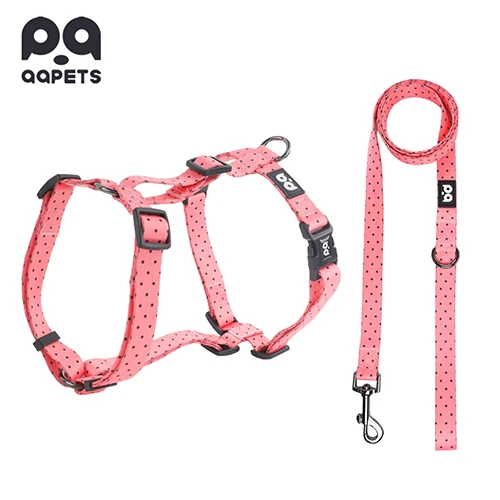
A perfectly matched set requires consistency in all components10. An integrated customization platform allows you to select the exact same hardware models, finishes, and branding elements and apply them across both the collar and harness designs for a truly cohesive, premium feel.
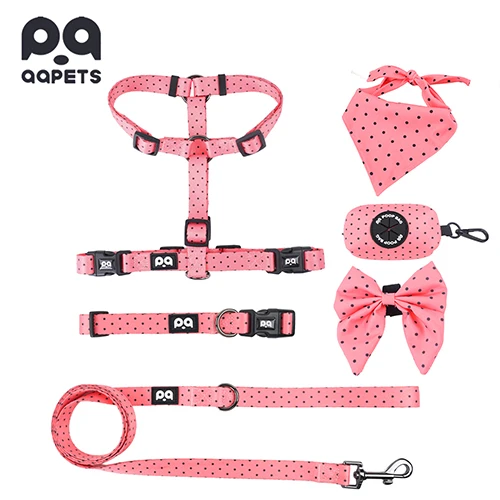
Customers notice these details, even if only subconsciously.11 The consistent click of a high-quality buckle on both the collar and harness, the same smooth finish on all the metal parts—these details create a powerful, tactile sense of quality and thoughtfulness. This is what elevates your products from mere pet accessories to a true designer collection. It signals to the customer that you are a brand that cares about quality from the big picture down to the smallest component. As a factory partner, our job is to give you the control to orchestrate this harmony, and our low MOQ of just 50 pieces per style makes it easy to launch a complete, perfectly matched set without a huge investment.
Curating a Cohesive Component Library
Think of yourself as the curator of your brand. You're not just choosing a pattern; you're selecting every element to create a specific experience.
- Hardware Harmony: Il nostro 3D Mockup System goes beyond patterns. You have a library of hardware components to choose from. You can select "Buckle Style #12 in Matte Black" and "D-Ring #DR-08 in Matte Black" and apply those exact choices to both the collar and harness. This ensures they are made from the same material and have the same finish.
- Consistent Branding: The same applies to your logo. You can choose to have a 2cm rubber PVC patch on the harness and a 1.5cm version of the exact same patch on the collar. This consistency reinforces your brand identity12 and looks incredibly professional.
- Building Your Collection: By controlling the pattern, the hardware, and the branding elements from a single interface, you are truly creating a perfectly matched set. You can then order with confidence, knowing that the 50 collars and 50 harnesses you order will look like they were born to be together.
Ready to stop struggling with mismatches and start building a beautiful, cohesive collection? Contact our expert team today.
Conclusione
A perfectly matched set is born from a single-source factory with a unified digital system for patterns and hardware. We provide the tools and flexible manufacturing that empower you to create these premium collections effortlessly.
"Digital textile printing: colorfastness of reactive inks versus pigment ...", https://dr.lib.iastate.edu/entities/publication/0978d307-a46a-4ee3-9e6e-f306e655870e. A color-management or textile-printing source can document that substrate, printer, ink, and workflow differences can produce visible color and scale inconsistencies between printed products. Evidence role: general_support; source type: paper. Supports: Different production conditions can cause visible shade and pattern-size differences between items intended to match.. Scope note: This would support the general production-risk claim, not the specific collar-and-harness example. ↩
"Reducing Variation with SPC | Center for Quality and Applied Statistics", https://www.rit.edu/processimprovement/reducing-variation-spc. A manufacturing or product-data-management source can explain that unified workflows and controlled master data reduce variation and rework across related products. Evidence role: mechanism; source type: institution. Supports: Using one unified production process can improve consistency across related manufactured products.. Scope note: Such evidence would support the process-control principle rather than prove that any particular factory guarantees a perfect match. ↩
"What is Variant Management? Definition & PLM Applications - Aras", https://aras.com/en/glossary/variant-management. A product lifecycle management or color-management source can support that using controlled digital assets, specified color standards, and defined components helps maintain consistency across product variants. Evidence role: mechanism; source type: research. Supports: Shared design files, color specifications, and component specifications help keep related products consistent.. Scope note: This is contextual support for consistency practices, not direct evidence of guaranteed absolute consistency. ↩
"Vector graphics - Wikipedia", https://en.wikipedia.org/wiki/Vector_graphics. A graphics or computing reference can document that vector graphics are resolution-independent and can be scaled without the pixelation associated with raster images. Evidence role: definition; source type: encyclopedia. Supports: Vector-based digital files are better suited than raster files for scaling designs across different product sizes.. Scope note: This supports the scalability of vector files, but not all production outcomes unless the entire workflow preserves vector data and correct color management. ↩
"Designing for Print vs. Digital: Key Differences and Considerations", https://www.rmcad.edu/blog/designing-for-print-vs-digital-key-differences-and-considerations/. A computer-aided design or digital-printing source can explain how proportional scaling and controlled digital workflows preserve design geometry across different output dimensions. Evidence role: mechanism; source type: education. Supports: Controlled digital scaling can preserve pattern proportions across different product dimensions.. Scope note: The source would support the mechanism of proportional scaling, not the article’s absolute claim that scaling is always perfect. ↩
"Commercial Printing Guide| Color Printers and Ink Color Explained", https://www.printingforless.com/blog/guide-to-using-color-and-ink-in-commercial-printing/?srsltid=AfmBOookdDmY2Q4FkZuMVEoNq6q-Fhm_uHxhclwcaaXng8WJEPib5PNc. A printing or textile-engineering source can show that differences in equipment, inks, and process variables can affect color reproduction and print consistency. Evidence role: mechanism; source type: paper. Supports: Using different machines or ink batches can contribute to color or print variation.. Scope note: This evidence would address general printing variation and may not specifically test pet-accessory production lines. ↩
"Image scaling - Wikipedia", https://en.wikipedia.org/wiki/Image_scaling. A digital-imaging source can document that JPEG is a lossy raster format and that enlarging low-resolution raster images can produce visible artifacts or pixelation. Evidence role: definition; source type: education. Supports: Incorrectly resizing a low-quality JPEG can distort or degrade printed artwork.. Scope note: This supports the imaging mechanism but does not establish how often factories make this error. ↩
"Single source of truth - Wikipedia", https://en.wikipedia.org/wiki/Single_source_of_truth. An information-systems or product-data-management source can define a single source of truth as maintaining authoritative data so that users and processes work from the same controlled information. Evidence role: definition; source type: institution. Supports: A single source of truth means using one authoritative master record or file for downstream processes.. Scope note: This supports the terminology and data-governance concept, not the vendor’s implementation. ↩
"Pantone - Wikipedia", https://en.wikipedia.org/wiki/Pantone. A color-standard or color-management source can explain that standardized color references such as Pantone and numeric color codes are used to specify colors consistently across design and production workflows. Evidence role: definition; source type: institution. Supports: Color codes and standards help specify intended colors more consistently than visual estimation alone.. Scope note: HEX values are device-dependent without color management, so this supports color specification rather than guaranteed physical color matching. ↩
"Package design as a branding tool in the cosmetic industry - PMC", https://pmc.ncbi.nlm.nih.gov/articles/PMC9123395/. A product-design or branding source can support that consistent visual and material elements across a product family contribute to perceived coherence and brand recognition. Evidence role: general_support; source type: paper. Supports: Consistent components across related products contribute to a cohesive product set.. Scope note: This would support the design principle generally, not prove that every customer evaluates dog-collar hardware the same way. ↩
"[PDF] The Impact of Visual Cues and Service Behavior on the Consumer ...", https://digitalcommons.usu.edu/cgi/viewcontent.cgi?article=1210&context=honors. Consumer-behavior research on haptic perception and product cues can show that tactile and material details influence quality judgments and product evaluation. Evidence role: expert_consensus; source type: paper. Supports: Consumers can perceive and respond to tactile or material product details when judging quality.. Scope note: This supports the broader psychological mechanism and may not directly measure dog-collar buyers. ↩
"Building Brand Consistency Across Channels", https://marketingcommunications.wvu.edu/professional-development/marketing-communications-today/marketing-communications-today-blog/2025/02/12/building-brand-consistency-across-channels. A branding or marketing source can document that consistent brand presentation and repeated visual identity cues help build brand recognition and coherent brand associations. Evidence role: general_support; source type: paper. Supports: Consistent branding elements across products help reinforce brand identity.. Scope note: This supports the general branding principle, not the specific effectiveness of a PVC patch on a collar or harness. ↩