 SL
SL  EN
EN  FR
FR  RU
RU  DE
DE  AR
AR  ES
ES  PT
PT  IT
IT  NL
NL  PL
PL  ET
ET  RO
RO  CS
CS  EL
EL  LV
LV 
You've finally found a manufacturer with a low price, and you're ready to start production. But have you asked the critical question? Do they truly understand the specific needs of a custom dog harness for pitbull? The wrong partner can leave you with a product that fails under pressure, destroying your brand's reputation overnight.
A manufacturer that genuinely understands this niche goes beyond basic production. They must comprehend the breed's unique physical anatomy1, the critical need for certified strength2, and the market's deep desire for positive, stereotype-defying designs. A true partner provides not just a product, but a complete solution.
As a pet product customization specialist, my name is Cathy, and I have seen this exact scenario play out countless times. A brand owner invests in a large order of harnesses, only to discover they don't fit a pitbull's broad chest3 properly, or worse, they aren't strong enough. This is because they chose a factory that could make a harness, but not the right harness. The needs of a custom dog harness for pitbulls are complex and non-negotiable. A generic approach isn't just a poor business decision; it's a risk to the dogs your customers love. Let's break down what a manufacturer must understand to be a worthy partner for your brand, and how this understanding is the foundation of our work at qqpets.
Do they understand the unique physical requirements of a pitbull harness?
You're looking at a standard harness design. It looks okay on paper, but will it chafe a pitbull's wide chest and muscular neck? Or are the straps and buckles simply scaled up from a small dog design, making them totally inadequate for their power?
A manufacturer that understands the breed knows that a pitbull harness requires an engineered fit. This includes features like a wider, often Y-shaped chest plate to distribute pressure4, multiple adjustment points5 to accommodate a deep chest and narrow waist6, and strategically placed hardware to prevent chafing and ensure comfort.

A generic manufacturer often sees a harness as a simple "one-size-fits-most" template that can be scaled up or down. For a breed with a unique morphology like a pitbull, this approach is doomed to fail. It results in harnesses that restrict shoulder movement7, dig into sensitive areas8in create easy escape points9 for a determined dog. A specialist manufacturer, however, begins with the dog's anatomy. The design is built around the breed's needs.
From Generic Fit to Engineered Comfort
Our approach is fundamentally different. We don't just scale patterns; we engineer solutions. This is the difference between a product that simply exists and a product that performs flawlessly. This expertise is demonstrated in the very construction of the harness.
| Feature | The Generic Manufacturer's Approach | The qqpets Specialist Approach |
|---|---|---|
| Chassis Design | A single, scaled-up "T" strap design. | Offers multiple chassis options (e.g., Y-harness, H-harness) designed for broad chests. |
| Fit & Adjustment | 2-3 minimal adjustment points. | 4-5 strategic adjustment points for a secure, no-chafe fit on muscular builds. |
| Strength Points | Standard single stitching at joints. | Reinforced "box-X" stitching10 and load-rated D-rings at all critical stress points. |
This deep anatomical understanding is the first, non-negotiable requirement. Without it, even the most beautiful design is rendered useless and potentially unsafe. The comfort and safety of the dog are ensured by this expert-level understanding, which is built into every harness we produce.
Do they understand your market's need for unique, positive designs?
You want to build a brand that celebrates pitbulls and counters unfair stereotypes11. But your potential manufacturer's catalog is filled with solid colors, basic stripes, and generic paw prints. How can you create a product that tells a story and builds a community with such limited tools?
A forward-thinking manufacturing partner understands that pitbull owners are a passionate community. They want products that reflect their dog's goofy, loving personality. This requires a manufacturer that moves beyond being a simple producer and becomes a creative enabler, giving you the tools to turn a harness into a statement piece.
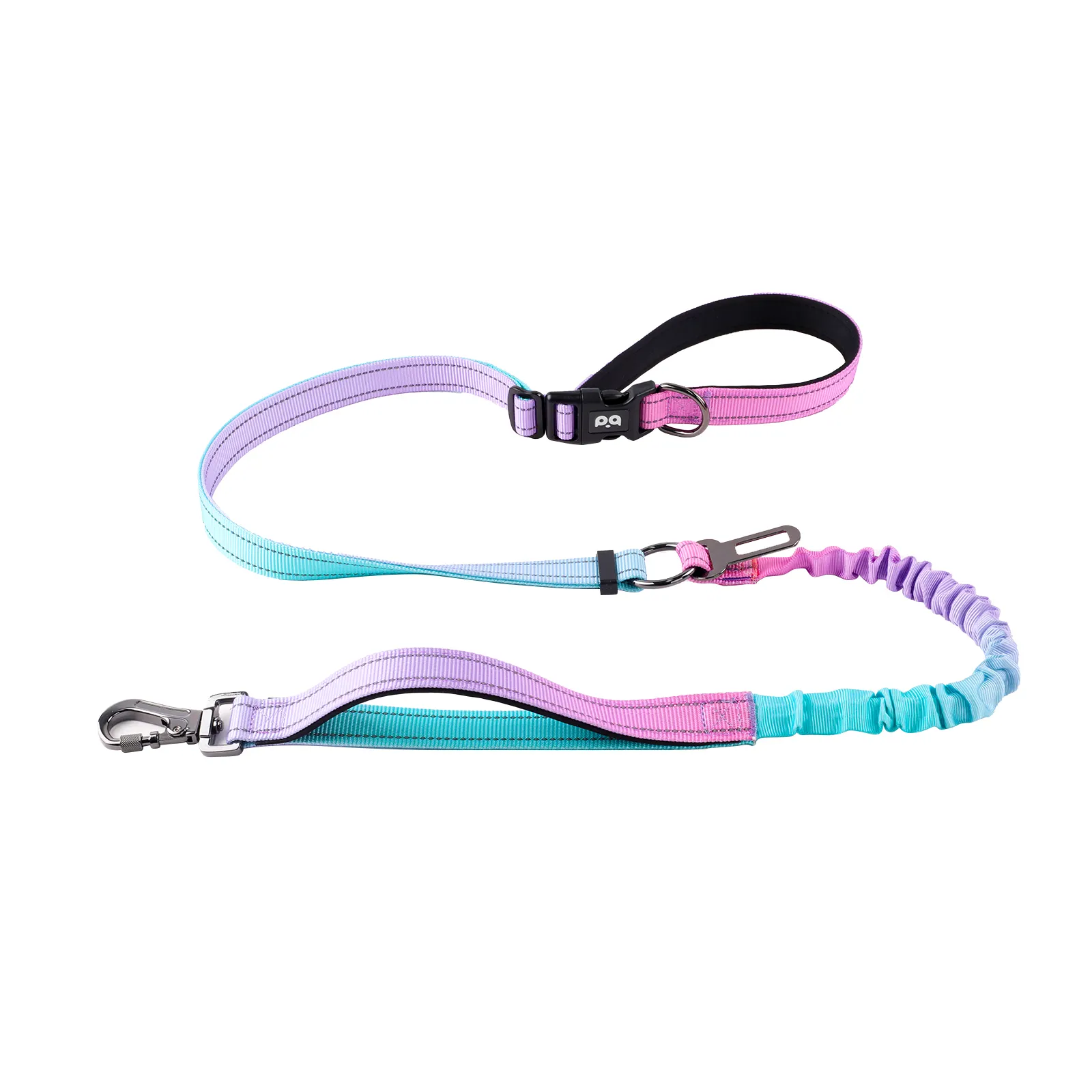
This is where a specialist partner truly shines and where we have focused all of our innovation. We know that for an online brand, differentiation is survival12. Your brand's story is told through its visuals, and we have built an entire ecosystem to help you write that story. Our promise is simple and powerful: "Mockup in seconds. Sample in 3 Days."
From Limited Catalog to Limitless Creativity
Forget asking for a PDF catalog. We give you a virtual design studio. Our revolutionary, free 3D Mockup System puts the power of a design team in your hands.
- Generate Originality with AI: You don't need to be an artist. Our integrated AI Pattern Generator lets you create one-of-a-kind Vzorci po meri. Simply type your vision—"a pattern of happy pitbulls wearing flower crowns" or "a cool retro 90s geometric pattern"—and the AI brings it to life instantly.
- Launch Lean, Launch Smart: Traditional MOQs would force you to bet everything on one design. We demolished that barrier. With our "lightweight customization" model, your MOQ is just 50 pieces per size and design. You can launch a whole collection of positive, unique harnesses without a massive financial risk.
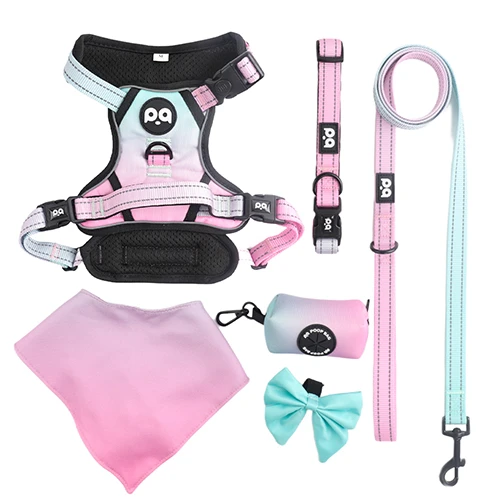
- Build Your Empire: That unique pattern you just created can be applied to matching collars, leashes, and other accessories in our system, allowing you to build a cohesive, desirable brand world that customers will love.
If you're ready to partner with a manufacturer who understands both the technical demands of a pitbull harness and the creative demands of your brand, we're ready to help. I encourage you to contact our expert team today and see the difference a true specialist can make.
Zaključek
Finding a factory is easy. Finding a partner who deeply understands a pitbull's physical needs, your market's desires, and gives you the tools to succeed is the real key to building a successful brand. Don't settle for a generic manufacturer.
"Breed Standards : American Pit Bull Terrier | United Kennel Club ...", https://www.ukcdogs.com/american-pit-bull-terrier. Breed-standard descriptions of American Pit Bull Terrier–type dogs document a muscular, athletic build with breed-specific proportions, supporting the need to account for anatomy in equipment fit; this is contextual support rather than direct testing of a particular harness design. Evidence role: definition; source type: institution. Supports: Pitbull-type dogs have distinctive anatomical traits that manufacturers should account for when designing harnesses.. Scope note: Breed standards describe idealized conformation and do not prove how every individual pitbull-type dog is built. ↩
"2013 Harness Study Results | Center for Pet Safety", https://centerforpetsafety.org/2013-harness-crash-test-study-results/. Pet restraint and consumer-safety testing sources show that pet harnesses and related restraint products can be evaluated through standardized strength or crash-testing protocols, supporting the general importance of verified strength claims. Evidence role: general_support; source type: institution. Supports: Strength claims for dog harnesses are stronger when backed by recognized testing or certification protocols.. Scope note: Available standards often address travel restraints or materials testing and may not directly certify ordinary walking harnesses for pitbulls. ↩
"American Pit Bull Terrier - Wikipedia", https://en.wikipedia.org/wiki/American_Pit_Bull_Terrier. Conformation standards and breed descriptions commonly characterize American Pit Bull Terrier–type dogs as strong, muscular dogs with substantial forequarters, providing contextual support for harness designs that accommodate a broader chest. Evidence role: definition; source type: institution. Supports: Pitbull-type dogs often require harness accommodation for a broad chest.. Scope note: Breed descriptions are general and do not replace measurement data for a target customer population. ↩
"Review of Collars, Harnesses, and Head Collars for Walking ...", https://pmc.ncbi.nlm.nih.gov/articles/PMC12345489/. Veterinary and canine biomechanics sources describe how harness design can affect pressure distribution and limb movement, offering contextual support for designs that avoid concentrating force on the neck or shoulders. Evidence role: mechanism; source type: paper. Supports: A Y-shaped or anatomically designed chest plate can help distribute pressure more appropriately than a generic strap layout.. Scope note: Such sources usually compare harness categories or pressure effects and may not specifically endorse one pitbull harness pattern. ↩
"Your dog shouldn't be embarrassed at the vet because their harness ...", https://www.instagram.com/reel/DYz3qtBM5tm/. Animal-welfare and veterinary fitting guidance emphasizes that harnesses should be adjustable and fitted closely enough to prevent rubbing, restriction, or escape, supporting the general role of multiple adjustment points in fit quality. Evidence role: expert_consensus; source type: institution. Supports: Multiple adjustment points improve the ability to fit a harness securely and comfortably.. Scope note: Guidance supports adjustability in general and may not specify an exact number of adjustment points for pitbull-type dogs. ↩
"American Pit Bull Terrier - Wikipedia", https://en.wikipedia.org/wiki/American_Pit_Bull_Terrier. Breed-standard descriptions of pitbull-type terriers include proportion and body-shape features such as a developed chest and athletic waistline, which contextually supports the need for harness adjustability across chest and girth dimensions. Evidence role: definition; source type: institution. Supports: Pitbull-type dogs may need harnesses adjustable for a deep chest and narrower waist.. Scope note: This source would support general morphology, not a universal deep-chest/narrow-waist measurement for all pitbull-type dogs. ↩
"Effects of restrictive and non-restrictive harnesses on ...", https://pubmed.ncbi.nlm.nih.gov/30455191/. Peer-reviewed canine gait research has found that some harness designs can alter shoulder extension and forelimb movement, supporting the concern that poorly designed harnesses may restrict motion. Evidence role: mechanism; source type: paper. Supports: Poorly fitted or poorly designed harnesses can restrict a dog's shoulder movement.. Scope note: The evidence concerns harness effects on canine gait generally and is not limited to pitbull-type dogs. ↩
"That harness fit matters more than you think! A harness ... - Facebook", https://www.facebook.com/HorizonRidgeAH/posts/that-harness-fit-matters-more-than-you-think-a-harness-thats-too-loose-can-let-y/1619879810146935/. Veterinary fitting resources note that ill-fitting collars or harnesses can cause rubbing, skin irritation, and pressure-related discomfort, supporting the claim that poor fit can dig into sensitive areas. Evidence role: expert_consensus; source type: education. Supports: Ill-fitting harnesses can dig into sensitive areas and cause discomfort or irritation.. Scope note: This evidence supports the general risk of irritation and pressure injury, not the frequency of such problems in pitbulls specifically. ↩
"Prevents Dogs From Backing/Slipping Out Of Their Harness - YouTube", https://www.youtube.com/watch?v=Qv8iTq9dUC0. Animal rescue and welfare organizations commonly advise that loose or poorly fitted harnesses increase the risk of a dog slipping out, supporting the safety rationale for secure harness fit. Evidence role: expert_consensus; source type: institution. Supports: Poorly fitted harnesses can create escape points for dogs.. Scope note: This is practical safety guidance rather than controlled experimental evidence on escape rates by harness design. ↩
"Sewing a Box X Stitch in Webbing & Breaking Strength Formula", https://www.youtube.com/watch?v=wf6buu7PqT4. Technical sewing and webbing references describe box-X stitch patterns as a common reinforcement method for load-bearing webbing joints, supporting the mechanism by which reinforced stitching can improve seam strength. Evidence role: mechanism; source type: government. Supports: Box-X stitching is used as a reinforcement method at load-bearing stress points.. Scope note: The source would support the engineering principle, not the measured strength of any specific manufacturer's harness. ↩
"How Changing Portraits and Opinions of “Pit Bulls ... - PMC", https://pmc.ncbi.nlm.nih.gov/articles/PMC12291974/. Peer-reviewed studies and animal-welfare research discuss breed stigma and public perceptions of pitbull-type dogs, supporting the contextual claim that some owners may seek products that challenge negative stereotypes. Evidence role: historical_context; source type: paper. Supports: Pitbull-type dogs are subject to negative public stereotypes that some branding may seek to counter.. Scope note: Evidence of stigma does not directly prove demand for a particular harness design style. ↩
"Porter's generic strategies", https://en.wikipedia.org/wiki/Porter%27s_generic_strategies. Strategic management literature identifies product differentiation as a major route to competitive advantage, providing contextual support for the claim that visual and design differentiation can matter for online brands. Evidence role: expert_consensus; source type: paper. Supports: Differentiation is strategically important for brands competing in crowded markets.. Scope note: This supports the general business principle and does not prove that differentiation determines survival for every pet-accessory brand. ↩