 SL
SL  EN
EN  FR
FR  RU
RU  DE
DE  AR
AR  ES
ES  PT
PT  IT
IT  NL
NL  PL
PL  ET
ET  RO
RO  CS
CS  EL
EL  LV
LV 
You're working with a trading company or a local agent. Communication is slow, prices are high, and when there's a problem, you're stuck in a frustrating game of telephone with no real answers.
You should buy custom dog collars direct from a factory to lower your costs by cutting out the middleman1, gain direct control over quality and customization2, and drastically speed up your entire production timeline3.
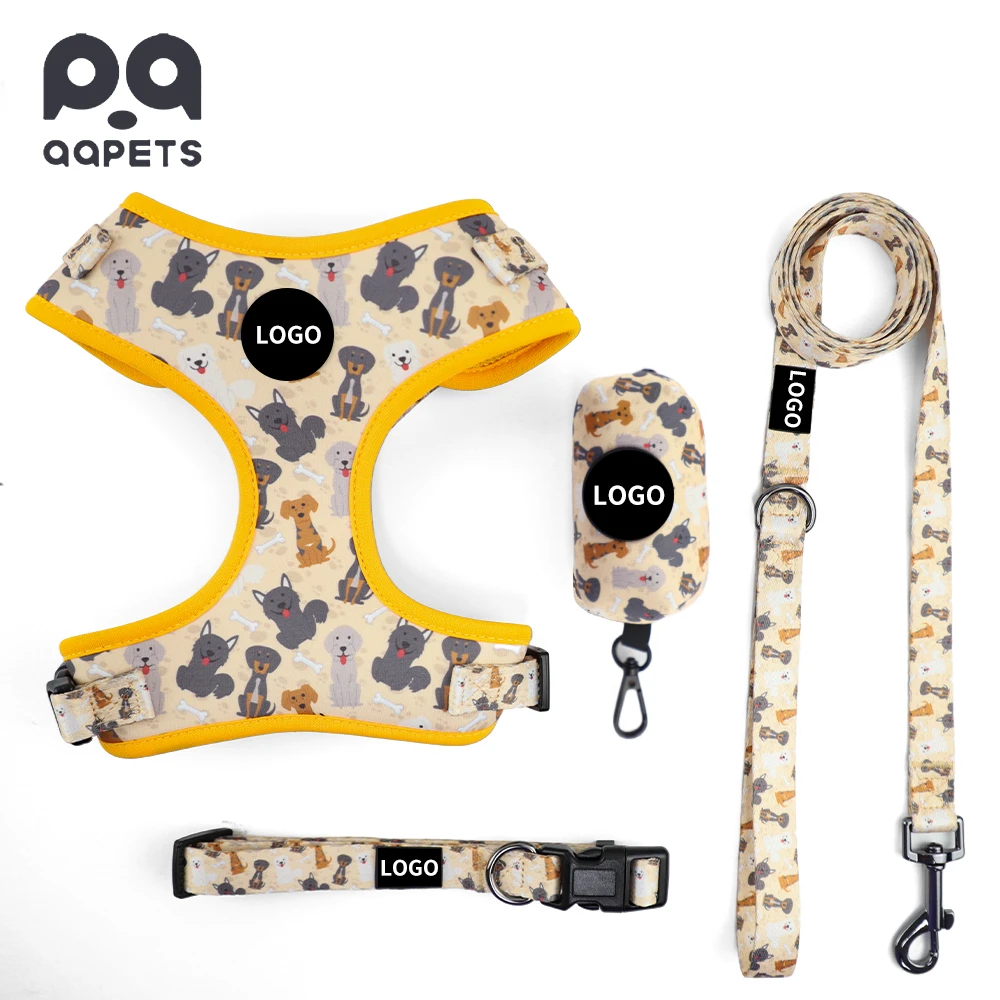
My name is Cathy, and I am a pet traction customization expert at qqpets. I speak with so many brand owners who are frustrated with the old sourcing model. Their creative vision gets lost in translation, and their profits are eaten up by markups they can't control. This is why we've built our company differently. We aren't just a factory; we are a direct partner. We have designed our systems to give you the control, speed, and creative freedom you thought was only possible for giant corporations.
Do middlemen really add that much cost and delay?
You receive a quote that seems high, and any request for a small change takes days to get an answer. You suspect you're overpaying and losing valuable time, but you don't know what to do about it.
Yes, middlemen add significant cost and crippling delays. They add their own profit margin to every unit and act as a communication bottleneck4. Every question and every file has to pass through them, creating opportunities for misunderstanding5 and slowing you down.
Let's break down the hidden costs. A trading company is a business that needs to make a profit. That profit is a direct markup on the factory's price, a "middleman tax" that you are paying on every single collar. But the financial cost is only part of the problem. The time cost is just as damaging. When you have a question about materials or a design change, you tell your agent. Your agent then has to contact the factory. The factory responds to the agent, who then responds to you. This simple back-and-forth can take days. By working directly with us, you are communicating with the source. Your questions are answered by the experts making your product. This eliminates confusion, saves time, and cuts out an unnecessary layer of cost.
Factory Direct vs. Trading Company
| Factor | Working with a Trader | Working Direct with qqpets | Your Advantage |
|---|---|---|---|
| Price | Factory Price + Trader's Markup | Factory Price | Higher Profit Margins |
| Communication | Slow, indirect, filtered | Fast, direct, clear | Faster Problem Solving & Development |
| Nadzor | Limited | Full | Your Vision is Perfectly Executed |
How can a factory offer more creative freedom than a trading company?
You have a unique design idea, but your supplier says it's not possible or offers you a generic alternative. Your brand is forced to compromise, and your products end up looking like everyone else's.
A factory creates; a trading company simply sources. A modern, digitized factory like ours gives you direct access to the tools of creation. Instead of being limited to what's already available, you have the power to invent something entirely new, quickly and easily.
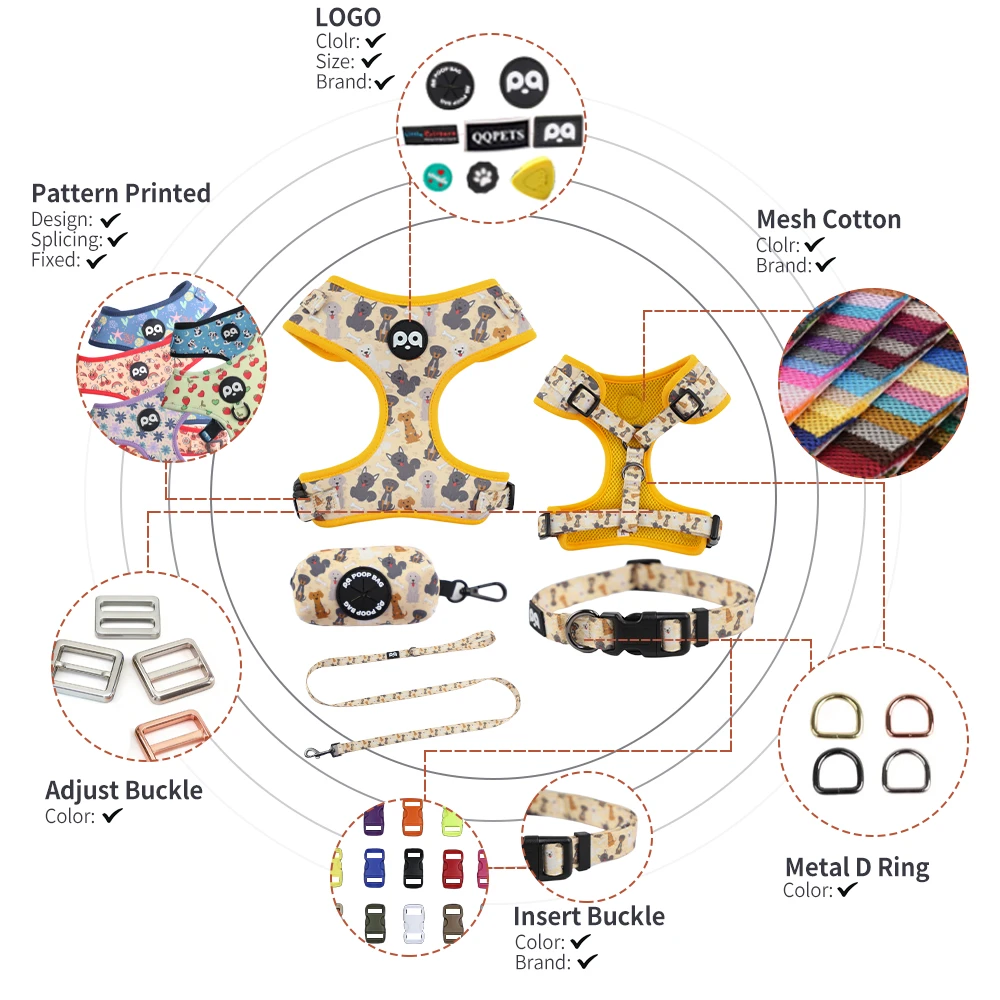
This is where the true magic happens. A trader can only offer you what they can find. We, on the other hand, can create whatever you can imagine. We have invested heavily in technology to put you in the designer's seat. You can use our incredible online [3D Mockup System](https://scholarworks.calstate.edu/downloads/sn00b389v)6 to bring your ideas to life in seconds. Don't have a design? No problem. Use our AI pattern generator7 to create an exclusive pattern just by typing in your thoughts. You could type "a vintage 1970s floral pattern" or "a geometric pattern with neon blues and pinks," and our system will generate options for you. This is how you create truly unique Vzorci po meri that make your brand stand out. This level of creative control and speed is something a middleman could never offer.
Is ordering direct from a factory too risky for a small brand?
You've heard that factories require massive orders of thousands of pieces. The thought of investing that much money upfront and risking so much capital on one product is terrifying, so you stick with expensive, low-quantity local options.
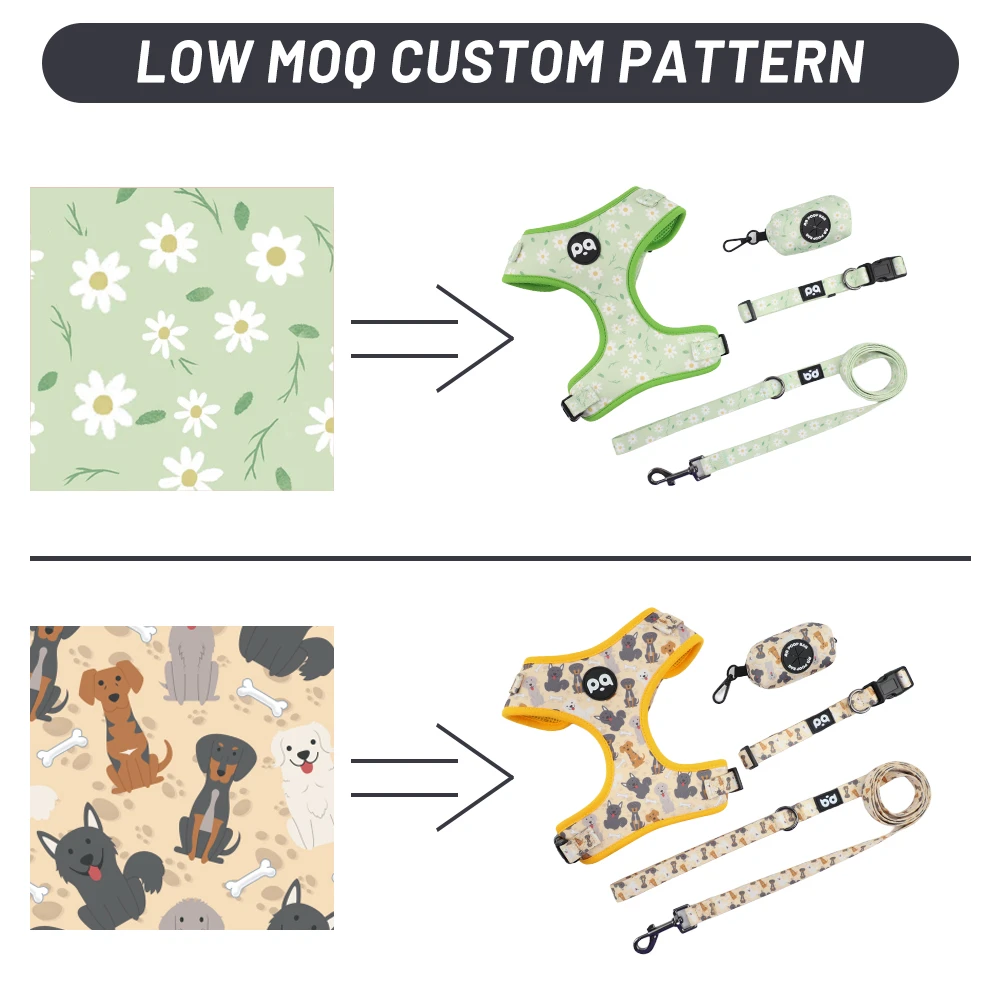
This used to be true, but it's an outdated fear. A modern factory partner like us is built to support brands of all sizes. By using technology to streamline production, we offer "lightweight customization" with incredibly low Minimum Order Quantities (MOQs), removing the risk for emerging brands.
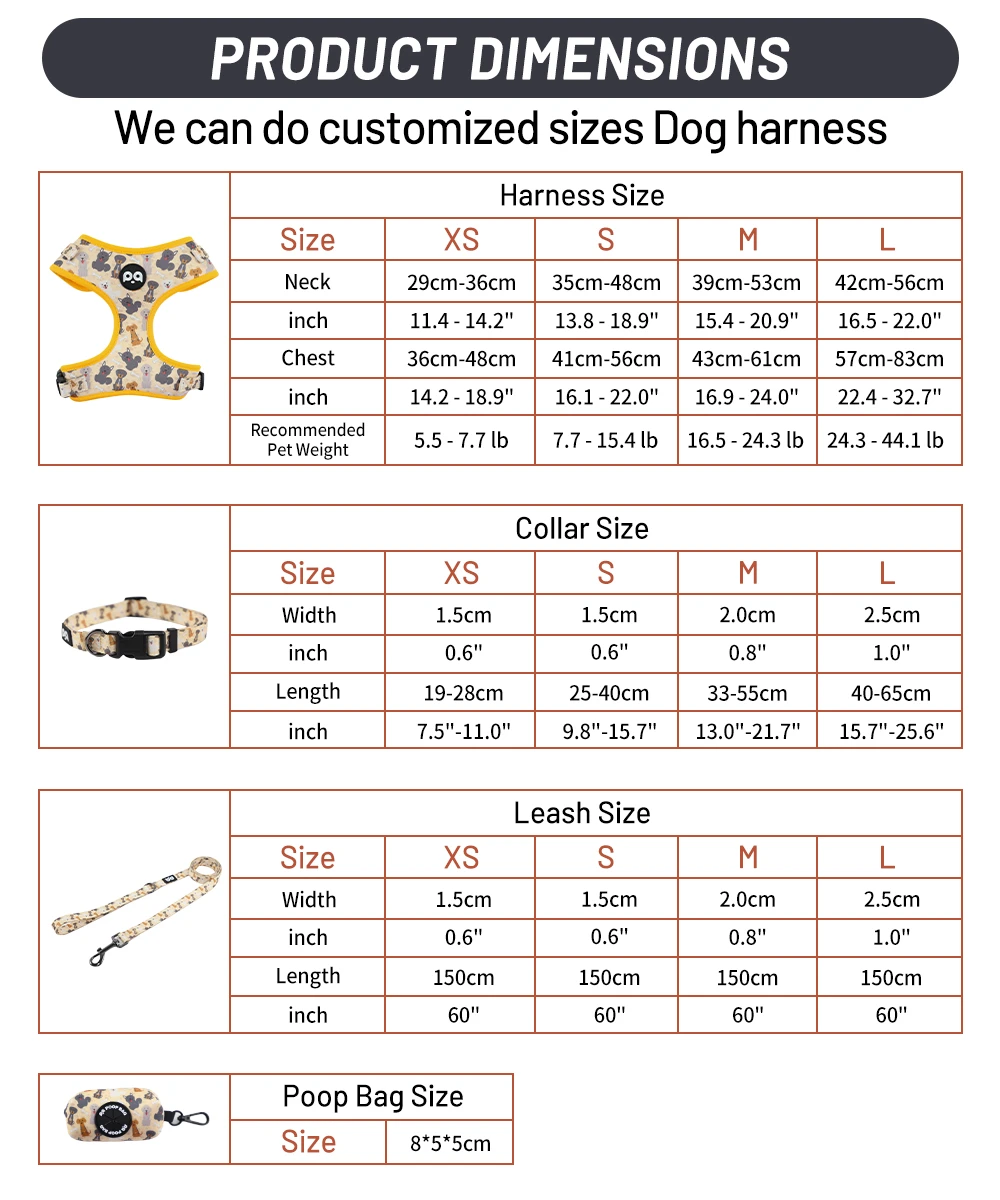
The old factory model was a major barrier for small businesses. A high MOQ8 can sink a brand before it even starts. That's why we've made low MOQs a core part of our business. You can start with an order of just 50 pieces per size and design. This changes everything. It means you don't have to bet your entire budget on one design. You can launch a whole collection of different patterns to see what your customers love9. Our promise of "Mockup in seconds. Sample in 3 Days" combined with our low MOQ means you can test, learn, and grow your brand with agility and minimal financial risk. Add in our formal quality certifications and dedicated quality control, and you get all the benefits of factory-direct pricing without the old risks.
Ready to take control of your brand's future? Contact our expert team today and experience the factory-direct difference.
Zaključek
Buying direct from a modern factory gives you lower costs, faster speed, total creative control, and lower risk. It's the smartest way to build a unique and profitable pet brand today.
"Disintermediation", https://en.wikipedia.org/wiki/Disintermediation. A neutral source on disintermediation defines it as removing intermediaries from a supply chain and notes that it can alter channel costs and pricing structures; it does not prove the exact savings for custom dog collars. Evidence role: definition; source type: encyclopedia. Supports: Buying direct from a factory can lower costs by cutting out the middleman.. Scope note: Provides general support for the cost logic of disintermediation, not a product-specific price comparison. ↩
"Examining collaborative buyer–supplier relationships and social ...", https://pmc.ncbi.nlm.nih.gov/articles/PMC9434505/. Research on supplier integration and buyer–supplier collaboration links closer coordination with improved product quality and customization capability; the evidence is general manufacturing research rather than pet-accessory-specific proof. Evidence role: expert_consensus; source type: paper. Supports: Direct factory relationships can give buyers more control over product quality and customization.. Scope note: Supports the broader manufacturing principle, not a direct measurement of qqpets outcomes. ↩
"Value of Information Sharing and Lead Time Reduction in a Supply Chain ...", https://www.academia.edu/108273688/Value_of_Information_Sharing_and_Lead_Time_Reduction_in_a_Supply_Chain_with_Autocorrelated_Demand. Supply-chain research shows that coordination, information sharing, and reduced handoffs can shorten lead times; this supports the mechanism but does not verify the article’s claim of a drastic timeline reduction. Evidence role: mechanism; source type: paper. Supports: Direct factory communication can speed production timelines by reducing handoffs and delays.. Scope note: Contextual support only; it does not quantify the timeline change for this factory or product category. ↩
"Information Distortion in a Supply Chain: The Bullwhip Effect", https://www.gsb.stanford.edu/faculty-research/publications/information-distortion-supply-chain-bullwhip-effect. Operations and supply-chain literature identifies multi-stage communication and information-sharing constraints as sources of delay and distortion; the support is conceptual rather than evidence about this article’s named supplier relationships. Evidence role: mechanism; source type: paper. Supports: An intermediary can become a communication bottleneck between buyer and manufacturer.. Scope note: Applies to supply chains generally and does not document a specific bottleneck in dog-collar production. ↩
"Information Distortion in a Supply Chain: The Bullwhip Effect", https://www.gsb.stanford.edu/faculty-research/publications/information-distortion-supply-chain-bullwhip-effect. Research on supply-chain information distortion and coordination problems shows that messages can be altered, delayed, or misinterpreted as they pass through organizational layers; this supports the risk mechanism but not the frequency of misunderstandings in this product category. Evidence role: mechanism; source type: paper. Supports: Routing design and production questions through intermediaries can increase opportunities for misunderstanding.. Scope note: General supply-chain communication evidence, not a direct case study of pet-accessory sourcing. ↩
"A Content Analysis of 3D Virtual Prototyping and Zero-Waste Design ...", https://scholarworks.calstate.edu/downloads/sn00b389v. Research on digital prototyping and 3D visualization indicates that virtual models can support faster design iteration and reduce reliance on physical prototypes; this provides contextual support, not proof of the performance of the named mockup system. Evidence role: mechanism; source type: paper. Supports: 3D mockup tools can accelerate design visualization and iteration.. Scope note: Supports the general value of 3D mockups, not the capabilities or speed of qqpets’ specific tool. ↩
"An Exploration of Default Images in Text-to-Image Generation", https://arxiv.org/html/2505.09166v2. Peer-reviewed and research-lab publications on text-to-image models show that generative AI systems can synthesize images from natural-language prompts; this supports the technical mechanism but not the uniqueness or commercial readiness of any specific pattern output. Evidence role: mechanism; source type: research. Supports: AI systems can generate visual pattern options from text prompts.. Scope note: Does not verify the quality, originality, or legal usability of generated patterns for commercial pet products. ↩
"Reasons Why Small Businesses Fail and How to Avoid Them", https://www.uschamber.com/co/start/strategy/why-small-businesses-fail. Small-business and inventory-management literature identifies excessive inventory purchases and cash-flow constraints as significant risks for new firms; this supports the concern about high MOQs, though it does not show that any single MOQ level will sink a brand. Evidence role: general_support; source type: government. Supports: High MOQs can create financial risk for small or emerging brands.. Scope note: Contextual support only; the severity depends on firm capital, demand, and product margins. ↩
"The launch of new products: New technology driven firm ...", https://www.sciencedirect.com/science/article/abs/pii/S1567422322000898. Lean startup and product-development literature supports using small experiments and customer feedback to test market demand before scaling; the evidence supports the testing approach generally, not the success of any specific dog-collar collection. Evidence role: expert_consensus; source type: education. Supports: Small initial production runs can help brands test customer preferences before scaling.. Scope note: Does not guarantee that launching multiple patterns will identify profitable products. ↩