 SL
SL  EN
EN  FR
FR  RU
RU  DE
DE  AR
AR  ES
ES  PT
PT  IT
IT  NL
NL  PL
PL  ET
ET  RO
RO  CS
CS  EL
EL  LV
LV 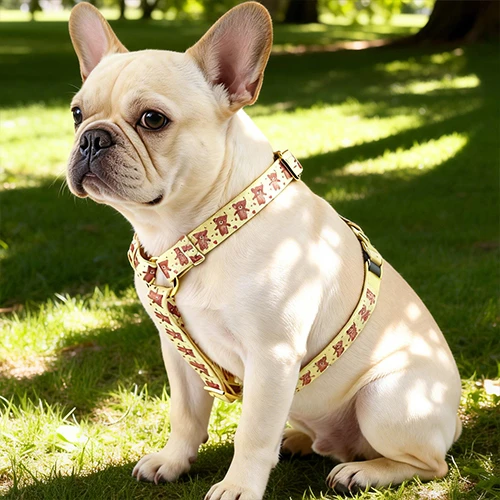
You want to source a china custom dog harness, but the process seems confusing and risky. You're worried about communication barriers, quality control, and the complex logistics of international shipping1.
Getting your china custom dog harness is a simple, three-step process: you create your design online, approve a physical sample sent to you in days, and then receive your quality-guaranteed delivery.
My name is Cathy, and I’m a customization expert at qqpets. I talk to aspiring brand owners every day who are full of incredible ideas but are stopped by fear of the unknown. They see "Made in China" and imagine a process full of headaches and risk. My job is to show them how a modern factory partner has completely changed that reality. The journey from your design to your customer's doorstep is now a clear, safe, and surprisingly simple path. Let's walk through it together.
How do you create a perfect custom harness design from halfway across the world?
You have a unique vision for your brand, but you're not in China. You worry you'll have to rely on emails and hope a designer understands your idea, or worse, settle for generic, uninspired products.
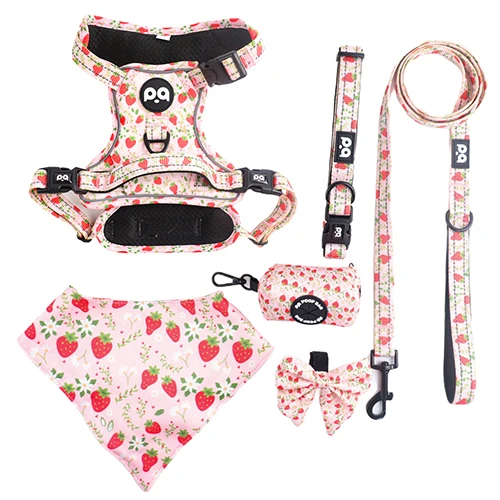
You can create a professional, completely unique design from your own home in minutes2. Our free online system lets you use AI to generate exclusive Vzorci po meri3 and build a 3D model of your harness.
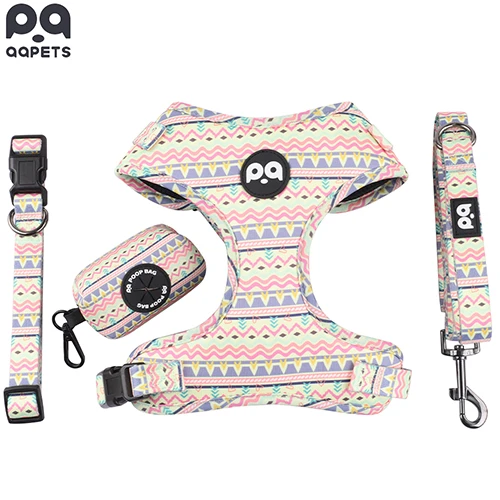
This is the first step: bringing your idea to life digitally. We’ve made it the most exciting part of the process. I encourage you to visit our free 3D Mockup System. It's your personal design studio. Use our AI Pattern Generator by simply typing in your concept, like "a pattern of French bulldogs wearing sunglasses," and watch it create options for you. Or, you can browse our library of over a thousand ready-to-use patterns. Then, apply your design to a 3D harness model4, choose your buckle colors, and add your logo. This is our "Mockup in seconds" promise. It removes all the guesswork and ensures your final product is 100% your vision.
How do you guarantee the quality before placing a large order?
Your digital design looks amazing, but you have a critical fear: what if the physical product is low quality? A shipment of poorly made harnesses could destroy your brand's reputation5 before it even begins.
You guarantee quality by holding the final product in your hands before committing6. We turn your digital design into a physical sample and ship it to you in three days for your approval.
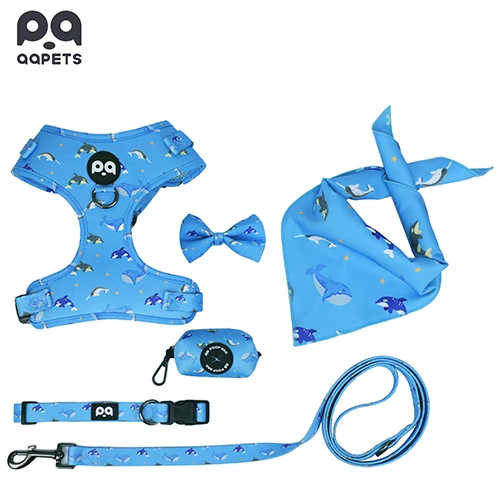
This is the most important step for building trust. You should never invest in a large order based only on a picture. That’s why the second part of our promise is "Sample in 3 Days." Once your design is finalized, our team creates a production-grade sample. When it arrives, you can feel the material, test the buckle's strength7, and inspect your custom pattern's vibrant colors. This sample is your confidence. Once you've approved it, you can move forward to production without any risk. We make this step even safer with a low Minimum Order Quantity (MOQ)8 of just 50 pieces per size and design. This allows you to launch your brand with a variety of products without a massive financial gamble.
How is the final production and delivery from China managed?
You've approved the sample, but now you're worried about the final stage. How do you manage production, quality control, and international shipping? The logistics seem overwhelming and are filled with potential delays9.
Your factory partner acts as your team on the ground10, managing the entire process for you. We handle production, conduct strict quality inspections11, and ensure a stable, reliable delivery to your door.
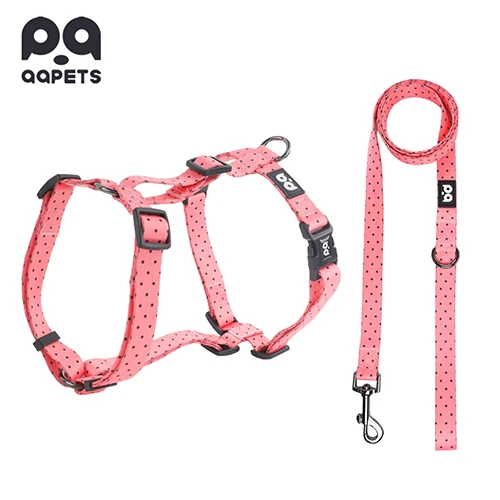
This is where a true partnership makes all the difference. As a direct factory with three dedicated production lines, we don't just make your product; we manage your success. After you place your low-risk order, your dedicated customer service representative oversees everything.
Your Journey From Order to Delivery
| Stage | What We Do | Your Experience |
|---|---|---|
| Proizvodnja | We manufacture your harnesses using the exact materials and specs from your approved sample. | You get regular updates without having to manage anything. |
| Nadzor kakovosti | Every batch is inspected for quality, strength, and accuracy against your design12. | You have peace of mind knowing your standards are being met. |
| Delivery | We handle all the packaging and logistics for stable, on-time international shipping. | Your product arrives ready to sell, hassle-free. |
This streamlined process is designed for online sellers. We remove the headaches of manufacturing so you can focus on building your brand.
Ready to see how easy it is to get your custom dog harness from design to delivery? Contact our expert team today and we'll guide you through every step.
Zaključek
The journey from design to delivery for your China custom dog harness is simplified into three steps: design online, approve a physical sample, and receive your quality-controlled order.
"Logistics Performance Index - World Bank", https://lpi.worldbank.org/en/home. A supply-chain or international-trade source supports that cross-border sourcing commonly involves communication, quality-assurance, and logistics risks; it does not establish the risk level for this specific supplier or product category. Evidence role: general_support; source type: paper. Supports: Sourcing custom products from China can involve communication barriers, quality-control concerns, and complex international logistics.. Scope note: Contextual support only; it would not verify the article’s specific vendor process. ↩
"(PDF) Creating a Sustainable E-Commerce Environment", https://www.researchgate.net/publication/365900221_Creating_a_Sustainable_E-Commerce_Environment_The_Impact_of_Product_Configurator_Interaction_Design_on_Consumer_Personalized_Customization_Experience. Research on online product configurators supports that web-based tools can allow customers to participate in product customization remotely; it does not verify that any specific harness design can be completed professionally or within minutes. Evidence role: general_support; source type: paper. Supports: Online systems can allow customers to create custom product designs remotely.. Scope note: The source would support the general mechanism of remote customization, not the speed or quality claim for this tool. ↩
"A Review on Generative AI for Text-to-Image and ...", https://arxiv.org/html/2502.21151v2. A technical source on text-to-image generative models supports that AI systems can generate novel visual designs from text prompts; it does not prove exclusivity, copyright status, or commercial suitability of the resulting patterns. Evidence role: mechanism; source type: paper. Supports: AI tools can generate custom visual patterns from user prompts.. Scope note: Contextual support only; exclusivity and ownership require separate legal or platform-specific evidence. ↩
"Use of interactive Virtual Prototypes to define product design specifications", https://www.academia.edu/1191378/Use_of_interactive_Virtual_Prototypes_to_define_product_design_specifications_A_pilot_study_on_consumer_products. Research on 3D visualization and virtual prototyping supports that applying designs to digital product models can aid product evaluation and communication; it does not demonstrate the accuracy of this specific harness model. Evidence role: mechanism; source type: paper. Supports: Applying a design to a 3D model can help users visualize a customized product before production.. Scope note: The evidence would support the design-visualization concept, not the vendor’s implementation quality. ↩
"Consumers blame both manufacturer and retailer when ...", https://mendoza.nd.edu/news/consumers-blame-when-products-fail/. Marketing and quality-management research supports that perceived product quality and product failures can affect customer satisfaction, trust, and brand reputation; it does not quantify the effect for custom dog harnesses specifically. Evidence role: general_support; source type: paper. Supports: Poor product quality can harm a brand’s reputation.. Scope note: The support is general to product quality and brand reputation, not specific to pet accessories. ↩
"Product Prototype Development: From First Sample to Manufacturing ...", https://lintonusa.com/resources/product-prototype-development-from-first-sample-to-manufacturing-ready-design/. Manufacturing and product-development literature supports that physical prototypes or samples are used to evaluate design, materials, and manufacturability before larger production commitments; it does not guarantee that a single sample predicts every production unit. Evidence role: mechanism; source type: paper. Supports: Reviewing a physical sample before a large order can reduce production and quality risk.. Scope note: Sampling reduces uncertainty but cannot eliminate all production variability. ↩
"Review of Collars, Harnesses, and Head Collars for Walking ...", https://pmc.ncbi.nlm.nih.gov/articles/PMC12345489/. Pet-safety or product-testing sources support that harness and restraint hardware strength can be a relevant safety and performance factor; evidence from travel-restraint testing may be only partially applicable to everyday walking harnesses. Evidence role: general_support; source type: institution. Supports: Checking buckle strength is a meaningful part of evaluating a dog harness sample.. Scope note: Testing standards or studies may focus on automotive pet restraints rather than ordinary walking harnesses. ↩
"Minimum Order Quantity (MOQ): Formula, Tips, & Benefits | NetSuite", https://www.netsuite.com/portal/resource/articles/inventory-management/minimum-order-quantity-moq.shtml. Operations and inventory-management sources define minimum order quantity as the smallest order a supplier will accept and show that order quantities affect inventory investment and carrying costs; this does not prove the suitability of any particular MOQ threshold. Evidence role: definition; source type: education. Supports: Minimum order quantity affects how much inventory and capital a buyer must commit up front.. Scope note: The source would explain MOQ and inventory implications, not validate the vendor’s 50-piece policy. ↩
"Supply Chains and Port Congestion Around the World in - IMF eLibrary", https://www.elibrary.imf.org/view/journals/001/2022/059/article-A001-en.xml. International logistics sources document that global shipping can experience delays from port congestion, disruption, customs processing, and transport capacity constraints; such evidence does not predict delays for a specific shipment. Evidence role: general_support; source type: institution. Supports: International shipping can involve potential delays.. Scope note: The evidence would establish that delays are a recognized logistics risk, not that delays will occur in this case. ↩
"Managing Quality in Outsourced Production: Construct Development ...", https://www.tandfonline.com/doi/abs/10.1080/10686967.2011.11918311. Supply-chain management literature supports that contract manufacturers and supplier partners can coordinate production, quality activities, and logistics for buyers; it does not verify that this particular factory performs those functions effectively. Evidence role: general_support; source type: paper. Supports: A manufacturing partner can manage production, quality-control, and logistics tasks for a remote buyer.. Scope note: The evidence would support the outsourcing model generally, not the vendor’s performance. ↩
"The Ultimate Guide to Quality Inspection in Manufacturing", https://www.6sigma.us/manufacturing/quality-inspection/. Quality-management standards and guidance support the use of inspection and monitoring to verify that products conform to specified requirements; such sources do not confirm the strictness or completeness of this supplier’s inspections. Evidence role: expert_consensus; source type: institution. Supports: Quality inspections are a recognized method for checking conformity in manufacturing.. Scope note: Standards support the practice of inspection, not the vendor’s actual inspection rigor. ↩
"6.2.1. What is Acceptance Sampling? - Information Technology Laboratory", https://www.itl.nist.gov/div898/handbook/pmc/section2/pmc21.htm. Acceptance-sampling and lot-inspection standards support the practice of inspecting production batches for conformity to specifications; they do not show that every unit or every batch from this supplier is actually inspected. Evidence role: mechanism; source type: institution. Supports: Batch inspection is a recognized way to evaluate production quality against specifications.. Scope note: The source would support batch inspection as a quality-control method, not verify the supplier’s operational claims. ↩