 SL
SL  EN
EN  FR
FR  RU
RU  DE
DE  AR
AR  ES
ES  PT
PT  IT
IT  NL
NL  PL
PL  ET
ET  RO
RO  CS
CS  EL
EL  LV
LV 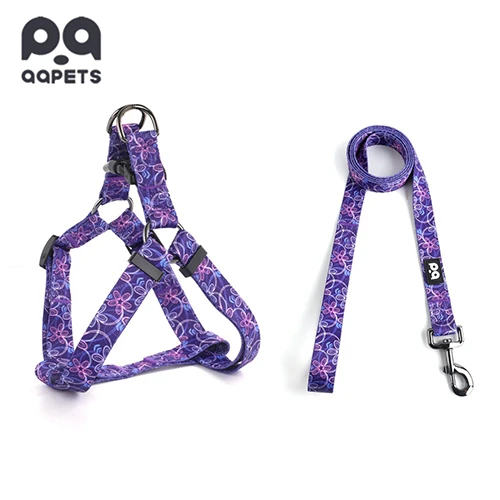
You have a unique idea for a china dog harness custom design, but you're unsure how to source it. You've heard about trading companies, and they seem easier, but you worry about losing control and paying hidden fees.
You should use a factory for your custom design to gain direct control over creativity, quality, and cost. Working directly with the source eliminates middlemen, reduces risks, and ensures your unique brand vision is perfectly executed.1
My name is Cathy, and as a custom pet products expert at qqpets, I see this dilemma all the time. Entrepreneurs are led to believe that a middleman makes the process simpler, but they often learn the hard way that it just adds a layer of confusion and cost2. A modern factory isn't a complex, faceless entity; it's your direct partner in creation. Let’s break down exactly why going straight to the source is the smartest move for your brand.
How does a factory give you more creative power for your design?
You're afraid a trading company will limit your creativity. They present you with a small menu of "custom" options, and your unique design ends up looking generic and boring, just like your competitors.
A true factory partner provides you with powerful tools that put unlimited creative power directly in your hands. This technology allows for truly unique Vzorci po meri that a middleman simply cannot offer.
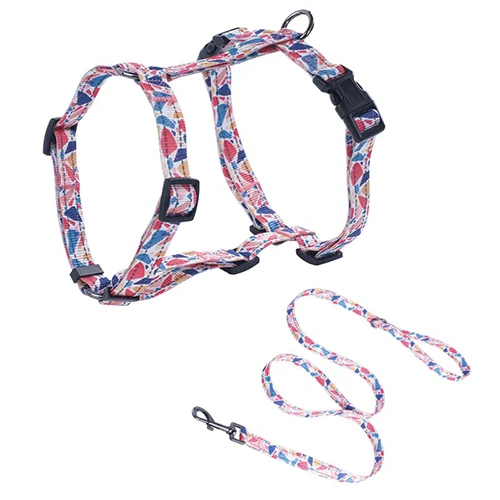
This is the most significant difference. A trading company relays messages, but a factory owns the tools of creation. We invested in technology like our free 3D Mockup System for this very reason. It allows you to become the designer. You can use our AI to generate a pattern from a simple text description or choose from over a thousand of our exclusive designs. Then, you can apply it to a 3D harness model and see your vision instantly3. This is our "Mockup in seconds" promise. A middleman can't offer this because they don't own the machinery or the software4. They can only ask a factory to do it, adding time and miscommunication5. Direct partnership means your creativity is never limited.
How does a factory ensure better quality and speed for your custom harness?
You are worried that working through a middleman will result in slow communication and, worse, inconsistent product quality. A bad batch of harnesses could be a disaster for your new brand's reputation.6
A factory ensures superior quality and speed by controlling the entire process under one roof7. This allows for immediate action on samples and consistent quality control checks directly on the production line.
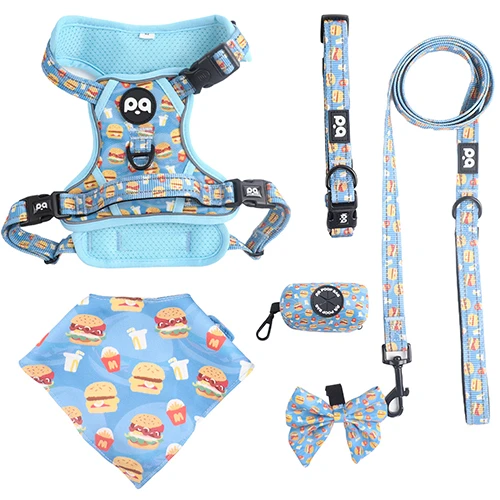
Speed is a reflection of control. A trading company has to send your request to a factory, wait for them to produce a sample, have it shipped to their office, and then finally ship it to you. This chain reaction takes weeks. As a factory, we can take your design and have a physical sample made and on its way to you in just a few days. This is our "Sample in 3 Days8" guarantee. It's proof that we have the people and machinery on-site. The same is true for quality. Our team inspects your products as they are being made. We are directly accountable for the final product and hold certifications like ISO 90019 to prove it. A middleman is not responsible for quality; the factory they happen to choose is. That's a risk your brand cannot afford.
Why is a factory more cost-effective and stable for your online store?
You're trying to launch your brand on a budget, and you assume a trading company might be cheaper. You're unaware of the hidden commissions and the long-term instability that come with using a middleman.
Working directly with a factory is more cost-effective because you are not paying a middleman's commission. Furthermore, it provides the long-term stability that online brands need to grow successfully.
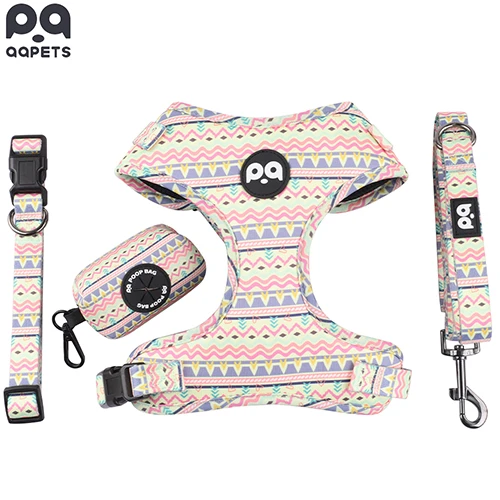
Every trading company adds a markup to the factory's price.10 This is their profit, and it comes directly out of yours. By working directly with us, you get the best possible price without any hidden fees. More importantly, you get stability. A trading company might switch factories to save a few cents, which can lead to drastic changes in the quality of your product from one order to the next.11
Direct Factory vs. Middleman: A Brand's Perspective
| Factor | Direct Factory (like qqpets) | Trading Company / Middleman |
|---|---|---|
| Cost | Direct, transparent pricing. No hidden fees. | Factory price + commission. Lower profit for you. |
| Quality | Consistent and guaranteed with every order. | Can vary wildly as they switch suppliers. |
| Communication | Direct, fast, and clear with the people making the product. | Slow and indirect, with risk of misinterpretation. |
| Loyalty | We invest in long-term partners. Your success is our success. | Loyalty is to their own profit margin, not your brand. |
As an online seller, you need a reliable supply chain. A direct factory partnership provides that foundation.
Ready to build your brand on a foundation of control, quality, and stability? Contact our expert team today to start the direct-to-factory process.
Zaključek
Using a factory gives you direct control over your design, guarantees quality and speed, and provides a more cost-effective and stable partnership. It is the smartest choice for your brand.
"Disintermediation - Wikipedia", https://en.wikipedia.org/wiki/Disintermediation. Research on supply-chain disintermediation and direct sourcing describes how reducing intermediary layers can lower transaction frictions and improve buyer access to production information; this supports the general rationale for direct factory engagement, though it does not prove outcomes for any specific pet-product supplier. Evidence role: general_support; source type: paper. Supports: Direct factory sourcing can reduce intermediary-related risks and improve control compared with working through middlemen.. Scope note: Contextual support only; direct sourcing does not automatically eliminate all sourcing risks. ↩
"[PDF] Do Consumers Benefit from Supply Chain Intermediaries? Evidence ...", https://www.bu.edu/econ/files/2016/04/EffectsSO_AEA_March13_2016_manus.pdf. Supply-chain literature commonly treats intermediaries as additional actors that may add coordination requirements and distribution margins; this supports the claim that middlemen can add cost and complexity, but the magnitude depends on the industry and contract terms. Evidence role: general_support; source type: paper. Supports: Using a middleman can add coordination complexity and cost to a sourcing process.. Scope note: The source would support the mechanism generally, not quantify costs for dog harness manufacturing. ↩
"The Development and Application of Computer Aided Design ...", https://scholarworks.uni.edu/cgi/viewcontent.cgi?article=4790&context=grp. Research on computer-aided design and virtual prototyping shows that three-dimensional models can be used to visualize and evaluate product designs before physical production; this supports the design-visualization mechanism, though not the performance of any specific mockup platform. Evidence role: mechanism; source type: paper. Supports: 3D modeling and virtual prototyping allow buyers or designers to visualize product designs before manufacturing.. Scope note: Contextual support only; it does not validate the article’s proprietary 3D mockup system. ↩
"Intermediate Goods Imports in Key U.S. Manufacturing Sectors", https://www.usitc.gov/research_and_analysis/trade_shifts_2017/specialtopic.htm. Descriptions of trading companies and manufacturing firms distinguish intermediaries that arrange transactions from producers that own or operate production assets; this supports the general distinction, although individual trading companies may maintain technical staff or partner systems. Evidence role: definition; source type: encyclopedia. Supports: Trading companies generally mediate trade rather than own the production machinery and manufacturing software used to make goods.. Scope note: This supports the general business-model distinction, not the asset ownership of every trading company. ↩
"Information Distortion in a Supply Chain: The Bullwhip Effect", https://www.gsb.stanford.edu/faculty-research/publications/information-distortion-supply-chain-bullwhip-effect. Supply-chain coordination studies identify information distortion, delays, and communication problems as risks when information passes through multiple organizational layers; this supports the mechanism behind possible delays, while not showing that all intermediated orders experience them. Evidence role: mechanism; source type: paper. Supports: Adding intermediaries to communication between buyer and manufacturer can increase delay and miscommunication risk.. Scope note: The evidence would be general supply-chain theory rather than a measurement for this product category. ↩
"(PDF) Relationship between Brand Awareness, Perceived Quality ...", https://www.academia.edu/87568401/Relationship_between_Brand_Awareness_Perceived_Quality_Trust_Value_Loyalty_and_Brand_Equity_A_Case_Study. Studies of product quality and brand reputation find that product failures and negative quality experiences can harm consumer trust, satisfaction, and brand equity; this supports the reputational risk claim, although effects vary by market and severity of defects. Evidence role: general_support; source type: paper. Supports: Poor product quality can damage a brand’s reputation, particularly for new or consumer-facing brands.. Scope note: The evidence would concern product quality and brand reputation broadly, not dog harnesses specifically. ↩
"Vertical integration: How to structure your supply chain", https://www.ie.edu/uncover-ie/vertical-integration-global-mba/. Operations-management sources describe vertical integration and internal process control as ways firms can coordinate production activities and reduce dependence on external suppliers; this supports the logic of centralized control, but not a guarantee of superior quality or speed in every case. Evidence role: mechanism; source type: education. Supports: A factory that controls more production steps can coordinate quality and timing more directly than a firm relying on multiple external actors.. Scope note: Centralized control can improve coordination, but actual outcomes depend on management systems and capacity. ↩
"A comparison of rapid prototyping technologies", https://www.sciencedirect.com/science/article/abs/pii/S0890695597001375. Manufacturing literature on rapid prototyping describes how shortened sample or prototype cycles can accelerate product development and buyer evaluation; this provides context for why a short sampling window matters, but it does not independently verify the advertised three-day guarantee. Evidence role: mechanism; source type: paper. Supports: Fast sample production can shorten the product-development and sourcing cycle.. Scope note: Contextual support only; a neutral source cannot prove this company’s specific turnaround promise without operational records. ↩
"ISO 9000 family - Wikipedia", https://en.wikipedia.org/wiki/ISO_9000_family. ISO describes ISO 9001 as an international standard specifying requirements for a quality management system, including consistent provision of products and services that meet customer and regulatory requirements; certification indicates a management-system framework, not independent proof that every product is defect-free. Evidence role: definition; source type: institution. Supports: ISO 9001 is a recognized quality management system standard relevant to manufacturing quality assurance.. Scope note: ISO 9001 certification supports the existence of a quality-management system but does not guarantee the quality of any individual production batch. ↩
"Intermediation and Resale in Networks", https://www.journals.uchicago.edu/doi/10.1086/697205. Economic and distribution-channel sources explain that intermediaries typically earn revenue through margins, commissions, or markups between purchase and resale prices; this supports the general pricing mechanism, though actual fee structures vary by intermediary. Evidence role: definition; source type: education. Supports: Trading intermediaries commonly add a margin, commission, or markup to the producer’s price.. Scope note: The word “every” may be too absolute because some intermediaries use disclosed service fees or commissions rather than a resale markup. ↩
"Toward a conceptualization of supplier-switching processes ... - PMC", https://pmc.ncbi.nlm.nih.gov/articles/PMC7148700/. Supplier-quality management research shows that supplier selection and supplier changes can affect product quality, consistency, and supply-chain performance; this supports the risk mechanism, but it does not establish that trading companies routinely switch suppliers for small savings. Evidence role: general_support; source type: paper. Supports: Changing suppliers can affect product quality consistency across orders.. Scope note: Supports the quality risk associated with supplier changes, not the motive or frequency of switching by trading companies. ↩