 AR
AR  EN
EN  FR
FR  RU
RU  DE
DE  ES
ES  PT
PT  IT
IT  NL
NL  PL
PL  SL
SL  ET
ET  RO
RO  CS
CS  EL
EL  LV
LV 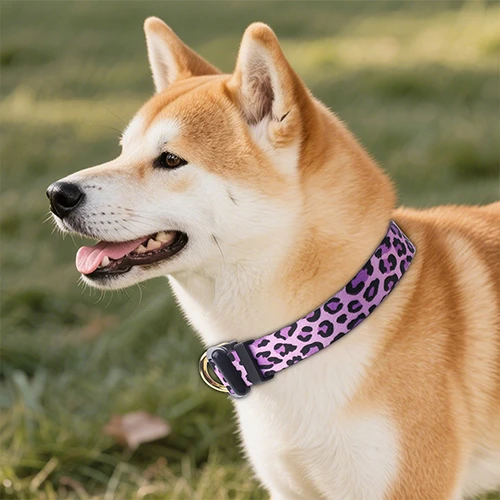
As a brand owner, you want to create custom collars for large dogs, but you are terrified of choosing the wrong material. A weak collar could break, leading to a dangerous situation for the dog and a disaster for your brand's reputation.
The best materials for custom collars for large dogs are high-density polyester or reinforced nylon webbing1. These materials provide the essential tensile strength needed for safety2, while also offering a perfect surface for vibrant, durable custom patterns that won't fade or peel.
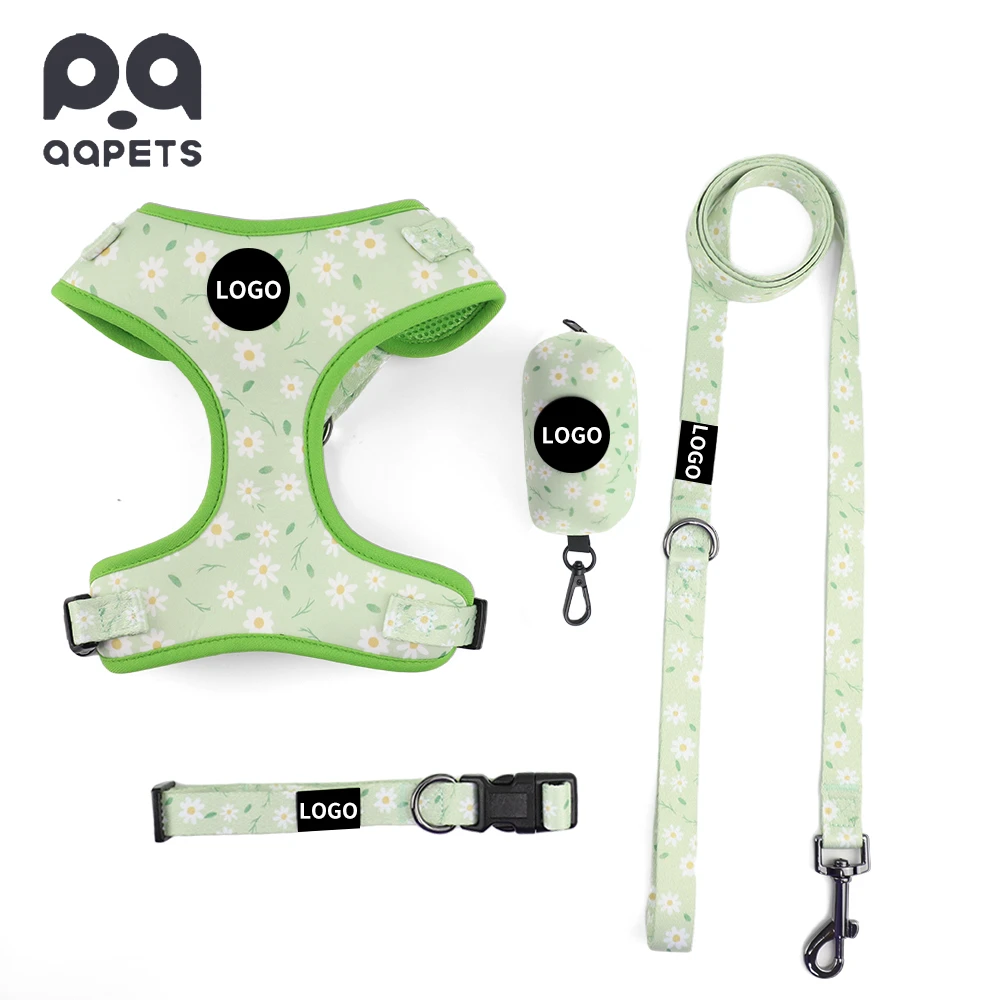
My name is Cathy, and as a pet traction customization expert at the مصنع qqqpets, the safety of products for large dogs is a non-negotiable priority. I've seen brands fail because they focused only on the look of a collar and neglected its strength. For large, powerful breeds like German Shepherds, Rottweilers, or Labradors, the collar is a critical piece of safety equipment. The material must withstand sudden lunges and constant pulling. However, strength should not come at the expense of your brand's identity. The old way meant choosing between a boring, strong collar or a stylish, weak one. That is no longer the case. A modern factory partner understands that the best product is a perfect fusion of safety, comfort, and customization. This guide will walk you through the material choices and, more importantly, how to turn that choice into a successful, trustworthy product.
Why is polyester webbing the top choice for strength and style?
You need a material that is unquestionably strong enough for a large dog, but you also need one that can display your unique brand designs beautifully. You're worried that the strongest materials are plain and impossible to customize.
High-density polyester webbing is the ideal solution because it offers both elite strength and superior print quality. Its fibers are incredibly robust and resistant to stretching, while its smooth surface is perfect for dye-sublimation3 printing, resulting in vibrant, permanent patterns.
When we talk about materials, it's about the science behind them. For custom collars for large dogs, polyester webbing is the champion. The key is in a process called dye-sublimation. This is how we apply your الأنماط المخصصة. Instead of printing on top of the material, the ink is turned into a gas and infused directly into the polyester fibers. This means your unique design becomes part of the material itself. It won't crack, peel, or fade over time, even with rough use. Furthermore, polyester is naturally hydrophobic4, meaning it resists absorbing water. This is crucial because a wet collar can lose strength and become a breeding ground for bacteria and odors. While nylon is also very strong, it tends to stretch when wet and doesn't always hold the same sharpness of a dye-sublimated print as polyester does. By choosing high-density polyester, you are selecting a material that was practically engineered for creating safe, durable, and brilliantly customized pet products. This material choice is the foundation of a premium product.
Material Showdown: Polyester vs. The Rest
| المواد | Strength for Large Dogs | Customization Potential | مقاومة الماء | Overall Rating |
|---|---|---|---|---|
| High-Density Polyester | Excellent. High tensile strength, does not stretch. | Excellent. Perfect for vibrant, durable dye-sublimation printing. | High. Resists water absorption, dries quickly. | A+ |
| نايلون | Very Good. Very strong, but can stretch when wet. | Good. Can be printed, but prints may be less sharp than on polyester. | Medium. Absorbs more water than polyester. | B |
| جلد5 | Good. Strong but requires maintenance and can be heavy. | Poor. Can only be stamped or embossed, no patterns. | Poor. Can be damaged by water. | C- |
| Cotton | Unacceptable. Too weak for large dogs, stretches and breaks easily. | Fair. Can be printed, but not durable. | Poor. Absorbs water and stays wet for a long time. | F |
Are the collar's hardware components more important than the fabric?
You have selected a super-strong polyester webbing for your collar, but you've overlooked the buckle and D-ring. A failure in this hardware can be just as catastrophic as a tear in the fabric, instantly breaking the collar.
Yes, the hardware is a critical point of failure. The entire collar is only as strong as its weakest component. For large dogs, you must insist on load-tested, heavy-duty buckles and welded D-rings to ensure complete safety and build customer trust.
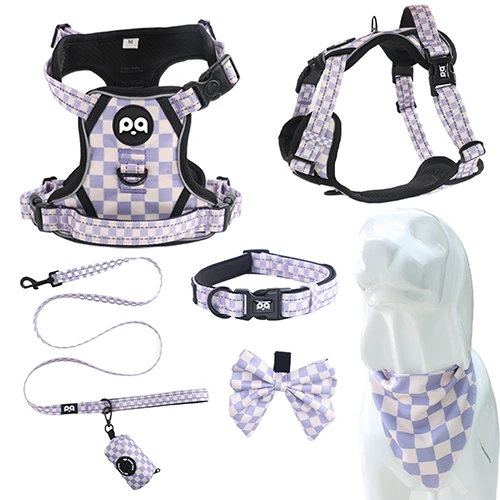
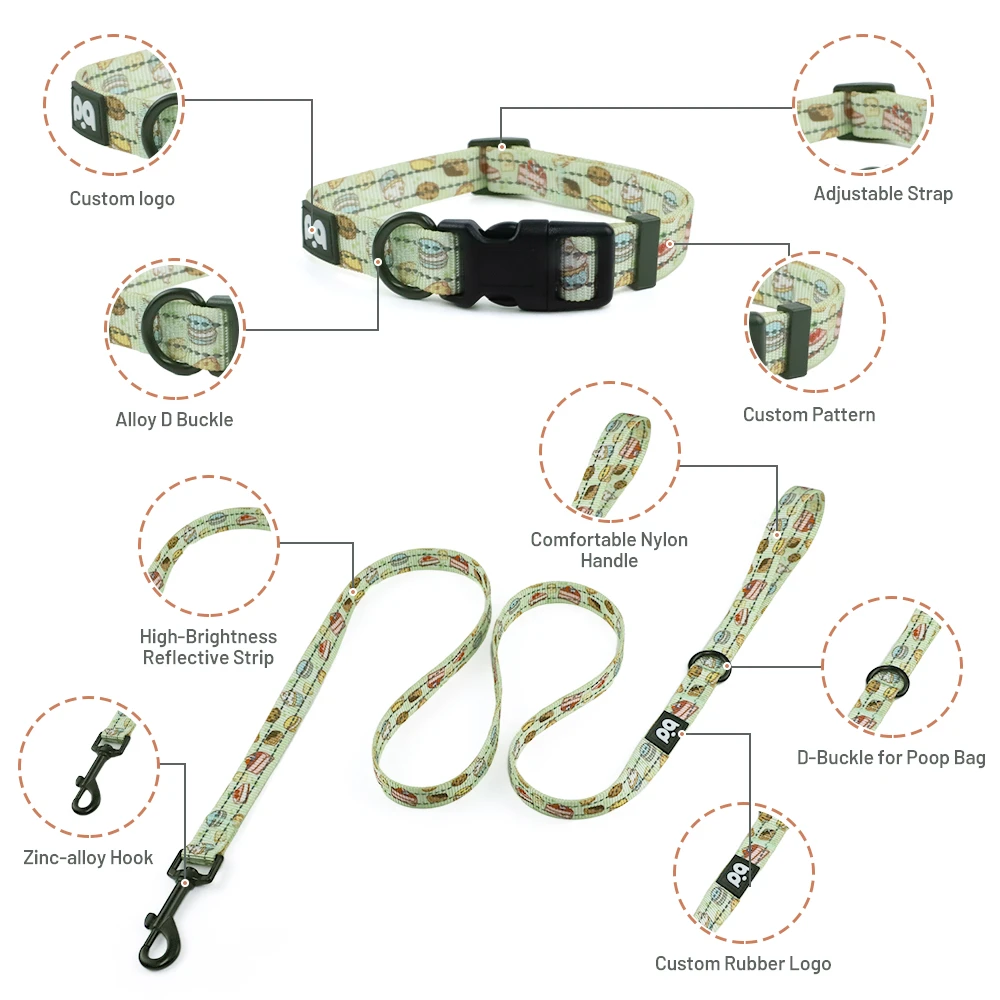
A chain is only as strong as its weakest link, and on a dog collar, the hardware is often that link. This is a detail that separates a professional, trustworthy brand from a risky one. At our factory, we treat hardware selection with the same seriousness as the webbing material. You cannot have a strong collar without strong components. For large dogs, a standard plastic buckle is not an option. You must use heavy-duty buckles made from materials like POM (Polyoxymethylene), which is a robust engineering thermoplastic known for its stiffness and stability6. For brands wanting maximum security or a more premium, rugged feel, metal buckles made from zinc alloy are the superior choice. Equally important is the D-ring, the metal loop where the leash attaches. It must be a "welded" D-ring. This means the ring is a solid, continuous loop of metal with no gap. A non-welded D-ring has a tiny split that can be pulled apart by a strong, determined dog. Insisting on these quality components is a non-negotiable part of creating a safe product for large dogs.
Choosing Your Hardware: Safety & Style
| Component | Standard Option (Not for Large Dogs) | Heavy-Duty Option (Essential) | الأفضل لـ |
|---|---|---|---|
| مشبك | Standard Side-Release Plastic | Heavy-Duty POM Plastic or Metal (Zinc Alloy) | POM is a great all-around choice. Metal offers max strength and a premium feel. |
| D-Ring | Non-Welded / Split Ring | Welded Steel or Zinc Alloy D-Ring | Essential for preventing the leash from pulling the ring open. |
| Tri-Glide | Flimsy Plastic | Heavy-Duty Plastic or Metal | Ensures the collar size stays fixed and doesn't loosen over time. |
How do you combine the right materials with a risk-free production process?
You know which materials and hardware you need, but the process of communicating these technical specs to an overseas factory and trusting them with production feels incredibly complex and risky. You are afraid of costly mistakes.
You use a modern, tech-driven factory partner that eliminates risk through a clear verification process. This includes visualizing your product in 3D, approving a physical sample, and launching with a small, low-risk test order of just 50 pieces.
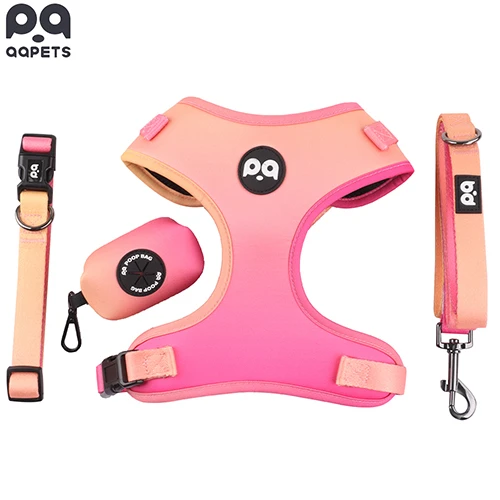
Knowing the right materials is only half the battle. The other half is ensuring those materials are used correctly to create your exact vision. This is where our promise, "Mockup in seconds. Sample in 3 Days." becomes your greatest asset. We have removed the guesswork and risk from the manufacturing process. It starts with our powerful design tools. You can use our AI to generate a unique pattern, then apply it to the collar in our interactive 3D Mockup System. This isn't just a picture; it's a digital twin of your product. Here you can select your material (high-density polyester), choose your hardware (heavy-duty metal buckle, welded D-ring), and see how it all looks together. Once you approve this digital version, we create and send you a physical sample. You get to feel the strength of the webbing, test the buckle, and see the vibrancy of your custom pattern in person. Only after you give your 100% approval do we begin production, all under our certified ISO 9001 quality management system. Finally, our low MOQ of just 50 pieces means you can launch your premium, safe collar for large dogs without a huge financial gamble.
Your Risk-Free Production Pathway
- Design for Free: Create unlimited الأنماط المخصصة using our AI generator or choose from our library.
- Verify in 3D: Finalize your material, hardware, and design choices on a photorealistic, interactive 3D model.
- Approve the Real Thing: Receive a physical sample to test and confirm quality with your own hands.
- Launch with Confidence: Place a small, safe order of just 50 units to test the market.
Ready to build a brand that dog owners can trust? Contact our expert team today and let's create something great together.
الخاتمة
The best custom collars for large dogs use high-density polyester and heavy-duty hardware. Choosing a factory partner with a transparent, tech-driven customization process ensures both safety and brand success.
"(PDF) "Design Fabrics Suitable for Being Used as Heavy Duty ...", https://www.academia.edu/17856546/_Design_Fabrics_Suitable_for_Being_Used_as_Heavy_Duty_Webbing_Slings_. Textile engineering sources describe polyester and nylon webbing as common high-strength synthetic narrow fabrics used where tensile performance and durability are required; this supports their suitability as collar materials in general, but does not by itself certify any specific collar design or batch. Evidence role: general_support; source type: education. Supports: The best materials for custom collars for large dogs are high-density polyester or reinforced nylon webbing.. Scope note: Support is material-level and does not prove the strength of a finished product without load testing. ↩
"Pressure and force on the canine neck when exercised using ...", https://pmc.ncbi.nlm.nih.gov/articles/PMC7386734/. Studies of dog leash and collar forces show that restraint equipment can experience substantial peak loads during pulling or sudden movement; this provides context for why tensile strength is a safety-relevant material property, though required strength varies by dog size, behavior, and product geometry. Evidence role: mechanism; source type: paper. Supports: Large-dog collars require materials with sufficient tensile strength for safety.. Scope note: Contextual support only; it does not establish a universal minimum tensile strength for all large-dog collars. ↩
"Dye Sublimation | Media Commons", https://mediacommons.psu.edu/project/dye-sublimation/. Technical descriptions of dye-sublimation printing explain that heat converts disperse dye into vapor that diffuses into polyester fibers, supporting the article’s account of how the process colors polyester rather than merely coating its surface. Evidence role: mechanism; source type: education. Supports: Dye-sublimation infuses ink into polyester fibers rather than simply printing on top of the material.. Scope note: The mechanism supports the printing process generally; durability still depends on dye chemistry, process control, and fabric construction. ↩
"Increased Comfort of Polyester Fabrics", https://upcommons.upc.edu/bitstreams/be48fd46-81f1-4817-9c39-a18660766900/download. Polymer and textile references describe polyethylene terephthalate polyester as having low moisture regain and hydrophobic behavior relative to many natural fibers, supporting the claim that polyester resists water absorption. Evidence role: definition; source type: education. Supports: Polyester is naturally hydrophobic and resists absorbing water.. Scope note: Hydrophobicity varies with fabric finish, weave, contamination, and surface treatments. ↩
"8+ Easy Ways: Remove Water Spots From Leather Fast!", https://bigblue.atlantisuniversity.edu/how-to-get-water-spots-out-of-leather/. Conservation and leather-care references note that leather is sensitive to water and can stiffen, deform, or degrade without appropriate care, supporting the article’s caution that leather collars require maintenance and have poorer water resistance than synthetic webbing. Evidence role: general_support; source type: institution. Supports: Leather can be strong but requires maintenance and may be damaged by water.. Scope note: The support concerns leather as a material generally; treated or coated leathers may perform differently. ↩
"Polyoxymethylene - Wikipedia", https://en.wikipedia.org/wiki/Polyoxymethylene. Polymer references identify polyoxymethylene, also called acetal, as an engineering thermoplastic valued for high stiffness, dimensional stability, and low friction, supporting its description as a robust buckle material in general. Evidence role: definition; source type: encyclopedia. Supports: POM is a robust engineering thermoplastic known for stiffness and stability.. Scope note: Material properties alone do not prove a particular buckle design is suitable without component load testing. ↩