 DE
DE  EN
EN  FR
FR  RU
RU  AR
AR  ES
ES  PT
PT  IT
IT  NL
NL  PL
PL  SL
SL  ET
ET  RO
RO  CS
CS  EL
EL  LV
LV You want to sell a full set of matching dog gear, but coordinating designs is complicated and costly. This leaves you with mismatched products that won't sell together.
To create a full set, use a factory with an integrated design system. You can generate a single unique pattern with AI, instantly apply it to 3D models of collars, leashes, and harnesses, and then produce the entire collection with a low MOQ.
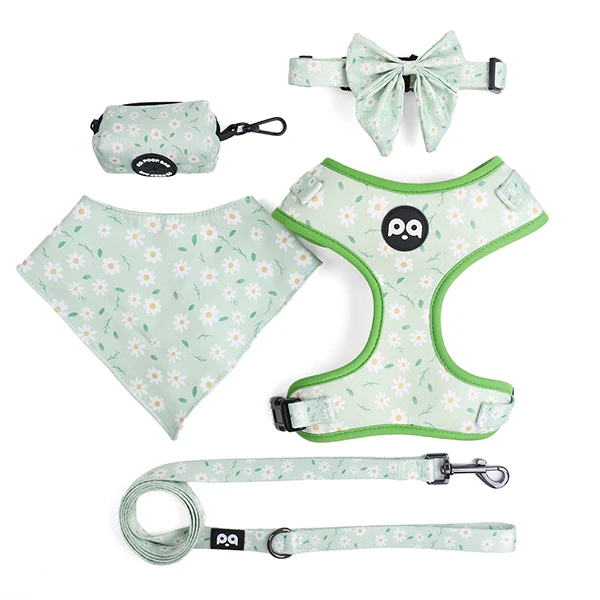
My name is Cathy, and as a customization expert at the qqpets Fabrik, I help brand owners move from selling single items to building complete, profitable collections. The ambition to create a full set of custom designed dog collars and leashes is a smart one; customers love buying matching sets, which increases your average order value1. However, the process can seem incredibly daunting. The old way involved hiring designers, managing multiple product specs, dealing with color inconsistencies between items2, and facing massive order quantities for each product in the set. It was a logistical and financial nightmare. We recognized this barrier and have engineered a completely new, technology-driven process. Our system was designed to make creating a beautiful, cohesive collection not just possible, but simple and affordable for online sellers. Let's walk through how you can do it.
How can you create one unique design for an entire collection?
You need one amazing, signature pattern for your entire collection to look cohesive. However, hiring a designer is expensive and slow, and you worry that you will spend a lot of money on a design that doesn't even translate well across different products.
You use a modern factory partner that provides a free AI Pattern Generator. This allows you to simply describe your idea in words and instantly receive countless exclusive, professional patterns3, ensuring your entire collection is built on a strong, unique design foundation.
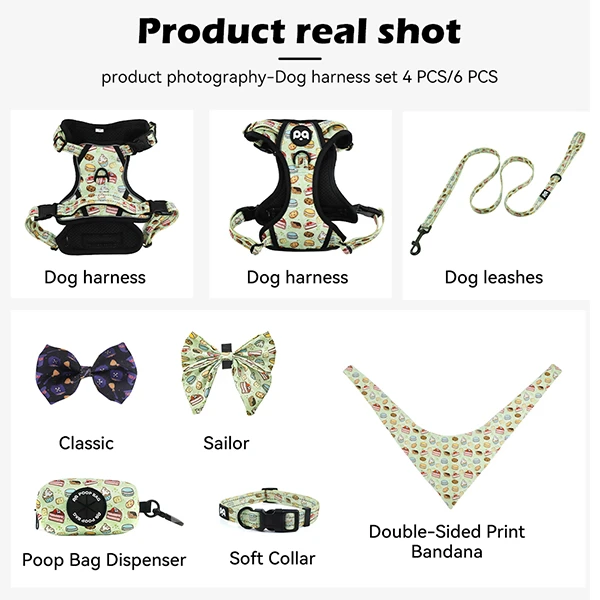
Everything starts with a single, powerful design. This design will be the visual DNA of your entire collection. In the past, this was the most expensive and time-consuming step. Today, it should be the most creative and fun. This is why we provide free access to our integrated 3D Mockup System, which includes a powerful AI Pattern Generator. It works as your personal, on-demand designer. You just need to type in your creative vision. For instance, you could try prompts like "a playful pattern of cartoon avocados with sunglasses," "a geometric Art Deco pattern in gold and black," or "a watercolor pattern of autumn leaves." Within seconds, the AI presents you with several completely original, high-resolution4 Benutzerdefinierte Patterns. You can generate as many as you like until you find the one that perfectly captures your brand's spirit. This tool gives you an infinite source of exclusive designs without ever paying a designer's fee. You can then instantly preview your chosen pattern on a product5, a process we call "Mockup in seconds," to ensure it looks amazing before moving forward.
Design Creation: The Old Bottleneck vs. The Modern qqpets Flow
| Aspect | The Old, Expensive Bottleneck | The Modern, Creative qqpets Flow |
|---|---|---|
| Idea to Design | Hire a designer, write a brief, wait for drafts, go through revisions. (Cost: £50-£200+) | Type your idea into our free AI tool and get unique patterns instantly. |
| Exclusivity | If you buy stock art, it's not exclusive. Custom design costs are high. | Every AI-generated pattern you choose is 100% exclusive to your brand. |
| Design Cost | A significant upfront investment before you even know if the products are viable. | £0. Our entire suite of advanced design tools is free for our partners. |
How do you apply one design across different products like harnesses and poop bag holders?
You have your signature design, but now you need to apply it to a collar, a leash, a harness, and other accessories. With traditional factories, this means new setups, new proof sheets, and a high risk of color and scale inconsistencies between the different products.
A factory with a unified system allows you to apply your one approved design to an entire library of 3D product models with a single click6. This guarantees that the pattern, color, and scale are perfectly consistent across collars, leashes, harnesses, and all other accessories7 in your set.
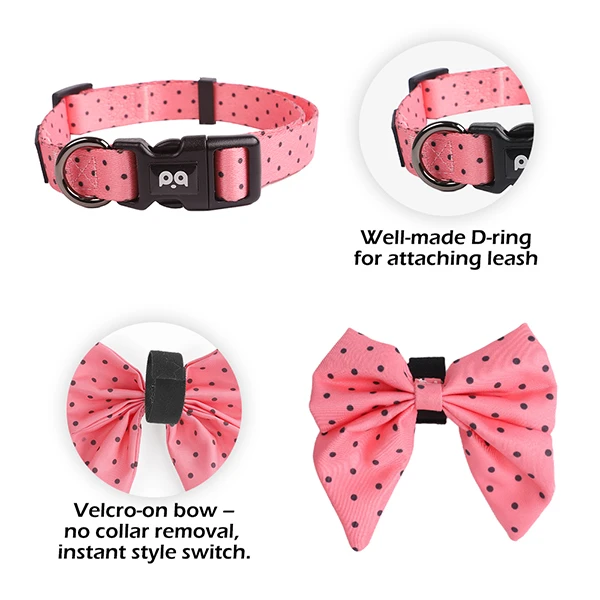
A collection is only a "set" if it truly matches. This is where most brands fail when using traditional sourcing methods. Our integrated system solves this problem completely. Once your signature pattern is created in our system, it becomes a "digital asset" that belongs to you. You can then browse our extensive library of customizable products—including multiple styles of collars, leashes, no-pull harnesses, step-in harnesses, bandanas, and poop bag holders—and apply your digital asset to any of them. The system automatically scales and maps your pattern perfectly onto the 3D model of each product. This ensures the color profile (e.g., the exact shade of red) and the pattern scale are identical across the entire product family. You can see a photorealistic 3D preview of your entire matching collection online8. To give you total confidence, our "Sample in 3 Days" promise allows you to get physical samples of each item, proving that the digital consistency translates into perfect physical consistency.
Product Application: The Disjointed Process vs. The Unified System
| Stage | The Disjointed, Risky Process | The qqpets Unified System |
|---|---|---|
| Applying the Design | Send the design file to the factory for each separate product. Hope they get it right. | One-click application of your design across our entire library of 3D product models. |
| Consistency | High risk of color variations due to different print runs and setups9. | Guaranteed color and pattern consistency across all items, verified in the 3D system. |
| Proofing | Receive multiple, confusing 2D proof sheets for each item. | See your entire matching collection together in an interactive 3D view. |
How can you afford to launch a full set without a huge investment?
You have designed a beautiful, consistent collection, but now you face the biggest hurdle: production cost. Traditional factories demand a Minimum Order Quantity (MOQ)10 of 1,000+ pieces for EACH item in your set. This would require a massive, high-risk investment that is simply impossible for a growing brand.
You must partner with a factory that was built for online brands and offers "lightweight customization." This means a revolutionary low MOQ, such as 50 pieces per item, which allows you to launch your complete, matching collection with a small, manageable, and low-risk investment.
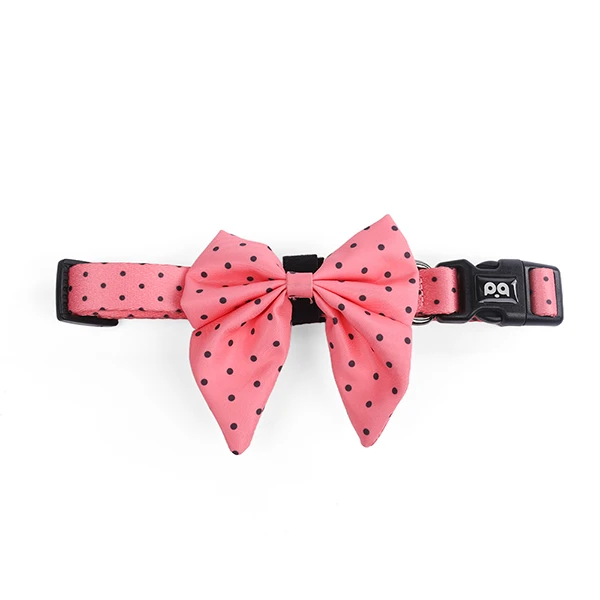
This final step is what makes launching a full collection a realistic strategy instead of just a dream. The financial barrier of high MOQs11 on multiple products is what stops most brands. We have built our three modern, flexible production lines to eliminate this barrier. Our industry-leading 50-piece MOQ applies to each item in your set. This is a game-changer. Let's look at the numbers. With a traditional factory, ordering a simple set of a collar and leash (1000 each) could mean a 2000-piece order. With us, you could launch a 4-piece collection—collar, leash, harness, and poop bag holder—and only need to order 50 of each, for a total of just 200 units. This "lightweight customization" approach allows you to test the market's appetite for a full collection without risking your entire budget. You can see which items are most popular and use that real-world sales data to guide your larger reorders, ensuring you only invest heavily in proven winners.
Creating a full collection elevates your brand and boosts your sales. With the right partner, it is a simple, risk-free process. Ready to build your complete collection? Contact our expert team today.
Schlussfolgerung
Create a full set by using AI to design a unique pattern, apply it across a suite of 3D product models, and launch affordably with a low 50-piece MOQ.
"Pivot to Bundling Products to Increase Sales - UMD Extension", https://extension.umd.edu/resource/pivot-bundling-products-increase-sales. Empirical research on product bundling and cross-selling indicates that presenting complementary products together can increase transaction value under some retail conditions; this supports the average-order-value rationale contextually rather than proving the effect for dog accessories specifically. Evidence role: general_support; source type: paper. Supports: Matching dog gear sets can increase average order value because customers may buy coordinated complementary items together.. Scope note: The evidence is likely to be general retail or e-commerce research, not category-specific proof for pet collars and leashes. ↩
"(PDF) Manufacturing cost modelling for concurrent product ...", https://www.academia.edu/17047007/Manufacturing_cost_modelling_for_concurrent_product_development. Product-development literature describes design coordination, specification management, and quality consistency as recurring sources of cost and complexity in multi-item manufacturing projects; this supports the article’s process-complexity claim at a general manufacturing level. Evidence role: general_support; source type: paper. Supports: Creating a coordinated multi-product collection can be costly and complex because it involves design work, product specifications, and consistency control.. Scope note: The source may discuss manufacturing or product development broadly rather than pet-accessory production specifically. ↩
"Text-to-image Diffusion Models in Generative AI: A Survey", https://arxiv.org/html/2303.07909v3. Research on text-to-image generative models shows that such systems can synthesize images from natural-language prompts, supporting the mechanism of prompt-based pattern creation; it does not independently verify exclusivity or professional quality for any specific factory tool. Evidence role: mechanism; source type: paper. Supports: AI tools can generate visual patterns from text prompts.. Scope note: Neutral sources can support text-to-image generation generally, but exclusivity and output quality are vendor-specific claims requiring separate substantiation. ↩
"High-Resolution Image Synthesis with Latent Diffusion ...", https://arxiv.org/abs/2112.10752. Studies of generative image models explain that these systems synthesize new image outputs from learned statistical patterns rather than retrieving a single stored image in ordinary use; this supports the idea of generated novelty, with legal originality and copyright status remaining separate questions. Evidence role: mechanism; source type: paper. Supports: AI image systems can generate novel high-quality image outputs suitable for visual design exploration.. Scope note: The evidence can support technical novelty of generated outputs but not guarantee legal originality, exclusivity, or absence of similarity to training data. ↩
"Virtual Prototypes Can Cheaply Test More Ideas", https://www.gsb.stanford.edu/insights/virtual-prototypes-can-cheaply-test-more-ideas. Research on virtual prototyping and 3D visualization reports that digital product previews can help evaluate appearance and design decisions before physical production; this supports the use of previews as a design-validation step in a general sense. Evidence role: mechanism; source type: paper. Supports: Previewing a pattern on a product model can help assess the design before production.. Scope note: The evidence supports digital previewing generally and may not prove the accuracy of a specific mockup system for pet accessories. ↩
"Synthesizing 3D Textures", https://www.cs.utexas.edu/~fussell/courses/cs384g/projects/final/artifacts/harsh/cs384g_final_proj.html. Computer-graphics references on texture mapping describe how a two-dimensional image can be mapped onto different three-dimensional models, supporting the technical feasibility of applying one design asset across multiple product forms. Evidence role: definition; source type: education. Supports: A single two-dimensional design can be mapped onto multiple three-dimensional product models.. Scope note: The source supports the underlying graphics method, not the specific one-click functionality or model library claimed by the article. ↩
"Using Photoshop and Color Management for Printing", https://www1.udel.edu/cookbook/scan-print/colormang/colormang.html. Color-management and digital-printing literature explains that standardized digital workflows and color profiles are used to improve consistency across outputs; this supports the consistency objective, while the word 'perfectly' would require product-specific measurement. Evidence role: mechanism; source type: research. Supports: A unified digital workflow can help maintain consistent pattern, color, and scale across related products.. Scope note: Neutral evidence can support improved consistency through color-managed workflows, but not guarantee perfect consistency across every physical item. ↩
"Virtual Prototypes Can Cheaply Test More Ideas", https://www.gsb.stanford.edu/insights/virtual-prototypes-can-cheaply-test-more-ideas. Research on computer-aided design, rendering, and virtual prototyping documents the use of realistic three-dimensional visualization to review product appearance before manufacture; this supports the role of online 3D previews as a product-development aid. Evidence role: general_support; source type: paper. Supports: Photorealistic 3D previews can be used to review a product collection before physical production.. Scope note: The source may support the general use of 3D visualization but not the photorealistic accuracy of the specific system described. ↩
"Improving color reliability of digital textile images via optimized ...", https://pmc.ncbi.nlm.nih.gov/articles/PMC12789604/. Technical literature on printing and color quality control notes that color output can vary across devices, substrates, calibration states, and production runs, supporting the concern that separate print setups may create visible variation. Evidence role: mechanism; source type: research. Supports: Different print runs and production setups can create color variation between items.. Scope note: The evidence supports the general risk of print variation, not the frequency or severity in any named factory’s workflow. ↩
"Raw Material Minimum Order Quantity Optimization", https://dspace.mit.edu/entities/publication/e43f520c-9951-4e8d-b867-36c7afb5234c. Operations and supply-chain references define minimum order quantity as the smallest quantity a supplier will sell or produce in one order, often linked to setup costs, production economics, or procurement constraints. Evidence role: definition; source type: education. Supports: MOQ refers to the minimum number of units that must be ordered from a supplier or manufacturer.. Scope note: A definition source explains MOQ generally but does not verify the specific MOQ levels stated for any supplier. ↩
"Global supply chains risks and COVID-19 - PMC - NIH", https://pmc.ncbi.nlm.nih.gov/articles/PMC9640425/. Supply-chain and inventory-management research shows that large order quantities increase working-capital needs and inventory risk, supporting the claim that high MOQs can be a financial barrier for smaller sellers. Evidence role: general_support; source type: paper. Supports: High minimum order quantities can create financial barriers by increasing upfront inventory investment and risk.. Scope note: The evidence supports the financial mechanism generally and may not quantify the barrier for pet-accessory startups specifically. ↩