 DE
DE  EN
EN  FR
FR  RU
RU  AR
AR  ES
ES  PT
PT  IT
IT  NL
NL  PL
PL  SL
SL  ET
ET  RO
RO  CS
CS  EL
EL  LV
LV 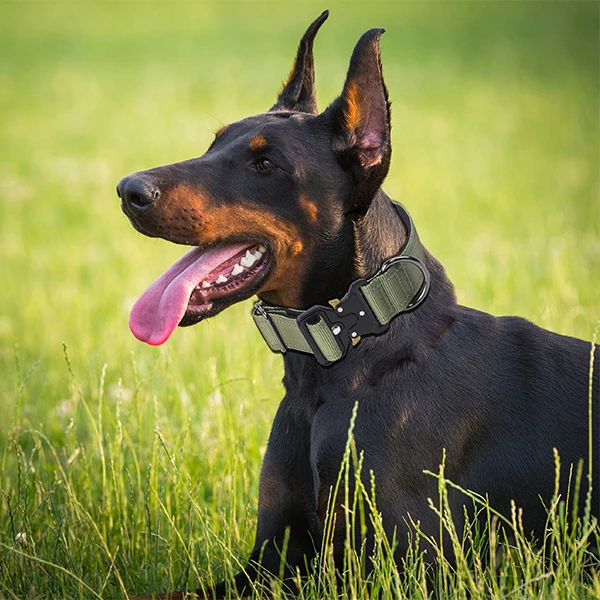
You're building a brand, not just selling a product. But your supplier treats you like any reseller, offering generic items from a catalog. So when it comes to 2 inch wide custom dog collars, what should you really demand from a manufacturing partner to build a real brand identity?
As a brand, you must demand three things: non-negotiable safety engineering with certified components, complete creative control to make your product unique, and a flexible production model with low MOQs that allows you to test the market and grow. Anything less makes you a reseller, not a brand.
My name is Cathy, and as a pet product customization specialist at qqpets, I speak with hundreds of online brand owners. I see the frustration firsthand. They have a powerful brand vision, but their suppliers give them a limited menu of options that makes it impossible to stand out. They are forced to compete on price with a generic product. A true brand is built on differentiation and trust1. Therefore, you must stop accepting the standard offer and start demanding the tools you need to succeed. Let's explore exactly what those demands should be.
Shouldn't you demand non-negotiable safety engineering?
You've found a supplier offering wide collars. But are you sure they're safe? A single product failure from a weak buckle or shoddy stitching can lead to a terrible accident and destroy the trust you've worked so hard to build2.
A brand must demand verifiable proof of safety. This means insisting on load-rated hardware like double-pin buckles and welded D-rings3, high-density webbing4und reinforced stitching at all stress points5. Safety should not be a feature; it should be the engineered foundation of the product.

A generic supplier sees a collar as fabric and clips. A true brand partner sees it as a piece of safety equipment6. The demands you place on your manufacturer are what separate a premium, trustworthy product from a cheap and dangerous one. At our ISO 9001 certified facility, these engineering demands are not special requests; they are our standard operating procedure. This is because your brand's reputation is built upon the reliability of our manufacturing.
From Component Checklist to Engineered System
It is critical to understand the difference between a supplier who just checks boxes and a partner who engineers a complete safety system.
| Your Demand | A Standard Supplier's Response | A True Partner's Standard (Our Promise) |
|---|---|---|
| "Strong Buckle" | "We use a metal buckle." (Often a single-pin, non-rated type) | "We use a heavy-duty, double-pin metal buckle system engineered to distribute force and prevent failure under load7." |
| "Durable Webbing" | "It's 2-inch polyester." (Could be low-density and prone to fraying) | "We use high-density, tightly woven polyester webbing with a certified high tensile strength, ensuring it won't stretch or tear8." |
| "Secure Stitching" | "The D-ring is sewn on." (Often with a single, weak stitch line) | "All stress points feature reinforced 'box-X' stitching, a technique used in safety gear to multiply holding power." |
Demanding this level of engineering is the first step in building a product that you can proudly stand behind.
Shouldn't you demand total creative control over your brand's identity?
Your collar is now incredibly safe and strong. That's great. But it's a solid black color, just like the fifty other brands selling heavy-duty collars on Amazon. How do you stop competing on price and start building a loyal following that loves your brand?
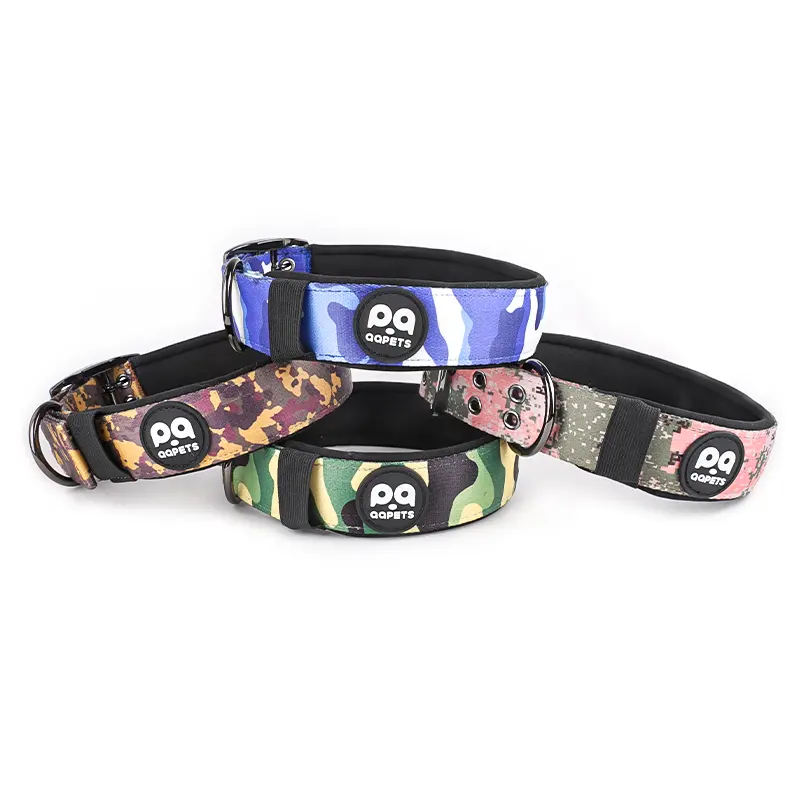
You must demand the tools to make your product visually unique. In the world of e-commerce, the pattern on a collar is your brand's uniform, its voice, and its personality. A factory partner should empower your creativity, not limit it with a small, outdated catalog.
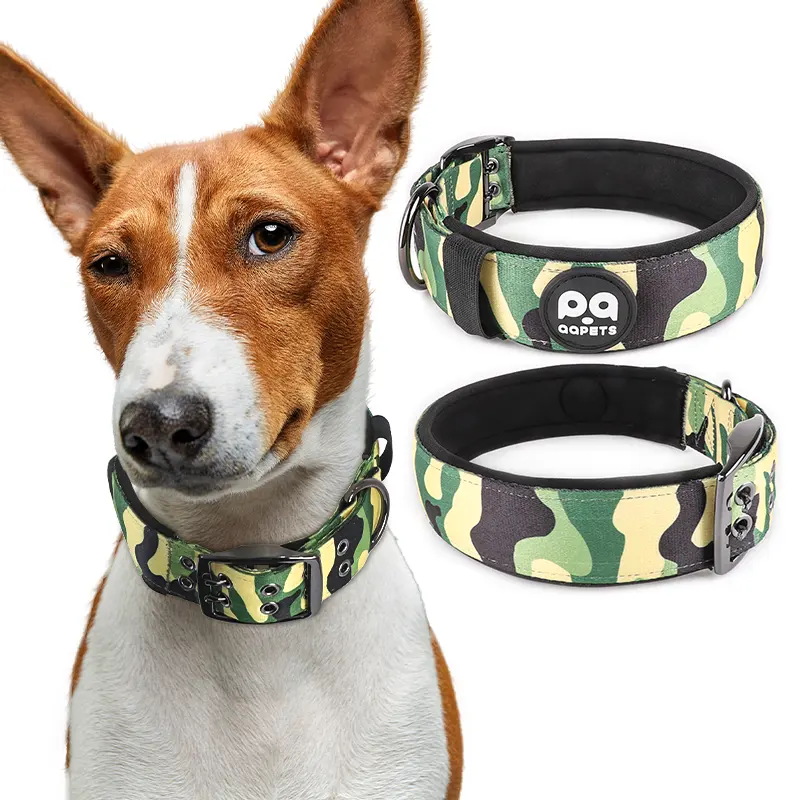
This is the demand that separates the past from the future of manufacturing. We've built our entire factory to serve the creative needs of online brands like yours, encapsulated in our promise: "Mockup in seconds. Sample in 3 Days." This is powered by our revolutionary free 3D Mockup System.
From Limited Catalog to Limitless Creation
Stop asking for PDF catalogs. It's time to demand a virtual design studio.
- Demand AI-Powered Design: With our integrated AI Pattern Generator, you are the designer. You don't need artistic skills. Just type your vision—"a fun pattern of cartoon corgis surfing," or "a sophisticated art deco geometric pattern"—and our AI creates unique Benutzerdefinierte Patterns exclusively for you.
- Demand Production Flexibility: The old model of high MOQs kills creativity and creates massive risk9. We destroyed that model. Demand "lightweight customization." With our system, the MOQ is just 50 pieces per size and design. This allows you to launch a diverse collection and let your customers tell you what they love.
- Demand a Brand Ecosystem: Demand the ability to apply your unique designs across a range of products. With our system, your new custom pattern can be instantly placed on matching leashes and harnesses, creating a complete, irresistible brand world10.
If you are ready to work with a partner who meets these modern demands, I invite you to contact our expert team today.
Schlussfolgerung
As a brand, you must demand more. Demand engineered safety, demand total creative control, and demand a flexible production model. We've built our factory to meet these demands and help you build a brand that lasts.
"Decomposing Brand Loyalty: An Examination of ... - PMC - NIH", https://pmc.ncbi.nlm.nih.gov/articles/PMC11851547/. Marketing scholarship identifies differentiation and consumer trust as important contributors to brand equity and customer preference. Evidence role: expert_consensus; source type: paper. Supports: A true brand is built on differentiation and trust.. Scope note: This supports the branding principle generally, not the performance of any specific dog-collar brand. ↩
"How Brand Knowledge Affects Purchase Intentions in Fresh ...", https://pmc.ncbi.nlm.nih.gov/articles/PMC10451841/. Research on product-harm crises shows that product failures and recalls can damage consumer trust, brand evaluations, and purchase intentions. Evidence role: expert_consensus; source type: paper. Supports: A single product failure can seriously damage consumer trust in a brand.. Scope note: The evidence is typically based on broader product-harm or recall contexts, not specifically dog collars. ↩
"1926.251 - Rigging equipment for material handling. - OSHA", http://www.osha.gov/laws-regs/regulations/standardnumber/1926/1926.251. Engineering and safety guidance for load-bearing equipment emphasizes the use of hardware with known load ratings and appropriate attachment integrity where failure could create injury risk. Evidence role: mechanism; source type: government. Supports: Load-rated hardware is important for safety-critical collar components such as buckles and D-rings.. Scope note: The source would support the engineering rationale for load-rated components generally, not certify the specific collar hardware described. ↩
"Weave structures of polyester fabric affect the tensile strength ... - PMC", https://pmc.ncbi.nlm.nih.gov/articles/PMC11756394/. Textile engineering sources describe webbing strength as dependent on fiber type, weave structure, density, and tensile performance, supporting the relevance of specifying high-quality webbing for load-bearing uses. Evidence role: mechanism; source type: education. Supports: High-density webbing can be relevant to durability and tensile performance in a dog collar.. Scope note: This would support the material principle, not verify the tensile strength of the manufacturer’s particular webbing. ↩
"The effects of different fabric types and seam designs on the ...", https://commons.emich.edu/cgi/viewcontent.cgi?article=1052&context=honors. Sewn-joint and textile-assembly research shows that seam construction, stitch type, and reinforcement affect joint strength and failure resistance under load. Evidence role: mechanism; source type: paper. Supports: Reinforced stitching at stress points improves the reliability of load-bearing textile assemblies.. Scope note: This supports reinforced stitching as a general durability measure and does not test the exact collar design in the article. ↩
"Review of Collars, Harnesses, and Head Collars for Walking Dogs", https://pmc.ncbi.nlm.nih.gov/articles/PMC12345489/. Pet and animal-control guidance commonly treats collars, leashes, and restraint devices as equipment used to control animals and reduce escape or injury risks. Evidence role: general_support; source type: institution. Supports: A dog collar can function as safety-related restraint equipment rather than merely an accessory.. Scope note: Such sources support the functional safety role of collars but may not classify all decorative collars as formal safety equipment. ↩
"Buckling - Wikipedia", https://en.wikipedia.org/wiki/Buckling. Mechanical design references explain that distributing load across contact points can reduce localized stress concentrations and lower the risk of component failure under load. Evidence role: mechanism; source type: education. Supports: A buckle system designed to distribute force can reduce stress concentration and failure risk under load.. Scope note: This supports the engineering concept of load distribution, not a comparative test of double-pin versus single-pin dog-collar buckles. ↩
"[PDF] Comparison of strength, elongation and evenness of selected types ...", https://ir.library.oregonstate.edu/downloads/z029p7629. Textile testing literature distinguishes tensile strength and elongation as measurable indicators of resistance to breaking and stretching under applied load. Evidence role: mechanism; source type: paper. Supports: Tensile and elongation properties are relevant to whether webbing resists stretching and tearing.. Scope note: The evidence would support the relationship between tensile properties and deformation generally, not guarantee that any collar will never stretch or tear. ↩
"[PDF] Raw Material Minimum Order Quantity Optimization - DSpace@MIT", https://dspace.mit.edu/bitstream/handle/1721.1/121302/1240293813-MIT.pdf?sequence=1. Operations and supply-chain research links large batch sizes and high minimum order quantities to increased inventory exposure, demand-forecasting risk, and reduced flexibility. Evidence role: expert_consensus; source type: paper. Supports: High minimum order quantities can increase inventory risk and reduce flexibility for small brands.. Scope note: This supports the general inventory-risk logic of high MOQs, not the article’s stronger claim that they necessarily kill creativity. ↩
"Building Brand Consistency Across Channels", https://marketingcommunications.wvu.edu/professional-development/marketing-communications-today/marketing-communications-today-blog/2025/02/12/building-brand-consistency-across-channels. Brand-management literature describes consistent visual identity and coordinated product lines as mechanisms for building brand recognition and coherent brand meaning. Evidence role: expert_consensus; source type: paper. Supports: Applying consistent designs across collars, leashes, and harnesses can support a coherent brand identity.. Scope note: This supports the branding rationale for coordinated products, not the subjective claim that the result is “irresistible.” ↩