 DE
DE  EN
EN  FR
FR  RU
RU  AR
AR  ES
ES  PT
PT  IT
IT  NL
NL  PL
PL  SL
SL  ET
ET  RO
RO  CS
CS  EL
EL  LV
LV 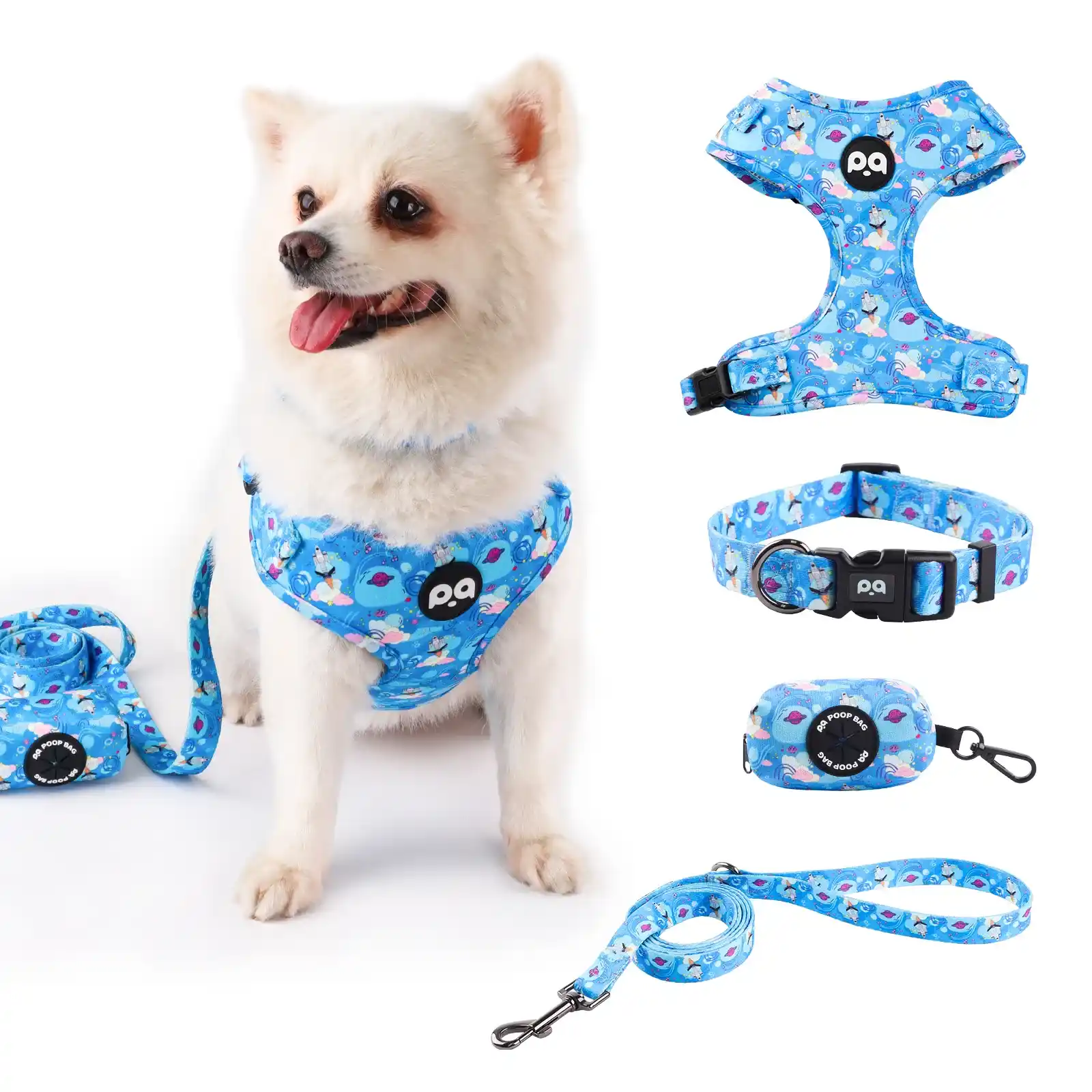
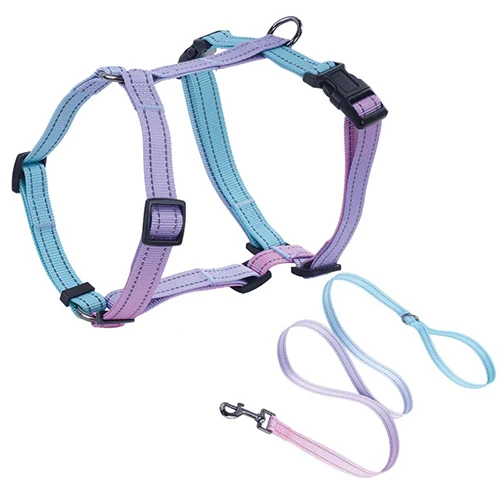
You have a vision for a specific custom blue dog harness—a deep navy, a bright sky blue, or a trendy teal. But you're terrified that after weeks of waiting, your manufacturer will deliver a shade that is completely wrong, killing your brand's aesthetic.
The best way to get the perfect shade is to partner with a factory that has a technology-driven color-proofing system. This involves using digital tools like Pantone codes and a 3D mockup system, followed by a rapid physical sampling process to guarantee "what you see is what you get."
As a pet industry customization expert at qqpets, I can tell you that color is the number one source of conflict and disappointment in custom manufacturing. A simple misunderstanding of "light blue"1 can lead to thousands of dollars in unsellable inventory. This is a problem we have obsessed over solving. We believe getting the color right shouldn't be a matter of luck; it should be a matter of science. That is why we have built a system to eliminate color risk for our partners.
How can you guarantee the blue on your screen matches the harness in your hand?
You're worried that the color you see on your monitor won't be the same as the final product. Screen calibrations differ, and digital files can be deceiving2, leading to costly and frustrating production errors.
We guarantee color accuracy through a three-step verification process: digital precision, physical proof, and production consistency. This system is designed to ensure the Pantone shade you approve on-screen is the exact shade you hold in your hand in just a few days.
The fear of color inaccuracy is completely valid. It is the most subjective part of the design process3, and traditional factories handle it very poorly. They often rely on vague descriptions or mismatched photos. We have removed that subjectivity. Our process is structured to give you complete control and confidence. Your brand's color integrity is protected by a system, not by a guess. The peace of mind this provides is invaluable.
Our System for Flawless Color Realization
This process was designed to eliminate all color-related risks.
- 1. Digital Precision: It all starts on our free 3D Mockup System. Here, you can select your exact blue using universal Pantone color codes4. This creates a specific, technical standard for your color, not just a subjective description. The 3D render gives you an instant preview5 of your harness with this exact shade.
- 2. Physical Proof: This is the most crucial step. Our promise of "Mockup in seconds. Sample in 3 Days" is your ultimate guarantee. We take your Pantone-specified design and produce a physical sample. In just a few days, you will have the actual harness, made with the final material and dye6, to approve in person.
- 3. Production Consistency: Once you approve the physical sample, that sample becomes the "master" standard7 for your full production run. Our quality control team uses it to verify every batch8, ensuring every single harness perfectly matches the color you approved.
| The Old, Risky Way | The qqpets Verified Way |
|---|---|
| Vague color descriptions ("light blue") | Precise Pantone color codes |
| Waiting weeks for a sample | Physical sample in as little as 3 days |
| Hope the full order matches the sample | QA check against your approved master sample |
Is a single blue shade enough to build a standout brand?
You've perfected your signature blue. But now what? A single solid-colored harness is good, but you're worried it's not enough to create a truly memorable brand collection that encourages repeat purchases.
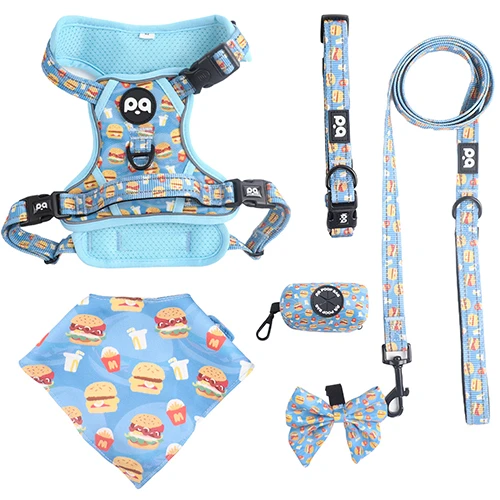
No, a single shade is just the beginning. A standout brand is built by using that signature color as a theme across a diverse collection of unique Benutzerdefinierte Patterns. This transforms your one blue harness into a complete, recognizable product line.
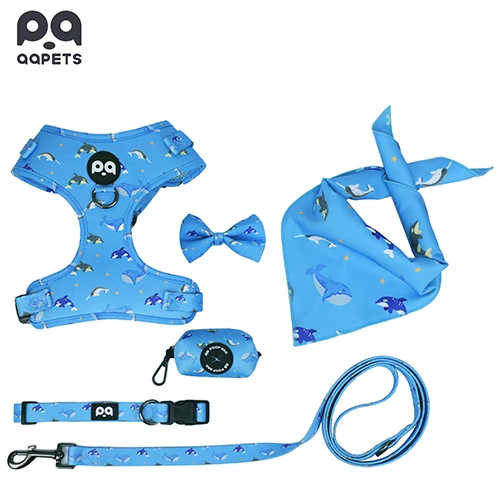
For a modern online brand, like a Shopify seller, product diversity is key9. Your customers want newness and variety10. But launching new products is risky and expensive, right? Not with our system. We empower you to take your "signature blue" and effortlessly spin it into dozens of new products. You can create a floral pattern with blue accents for spring, a snowflake pattern with blue details for winter, and a geometric pattern with your blue for your core collection. Each new pattern is a new product.
From a Single Color to a Full Collection
We provide the tools to expand your brand without the risk.
- AI-Powered Design: Go to our 3D Mockup System and use the AI Pattern Generator. Type in ideas like "nautical rope pattern with navy blue" or "delicate floral print using sky blue and white." The AI will generate unique, production-ready patterns for you in seconds.
- Test the Market, Risk-Free: This is where our model is a game-changer for online sellers. With a low MOQ of just 50 pieces per size/pattern, you don't have to guess what your customers will love. You can launch five different blue patterns with the same investment it would take to launch one with another factory.
- Build Your Brand Story: Use your perfect blue across a range of harnesses, collars, and leashes to create cohesive sets. This increases your average order value11 and builds a powerful, recognizable brand identity12 that customers will remember.
Ready to create more than just a blue harness? Ready to build a blue-themed collection? Contact our expert team today.
Schlussfolgerung
Finding the perfect blue is not about luck; it's about using the right system. We guarantee your color accuracy and then give you the tools to transform that single shade into a full, risk-free collection.
"Individual Differences in Colour Perception: The Role of Low ... - PMC", https://pmc.ncbi.nlm.nih.gov/articles/PMC8649478/. Research on color naming and color categorization documents that everyday color terms are imprecise and interpreted differently by observers, supporting the risk of ambiguity in descriptions such as “light blue.” Evidence role: mechanism; source type: paper. Supports: Informal color descriptions such as “light blue” can be misunderstood in production communication.. Scope note: This supports ambiguity in color language but does not quantify resulting inventory losses. ↩
"Color Management in Digital Pathology - PMC - NIH", https://pmc.ncbi.nlm.nih.gov/articles/PMC4334042/. Color-management guidance from an institution such as the International Color Consortium or W3C explains that displayed color depends on device profiles, calibration, and viewing conditions, supporting the claim that screen previews may not match physical products without controlled workflows. Evidence role: mechanism; source type: institution. Supports: Monitor differences and digital files can cause misleading color previews in custom manufacturing.. Scope note: This supports the general risk of screen-to-object mismatch, not the accuracy of any specific factory process. ↩
"Individual differences and their implications for color perception - PMC", https://pmc.ncbi.nlm.nih.gov/articles/PMC7430749/. Color-perception research shows that color judgments vary with observer physiology, adaptation, illumination, and context, supporting the claim that color approval contains subjective elements. Evidence role: expert_consensus; source type: paper. Supports: Color evaluation is subjective because human perception and viewing conditions vary.. Scope note: The source would support subjectivity in color perception generally, not prove that color is the single most subjective part of all design processes. ↩
"Pantone Matching System - Wikipedia", https://en.wikipedia.org/?title=Pantone_Matching_System&redirect=no. An encyclopedia or design reference source describes the Pantone Matching System as a standardized color identification system used in printing and manufacturing, supporting the use of Pantone codes as a more precise reference than informal color names. Evidence role: definition; source type: encyclopedia. Supports: Pantone color codes provide a standardized way to specify a desired shade.. Scope note: Pantone references improve specification but do not by themselves guarantee identical results across all materials, dyes, and lighting conditions. ↩
"[PDF] A Content Analysis of 3D Virtual Prototyping and Zero-Waste Design ...", https://scholarworks.calstate.edu/downloads/sn00b389v. Research on computer-aided design and virtual prototyping reports that 3D visualization can help designers evaluate form, color, and product appearance before physical production, providing contextual support for using renders as previews. Evidence role: general_support; source type: paper. Supports: A 3D render can provide a useful preview of a customized harness design before physical sampling.. Scope note: Such research supports the general value of 3D visualization, not the speed or color fidelity of this specific mockup system. ↩
"Color appearance shifts depending on surface roughness ... - PMC", https://pmc.ncbi.nlm.nih.gov/articles/PMC8789860/. Textile color-science sources explain that perceived color is affected by substrate, dye, finish, and illumination, supporting the need to review a physical sample made from the intended materials. Evidence role: mechanism; source type: research. Supports: A physical sample made with the final material and dye is more reliable for color approval than a digital file alone.. Scope note: This supports the rationale for material-specific sampling, not the claim that a sample can always be produced within three days. ↩
"Textile Inspection: A Complete Guide and Quality Control Checklist", https://proqc.com/blog/textile-inspection-complete-guide-and-quality-control-checklist/. Quality-management and textile inspection guidance commonly describes approved reference or master samples as comparators for production acceptance, supporting the use of an approved sample as a production standard. Evidence role: mechanism; source type: institution. Supports: An approved physical sample can function as a master standard for later production runs.. Scope note: This provides general quality-control context and does not verify the company’s internal procedures. ↩
"AATCC Standard Test Methods and Procedures", https://www.aatcc.org/standards/. Textile testing guidance from organizations such as AATCC or ISO describes batch color evaluation using visual standards or instrumental color-difference methods, supporting the practice of checking production lots against an approved reference. Evidence role: mechanism; source type: institution. Supports: Production batches can be checked against an approved sample to monitor color consistency.. Scope note: This supports batch verification as a recognized practice, not the effectiveness of any particular company’s inspections. ↩
"[PDF] product variety, across-market demand", https://cowles.yale.edu/sites/default/files/2022-09/d2054-r3.pdf. Retail and marketing research on product assortment finds that variety can influence consumer search, perceived choice, and purchasing behavior, providing contextual support for product diversity as an e-commerce strategy. Evidence role: general_support; source type: paper. Supports: Product diversity can be important for online retail brands because assortment affects customer choice and purchase behavior.. Scope note: Assortment research is context-dependent and does not prove that more variants will improve performance for every pet-accessory brand. ↩
"Variety-Seeking Behavior in Consumption: A Literature Review and ...", https://pmc.ncbi.nlm.nih.gov/articles/PMC9207504/. Consumer-behavior research on variety seeking and novelty seeking shows that many shoppers derive value from new options and assortment variety, supporting the general claim that newness can matter to customers. Evidence role: expert_consensus; source type: paper. Supports: Customers often respond to novelty and variety in product assortments.. Scope note: The evidence would be general consumer-behavior support and may not be specific to dog harness buyers. ↩
"[PDF] The Dynamic Effects of Bundling as a Product Strategy", https://www.hbs.edu/ris/Publication%20Files/dynamicbundling_2013_06_20_13def9fb-1904-479a-8a37-fa64eff9663a.pdf. Marketing and retail research on product bundling and complementary goods finds that presenting related products together can affect basket size and purchase value, providing contextual support for the average-order-value claim. Evidence role: general_support; source type: paper. Supports: Offering cohesive sets of complementary products can increase the value of a customer’s order.. Scope note: Bundling effects vary by category, pricing, and customer segment, so the evidence would not guarantee higher AOV for every harness, collar, and leash set. ↩
"BRAND: Brand recognition and attitude norms database - PMC", https://pmc.ncbi.nlm.nih.gov/articles/PMC11649726/. Branding research indicates that consistent visual identity elements, including color, can contribute to brand recognition and memory, supporting the use of a signature color across related products. Evidence role: general_support; source type: paper. Supports: Using a consistent signature color across products can help build a recognizable brand identity.. Scope note: This supports the branding principle but does not prove that a specific blue collection will be memorable or commercially successful. ↩