 RO
RO  EN
EN  FR
FR  RU
RU  DE
DE  AR
AR  ES
ES  PT
PT  IT
IT  NL
NL  PL
PL  SL
SL  ET
ET  CS
CS  EL
EL  LV
LV 
You want to sell custom college dog collars, but you're terrified of getting the colors and logos wrong. A university's brand is sacred1, and you know one mistake in the shade of blue or the clarity of the mascot will lead to angry customers and a warehouse full of useless inventory.
To get perfectly brand-accurate collars, you must partner with a factory that uses a technology-driven, three-step verification process: Pantone color code integration for perfect matching, a high-resolution 3D mockup for visual approval, and a physical production sample for final, tangible confirmation before mass production.
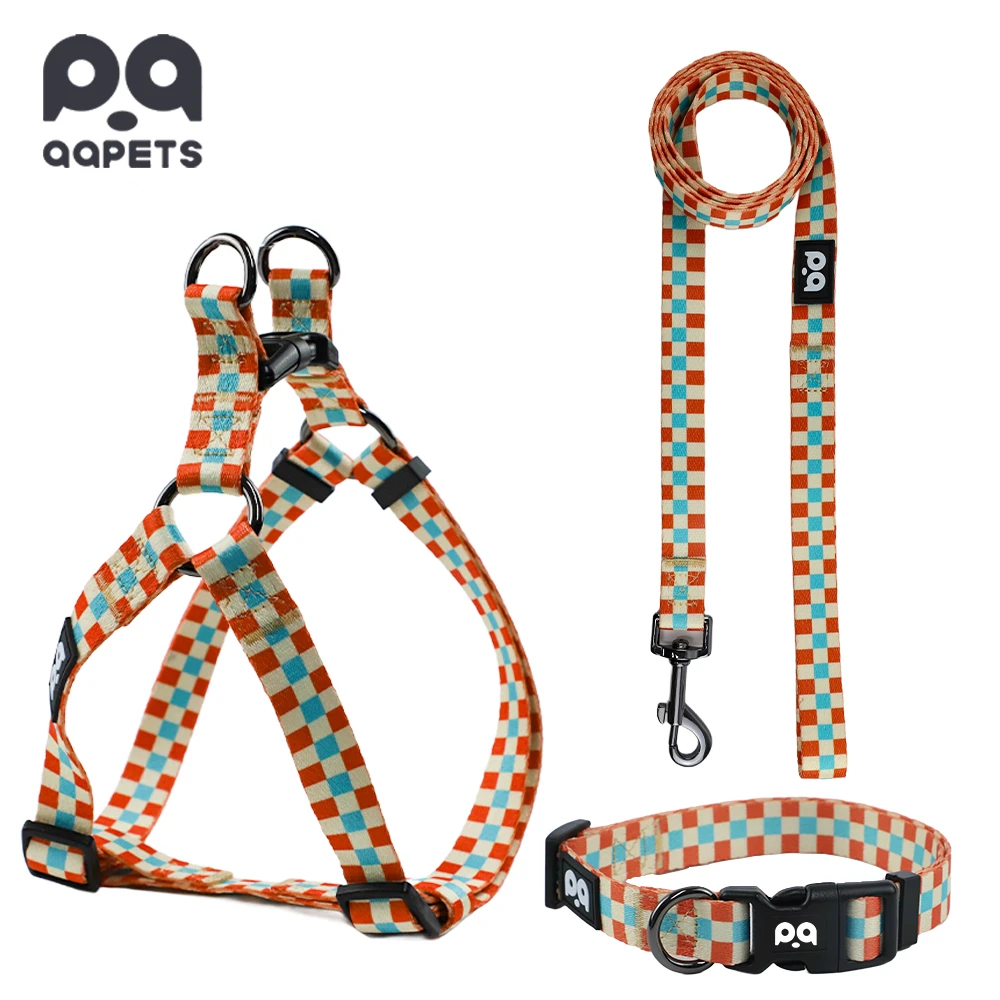
My name is Cathy, and as a customization expert at the qqpets fabrică, I understand that for a licensed or school-branded product, "close enough" is not good enough. It has to be perfect. The passion of college sports fans and alumni is incredible, and they will spot a color that is off by a single shade or a logo that is not perfectly crisp. Many brand owners think that achieving this level of precision is a complex and risky gamble. In reality, modern manufacturing has turned it into a science. This guide will show you exactly how our factory process eliminates the guesswork and guarantees the brand accuracy your business depends on.
How can you guarantee perfect Pantone color matching from a factory?
You send your supplier the exact Pantone Matching System (PMS) code for your university's official color. Despite this, they send back a sample that is just a little too light or too dark. This error makes the entire product look unofficial and cheap.
You guarantee perfect color by working with a factory whose printing process is digitally integrated with the Pantone system. This ensures the precise color code is used in the ink formula, which is then verified first on a 3D model and second with a physical sample.
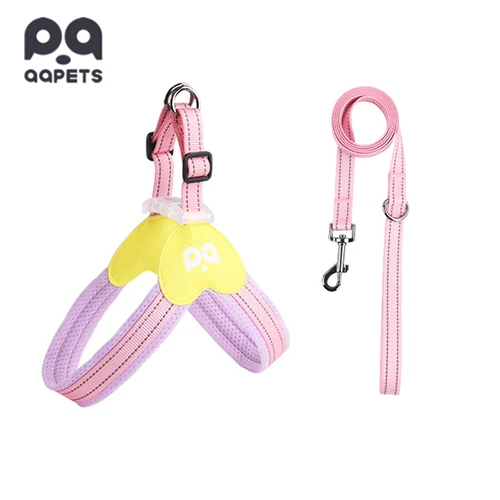
Color is the single most important element of brand identity2, especially for a college. The "Burnt Orange" of one university is completely different from the "Tennessee Orange" of another. The old way of manufacturing involved a worker visually trying to match a color swatch, which is incredibly unreliable3. This is why our process is built on digital precision. When you provide us with a PMS code, that code is entered directly into our digital printing software. This software controls the mix of inks for our dye-sublimation printers, which fuse the color directly into the fibers of the webbing for a vibrant, permanent finish. Furthermore, you get to see this color instantly in our free 3D Mockup System. You can see how the exact shade looks on the collar texture under virtual lighting. But we don't stop there. The "Sample in 3 Days" part of our promise means you get a physical sample dyed with that exact formula. You can hold it in your hand and compare it to your official color chart, giving you 100% confidence before you approve the full order.
Color Matching: The Old Guesswork vs. The New Science
| Factor | The Old Way (Guesswork) | The qqpets Way (Digital Science) |
|---|---|---|
| Color Input | A JPG file or a verbal "make it royal blue." | A specific Pantone (PMS) code is entered into the system. |
| Matching Process | A worker visually compares ink to a swatch. Highly subjective. | Software calculates the precise ink formula. Highly objective. |
| First Proof | Wait weeks for a physical sample that might be wrong. | Instant visual proof on a 3D model. "Mockup in seconds." |
| Final Approval | Approve a potentially flawed sample or start over. | Approve a perfect physical sample that matches the 3D model. |
What if my college logo or mascot design is complex?
Your chosen university has a mascot with fine details, a crest with small text, or a wordmark with a unique font. You are worried that a factory will not be able to replicate these details, resulting in a blurry, unreadable, and unprofessional-looking logo.
You ensure perfect clarity by providing a vector file of the logo and partnering with a factory that uses high-resolution printing. This is then confirmed by zooming in on a hyper-detailed 3D mockup and inspecting a crisp, high-definition physical sample.
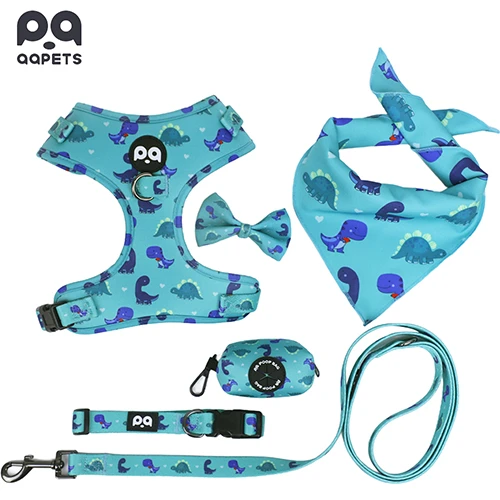
A blurry logo is an instant dealbreaker. It screams "cheap knock-off" and will destroy your brand's credibility. The clarity of your Model personalizat and logo comes down to two things: the file type you provide and the factory's printing technology4. We always advise our partners to provide logos in a vector format (like .AI, .EPS, or .SVG). Unlike a pixel-based file like a JPG, a vector file can be scaled to any size without losing any quality. This ensures that even the finest lines of a complex mascot remain perfectly sharp. Our advanced dye-sublimation printers then render these vector files at an extremely high resolution, ensuring every detail is captured on the fabric. The most powerful tool you have in this process is our 3D mockup system. You can load your vector logo onto the collar model and zoom in. You can inspect the points on a crown, the letters in a crest, or the whiskers on a mascot to ensure everything is perfect before we even think about printing a sample. This digital-first verification, backed by a flawless physical sample, removes all risk of a blurry logo.
Logo Clarity: Blurry Risk vs. HD Guarantee
| Aspect | The High-Risk Approach | The qqpets HD Guarantee |
|---|---|---|
| File Type | Uses low-resolution JPGs or PNGs. | Requires high-resolution vector files (.AI, .EPS) for perfect scaling. |
| Printing Tech | Basic screen printing that can smudge or blur fine lines. | Advanced high-DPI dye-sublimation for photo-quality sharpness. |
| Verification | You hope for the best and wait for a sample. | You zoom in and inspect every detail on a 3D model, then approve a physical sample. |
| Outcome | A blurry, unprofessional logo. | A crisp, retail-quality logo that honors the brand. |
How can I afford to stock collars for multiple colleges without a huge investment?
You want to serve the fans of several different colleges, not just the biggest one. However, traditional factory Minimum Order Quantities (MOQs) of 1,000+ units per design would require a massive financial investment that is simply impossible for your brand.
You launch a diverse, multi-college collection affordably by partnering with a factory that offers "lightweight customization." A low MOQ of just 50 pieces per design allows you to test numerous college brands in the market with a minimal, manageable upfront investment.
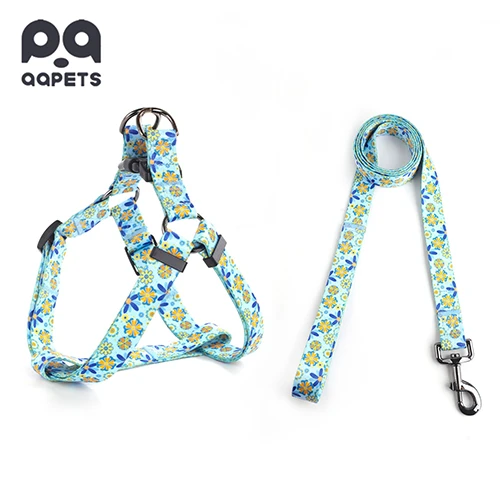
This is where the business model becomes as important as the technology. The opportunity in the college market is not just selling gear for the top 10 universities; it is serving the passionate alumni of hundreds of smaller, regional colleges that big brands ignore. The only thing stopping most sellers is the inventory risk. This is the exact problem our 50-piece MOQ was designed to solve. It is a strategic tool that changes the entire equation. Instead of making one massive, high-risk bet on a single college (e.g., ordering 1,000 collars for one school), you can make 20 small, low-risk bets. For the same total investment, you could launch a collection for 20 different colleges, ordering just 50 collars for each. This allows you to enter the market with an incredibly diverse offering. You can see which schools have the most passionate dog-owning fans and then double down on the winners. This "test and invest" strategy is a smarter, safer, and more profitable way to build a niche brand. It is made possible by a factory partner who sees themselves as a platform for your growth, not just a simple supplier.
Inventory Strategy: The Big Gamble vs. The Smart Portfolio
| Strategy | The High-MOQ Gamble | The 50-Piece Smart Portfolio |
|---|---|---|
| Initial Order | 1,000 units for 1 college. | 50 units each for 20 different colleges. |
| Market Reach | You serve only one fanbase. | You serve 20 different fanbases. |
| Financial Risk | Massive. If that one product line fails, your investment is lost. | Minimal. You identify winners and losers with very little capital at risk. |
| Growth Path | Slow and risky. | Fast, data-driven, and agile. |
Getting brand-accurate college collars is not a matter of luck; it is a matter of process. With the right partner, you can be confident that every color is perfect, every logo is crisp, and your business is built for success. Ready to create your first design? Contact our expert team today.
Concluzie
Get brand-accurate college collars with a factory that guarantees Pantone matching and logo clarity through a 3D mockup and physical sample, all while launching a diverse collection with a low, 50-piece MOQ.
"College Logos and Identity Standards", https://www.rmc.edu/about-rmc/offices-departments/marketing-communications/college-logos-identity-standards/. University brand and trademark guidelines document that institutional names, colors, logos, and mascots are controlled identity assets, supporting the need for accuracy in school-branded products; the wording here is rhetorical rather than a legal term. Evidence role: general_support; source type: institution. Supports: Universities treat colors, logos, mascots, and related marks as controlled brand assets that require accurate use.. Scope note: Supports the practical importance of brand control, not the literal statement that a brand is “sacred.” ↩
"Color Psychology Used in Marketing: An Overview", https://appliedpsychologydegree.usc.edu/blog/color-psychology-used-in-marketing-an-overview. Research on brand identity and consumer perception links color to brand recognition and brand associations, supporting the importance of color in branding; however, the source may not prove that color is always the single most important brand element. Evidence role: expert_consensus; source type: paper. Supports: Color is a major component of brand identity and can influence recognition and perception.. Scope note: Contextual support only; the superlative “single most important” may be stronger than the evidence establishes. ↩
"CIE 1931 color space", https://en.wikipedia.org/wiki/CIE_1931_color_space. Color-science standards and research describe how visual color matching is affected by illumination, viewing conditions, substrate, and observer variability, supporting the claim that unaided visual matching can be unreliable; the degree of unreliability depends on the process controls used. Evidence role: mechanism; source type: research. Supports: Visual color matching can vary because of lighting, materials, and human perception.. Scope note: Supports the general vulnerability of visual color matching, not the performance of any specific factory worker or process. ↩
"The Best File Format for Printing Logos Without Quality Loss", https://www.designyourway.net/blog/the-best-file-format-for-printing-logos/. Graphic-arts and print-production guidance explains that reproduction quality depends on both the resolution or vector quality of the source artwork and the capabilities of the output device, supporting the claim at a general level; it does not verify any specific factory’s equipment. Evidence role: mechanism; source type: education. Supports: Logo clarity in printed products depends on source-file quality and printing technology.. Scope note: General print-production support only, not evidence of the performance of the named factory. ↩