 RO
RO  EN
EN  FR
FR  RU
RU  DE
DE  AR
AR  ES
ES  PT
PT  IT
IT  NL
NL  PL
PL  SL
SL  ET
ET  CS
CS  EL
EL  LV
LV 
Your brand sells "no-pull" harnesses, but they don't always work1. You're dealing with customer complaints about poor training results, chafing, or dogs escaping, damaging your brand's credibility.
The best custom dog harness for no-pull training is made from a combination of two key elements: a specific structural design, like a front D-ring, paired with a perfect, customized fit that prevents rotation and ensures the harness works safely and effectively.
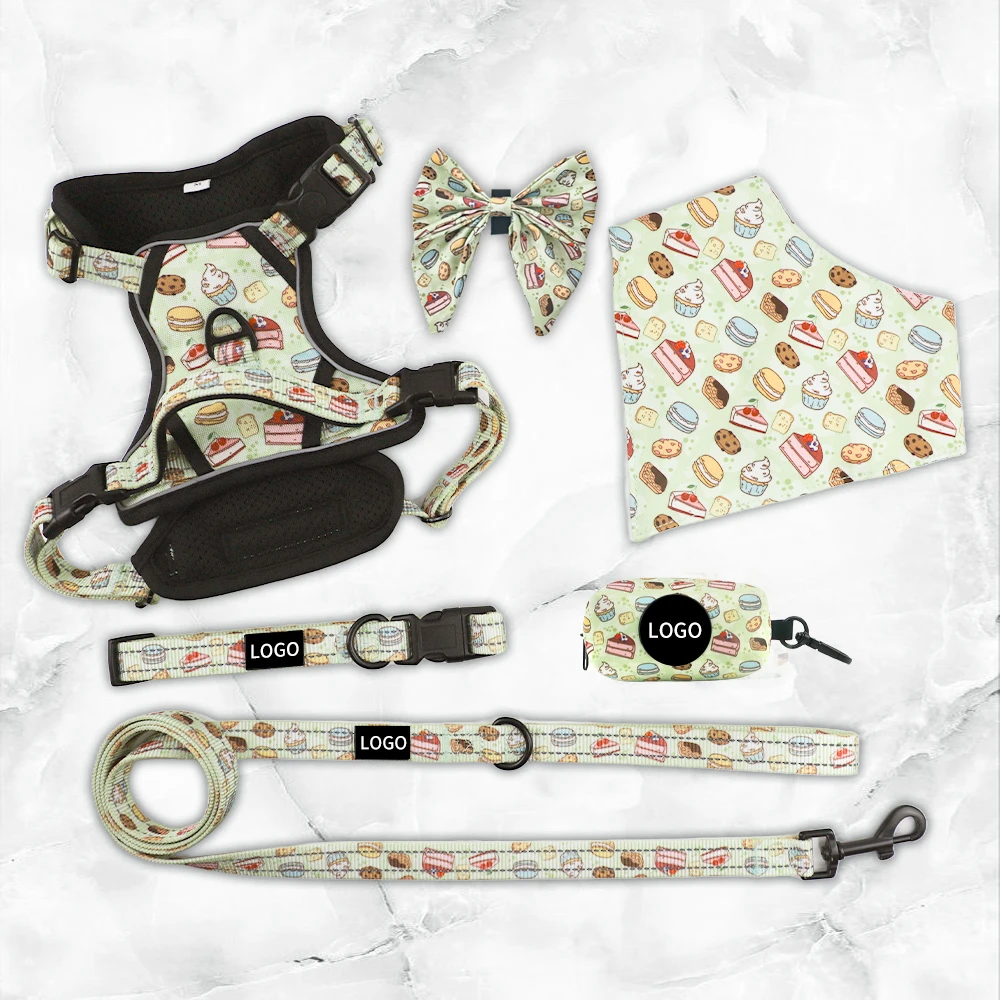
My name is Cathy, and as a customization specialist at qqpets, I've seen many brands struggle with this. They source a generic harness with a front clip, but they miss the most important part: the fit. An ill-fitting harness is an ineffective and potentially unsafe training tool. Therefore, a true manufacturing expert must provide not just the right features, but also the deep customization capabilities to ensure those features work perfectly for a wide range of dogs.
What is the key structural feature of a true no-pull harness?
You see many harnesses marketed as "no-pull," but their designs vary wildly. This makes it difficult for your brand to choose a product that actually delivers on its promise, leading to customer confusion and mistrust.
The key structural feature of a true no-pull harness is a leash attachment point on the front, at the center of the dog's chest. This front D-ring is the critical component that gently redirects a dog's momentum, making it the most effective design for training.
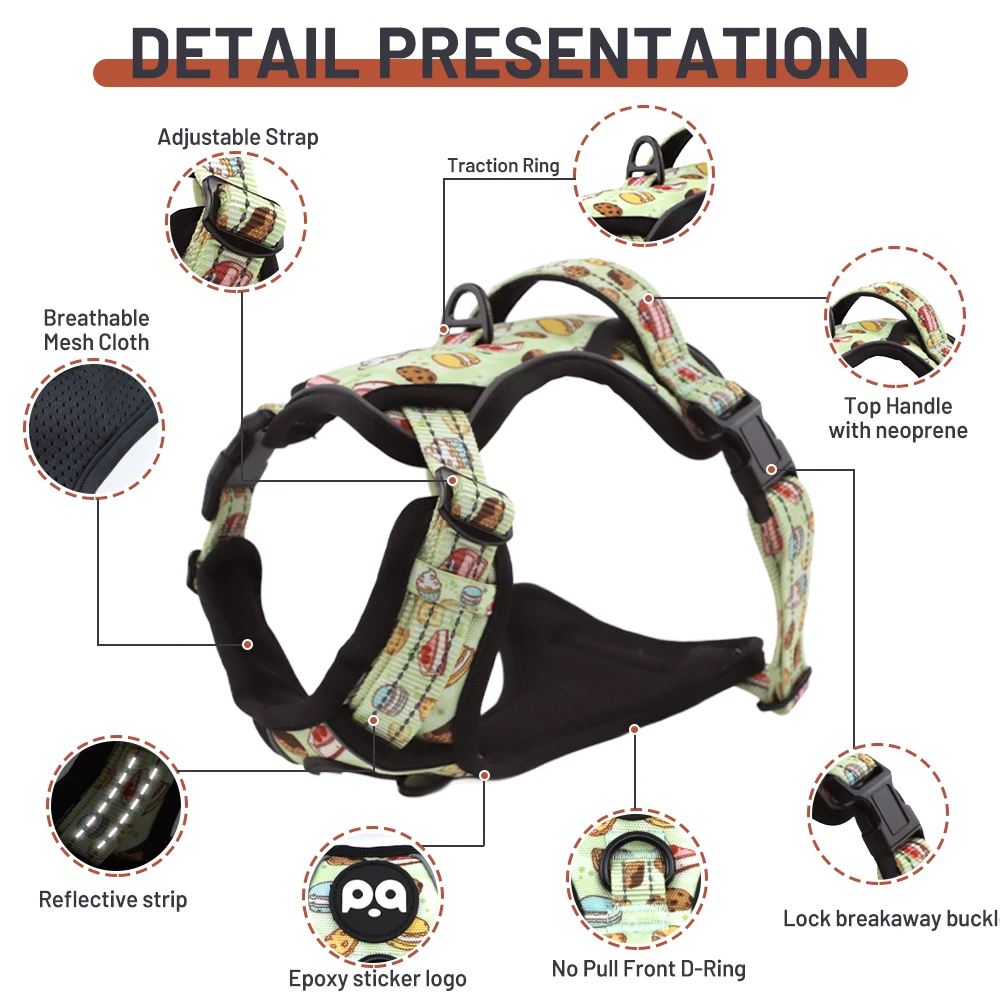
The science behind this is simple. When a leash is attached to a D-ring on a dog's back, pulling triggers their "opposition reflex2," causing them to pull even harder forward3. However, when the leash is connected to a front D-ring, any pulling motion gently turns the dog back toward the handler. This redirection makes it physically difficult to continue pulling and teaches the dog that walking calmly by their owner's side is the easiest path forward. This single design feature is the foundation of an effective no-pull training tool.
Understanding Leash Attachment Points
| Attachment Point | Dog's Reaction to Pulling | Training Outcome |
|---|---|---|
| Back D-Ring | Engages opposition reflex; the dog pulls harder into the pressure. | Encourages pulling; often used for sports like canicross. |
| Front D-Ring | Gently redirects momentum, turning the dog's body sideways. | Discourages pulling; teaches loose-leash walking. |
Why isn't a front clip alone enough to be the "best"?
You've found a supplier who offers front-clip harnesses, but you still get complaints. Customers report that the harness twists, loosens, or gets tangled in their dog's legs when they pull. The harness isn't working as intended, and your brand is getting the blame.
A front clip alone is not enough because if the harness does not fit perfectly, it will rotate and slide out of position. The "best" no-pull harness must be customized for a snug, secure fit that keeps the front D-ring centered and stable during use.
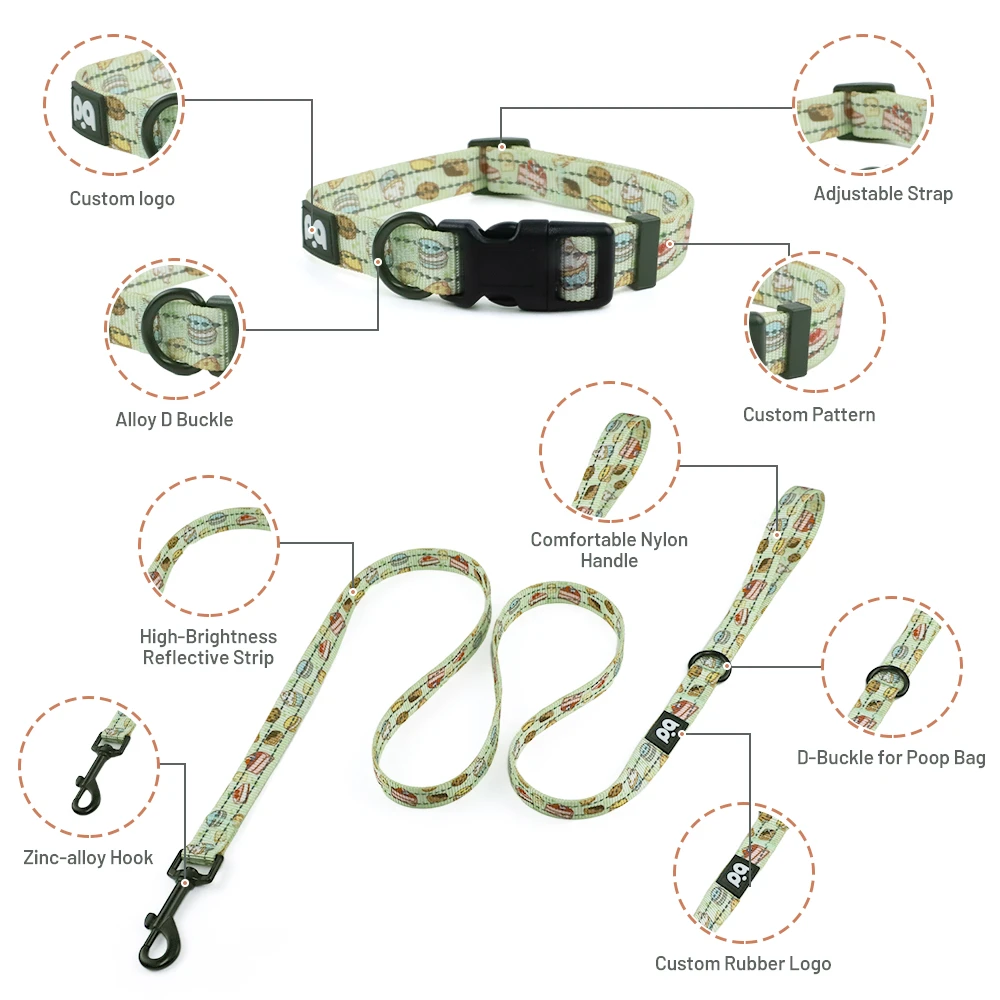
This is where true customization becomes critical. A generic, off-the-shelf harness is designed for an "average" dog shape. For dogs with deep chests, narrow shoulders, or unique proportions4, these harnesses will be too loose in some areas and too tight in others. When a dog pulls on a poorly fitting front-clip harness, the entire harness can shift to the side, causing discomfort and rendering the no-pull function useless. As pet traction experts, we solve this by offering deep customization of the harness structure itself, ensuring a perfect fit that allows the no-pull mechanism to work flawlessly and safely.
How can your brand easily create and test a superior no-pull harness?
You understand the need for a perfectly fitted, front-clip harness, but the thought of designing it seems overwhelming. You worry about high design costs, long sampling times, and massive order quantities for a product you haven't even tested yet.
Your brand can create a superior no-pull harness by partnering with a factory that has digitized and simplified the entire customization process. This approach allows you to design, visualize, and order a test batch quickly, affordably, and with zero creative error.
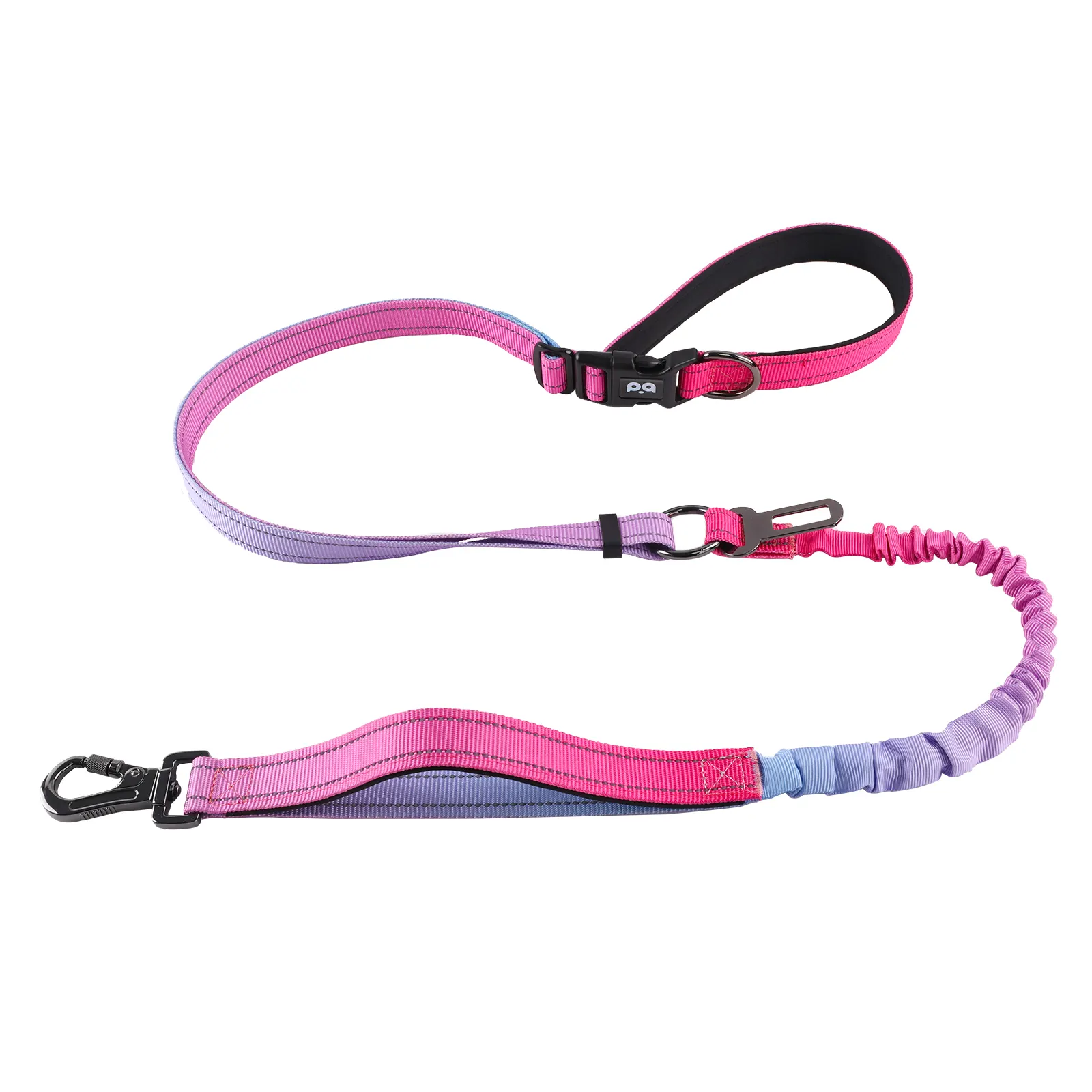
We built our factory to be the ideal partner for online brands. Our promise—"Mockup in seconds. Sample in 3 Days"—is made possible by our unique digital toolkit. First, use our free 3D Mockup System to select a no-pull harness structure and see it in photorealistic 3D. Next, create a one-of-a-kind design with our AI Pattern Generator, turning your ideas into unique Modele personalizate. Instantly apply your new pattern and logo to the 3D model to see exactly how it will look. Once you're happy, we move to sampling. Because we've eliminated the guesswork, your sample is made right the first time. Finally, you can launch your new product with confidence thanks to our low MOQ of just 50 pieces, minimizing your risk and maximizing your ability to innovate.
Ready to create the best no-pull harness on the market? I invite you to contact our expert team today to get started.
Concluzie
The best no-pull harness combines a front-clip design with a perfect, customized fit. Our factory's digital tools and low-risk manufacturing make it easy for your brand to create one.
"Managing reactive behavior", https://www.vet.cornell.edu/departments-centers-and-institutes/riney-canine-health-center/canine-health-information/managing-reactive-behavior. An animal-behavior or veterinary training source should support that anti-pulling equipment is an aid rather than a standalone solution and that results depend on fit, handling, and training protocol. Evidence role: expert_consensus; source type: institution. Supports: No-pull harnesses do not always produce successful training outcomes.. Scope note: This would contextualize why no-pull harnesses may fail; it would not measure failure rates for this specific product category. ↩
"wildcat dog training community project - UA Campus Repository", https://repository.arizona.edu/bitstream/handle/10150/650942/azu_etd_hr_2020_0040_sip1_m.pdf?sequence=1. A canine behavior or training reference should describe the opposition reflex as a dog’s tendency to resist or push against leash pressure, providing context for why some restraint methods may intensify pulling. Evidence role: definition; source type: education. Supports: Pulling against a back-attached leash can be explained by the training concept commonly called opposition reflex.. Scope note: The concept is widely used in training literature, but peer-reviewed evidence on its role in harness pulling may be limited. ↩
"Dog Pulling on the Leash: Effects of Restraint by a Neck Collar vs ... - PMC", https://pmc.ncbi.nlm.nih.gov/articles/PMC8450523/. A dog-training or veterinary behavior source should support that rear leash attachment or backward restraint can encourage some dogs to lean into pressure and continue pulling. Evidence role: mechanism; source type: institution. Supports: Back-attachment leash pressure may encourage a dog to pull forward into the pressure.. Scope note: This support is likely to be behavioral guidance rather than a universal rule for every dog or harness configuration. ↩
"Breed-Specific Variations in Vertebral Right Heart Index (VRHi) - PMC - NIH", https://pmc.ncbi.nlm.nih.gov/articles/PMC12031339/. A veterinary anatomy, breed morphology, or canine rehabilitation source should support that dog breeds and individuals vary substantially in thoracic and shoulder conformation, providing context for fit variation. Evidence role: general_support; source type: education. Supports: Dogs can have different chest, shoulder, and body proportions that affect harness fit.. Scope note: This would support anatomical variability, not directly prove that every generic harness fails on these body types. ↩