 RO
RO  EN
EN  FR
FR  RU
RU  DE
DE  AR
AR  ES
ES  PT
PT  IT
IT  NL
NL  PL
PL  SL
SL  ET
ET  CS
CS  EL
EL  LV
LV 
You're terrified that your custom collars will arrive with faded colors, weak buckles, and cheap materials. This fear of poor quality is real and can destroy your brand's reputation overnight.
The only way to ensure quality is with a three-stage verification process: approve premium materials, approve a physical production-grade sample before bulk production, and partner with an ISO 9001 certified factory that guarantees consistency for every single unit.

My name is Cathy, and as a pet product customization expert at the qqpets fabrică, the number one concern I hear from new brand owners is fear of bad quality. It is the biggest barrier that prevents them from sourcing directly from a factory. You have a vision, but you're worried about how to ensure the quality of custom designed dog collars when the manufacturer is thousands of miles away. The horror stories are everywhere: colors that don't match, logos that are blurry, and buckles that snap. This is why we have built our entire manufacturing process around transparency and verification. We don't ask you to simply trust us; we provide you with a systematic process to prove the quality at every single step, eliminating risk and giving you complete confidence before you ever commit to a large order.
How do you guarantee the quality of the raw materials?
You can't see or touch the materials a factory uses from halfway around the world. They could be using cheap, weak webbing or non-safety buckles to cut their costs, and you wouldn't know until you received a box of inferior products that your customers will hate.
A trustworthy factory is transparent about their premium materials from the start and proves it in the physical sample. They should specify the use of high-density polyester for softness and durability1, along with robust, safety-tested hardware for security.
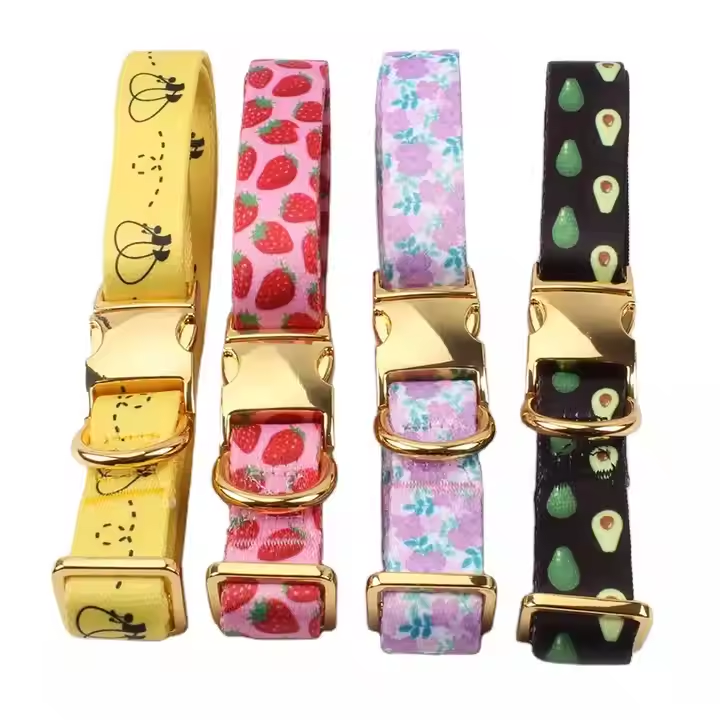
Quality is not just a final check; it begins with the ingredients. The first step to ensuring a high-quality collar is to control the quality of the raw materials that go into it. A middleman or a low-quality factory will always be tempted to use cheaper materials to increase their own profit margin. As a direct factory, our reputation is built on the final product, so we only use premium components. For the webbing, we use a high-density, soft-touch polyester. This material is chosen for three key reasons: it's incredibly strong and durable for safety, it's soft and won't chafe a dog's neck, and its smooth surface is perfect for our dye-sublimation printing2, resulting in brilliant, fade-proof colors3. For the hardware—the buckles, D-rings, and adjusters—we use robust, safety-tested components that are designed to withstand the pulling and strain of daily use. We are transparent about these materials from day one, and more importantly, you will get to feel and test them yourself when you receive your physical sample.
Material Quality: The Hidden Risk vs. The Transparent Promise
| Component | The Hidden Risk with a Trader | The qqpets Transparent Promise |
|---|---|---|
| Chingi | Unknown, likely cheap nylon or low-grade polyester that is rough and fades easily. | High-density, soft-touch polyester that is strong, comfortable, and holds color perfectly. |
| Hardware | Brittle, untested plastic or cheap metal alloys that can snap under pressure. | Robust, safety-tested buckles and D-rings designed for security and longevity. |
| Verification | You hope for the best and only discover the poor quality after paying for the full order. | We specify the premium materials upfront and you verify them on the physical sample. |
How can you be sure the final collar perfectly matches your design?
You send a design file and cross your fingers, hoping it will be interpreted correctly. You're worried the colors will be off, your logo will be blurry, or the pattern will be misaligned. A small error in production can make the entire batch of products unsellable.4
You use a factory with a "digital-to-physical" proofing system. This involves using an online 3D mockup system to create and approve a perfect digital twin5 of your collar, then receiving a physical production-grade sample made from that exact file for final approval.
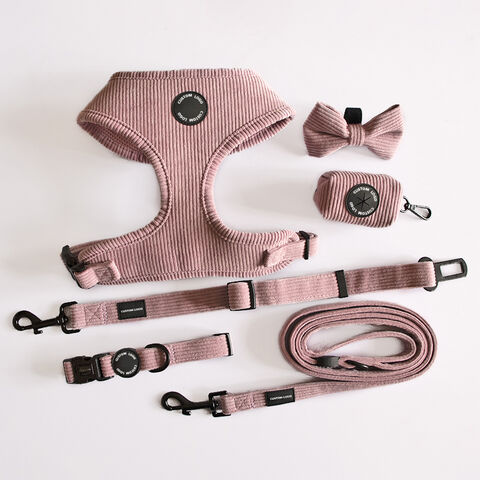
This is where technology eliminates guesswork and guarantees accuracy. The old method of emailing 2D proof sheets back and forth is slow, confusing, and prone to error.6 We have replaced it with our powerful 3D Mockup System. This free tool allows you to become the designer. You can use our AI Pattern Generator to create endless Modele personalizate just by typing what you want to see. Then, you can apply your chosen pattern and logo to a photorealistic 3D collar model and see exactly how it will look from every angle. This is our "Mockup in seconds" promise. Once you approve this perfect digital twin, we move to the next stage of verification: our "Sample in 3 Days" promise. We create a physical sample using the exact data from your approved 3D model. This is your chance to see the colors in real light, feel the material, and test the hardware. It is the ultimate quality check. You only approve the bulk order after you are 100% satisfied with this physical sample, guaranteeing the final product will match your vision perfectly.
Design Accuracy: The Old Way vs. The Modern qqpets Way
| Stage | The Old, Error-Prone Way | The Modern, Risk-Free qqpets Way |
|---|---|---|
| Design Proof | A flat, 2D PDF that is hard to visualize. Revisions are slow. | An interactive, 3D model you can inspect in real-time. Revisions are instant. |
| Physical Proof | Wait weeks or months for a sample that might not use the final materials. | Receive a production-grade sample made with final materials in just 3 days. |
| The Result | A high chance of a mismatch between your vision and the final product. | A 100% guarantee that the bulk order will be identical to the sample you approved. |
How do you ensure the 1000th collar is as good as the first?
Your sample was perfect, but now you're placing a bulk order. A new fear emerges: "quality fade7." How can you be sure the factory's standards won't slip during a large production run? An inconsistent batch means a lottery for your customers and a logistical nightmare for you.
You must partner with an ISO 9001 certified factory. This international certification is not just a logo; it is an external guarantee that the factory has strict, documented, and repeatable quality control systems in place for every stage of production, ensuring every single unit is consistent.
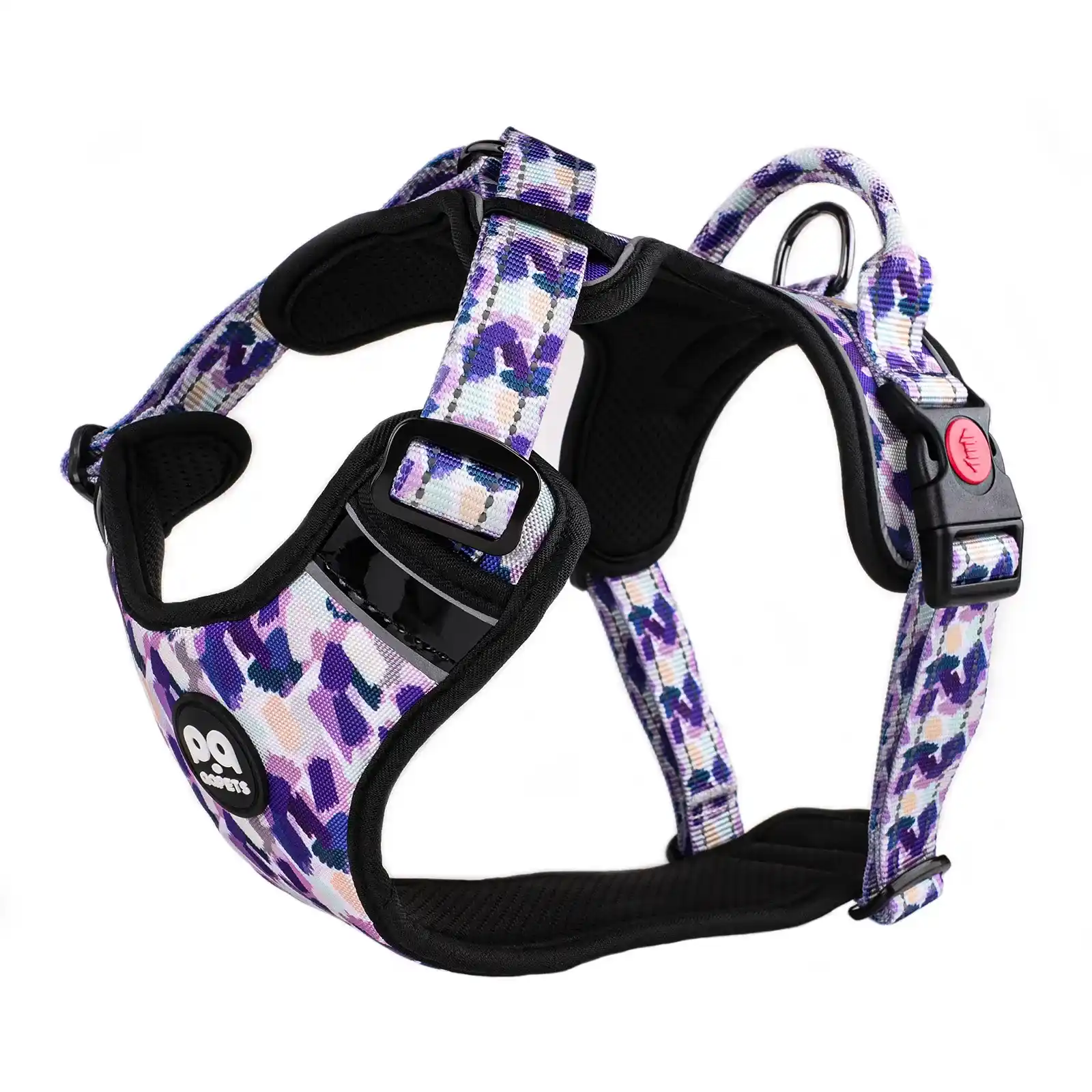
This final stage is what separates a professional factory from a simple workshop. Consistency is a result of process, not luck. As an ISO 9001 certified manufacturer, our commitment to quality is documented and audited. This means we have a multi-stage quality control system built into our production lines. First, our printed webbing is inspected for color accuracy and print defects before it ever goes to sewing. Second, our skilled sewing teams follow precise guidelines for stitching strength and placement, with supervisors performing spot-checks. Finally, every single finished collar goes through a final inspection station. Here, a dedicated quality control team checks the stitching, cleans any loose threads, tests the buckle function, and compares the final product against the approved sample one last time before it is packaged. This rigorous process is applied to every order, whether it is for our low MOQ of 50 pieces or for 50,000 pieces. It is your ultimate assurance that the 1,000th collar your customer receives will be identical in quality to the perfect sample you approved.
Ensuring quality isn't about hope; it's about having the right partner with the right processes. Ready to produce your custom collars with complete confidence? Contact our expert team today.
Concluzie
Ensure collar quality with a three-stage process: verify premium materials, approve a rapid physical sample, and partner with an ISO 9001 certified factory for guaranteed production consistency.
"Comparison of strength, elongation and evenness of ...", https://ir.library.oregonstate.edu/downloads/z029p7629. Textile reference sources describe polyester fibers as having relatively high strength, abrasion resistance, and dimensional stability, supporting their common use in durable woven webbing; this does not by itself verify the density, hand-feel, or comfort of any specific collar material. Evidence role: general_support; source type: encyclopedia. Supports: High-density polyester is an appropriate collar webbing material because it can offer softness and durability.. Scope note: Supports general polyester properties, not the specific supplier's material grade or softness. ↩
"Pad Thermosol Dyeing Polyester with Disperse Dyes (PDF)", https://www.academia.edu/2532334/Pad_Thermosol_Dyeing_Polyester_with_Disperse_Dyes. Technical literature on dye-sublimation printing explains that disperse dyes bond especially well with polyester fibers under heat, which supports the suitability of polyester substrates for sublimated designs; the source would not prove that a particular factory's print process is defect-free. Evidence role: mechanism; source type: paper. Supports: Polyester's surface and fiber chemistry make it suitable for dye-sublimation printing.. Scope note: Supports the printing mechanism and substrate suitability, not the quality of this specific production process. ↩
"(PDF) Impact of Sunlight Exposure to different Dyed fabrics ...", https://www.academia.edu/35461011/Impact_of_Sunlight_Exposure_to_different_Dyed_fabrics_on_Colorfastness_to_Washing. Research and textile-testing standards discuss colorfastness of printed polyester under washing, rubbing, and light exposure, providing a framework for evaluating fade resistance; however, no neutral source can substantiate an absolute claim that colors are 'fade-proof' under all conditions. Evidence role: mechanism; source type: institution. Supports: Dye-sublimated polyester can be evaluated for colorfastness and may show fade resistance when properly produced.. Scope note: Supports potential fade resistance and testing methods, but not an absolute fade-proof guarantee. ↩
"Scrap and Rework: How Can You Reduce Errors and Cut ...", https://www.arenasolutions.com/resources/articles/scrap-rework/. Quality-management literature on the cost of poor quality identifies defects, scrap, rework, and rejected lots as common consequences of production errors; this supports the general risk described but does not quantify the probability for custom pet collars. Evidence role: expert_consensus; source type: government. Supports: Production errors can cause batch rejection, scrap, or unsellable goods.. Scope note: Supports the general manufacturing risk, not the likelihood or financial impact for this product category. ↩
"3D visualization design of digital intelligent landscape ... - PMC", https://pmc.ncbi.nlm.nih.gov/articles/PMC12106811/. Engineering-design research describes 3D models and digital twins as tools for visualizing product geometry and supporting design review before production; this provides contextual support, though it does not establish that any online mockup is a 'perfect' representation of the finished collar. Evidence role: mechanism; source type: paper. Supports: An online 3D mockup or digital model can help buyers review and approve a design before physical production.. Scope note: Supports the value of 3D visualization for design review, not the perfection of a specific mockup system. ↩
"A Comparison of Model-Based Design and Traditional 2D ...", https://scholarworks.uni.edu/cgi/viewcontent.cgi?article=4896&context=grp. Studies in engineering communication and computer-aided design report that 3D visualization can improve spatial understanding and reduce ambiguity compared with 2D drawings in some design-review contexts; the evidence is contextual and may not directly compare email proof sheets for pet products. Evidence role: general_support; source type: paper. Supports: 2D proofing can be more ambiguous and error-prone than interactive 3D design review.. Scope note: Supports the broader 2D-versus-3D design-review issue, not this exact workflow comparison. ↩
"Enabling manufacturing firms' supply chain performance in the ...", https://pmc.ncbi.nlm.nih.gov/articles/PMC10685374/. Supply-chain research discusses supplier quality deterioration, opportunistic cost reduction, and lot-to-lot variation as risks in outsourced production; this supports the concern commonly labeled 'quality fade,' although the term is not a formal universal standard. Evidence role: historical_context; source type: paper. Supports: Quality may deteriorate across production runs if supplier controls are weak.. Scope note: Supports the supply-chain risk concept, not evidence that it will occur in any specific order. ↩