 RU
RU  EN
EN  FR
FR  DE
DE  AR
AR  ES
ES  PT
PT  IT
IT  NL
NL  PL
PL  SL
SL  ET
ET  RO
RO  CS
CS  EL
EL  LV
LV 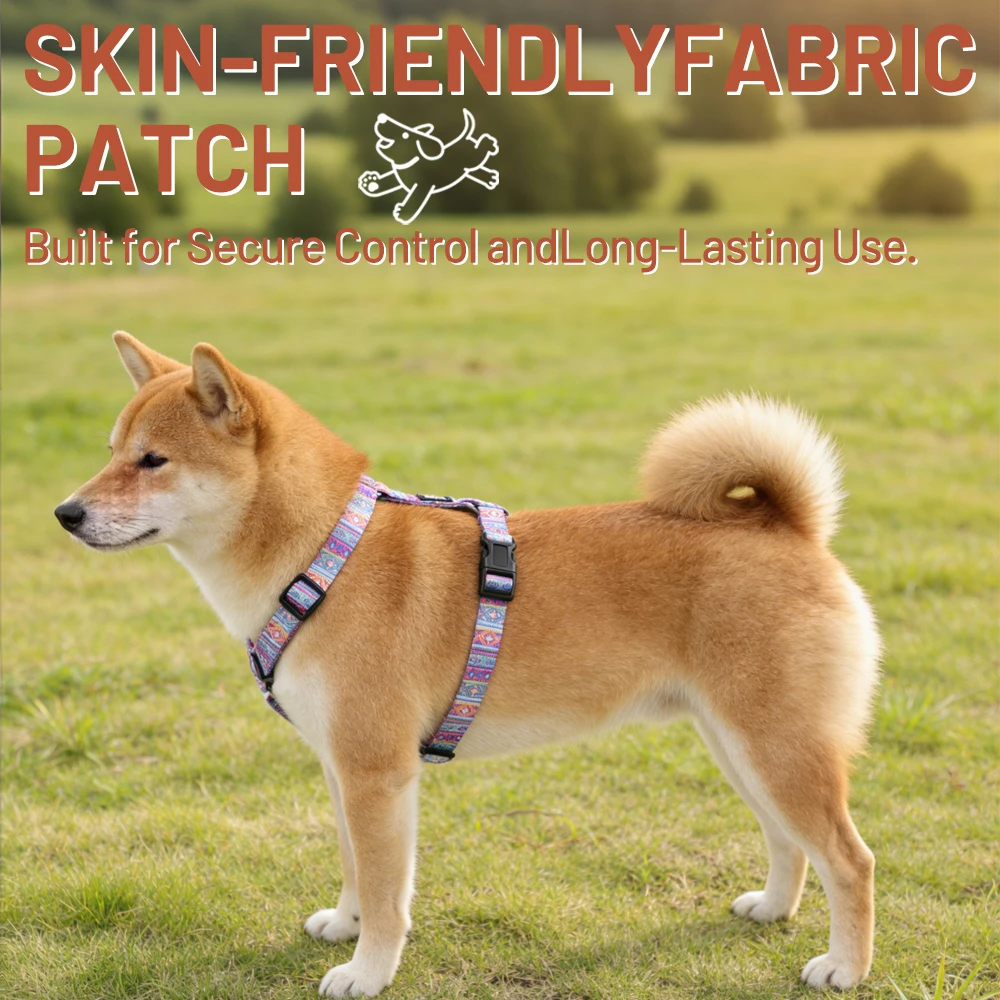
Your customers return harnesses that chafe, slip, or allow their dogs to escape1. This constant fit issue costs your brand sales and good reviews, making it impossible to confidently sell the best dog harness.
The best dog harness for a custom fit isn't about one magic number. A 5-point harness2, like the classic H-style, offers the most comprehensive adjustability for diverse dog shapes. However, simpler harnesses with 2-4 points3 are better for ease of use or specific body types.
My name is Cathy, and as a pet traction customization expert at qqpets, this is one of the most common questions I get from brand owners. They get stuck trying to find the "one perfect harness" to sell. But the truth is, the market needs variety. The secret to success isn't finding one harness, but building a diverse, customizable line of harnesses. We have built our entire factory to help you do exactly that, easily and affordably.
Why is a 5-point harness the gold standard for adjustability?
You struggle to find a harness that fits dogs with unique body shapes, like deep chests and narrow waists4. Standard harnesses are either too tight in one spot or too loose in another, leading to unhappy customers.
A 5-point harness is the gold standard because it allows for independent adjustments of the neck, chest, and back length. This creates a truly custom, secure, and comfortable fit for the widest possible range of dog breeds and body types.
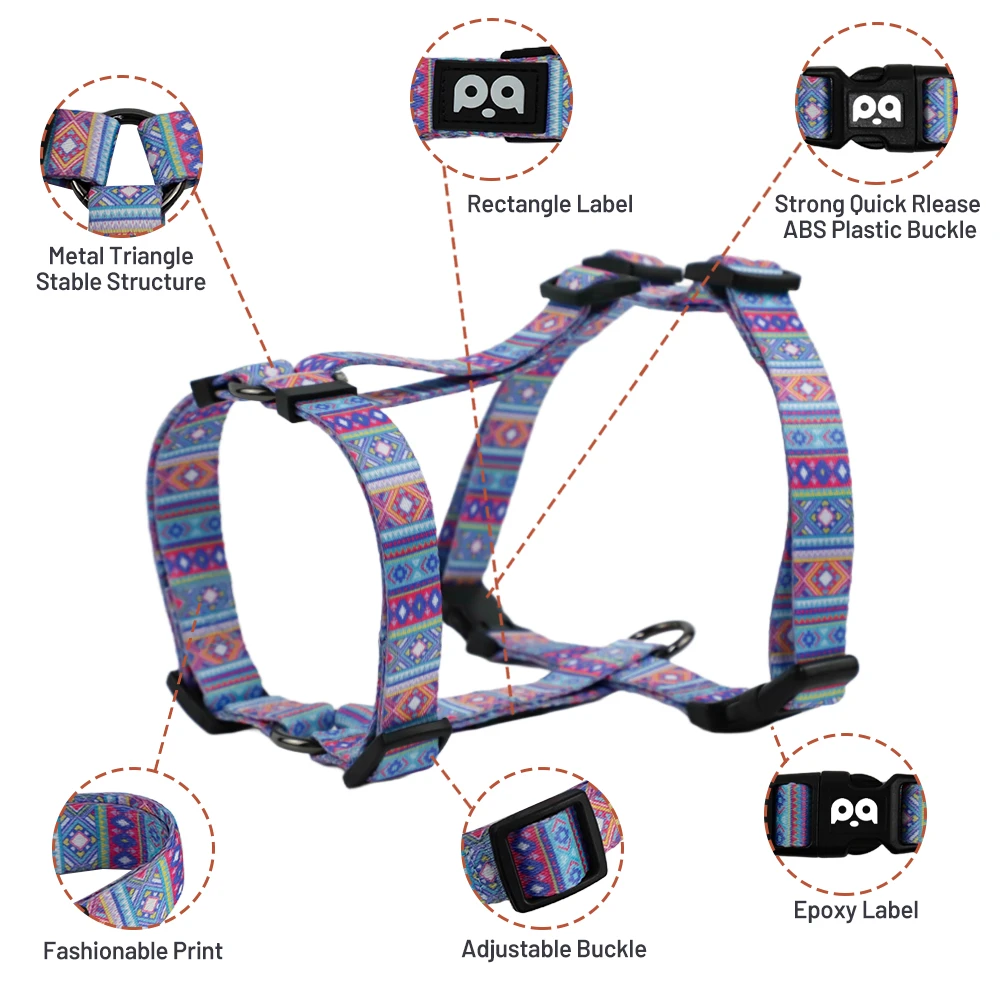
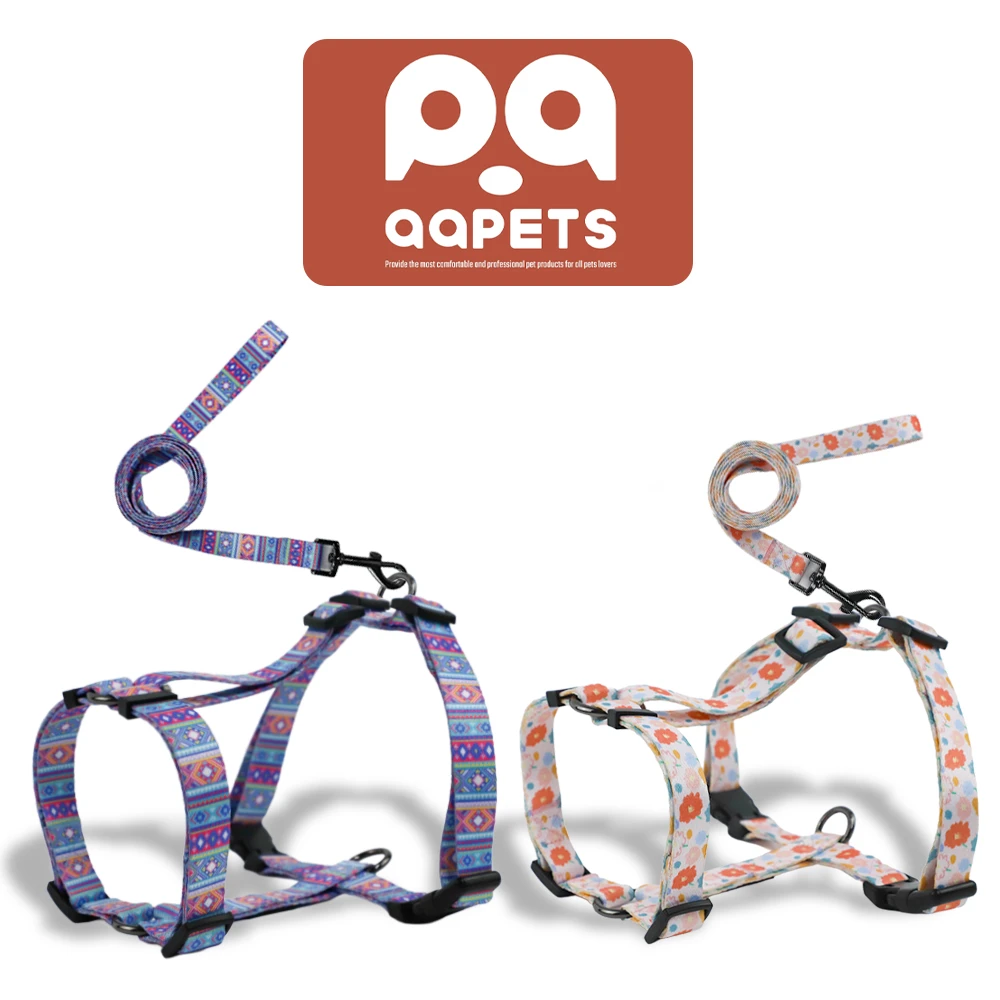
A 5-point H-style harness is the ultimate problem-solver. It has two sliders for the neck straps, two for the chest or girth straps, and one on the connecting strap along the back or chest. This design ensures that no single part of the harness is pulling another part out of place. It's the most secure and escape-proof option when fitted correctly. For a brand that wants to build a reputation for quality and performance, offering a 5-point harness is a must. You can market it as your "Pro-Fit" or "Adventure" model. And with our system, you can take this superior functional design and make it visually stunning with your own Пользовательские узоры.
Harness Adjustability Comparison
| Harness Style | Точки регулировки | Лучшее для | Key Advantage |
|---|---|---|---|
| H-Harness | 5 | All body types, escape artists | Maximum custom fit |
| Жгуты с шаговым креплением | 2-4 | Standard body types, convenience | Easy to put on and take off |
| Жилет Harness5 | 2-4 | Small dogs, comfort | Spreads pressure over a wide area |
When are fewer adjustment points a better choice?
Some of your customers find complex harnesses with many straps confusing and difficult to use. They just want something they can put on their dog quickly for a simple walk, but your highly adjustable models feel like overkill.
Fewer adjustment points are better for harness styles where convenience is the top priority6. Step-in or vest harnesses with 2 to 4 points are faster to secure, less intimidating for new owners7, and ideal for everyday use with dogs of standard proportions.
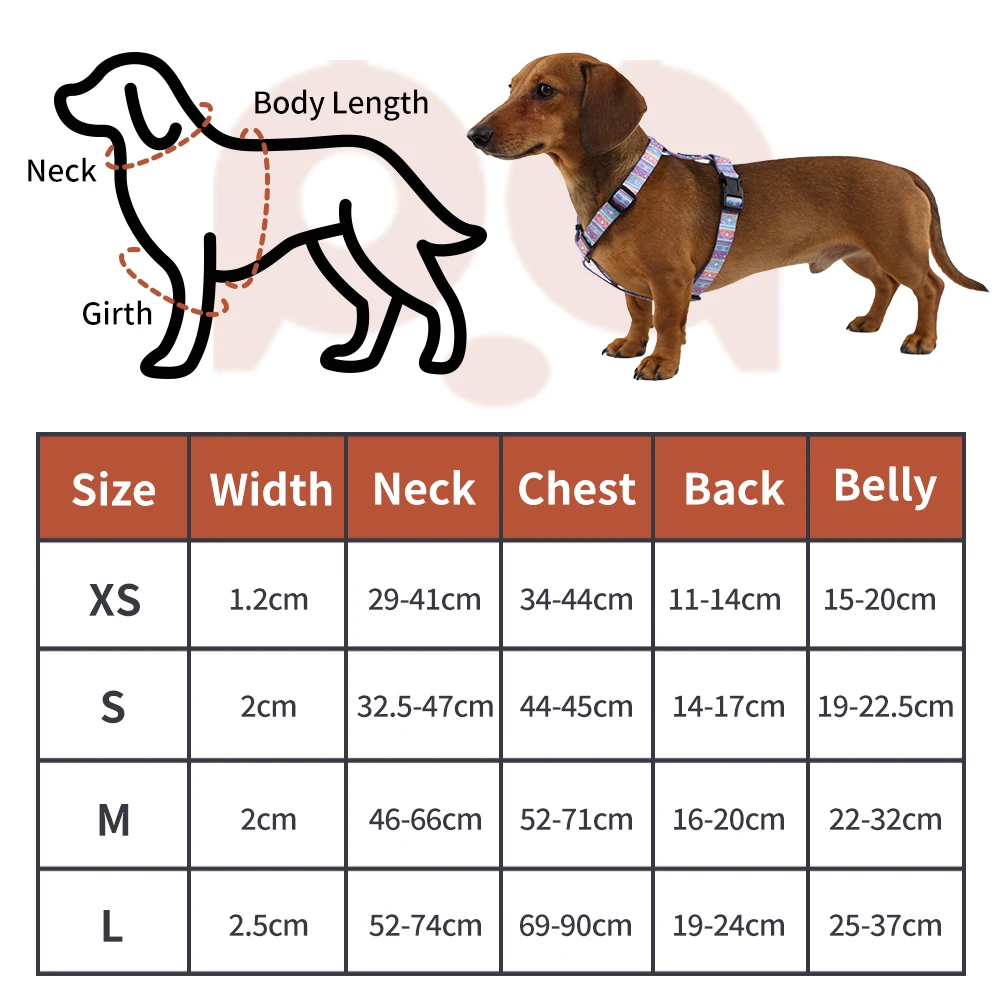
Not every customer needs a technical, 5-point harness. For many pet owners, especially those with small or calm dogs, ease of use is the most important feature. A simple step-in harness that buckles on top is a fantastic option. This is a business opportunity for your brand. You can offer a complete product line: the 5-point "Pro" harness for adventurers and a 2-point "Easy" harness for daily walks. The best part? You don't have to choose. Because our factory offers a low MOQ of just 50 pieces per design, you can affordably launch both styles. You can use our 3D Mockup System to create a beautiful, unique pattern and apply it across your entire product range, ensuring a strong, cohesive brand identity.
How do you turn the right harness into your brand's bestseller?
You have chosen the perfect harness styles for your brand, but they still look generic. Without a powerful visual identity, you are just selling a commodity and are forced to compete on price, not on brand loyalty8.
You turn the right harness into a bestseller by transforming its function into a fashion statement. This is achieved by applying exclusive Пользовательские узоры, selecting brand-aligned hardware, and using a rapid, low-risk production model to launch a full and exciting collection.
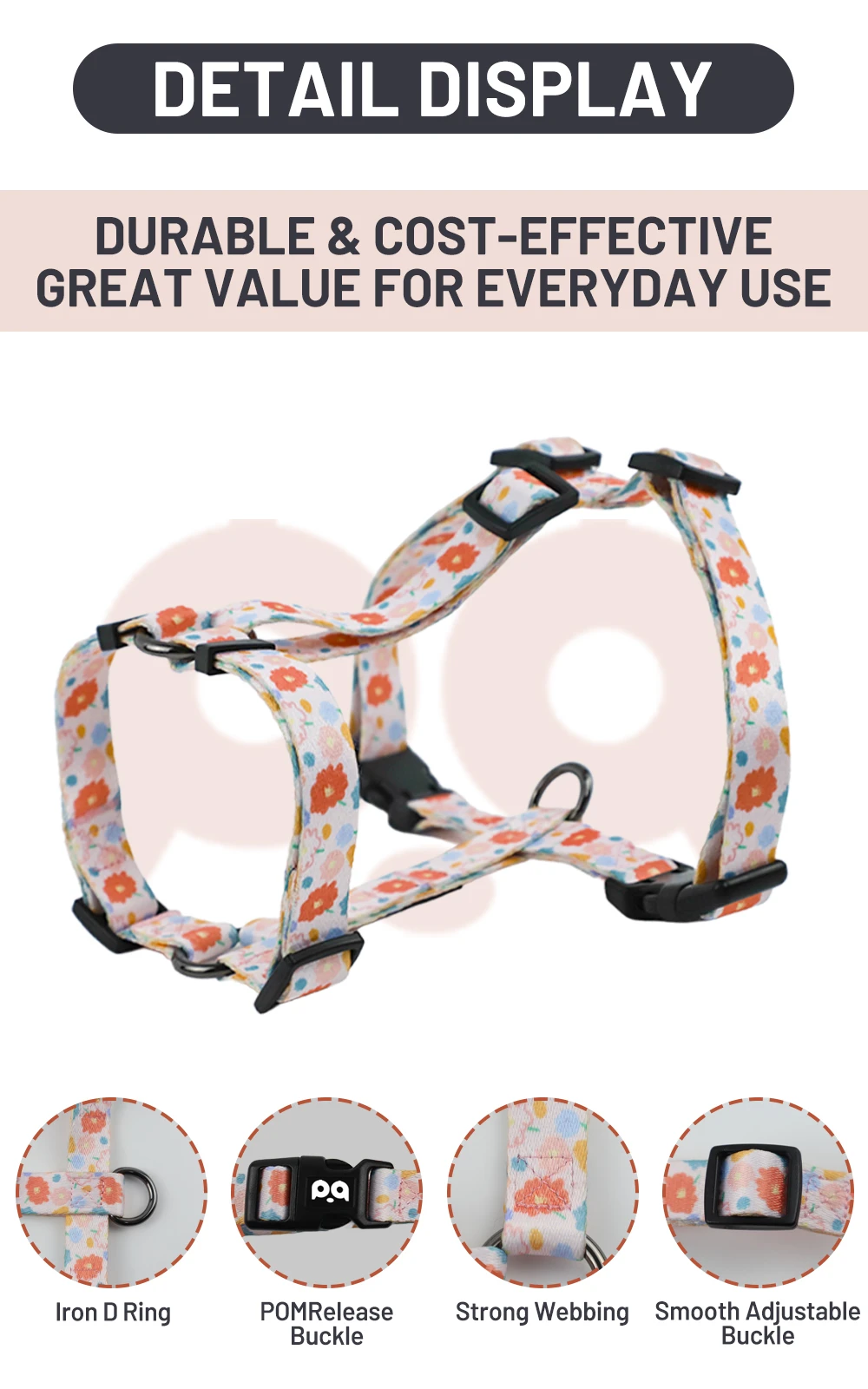
This is how you win. Once you've selected the right harness structures for your audience, our system makes branding them effortless. Use our free AI generator to create a pattern that is 100% unique to your brand. See it come to life in our 3D mockup system with your choice of hardware. This is our core promise: "Mockup in seconds. Sample in 3 Days." This speed and visual confirmation removes all the guesswork. For Shopify sellers and online brands, this agility is everything. You can test a new pattern with just 50 pieces, see if your customers love it, and then quickly reorder the winners. This is how you build a dynamic, desirable brand that people love.
Are you ready to offer a full line of perfectly fitting, beautifully designed harnesses? Contact our expert team today and let's get started.
Заключение
The best harness fit comes from choosing the right style for the customer. Our factory empowers you to customize any harness with unique patterns and low risk, turning perfect fit into brand success.
"The Ultimate Guide to How to Dog Harness: Fit, Safety & Training ...", https://imba.missouri.edu/how-to-dog-harness-1931079647.html. Veterinary and animal-welfare guidance notes that poorly fitted collars or harnesses can cause rubbing, restrict movement, or fail to restrain the dog securely; this supports the general fit-risk claim but does not quantify return rates. Evidence role: general_support; source type: institution. Supports: Poorly fitting dog harnesses can chafe, slip, or allow dogs to escape.. Scope note: Supports the welfare and safety issue, not the article’s business-impact claim about returns or reviews. ↩
"AS-564-W Choosing the Right Type of Collar for Your Dog", https://www.extension.purdue.edu/extmedia/as/as-564-w.pdf. Technical descriptions of dog harness fitting commonly identify multiple adjustable straps around the neck, girth, and body as a way to accommodate varied canine dimensions; this contextualizes why a five-point design is described as highly adjustable rather than proving it is universally best. Evidence role: definition; source type: institution. Supports: A 5-point harness is a highly adjustable dog-harness configuration.. Scope note: Contextual support for the term and design logic, not direct comparative proof that five points is optimal in every case. ↩
"Human Factors and Usability for Health Information Technology - PMC", https://pmc.ncbi.nlm.nih.gov/articles/PMC6697515/. Human-factors research on product usability shows that fewer steps and simpler interfaces can improve ease of use and reduce user error; this supports the convenience rationale by analogy rather than as dog-harness-specific evidence. Evidence role: mechanism; source type: paper. Supports: Harnesses with fewer adjustment points may be easier for owners to use.. Scope note: Applies general usability principles; it is not direct empirical evidence comparing two-, four-, and five-point dog harnesses. ↩
"Some morphological characteristics of Kangal Dogs raised ...", https://www.academia.edu/40912253/Some_morphological_characteristics_of_Kangal_Dogs_raised_in_various_parts_of_Turkey_I_Body_measurements. Canine morphology references document substantial breed variation in chest depth, body proportions, and limb-trunk structure, which supports the need to account for different body shapes in harness fitting. Evidence role: general_support; source type: encyclopedia. Supports: Dogs vary widely in body shape, including chest depth and waist proportions.. Scope note: Shows morphological variation among dogs, not that every deep-chested dog requires a five-point harness. ↩
"Pressure distribution under three different types of harnesses used for ...", https://pubmed.ncbi.nlm.nih.gov/24360734/. Harness fitting and canine-equipment references describe vest-style harnesses as designs with a broader fabric body panel, supporting the claim that they distribute contact over a larger area than narrow strap-only harnesses. Evidence role: definition; source type: institution. Supports: Vest harnesses generally use broader panels that spread contact over a wider area.. Scope note: Supports the design description; actual pressure distribution depends on fit, material stiffness, and leash-force direction. ↩
"Impact of perceived convenience, service quality and security ... - PMC", https://pmc.ncbi.nlm.nih.gov/articles/PMC9825085/. Consumer-behavior research identifies convenience and reduced effort as important determinants of product choice, which supports the article’s general rationale for offering simpler harness designs. Evidence role: expert_consensus; source type: paper. Supports: Some buyers prioritize convenience over maximum adjustability when choosing products.. Scope note: General consumer-behavior evidence; it is not specific to dog-harness purchases. ↩
"Task Success Rate in UX: How to Use the Simplest Metric in a Serious Way", https://medium.com/@claus.nisslmueller/task-success-rate-in-ux-how-to-use-the-simplest-metric-in-a-serious-way-34177fede27f. Usability literature indicates that simpler procedures with fewer required actions tend to reduce task time and perceived difficulty, supporting the article’s claim about simpler harnesses in a general human-factors sense. Evidence role: mechanism; source type: paper. Supports: Harness designs with fewer fastening or adjustment steps may be quicker and less intimidating for inexperienced users.. Scope note: The support is indirect unless paired with a dog-harness-specific usability test. ↩
"(DOC) BUILDING BRAND LOYALTY: IDENTITY THEORY PERSPECTIVE", https://www.academia.edu/37098715/BUILDING_BRAND_LOYALTY_IDENTITY_THEORY_PERSPECTIVE. Marketing research on brand equity finds that distinctive brand associations and perceived differentiation can increase loyalty and reduce reliance on price competition; this supports the strategic claim at a general marketing level. Evidence role: expert_consensus; source type: paper. Supports: A weakly differentiated product is more vulnerable to price-based competition, while stronger brand identity can support loyalty.. Scope note: General brand-equity evidence; it does not demonstrate that custom dog-harness patterns alone create loyalty. ↩