 RU
RU  EN
EN  FR
FR  DE
DE  AR
AR  ES
ES  PT
PT  IT
IT  NL
NL  PL
PL  SL
SL  ET
ET  RO
RO  CS
CS  EL
EL  LV
LV 
You need to build a heavy-duty custom bully dog harness for your brand, but you are overwhelmed. You know it requires more than just strong materials; the design and engineering are complex, and a failure could be catastrophic for a dog1 and your business.
You build a top-tier heavy-duty harness by treating it as an piece of engineered safety equipment. This is achieved by combining three core elements: an ergonomic, load-distributing structure2; industrial-grade components at every point; and a manufacturing partner who understands the unique forces involved.
My name is Cathy, and I am a pet traction customization expert at the Фабрика qqpets. I have seen firsthand what separates a truly great harness from a dangerous imitation. Building a harness for a powerful breed like a Pit Bull, Mastiff, or Bulldog is not like designing for a small dog. The forces are immense, the stakes are higher, and every single detail, from the angle of a strap to the placement of a stitch, matters immensely. Many brands make the mistake of thinking a heavy-duty harness is just a standard harness made with thicker straps. This is a dangerous misconception. A proper bully breed harness is architected from the ground up for strength, control, and safety. This guide will walk you through how we, as your manufacturing partner, build these products correctly.
How do you engineer the harness for maximum strength and safety?
You are worried that even a "heavy-duty" harness will have a weak point. A single buckle failure or a torn strap during a powerful lunge is a brand's worst nightmare, and you do not know what to look for to prevent it.
You engineer for safety by focusing on load distribution and reinforcing all failure points. This means using a multi-point structure with wide chest plates, multiple load-rated metal D-rings (not plastic), and bar-tack stitching3 on every single stress point to create a cohesive, unbreakable system.
This is the most critical aspect, and it goes far beyond just using "strong" materials. It is about systems engineering. The harness must function as a single, integrated unit designed to absorb and distribute the massive, sudden forces of a powerful dog. A generic factory might simply sew thicker webbing together, but a specialist factory understands the physics involved. Think of it like the chassis of a race car. It is not just about having a powerful engine; the entire frame must be designed to handle that power without twisting or breaking. We approach harness building with this same engineering mindset. We analyze every strap, buckle, and stitch, not as individual parts, but as components of a complete safety system. This is what gives our partners and their customers true peace of mind.
The Blueprint for an Unbreakable Harness
A truly secure harness is a masterclass in structural engineering. Here is how we build it.
1. The Structure: Load Distribution is Key
A harness for a bully breed cannot just be a set of straps. It needs a core structure that spreads force across the strongest parts of the dog's body—the chest and torso—while avoiding the delicate neck area4.
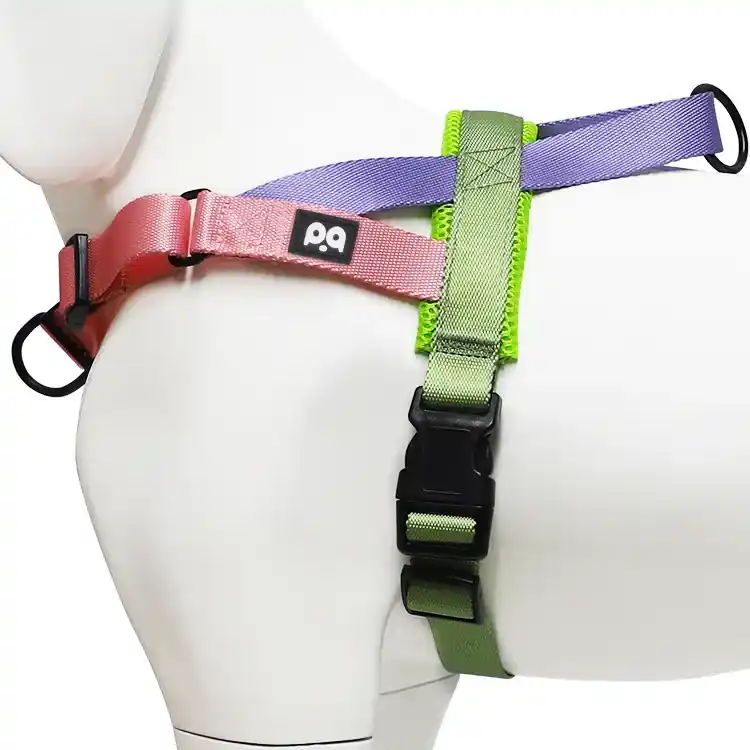
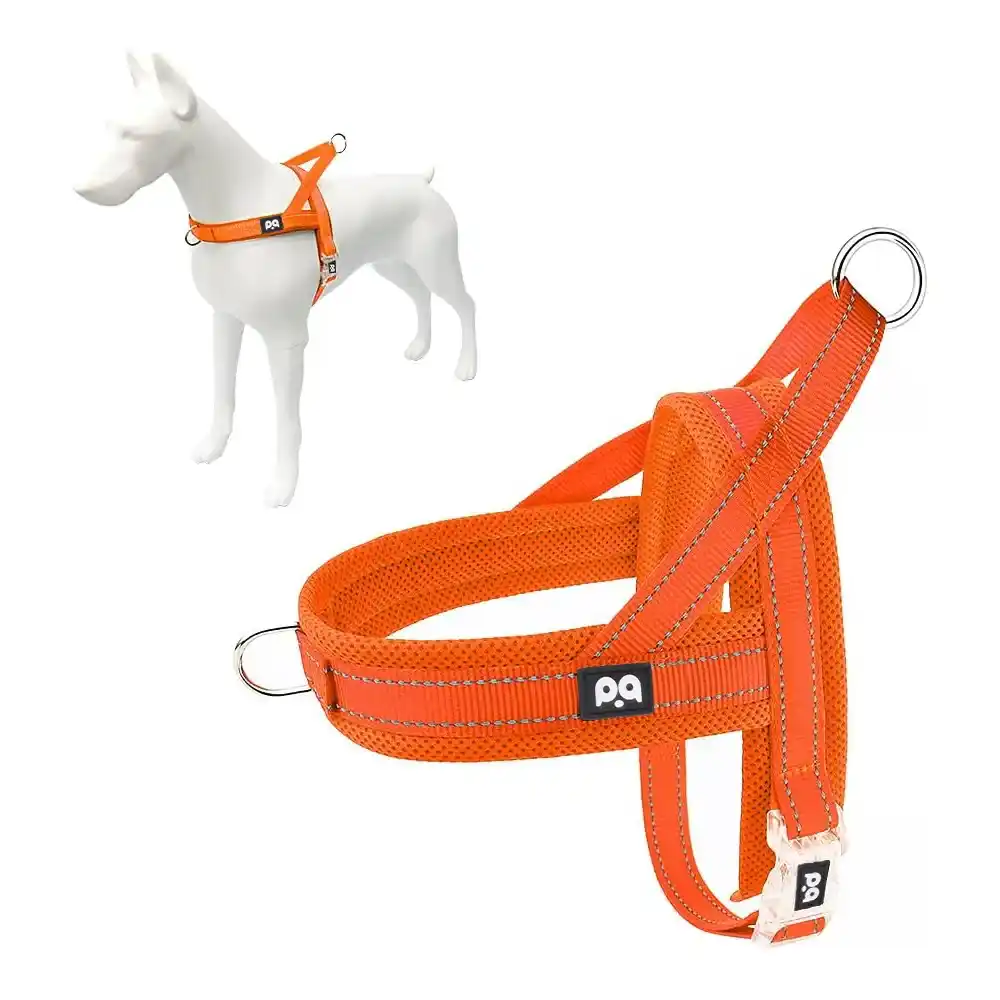
- Wide, Padded Chest Plate: This is the primary point of contact. We use a wide, often padded, chest plate to distribute pressure evenly, preventing chafing5 and providing a stable anchor.
- Y-Shape vs. H-Shape Designs: We offer customizable styles, including the popular Y-shape front, which allows for free shoulder movement6 while still providing excellent control and preventing the harness from shifting.
2. The Connection Points: Zero-Tolerance Hardware
Every point where a leash attaches or a strap adjusts is a potential point of failure. We eliminate that risk.
- Multiple, Solid Metal D-Rings: A good heavy-duty harness should have at least two connection points: one on the back for standard walking and a crucial one on the front chest plate. This front ring is essential for no-pull training with powerful dogs. Our D-rings are solid cast metal, not weak welded rings that can be pulled apart.
- Load-Rated Buckles: Standard plastic clips are unacceptable7. We use heavy-duty metal buckles or Cobra-style clasps that have been tested to withstand hundreds of pounds of force.
3. The Assembly: Reinforced Bar-Tack Stitching
The way the harness is held together is as important as the materials themselves.
- Strategic Reinforcement: At every point where a strap meets a buckle or a D-ring, we use computerized bar-tack stitching. This is the same type of dense, powerful stitching used on rock climbing gear and seatbelts8. It creates a bond that is stronger than the webbing itself, ensuring the harness will not come apart under extreme stress.
How do you make a technical harness visually unique to my brand?
You need a harness that is incredibly strong, but you also need it to look like your brand. You are frustrated because most heavy-duty options are only available in boring, generic colors like black or army green, which will not help you stand out.
You achieve this with advanced dye-sublimation technology. We can print any high-resolution, full-color Пользовательские узоры directly onto the high-tensile nylon webbing. This infuses the design into the material, creating a vibrant, un-scratchable look without compromising the harness's structural integrity.
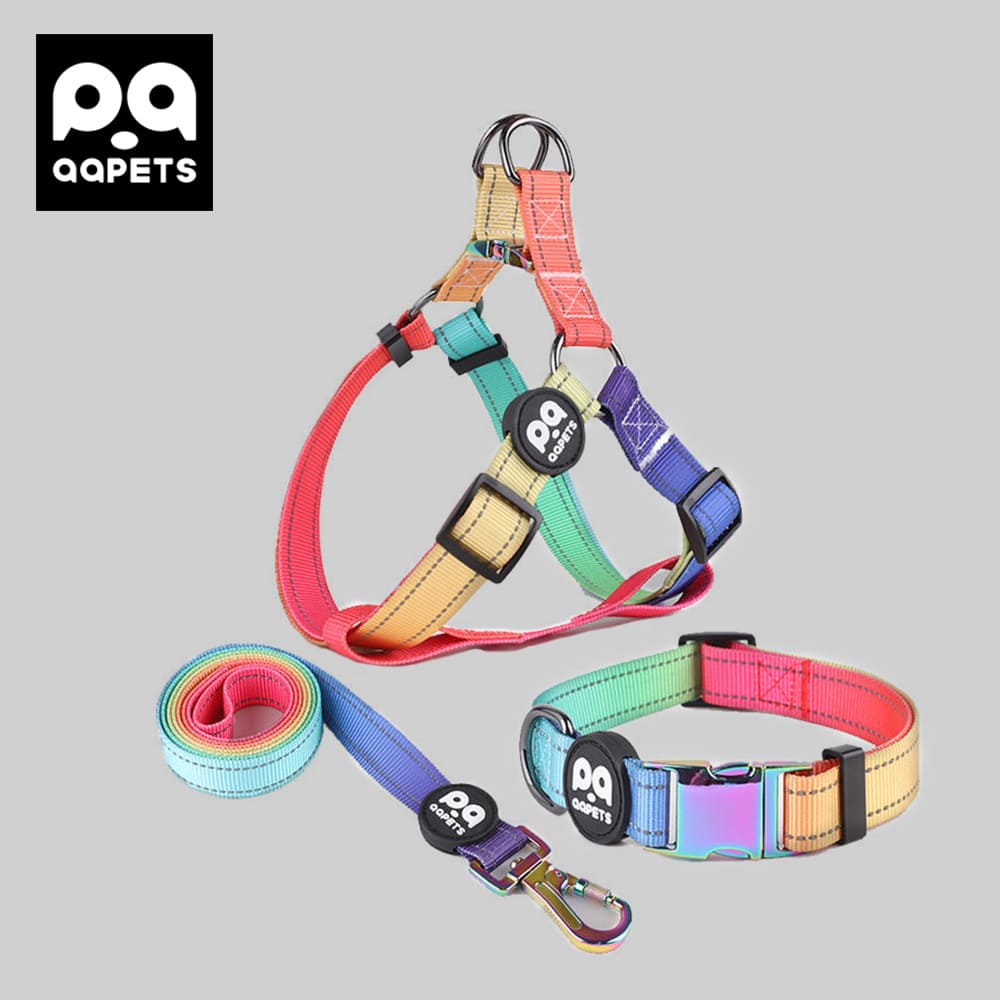
This is the magic that transforms a piece of safety equipment into a flagship brand product. For years, brands have been told they have to choose: do you want a harness that is strong, or do you want one that is stylish? We say you must have both. As pet traction customization experts, this is our specialty. Our factory has invested heavily in the technology to solve this exact problem. The dye-sublimation process we use ensures that your wildest designs become a permanent part of the strongest materials. The ink is heated into a gas and fused deep within the webbing fibers9. It cannot be scratched off, it will not fade after washing, and most importantly, it does not weaken the material in any way. This allows us to offer you unlimited creative freedom on a platform of uncompromising strength.
Become the Designer: Total Creative Control
We do not just offer customization; we give you the keys to the entire design studio. Our revolutionary 3D Mockup System is a free tool that puts you in complete control.
- Create Your Pattern with AI: Don't have a designer? No problem. Use our integrated AI tool. Simply type in a description like "blue and gold geometric pattern for a strong dog" or "punk rock skulls and roses," and the AI will generate unique, production-ready designs for you in moments. Or, feel free to browse our library of over a thousand free patterns.
- Build Your Harness in Real-Time: Select a heavy-duty harness model in our 3D system. Click to apply your new pattern to the webbing.
- Visualize and Perfect Every Detail: This is where it gets exciting. Rotate your 3D model 360 degrees. Zoom in. Change the color of the stitching. Swap the standard hardware for matte black, heavy-duty metal buckles. Add your brand's logo to a PVC patch on the side. Every change you make is reflected instantly.
This process is what we call "Mockup in seconds." It eliminates all the guesswork and weeks of back-and-forth emails. What you see on your screen is a perfect digital twin of the physical product we will produce. And with our "Sample in 3 Days" promise, you can go from digital design to physical product in your hands faster than any other factory.
How can my small online brand afford to develop and launch a custom harness?
You see the massive opportunity in the bully breed market, but you are a Shopify seller or a small startup. You assume that creating a truly custom, high-quality, engineered harness requires a massive upfront investment that is far beyond your budget.
You can afford it by partnering with a factory built for you. We have engineered our business model, which we call "lightweight customization," specifically for online sellers. This is defined by an industry-leading low Minimum Order Quantity (MOQ) of just 50 pieces per design and size.
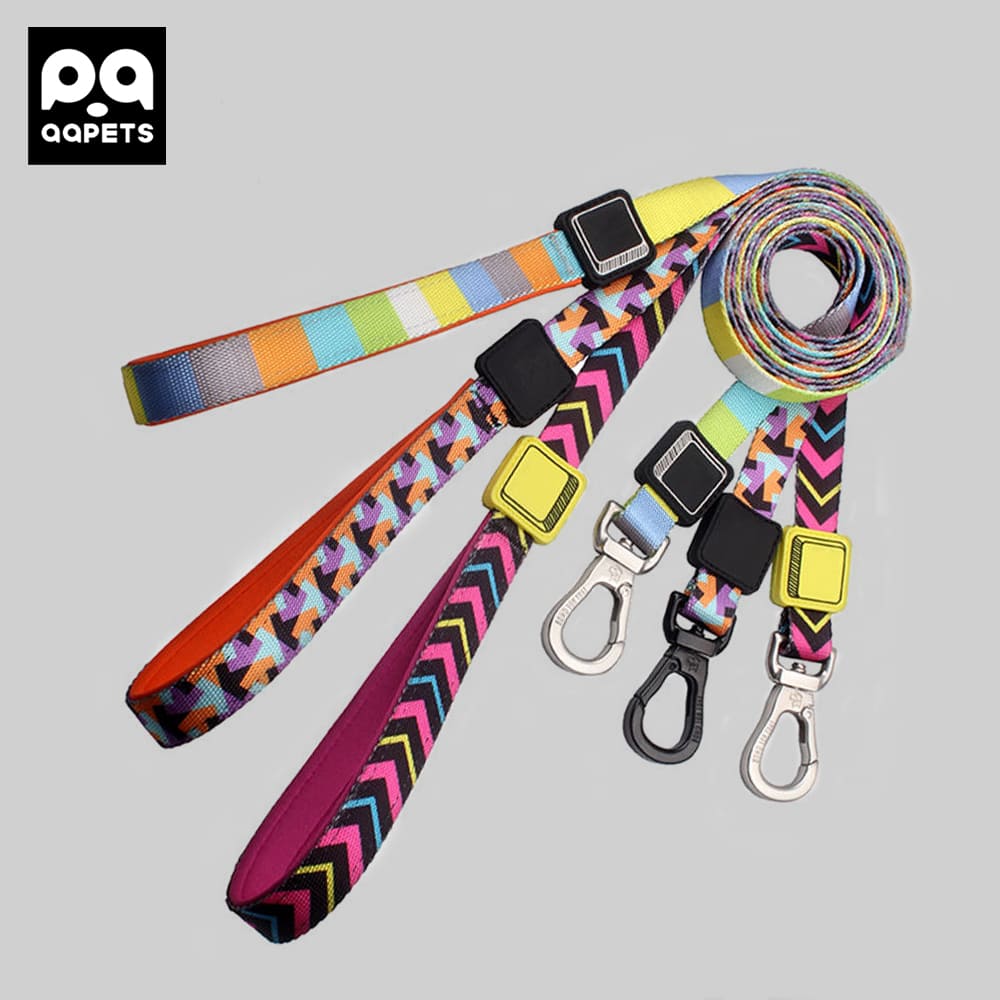
This is the final, and most important, piece of the puzzle. It is the key that unlocks this entire market for agile, online brands. The old world of manufacturing was built on volume, creating a high barrier to entry that shut out small businesses. We have torn down that barrier. Our three dedicated production lines are configured for efficiency at both small and large scales. This allows us to offer a 50-piece MOQ without sacrificing quality or factory-direct pricing. This is not just a number; it is a strategic advantage we give you. It means you are no longer forced to bet your entire budget on a single product launch. You can be smarter, safer, and more creative.
A Business Model for Intelligent Growth
Consider the strategic power that a low MOQ gives you. Instead of launching one harness, you can now launch a full collection.
| Стратегия запуска | With a Traditional High-MOQ Factory | With qqpets' Lightweight Customization |
|---|---|---|
| Number of Designs | 1 | 4 different designs (e.g., Camo, Floral, Geometric, Flag) |
| MOQ per Design | 1,000 units | 50 units |
| Total Order Quantity | 1,000 units | 200 units |
| Your Risk | Very High: All capital is tied to one design. If it doesn't sell, you have a massive loss. | Very Low: You have a diverse offering. You can test the market to see what sells. |
| Your Strategy | Guess and hope. | Test, learn, and scale. You use real sales data to identify your winning designs and then place larger, confident reorders. |
This model empowers you to build your brand based on data, not debt. You get the engineered strength your customers require, the unlimited design freedom your brand deserves, and the intelligent business model your company needs to thrive. Are you ready to build the best heavy-duty bully harness on the market? Contact our expert team today and let's engineer it together.
Заключение
Building a heavy-duty bully harness requires engineering for strength, using technology for unique designs, and partnering with a factory that offers a low-risk, low-MOQ model to make it all possible.
"Review of Collars, Harnesses, and Head Collars for Walking ...", https://pmc.ncbi.nlm.nih.gov/articles/PMC12345489/. Veterinary and animal-welfare literature documents that failed or inappropriate restraint equipment can contribute to traumatic injury, escape, and handling risk; this supports the safety relevance of harness integrity, although it does not quantify failure rates for bully-breed harnesses specifically. Evidence role: general_support; source type: paper. Supports: Harness failure can create serious safety consequences for a dog.. Scope note: Contextual support; it establishes plausible injury and escape risks from restraint failure rather than proving outcomes for this specific harness type. ↩
"Effect of harness design on the biomechanics of domestic ...", https://www.tandfonline.com/doi/full/10.1080/10888705.2023.2259796. Canine restraint and biomechanics research indicates that distributing restraint loads over broader areas of the thorax can reduce localized pressure compared with narrow contact points; this supports the design principle, although it does not validate any particular commercial harness pattern. Evidence role: mechanism; source type: paper. Supports: A heavy-duty harness should distribute load across the body rather than concentrate it at a single point.. Scope note: Contextual biomechanical support; it does not directly test the article’s specific harness design. ↩
"How many bar tacks for sewn webbing loops?", https://www.facebook.com/groups/slackchat/posts/2608439149229946/. Technical sewing and load-bearing textile references identify bar-tack stitching as a reinforcement method used to strengthen high-stress points in straps, webbing, and gear; this supports its role as a stress-point reinforcement, although seam strength depends on thread, pattern, stitch density, and material. Evidence role: mechanism; source type: education. Supports: Bar-tack stitching is used to reinforce high-stress points in load-bearing textile assemblies.. Scope note: General support for the method; it does not prove the strength of any particular bar-tack implementation. ↩
"Effect of a Collar and Harness on Intraocular Pressure ... - PMC", https://pmc.ncbi.nlm.nih.gov/articles/PMC12036695/. Veterinary sources describe the canine neck as containing the trachea, cervical spine, major vessels, and nerves, and discuss collar-related pressure as a potential contributor to neck or airway problems; this supports avoiding concentrated restraint loads on the neck, although injury risk depends on force and individual anatomy. Evidence role: expert_consensus; source type: education. Supports: Harness designs should avoid concentrating force on a dog’s neck.. Scope note: The support is anatomical and clinical context, not a direct comparative safety trial for all harnesses versus collars. ↩
"Development of Smart Clothing to Prevent Pressure Injuries in ...", https://pmc.ncbi.nlm.nih.gov/articles/PMC10218695/. Textile ergonomics and veterinary dermatology sources note that friction, pressure, and repeated rubbing from fitted equipment can cause skin irritation or chafing; this supports the use of wider or padded contact areas, although material choice and fit remain decisive factors. Evidence role: mechanism; source type: paper. Supports: A wide padded chest plate can help reduce localized pressure and rubbing that contribute to chafing.. Scope note: General mechanism support; it does not prove that the article’s specific chest plate prevents chafing in use. ↩
"Effects of restrictive and non-restrictive harnesses on ...", https://pubmed.ncbi.nlm.nih.gov/30455191/. Peer-reviewed studies of canine harness fit and gait report that some harness configurations can alter shoulder extension or stride characteristics; this supports considering shoulder clearance in design, although the literature may not establish that every Y-shaped harness preserves movement equally. Evidence role: mechanism; source type: paper. Supports: Harness geometry can affect shoulder movement, and Y-front designs are intended to reduce shoulder restriction.. Scope note: Contextual support; actual shoulder freedom depends on pattern geometry, sizing, and adjustment. ↩
"Experimental Study of Fatigue and Fracture Behavior of ... - PMC", https://pmc.ncbi.nlm.nih.gov/articles/PMC9147575/. Materials engineering references show that plastics and metals differ substantially in tensile strength, fatigue behavior, and environmental degradation; this supports scrutiny of buckle material for high-load applications, although it does not establish that all plastic buckles are unsafe. Evidence role: mechanism; source type: education. Supports: High-load harness buckles should be selected using mechanical load ratings rather than assuming ordinary plastic clips are sufficient.. Scope note: Contextual materials support; actual buckle safety depends on the specific polymer, design, rating, aging, and quality control. ↩
"Interpretation ID: 001280cmc", https://www.nhtsa.gov/interpretations/001280cmc. Climbing-equipment and automotive-restraint standards include requirements for sewn webbing assemblies and high-strength stitching patterns, providing historical and technical context for the use of dense reinforced stitching in safety-critical textile products; this is analogous support rather than direct evidence for dog harnesses. Evidence role: historical_context; source type: government. Supports: Dense reinforced stitching is used in other safety-critical webbing products such as climbing equipment and seatbelts.. Scope note: Analogy only; climbing gear and seatbelts are regulated categories with different loads and certification requirements from pet harnesses. ↩
"Understanding Disperse Dyes: Mechanisms, Applications ...", https://www.alfa-chemistry.com/dyes/resources/understanding-disperse-dyes-mechanisms-applications-and-innovation-in-synthetic-textile-chemistry.html. Textile-printing references define dye sublimation as a heat-transfer process in which disperse dyes vaporize and diffuse into compatible synthetic fibers, supporting the described mechanism, although results depend on fiber chemistry and process controls. Evidence role: definition; source type: encyclopedia. Supports: Dye sublimation uses heat to transfer dye into synthetic fibers rather than laying pigment only on the surface.. Scope note: The mechanism applies primarily to compatible synthetic fibers such as polyester and some treated synthetics; nylon performance can vary by dye system. ↩