 Перейти к содержимому
 RU
RU  EN
EN  FR
FR  DE
DE  AR
AR  ES
ES  PT
PT  IT
IT  NL
NL  PL
PL  SL
SL  ET
ET  RO
RO  CS
CS  EL
EL  LV
LV 
Have you ever felt like you’re being yanked off your feet during a peaceful stroll with your pooch? If so, you’re not alone! Let’s us diving into whether your dog’s harness is turning them into a neighborhood sled dog.
Indeed, dogs can pull harder with a harness because it distributes pressure across a broader area of their body, making it more comfortable for them to pull.
Let’s get into the nitty-gritty of why harnesses might be giving your furry friend a little too much leverage and how you can regain control.
Why Dog Harness Encourage Pulling?
Harnesses, especially those that clip on the back, can inadvertently teach dogs to pull. The design allows them to use their body weight to pull forward, much like sled dogs pulling a sled. This is because the harness doesn’t cause discomfort or restrain them as a collar might when they start to pull.
Какие существуют типы жгутов?
There are mainly two types of dog harnesses: front-clip and back-clip. The back-clip harnesses are typically the culprits in making it easier for dogs to pull because of the reasons mentioned above. Front-clip harnesses, however, can help reduce pulling as they direct the dog’s body towards you when they try to pull, making it physically awkward to pull.
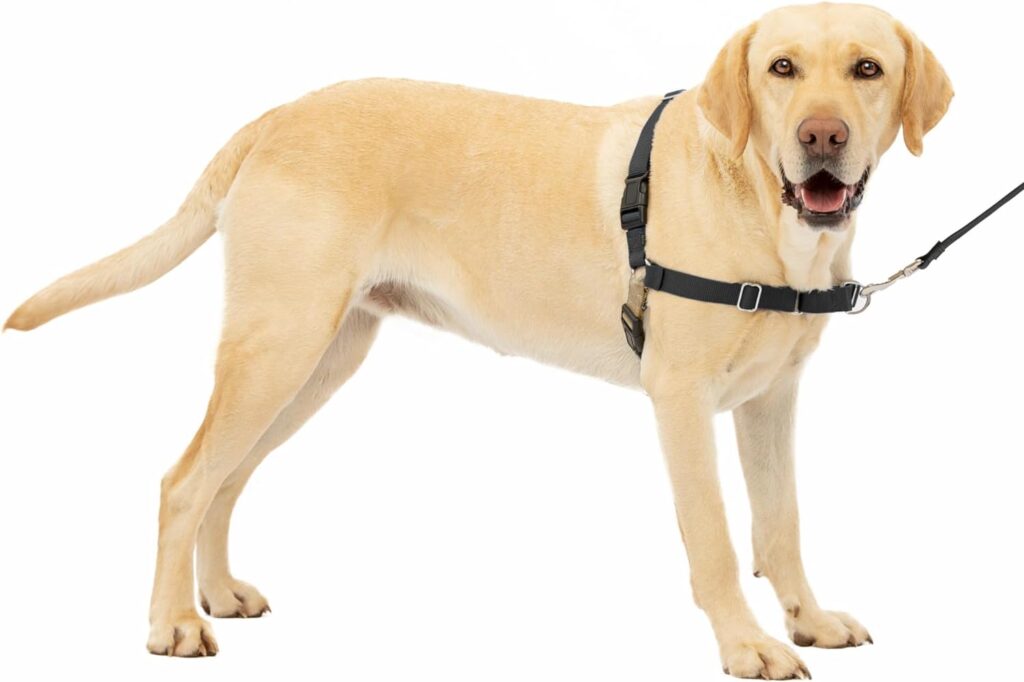
This harness is designed with a front-clip attachment, which effectively discourages pulling by redirecting the dog’s forward momentum towards you whenever they try to pull. This interruption in their path makes it difficult for them to pull strongly or gain speed, and over time, the dog learns that pulling is counterproductive.
How Can You Train Your Dog Not to Pull?
Training is key! Regardless of the type of harness, training your dog to walk nicely beside you is crucial. You can start by practicing in a low-distraction area:
- Use Short Leash: Keep the leash short but loose. This gives you control without putting constant pressure on your dog.
- Stop Technique: When your dog begins to pull, stop walking. Stand still until the leash slackens. Once your dog comes back to you or turns to look at you, praise them and continue walking.
- Смена направления: Another technique is to change direction suddenly. This teaches your dog to pay attention to where you are going rather than bulldozing ahead.
Are There Alternatives to Using a Harness?
Yes, if you find that harnesses aren’t working for your dog, you might consider other training tools like head collars or martingale collars, which provide different kinds of control and feedback. However, these should be used under the guidance of a professional to ensure they are used safely.
Заключение
While a harness can give your dog the mechanical advantage to pull, with the right training techniques, fit, and type of harness, you can enjoy tug-free walks. It’s all about finding what works best for you and your furry friend!
QQPETS является ведущим оптовым производителем регулируемых шлеек для собак и других предметов, которые люди могут использовать при выгуле своих собак. Наша цель - сделать прогулки с собаками легкими для владельцев животных, предоставляя ценные аксессуары. Мы предлагаем различные услуги по настройке, включая логотипы, графику, изделия на заказ и многое другое. Если вы хотите начать свой бизнес по производству товаров для собак, загляните на наш сайт и свяжитесь с нами прямо сейчас.
FAQ about how to get your dog to stop pulling
- Почему шлейка заставляет мою собаку тянуть больше, а не меньше?
- A harness can encourage pulling because it’s more comfortable than a collar and doesn’t cause discomfort when the dog pulls, giving them little reason to stop.
- Какой тип шлейки лучше всего подходит для предотвращения вытягивания моей собаки?
- Шлейка с передней застежкой - идеальный вариант, поскольку она перенаправляет поступательное движение собаки в вашу сторону, когда она начинает тянуть, и ей становится неудобно продолжать тянуть.
- Как приучить собаку не тянуть за шлейку?
- Применяйте технику "стоп-энд-гоу": останавливайтесь каждый раз, когда собака тянет, и продолжайте прогулку только тогда, когда поводок ослабнет.
- Может ли фасон шлейки повлиять на то, как сильно тянет моя собака?
- Yes, an improperly fitted harness can be uncomfortable or allow too much freedom, both of which can increase pulling. Ensure the harness fits snugly but doesn’t restrict your dog’s movement.
- Что делать, если собака начинает тянуть в середине прогулки?
- Немедленно прекратите прогулку, подзовите собаку к себе, попросите ее сесть и возобновите прогулку только после того, как она успокоится.
- Есть ли способ эффективно использовать лакомства для уменьшения вытягивания?
- Да, используйте лакомства, чтобы поощрять собаку, когда она идет рядом с вами на свободном поводке; это подкрепляет поведение, которое вы хотите поощрить.
- Каких ошибок следует избегать, пытаясь отучить собаку тянуть?
- Avoid continuously pulling back on the leash, which can trigger your dog’s opposition reflex and make them pull harder.
- Сколько времени потребуется, чтобы приучить собаку не тянуть за шлейку?
- Depending on the consistency of training and your dog’s temperament, it may take several weeks to a few months of consistent reinforcement.
- Should I use a different type of walking gear if the harness doesn’t help?
- If a harness isn’t effective, you might consider trying a head collar, which provides more control over your dog’s head and can discourage pulling.
- Как определить, где моей собаке удобнее - в шлейке или ошейнике?
- Observe your dog’s behavior and body language. If they seem less stressed and more responsive to commands with a harness, it’s likely more comfortable for them.
