 RU
RU  EN
EN  FR
FR  DE
DE  AR
AR  ES
ES  PT
PT  IT
IT  NL
NL  PL
PL  SL
SL  ET
ET  RO
RO  CS
CS  EL
EL  LV
LV 
As a dedicated owner of a custom collars for dogs UK brand, you are constantly battling high costs. The price of sourcing from local suppliers eats into your profits, making it incredibly difficult to grow or even compete.
The most effective way to save on costs for your UK brand is to shift your sourcing strategy. By importing directly from a modern factory partner, you can systematically eliminate the three biggest expenses: inflated unit prices, design fees, and the cost of unsold inventory.1
My name is Cathy, and as a pet traction customization expert at the Фабрика qqpets, I've spent years helping UK-based entrepreneurs solve this exact problem. The common belief is that "saving money" means sacrificing quality, but this is a dangerous misconception. True cost saving isn't about finding a cheaper, inferior product. Instead, it is about creating a smarter, more efficient business model. Many UK brands are unknowingly paying for three hidden costs: the middleman's markup, expensive design fees, and the financial disaster of dead stock.2 In this guide, I will break down each of these costs and show you how a direct factory partnership doesn't just reduce them—it completely eliminates them.
How do you slash the unit price of your collars?
You are paying high unit prices to your UK suppliers for every single collar. This leaves you with razor-thin profit margins, which means every sale is less impactful and your business growth remains stalled.
You can slash the unit price of your collars by cutting out the middleman entirely. By sourcing directly from the factory of origin, you avoid the 50-200% markup added by UK distributors3, allowing you to get the same high-quality product for a much lower cost.
This is the most direct and impactful cost saving you can make. The reality of the UK pet product market is that most local suppliers are not manufacturers. They are middlemen. They import products from a factory like ours, store them in a warehouse, and then sell them to you after adding a substantial markup to cover their own overhead and profit. When you partner directly with us, you are stepping into the role of the importer and capturing that margin for yourself. This simple change in your supply chain can fundamentally transform your business's finances.4 Suddenly, you have the flexibility to be more competitive on price, absorb rising advertising costs, or simply enjoy a healthier profit on every single item you sell. This isn't about a small discount; it is about restructuring your cost base for long-term success.
The Middleman's Toll: A Cost Breakdown
| Cost Structure | Buying from a UK Supplier | Importing Directly from qqpets |
|---|---|---|
| Actual Factory Cost | £2.00 (This is the price your supplier pays) | £2.00 (This is the price YOU pay) |
| Middleman Markup | + £3.00 (Their operational costs and profit) | £0.00 (This cost is eliminated) |
| Your Final Cost Price | £5.00 | £2.00 |
| Your Savings per Unit | N/A | £3.00 (A 60% saving on your cost price!) |
How can you eliminate design and development costs?
To build a memorable UK brand, you need unique Пользовательские узоры. However, hiring a British graphic designer to create these can be incredibly expensive, often forcing you to settle for generic, uninspired designs that fail to capture attention.
You can completely eliminate design costs by partnering with a factory that provides a powerful suite of professional design tools for free. This includes an AI Pattern Generator for creating original art and a vast library of exclusive, ready-to-use patterns.
A strong brand is built on a unique identity5, and in the pet accessories world, your patterns are your identity. This used to present a difficult choice for new brands: either spend hundreds of pounds on a designer or use the same boring stock patterns as everyone else. We believe that creativity should not be a luxury. As a customization expert, our role is to empower your brand vision. Therefore, we have invested in a comprehensive online design platform that you can use for free. Imagine having an idea for a pattern—for example, "a whimsical pattern of sausage dogs wearing raincoats." You can type this directly into our AI Pattern Generator and receive multiple original designs in seconds. If you need inspiration, you can browse our private library of over 1,000 exclusive designs. Once you have a pattern you love, you can immediately see it on your product using our 3D Mockup System. This entire process, from idea to photorealistic mockup, costs you nothing. It is a massive cost saving that directly enables you to build a more diverse and unique product line.
Design Investment: The Old Way vs. The Smart Way
| Aspect of Design | The Traditional UK Method | The qqpets Partner Method |
|---|---|---|
| Design Cost per Pattern | £50 - £200+ | £0 (Completely Free) |
| Access to Variety | High costs limit you to only one or two designs. | Unlimited. Create as many patterns as you like. |
| Development Time | Weeks of back-and-forth emails with a designer. | Minutes. Generate designs and mockups instantly. |
| Final Result | An expensive design file (JPG, PNG). | A free design applied to a fully interactive 3D product model. |
How do you avoid the cost of dead stock?
The biggest hidden cost in any product business is unsold inventory6. Traditional manufacturing and even most UK suppliers require high Minimum Order Quantities (MOQs)7, forcing you to gamble a large amount of capital on a design that might not sell.
You can avoid the cost of dead stock by adopting a "lightweight customization" model. A modern factory partner allows you to place a very small test order of just 50 pieces, enabling you to verify a product's popularity before committing to a larger investment.
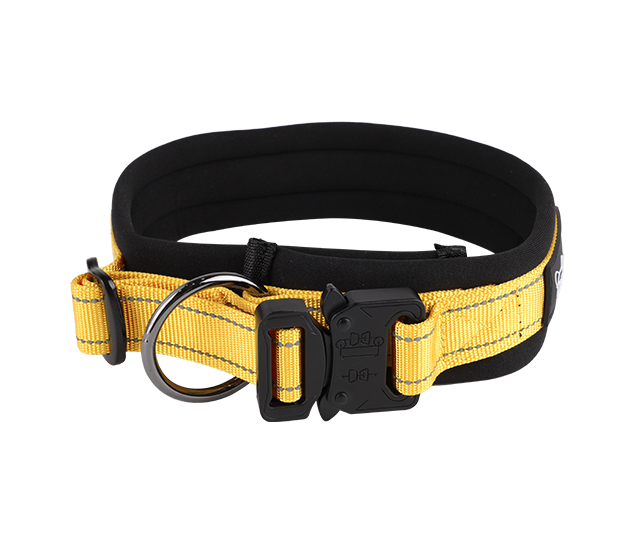
What is more expensive than a £5 collar? A £5 collar that sits in a box, unsold, for a year. Dead stock is pure loss. The old business model forced entrepreneurs to make a huge bet, ordering 1,000 or more units of a single design and praying it would be a hit. This is a recipe for disaster. We have designed our factory specifically to solve this problem for online sellers. Our industry-leading low MOQ of just 50 pieces per design is a strategic tool. It transforms a high-stakes gamble into a low-cost market test. Instead of spending £5,000 on one design, you can now spend £500 to launch five different designs. You let your UK customers decide what they love with their wallets. This data-driven approach is infinitely smarter and safer.8 You identify your winners with minimal risk, and only then do you scale up your orders. Our "Mockup in seconds. Sample in 3 Days." promise ensures that even your small test order is perfect, giving you complete confidence from the very first unit.
Inventory Risk: The Big Gamble vs. The Smart Test
| Financial Strategy | The High MOQ Gamble (Traditional) | The 50-Piece Smart Test (qqpets) |
|---|---|---|
| Initial Order | 1,000 units of 1 design | 50 units of 5 different designs |
| Upfront Investment | High (e.g., £2,000) | Very Low (e.g., £500) |
| Risk of Dead Stock | Extremely High. One failed design can be a catastrophe. | Extremely Low. Unpopular designs result in a tiny, manageable loss. |
| Market Feedback | None. You are operating on a guess. | Real Sales Data. You know which designs are proven winners. |
Saving money is the key to building a sustainable and profitable UK brand. The path is clear: cut your unit prices, eliminate design fees, and de-risk your inventory. Are you ready to implement a smarter cost strategy? Contact our expert team today to learn more.
Заключение
Save costs on your UK brand by cutting middlemen to lower unit prices, using free AI design tools, and starting with safe, 50-piece test orders direct from the factory.
"Grad Insights: How Modern Supply Chains Work - From S&OP to ...", https://www.wsc.edu/news/article/1407/grad-insights-how-modern-supply-chains-work---from-sandop-to-last-mile-and-ai. Supply-chain and operations-management literature describes direct sourcing, product-development costs, and inventory holding/obsolescence as distinct cost drivers in product businesses. Evidence role: general_support; source type: education. Supports: Importing directly from a factory partner can reduce inflated unit prices, design fees, and unsold-inventory costs.. Scope note: This would support the cost categories in general, not prove that every UK dog-collar brand can eliminate all three expenses completely. ↩
"[PDF] Retail Inventory Control Strategies - ScholarWorks", https://scholarworks.waldenu.edu/cgi/viewcontent.cgi?article=4274&context=dissertations. Business and operations sources commonly identify distributor margins, design or product-development expenses, and dead stock as costs that reduce retail profitability. Evidence role: general_support; source type: education. Supports: Middleman markups, design fees, and dead stock are hidden or often underestimated costs for product brands.. Scope note: The source would establish these as common cost categories, not that many UK pet-accessory brands are unaware of them. ↩
"Distributor margin by industry and retail markup calculation", https://allianceexperts.com/what-is-a-reasonable-margin-for-your-distributor/. Wholesale and retail margin data show that intermediary markups are a standard component of distribution channels and can materially increase final unit costs. Evidence role: statistic; source type: government. Supports: UK distributors may add substantial markups that increase the buyer’s unit cost.. Scope note: Neutral margin data may support the existence and scale of markups generally, but may not verify the exact 50–200% range for UK dog-collar distributors. ↩
"The Profit-Leverage Effect in Supply Chains", https://scm.ncsu.edu/scm-articles/article/thinking-about-the-future-role-of-procurementpurchasingsupply. Operations-management literature explains that supply-chain configuration affects procurement cost, margins, working capital, and firm financial performance. Evidence role: mechanism; source type: paper. Supports: Changing from distributor purchasing to direct sourcing can materially affect a business’s financial performance.. Scope note: The evidence would explain the mechanism by which sourcing changes affect finances, not quantify the effect for this specific collar brand scenario. ↩
"Brand Equity Explained: How to Build and Measure Success", https://online.hbs.edu/blog/post/brand-equity. Brand-management research identifies distinctive brand identity and assets as important contributors to recognition, differentiation, and brand equity. Evidence role: expert_consensus; source type: paper. Supports: A strong brand depends partly on a distinctive identity.. Scope note: The evidence supports brand identity as a general marketing principle, not the specific importance of collar patterns in pet accessories. ↩
"[PDF] Coordination of Inventory Distribution and Price Markdowns for ...", https://www.anderson.ucla.edu/faculty_pages/felipe.caro/papers/pdf_FC29.pdf. Retail and inventory-management literature treats unsold inventory as a source of carrying costs, markdown risk, obsolescence, and tied-up working capital. Evidence role: mechanism; source type: education. Supports: Unsold inventory is a major hidden cost in product businesses.. Scope note: The evidence would establish why unsold inventory is costly in general, not that it is the single largest hidden cost for every pet-product business. ↩
"[PDF] EFFECTIVE METHODOLOGIES FOR SUPPLIER SELECTION AND ...", https://etda.libraries.psu.edu/files/final_submissions/419. Supply-chain sources explain that suppliers use minimum order quantities to achieve production efficiency and transaction-cost economies, which can increase buyers’ upfront purchasing commitments. Evidence role: mechanism; source type: education. Supports: Traditional manufacturing and supplier models often use MOQs that raise upfront capital requirements.. Scope note: This supports why MOQs exist and how they affect buyers, but not the exact MOQ levels used by UK pet-product suppliers. ↩
"Addressing market risks through lean startup methodology", https://www.academia.edu/33321112/Addressing_market_risks_through_lean_startup_methodology. Lean-startup and product-development research supports small-market tests and validated learning as methods for reducing uncertainty before larger investment. Evidence role: expert_consensus; source type: paper. Supports: Small test orders and real sales data can reduce product-launch risk compared with committing to a large order before market validation.. Scope note: The evidence supports market testing as a risk-reduction method, but does not prove it is “infinitely” safer or guarantee success in the UK pet-accessory market. ↩