
 RU
RU  EN
EN  FR
FR  DE
DE  AR
AR  ES
ES  PT
PT  IT
IT  NL
NL  PL
PL  SL
SL  ET
ET  RO
RO  CS
CS  EL
EL  LV
LV 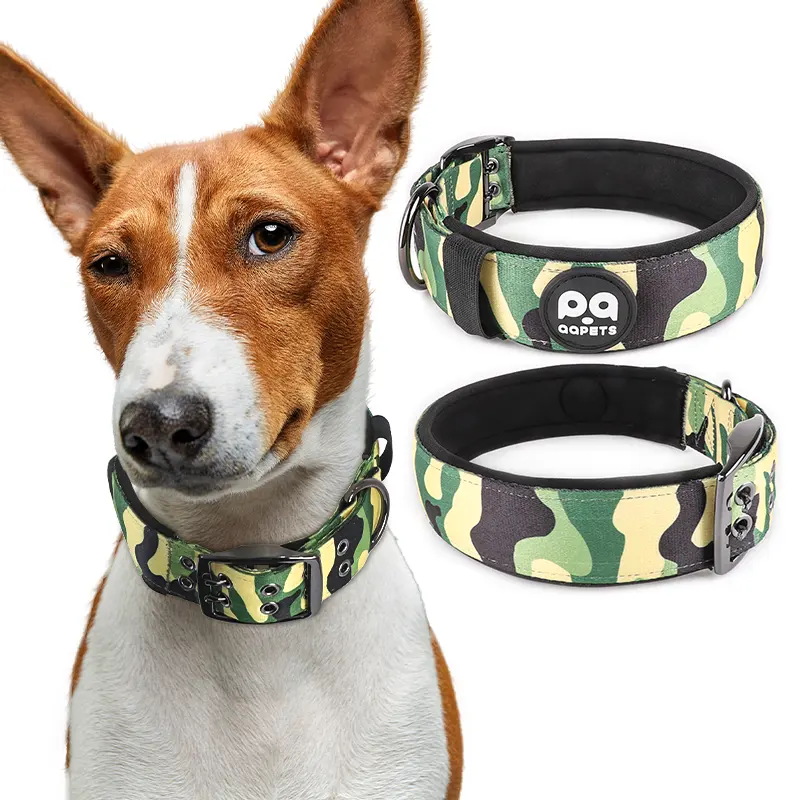
As a brand owner catering to large dogs, you've seen the standard 1-inch collars. They look flimsy and inadequate, and you worry about their safety. A snapped collar is a liability you can't afford. So, why choose a 2 inch custom dog collar for your large breed? Is it just about looks, or is there a critical reason behind it?
A 2-inch custom dog collar is the superior choice for large breeds because it prioritizes safety and comfort. The wider surface area distributes pressure across the dog's neck1, significantly reducing the risk of tracheal injury2 и providing better control for the owner3. It is not just an aesthetic choice; it is a functional and responsible one.

My name is Cathy, and as a pet product customization expert at qqpets, I often speak with brand owners who specialize in products for powerful breeds like Great Danes, Mastiffs, and Rottweilers4. They understand that for their customers, equipment is not a casual accessory; it is a vital piece of safety gear5. Choosing the right collar width is the first step in creating a product that is not only strong and safe but also serves as the foundation for a trustworthy brand. Therefore, let's explore the engineering behind this choice and how it can become your brand's biggest advantage.
Is a wider collar automatically a stronger and safer collar?
You're thinking of adding a wide collar to your product line, but you're worried that just any wide collar will do. A wide collar made from cheap materials or with weak hardware is a dangerous deception. It gives the illusion of safety while hiding critical failure points.
A truly safe, wide collar is an engineered system. The width must be paired with high-density webbing6, load-rated hardware7 (like double-pin buckles and welded D-rings8), and reinforced stitching. It's the combination of these elements that creates genuine strength, not just the width alone.
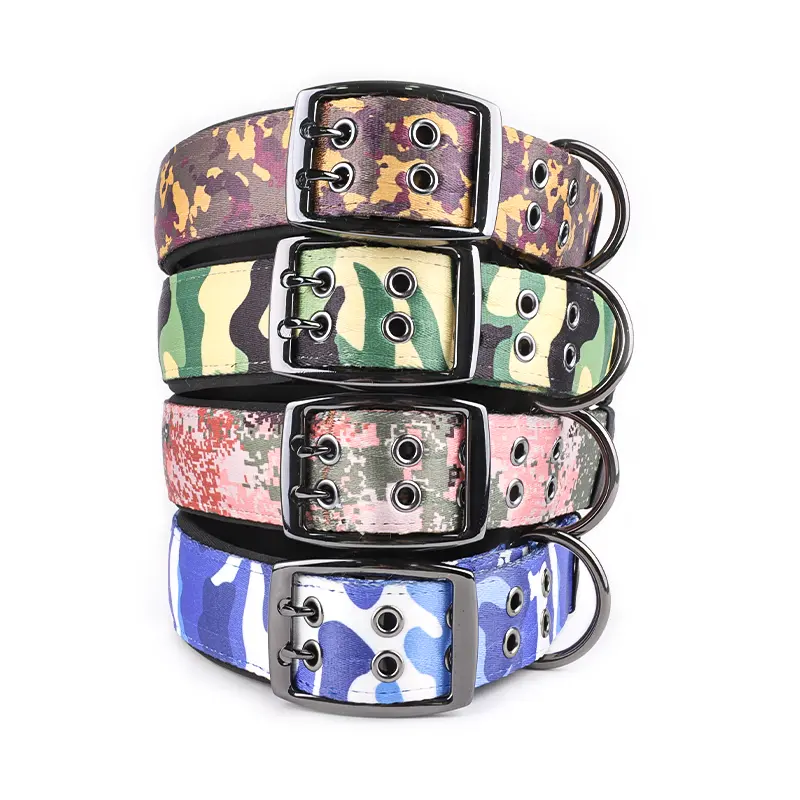
At our factory, we view product design through the lens of safety engineering. A 2-inch collar for a large breed isn't just a wider piece of fabric; it's a completely different product class with its own set of requirements. Many generic manufacturers simply scale up a standard collar design, which is a recipe for failure. The forces exerted by a 150-pound dog are immense9, and the equipment must be designed from the ground up to handle that specific stress. This is a responsibility we take very seriously.
The Anatomy of an Engineered 2-Inch Collar
A comparison of a standard wide collar versus a professionally engineered one reveals the critical differences. Our quality is verified by our ISO 9001 certification10, ensuring these standards are met on every single item.
| Component | The Generic "Wide" Collar | The qqpets Engineered 2-Inch Collar |
|---|---|---|
| Webbing Material | Standard, low-density nylon or polyester that can fray and stretch under load. | High-density, tightly woven nylon that resists stretching and has a certified high tensile strength. |
| Система пряжек | A single-pin buckle or a standard plastic clip not rated for high-force applications. | A heavy-duty metal double-pin buckle system that distributes force evenly and prevents accidental unfastening. |
| D-Ring | A simple, non-welded D-ring that can be pulled open under the sudden force of a lunging dog. | A thick, welded metal D-ring that is load-rated to withstand extreme pulling force without deforming. |
| Stitching | Basic single-line stitching at stress points. | Reinforced "box-X" stitching at the buckle and D-ring attachment points to prevent tearing under pressure. |
This systematic approach ensures that the collar's impressive width is backed by equally impressive strength.
How can this functional collar become a unique brand statement?
Your product is now verifiably strong and safe, which is fantastic. But now it looks like every other heavy-duty collar on the market—functional, but generic. How do you take this superior product and make it something that customers desire and recognize as uniquely your brand?
The answer is to use the collar's generous 2-inch width as a creative canvas. A smart manufacturing partner doesn't just give you a strong product; they give you the advanced tools to cover that product in unique, brand-defining art, turning a utility item into a premium fashion statement.
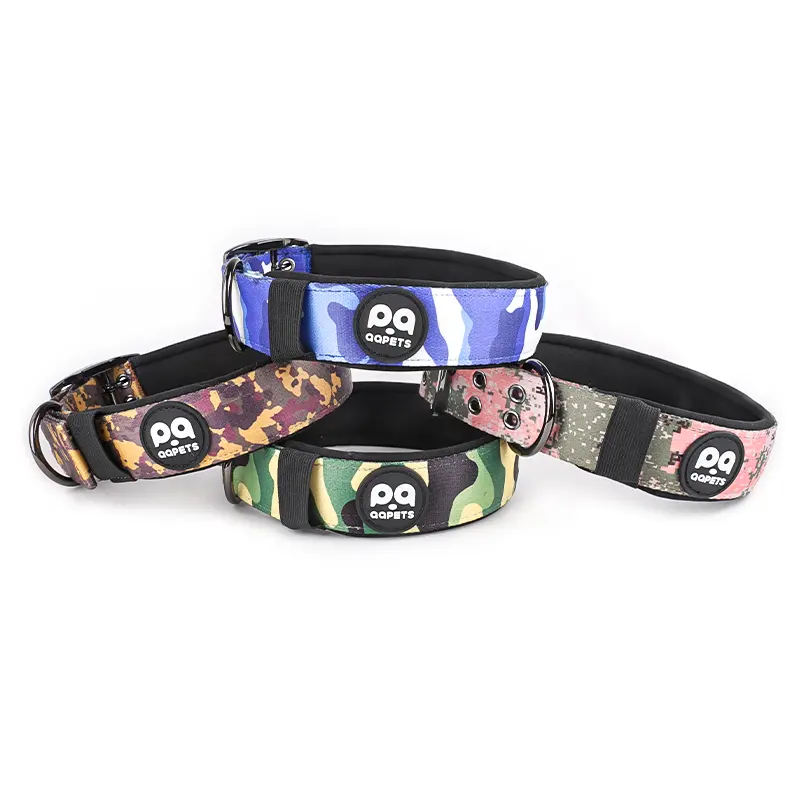
This is where we transform from being your manufacturer into being your creative partner. We have built our entire factory around a core principle for online sellers: "Mockup in seconds. Sample in 3 Days." This promise is powered by a suite of digital tools designed to give you an unfair advantage in the market.
Our free and revolutionary 3D Mockup System is at the heart of this. It lets you become the designer.
- Endless Design Possibilities: Forget browsing a limited catalog. You can choose from our library of over a thousand Пользовательские узоры or use our groundbreaking AI Pattern Generator. Simply describe your vision—for example, "a pattern of majestic lions on a dark green background" or "a fun, colorful pattern of oversized dog bones"—and our AI will create a completely unique, production-ready design for you.
- Launch Smarter, Not Harder: We understand that as an online seller, inventory risk is a major concern11. That's why we offer "lightweight customization" with an incredibly low MOQ of just 50 pieces per design and size. You can launch an entire collection of different 2-inch collar designs to see what resonates with your audience, all without a massive upfront investment.
- Create a Brand World: Your unique design doesn't have to stop at the collar. With our system, you can easily apply the same pattern to matching leashes, harnesses, and other accessories, creating a cohesive and compelling brand experience that customers will love.
Our professional team is dedicated to helping you navigate this process. If you are ready to build a brand that stands for uncompromising safety and unforgettable style, I urge you to contact our expert team today.
Заключение
A 2-inch collar for a large breed is a critical choice for safety and comfort. When you partner with a factory that combines this engineered strength with powerful, AI-driven design tools and a flexible production model, that collar becomes the cornerstone of a powerful and unique brand.
"[PDF] Journal of Biomechanics", https://ibionics.ece.ncsu.edu/assets/Publications/method_for_nonoptical_quantification_of_in_situ_tissue_biomechanics.pdf. An engineering or biomechanics source on contact pressure supports that, for a given pulling force, increasing the contact area lowers pressure on the contacted tissue; this provides the physical basis for the collar-width claim. Evidence role: mechanism; source type: education. Supports: A wider collar surface distributes force over a larger area of the dog's neck.. Scope note: This would establish the pressure-distribution mechanism, not prove that every 2-inch collar is safer in all real-world dog-handling situations. ↩
"Tracheal collapse | Cornell University College of Veterinary Medicine", https://www.vet.cornell.edu/departments-centers-and-institutes/riney-canine-health-center/canine-health-topics/tracheal-collapse. Veterinary references associate pressure or trauma to the canine neck and trachea with airway injury or worsening of tracheal conditions, supporting the caution against concentrated collar pressure. Evidence role: expert_consensus; source type: institution. Supports: Reducing concentrated pressure on a dog's neck may lower the risk of tracheal irritation or injury.. Scope note: Most veterinary sources support avoiding excessive neck pressure generally; they may not directly quantify risk reduction from a 2-inch collar specifically. ↩
"Review of Collars, Harnesses, and Head Collars for Walking Dogs", https://pmc.ncbi.nlm.nih.gov/articles/PMC12345489/. Canine handling and veterinary-behavior sources discuss how equipment fit, contact area, and attachment security affect handler control of dogs on leash. Evidence role: general_support; source type: institution. Supports: A properly fitted, secure collar can improve handler control of a large dog.. Scope note: Such sources may support the general relationship between appropriate equipment and control, but may not directly compare 2-inch collars with narrower collars in controlled trials. ↩
"Great Dane - Wikipedia", https://en.wikipedia.org/wiki/Great_Dane. Breed reference sources document that Great Danes, Mastiffs, and Rottweilers are large-bodied working or guardian-type breeds with adult weights commonly far above those of medium dogs. Evidence role: definition; source type: encyclopedia. Supports: Great Danes, Mastiffs, and Rottweilers are examples of large, powerful dog breeds.. Scope note: Breed size data supports the classification of these breeds as large or powerful, but does not alone establish individual temperament or pulling force. ↩
"Guidance for Municipalities - Department of Agriculture and Markets", https://agriculture.ny.gov/animals/guidance-municipalities. Animal-welfare and veterinary guidance identifies collars, leashes, and related restraint equipment as tools used for safe restraint, identification, and control of dogs. Evidence role: expert_consensus; source type: institution. Supports: For large and powerful dogs, collars and leashes function as safety and control equipment rather than merely decorative accessories.. Scope note: This supports the general safety function of dog equipment, not the superiority of a particular brand or collar width. ↩
""Design Fabrics Suitable for Being Used as Heavy Duty " Webbing ...", https://www.academia.edu/17856546/_Design_Fabrics_Suitable_for_Being_Used_as_Heavy_Duty_Webbing_Slings_. Textile engineering references describe how fiber type, weave density, and construction affect the tensile strength, abrasion resistance, and elongation of webbing materials. Evidence role: mechanism; source type: education. Supports: High-density, tightly woven webbing can improve tensile strength and resistance to stretching or fraying.. Scope note: This supports the material-science basis for stronger webbing, but the actual strength of a specific collar requires product-level testing data. ↩
"Webbing Strength and Safety Ratings Explained", https://countrybrookdesign.com/blog/webbing-strength-and-safety-ratings-explained?srsltid=AfmBOooyqDxqEXfdRSPSXqNc0u5BgnWpROfSDQqcywF6DJJ3SX6eCBJN. Engineering and safety-testing references explain that load ratings indicate the maximum force a component is designed or tested to withstand, supporting the need for rated hardware in load-bearing pet equipment. Evidence role: definition; source type: institution. Supports: Hardware used in large-dog collars should have known load-bearing performance rather than relying on appearance alone.. Scope note: This supports the meaning and relevance of load ratings generally; pet-collar-specific standards may vary by jurisdiction or manufacturer. ↩
"Welding D-Rings - Eng-Tips", https://www.eng-tips.com/threads/welding-d-rings.434513/. Mechanical and fabrication references explain that welded rings provide a closed load path, whereas unwelded split or open rings can deform or open under sufficient load. Evidence role: mechanism; source type: education. Supports: Welded D-rings are generally more appropriate for high-load restraint points than non-welded rings.. Scope note: This supports the engineering rationale for welded rings; the load capacity of any specific D-ring still depends on material, dimensions, weld quality, and testing. ↩
"Comparing efficacy in reducing pulling and welfare impacts of four ...", https://pmc.ncbi.nlm.nih.gov/articles/PMC11512810/. Studies measuring leash-pulling forces show that dogs can generate substantial transient forces during pulling or lunging, supporting the need to design restraint equipment for dynamic loads rather than body weight alone. Evidence role: statistic; source type: paper. Supports: Large dogs can exert high dynamic forces on collars and leash hardware.. Scope note: Measured forces vary by dog size, speed, training, surface, leash length, and test method; this would contextualize the claim rather than give a universal force value for every 150-pound dog. ↩
"ISO 9001:2015 - Quality management systems", https://www.iso.org/standard/62085.html. ISO describes ISO 9001 as a quality-management-system standard focused on consistent processes, documented controls, and continual improvement. Evidence role: definition; source type: institution. Supports: ISO 9001 relates to quality-management processes and consistency controls.. Scope note: ISO 9001 certification supports the existence of a quality-management system; it does not by itself certify the tensile strength, safety, or performance of any individual collar. ↩
"Types of 7(a) loans | U.S. Small Business Administration - SBA", https://www.sba.gov/partners/lenders/7a-loan-program/types-7a-loans. Small-business and operations-management sources identify excess inventory as a financial risk because it ties up working capital, increases storage costs, and may lead to markdowns or obsolescence. Evidence role: general_support; source type: government. Supports: Inventory risk is a significant concern for online sellers and small businesses.. Scope note: This supports the general business-risk claim; it does not prove that a specific minimum order quantity is optimal for every online pet-products seller. ↩