 NL
NL  EN
EN  FR
FR  RU
RU  DE
DE  AR
AR  ES
ES  PT
PT  IT
IT  PL
PL  SL
SL  ET
ET  RO
RO  CS
CS  EL
EL  LV
LV 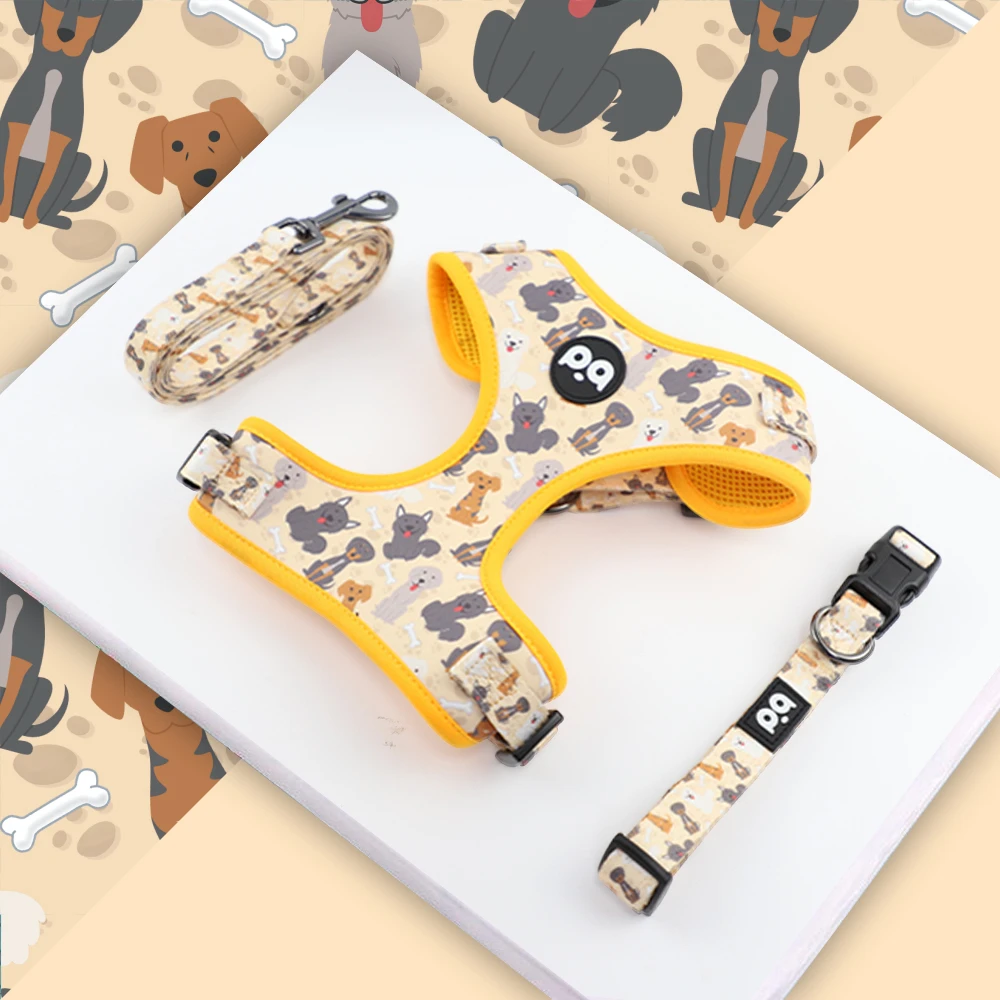
You're told a custom dog harness is "the best," but what does that even mean? You worry about unproven claims, potential safety issues, and your brand being associated with a low-quality product. How do you find the verifiable truth behind the marketing words?
We test for the "best" standard by applying two distinct types of rigorous testing. First, we conduct scientific, physical tests on materials and construction for safety. Second, we provide digital "testing" tools that allow you to verify your creative vision and market demand without risk.
My name is Cathy, and as a customization specialist at qqpets, I help brands understand that "best" isn't a feeling; it's a result of a process. For online sellers, trust is everything. Your customers trust you to provide a safe and reliable product for their beloved pets. Therefore, our responsibility as your factory partner is to provide you with undeniable proof that our products meet the highest standard of testing, both for physical quality and for creative accuracy.
How do we test the physical strength and safety?
You see a picture of a harness, and it looks sturdy. But pictures don't show the force required to break a buckle or snap a D-ring. Trusting appearances alone is a dangerous gamble for a brand that values its customers and their pets. A product must be proven safe.
The first and most critical test is for physical integrity. We test for strength and safety by moving beyond visual checks and using scientific methods and machines to gather objective data on every component. This is the only way to truly guarantee a harness is built to withstand real-world use.
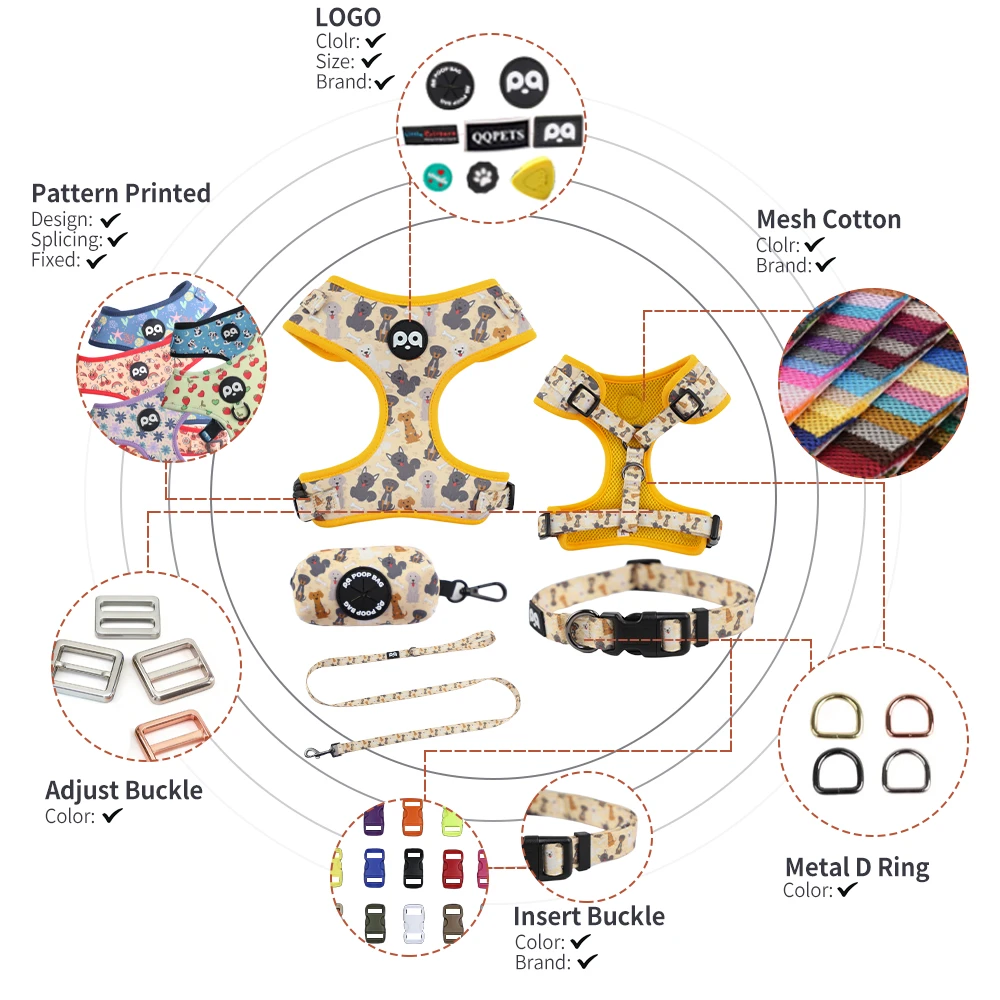
Our entire manufacturing process is governed by our ISO 9001 certification1, which mandates strict quality control. But we go even further. Our in-house lab is equipped to perform specific, targeted tests on the parts of a harness that matter most. We use tensile strength machines2 to see exactly how much force our webbing and buckles can take before they fail. We perform load-bearing tests on all our metal hardware, and we conduct cycle-life tests on buckles3 to ensure they keep working after thousands of uses. This data-driven approach to quality is not just a feature; it is our core philosophy. This is how we prove a harness is safe.
The Science Behind a Safe Harness
Our testing transforms vague claims into measurable facts.
| Component | Standard Supplier Check | Our "Best" Standard Test |
|---|---|---|
| Webbing | Visual inspection for flaws. | Tensile Strength Test4: Pulled by a machine to measure the exact force (kg) it can withstand. |
| Gesp | A few manual clicks. | Fatigue Test5: Opened and closed 500+ times to ensure the spring mechanism remains strong. |
| D-Ring | Check for smooth finish. | Static Load Test6: A specific weight is hung from the D-ring to test for warping or breaking. |
| Stitching | Look for straight lines. | Stress Point Pull Test7: We test the strength of the reinforced box stitching at critical joints. |
How do we "test" your creative ideas without risk?
You have a brilliant and unique design idea for your harness line. But the traditional process of sampling is slow, expensive8, and full of communication errors. You worry that your creative vision will be lost in translation, wasting valuable time and money on samples that are just not right.
You "test" your creative ideas by using a system that makes the process instant, visual, and free from error. This is achieved by using a powerful digital platform that lets you see your finished product before it’s made. This is the innovation behind our promise: "Mockup in seconds. Sample in 3 Days."
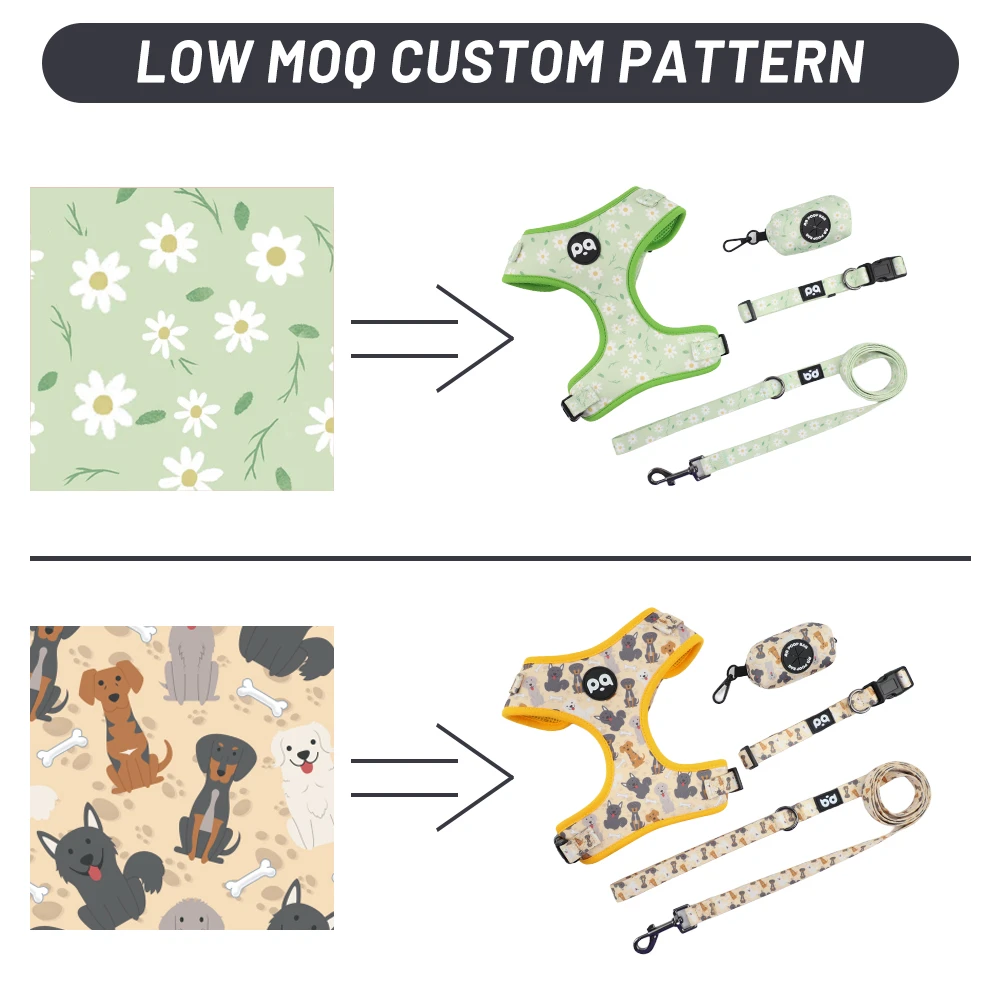
As experts in lightweight customization for online brands, we created the solution. Our free 3D Mockup System is your digital testing ground. Here, you are the designer. You can "test" hundreds of design combinations in minutes. Instead of writing a long email, you can visually verify your pattern's scale, your logo's placement, and your hardware's color instantly9. This process removes all creative risk and ensures that the physical sample we create for you will be a perfect match for your vision. It is the ultimate form of creative testing.
The Modern Way to Test and Launch
- Test Your Creativity with AI: Don't have a pattern yet? "Test" your imagination. Go to our AI Pattern Generator and type in your idea. In seconds, you'll have unique Aangepaste patronen to work with, turning a spark of an idea into a tangible design.
- Test Your Design in 3D: Apply your new pattern to a photorealistic 3D harness model. Spin it around. Zoom in. This isn't a flat drawing; it's a dynamic digital twin of your final product. This is your visual confirmation.
- Test the Market with Low MOQ: The final test is sales. With our low MOQ of just 50 pieces, you can affordably launch your verified design and "test" its performance with real customers, gathering data for your next big order.
Ready to partner with a factory that tests for the best standard in every way? I encourage you to contact my team today and let us prove it to you.
Conclusie
We test for the "best" standard by combining scientific lab testing for physical safety with innovative digital tools that let you test your creative vision and market potential, completely risk-free.
"ISO 9001:2015 - Quality management systems — Requirements", https://www.iso.org/standard/62085.html. ISO 9001 specifies requirements for a quality management system intended to support consistent provision of products and services that meet customer and regulatory requirements. Evidence role: definition; source type: institution. Supports: ISO 9001 certification is relevant evidence for a structured manufacturing quality-control process.. Scope note: ISO 9001 supports the existence of a quality-management framework; it does not independently verify the safety of any specific dog harness. ↩
"Tensile Test Experiment", https://www.mtu.edu/materials/k12/experiments/tensile/. Standard tensile testing methods use controlled pulling equipment to measure the force and elongation at which textile materials or components fail. Evidence role: mechanism; source type: institution. Supports: Tensile strength machines can quantify how much force webbing and related components withstand before failure.. Scope note: This supports the testing method in general; it does not provide the factory’s actual measured results. ↩
"Fatigue testing", https://en.wikipedia.org/wiki/Fatigue_testing. Cycle-life and fatigue testing evaluate durability by repeatedly operating or loading a component to observe wear, degradation, or failure over time. Evidence role: mechanism; source type: education. Supports: Repeated cycle-life testing is a valid way to evaluate whether buckles continue functioning after many uses.. Scope note: This supports the relevance of repeated-cycle testing but not any specific number of cycles as sufficient for dog harnesses. ↩
"ISO 13934-1:2013(en), Textiles — Tensile properties of fabrics — Part 1", https://www.iso.org/obp/ui/#iso:std:iso:13934:-1:ed-2:v1:en. Textile tensile-strength standards describe pulling fabric or webbing specimens until rupture in order to quantify maximum breaking force. Evidence role: mechanism; source type: institution. Supports: A tensile-strength test is an appropriate method for measuring how much force webbing can withstand.. Scope note: The citation would support the method, not the article’s implied superiority over a supplier’s visual inspection. ↩
"CYCLIC FATIGUE A machine part or structure will, if improperly designed ...", http://courses.washington.edu/me354a/chap9.pdf. Fatigue testing is used to assess how materials or components behave under repeated loading or repeated operation, including the onset of damage that may not appear in a single-use test. Evidence role: mechanism; source type: education. Supports: A buckle fatigue test can reveal durability issues that a few manual clicks may not show.. Scope note: The citation supports fatigue testing generally; it does not establish that 500 cycles is an industry standard for dog-harness buckles. ↩
"STATIC PILE LOAD TEST MANUAL - nysdot", https://www.dot.ny.gov/divisions/engineering/technical-services/technical-services-repository/GCP-18b.pdf. Static load testing applies a specified load to a structure or component and observes deformation, damage, or failure under that load. Evidence role: definition; source type: education. Supports: A static load test is a suitable way to check whether a D-ring warps or breaks under load.. Scope note: This supports the testing concept but not the particular weight or acceptance criteria used for a harness D-ring. ↩
"Standard Test Method for Failure in Sewn Seams of Woven ...", https://store.astm.org/d1683_d1683m-11a.html. Seam and stitching strength tests in textiles measure the force required to break or separate sewn joints, which is relevant for evaluating reinforced load-bearing seams. Evidence role: mechanism; source type: institution. Supports: Pull testing reinforced stitching at critical joints can measure the strength of sewn stress points.. Scope note: The source would support seam-strength testing broadly, not the exact box-stitch construction used in the article. ↩
"What is Virtual Prototyping and why is it so powerful?", https://www.sgwdesignworks.com/blog/what-is-virtual-prototyping-and-why-is-it-powerful. Research on virtual prototyping notes that physical prototyping can increase product-development time and cost, while digital prototypes can reduce the number of physical iterations required. Evidence role: general_support; source type: paper. Supports: Traditional physical sampling can be slower and more expensive than workflows that use digital prototyping.. Scope note: This is contextual support from product-development research and may not quantify sampling costs for custom dog harnesses specifically. ↩
"THE IMPACT OF 3D MODELING AND RENDERING ON DESIGN ...", https://zenodo.org/records/19354995. Studies of 3D visualization in design communication indicate that visual models can improve shared understanding of form, appearance, and configuration compared with text-only descriptions. Evidence role: general_support; source type: paper. Supports: 3D visualization can help users check design attributes such as scale, placement, and color more clearly than written instructions alone.. Scope note: This supports the communication benefit of visual models generally; it does not prove that every design detail will match the final manufactured harness exactly. ↩