 NL
NL  EN
EN  FR
FR  RU
RU  DE
DE  AR
AR  ES
ES  PT
PT  IT
IT  PL
PL  SL
SL  ET
ET  RO
RO  CS
CS  EL
EL  LV
LV 
You want to create your own custom collars for dogs, but the entire process seems like an overwhelming mountain to climb. You are worried about a complex procedure, high costs, and the huge risk of failure, which keeps your brilliant brand idea stuck in your head instead of in the market.
The process to create your own custom collars for dogs is a simple, three-stage journey with a modern partner: first, design your unique pattern with free tools; second, visualize your product with a 3D mockup; and third, launch with low-risk sampling and small-batch production.
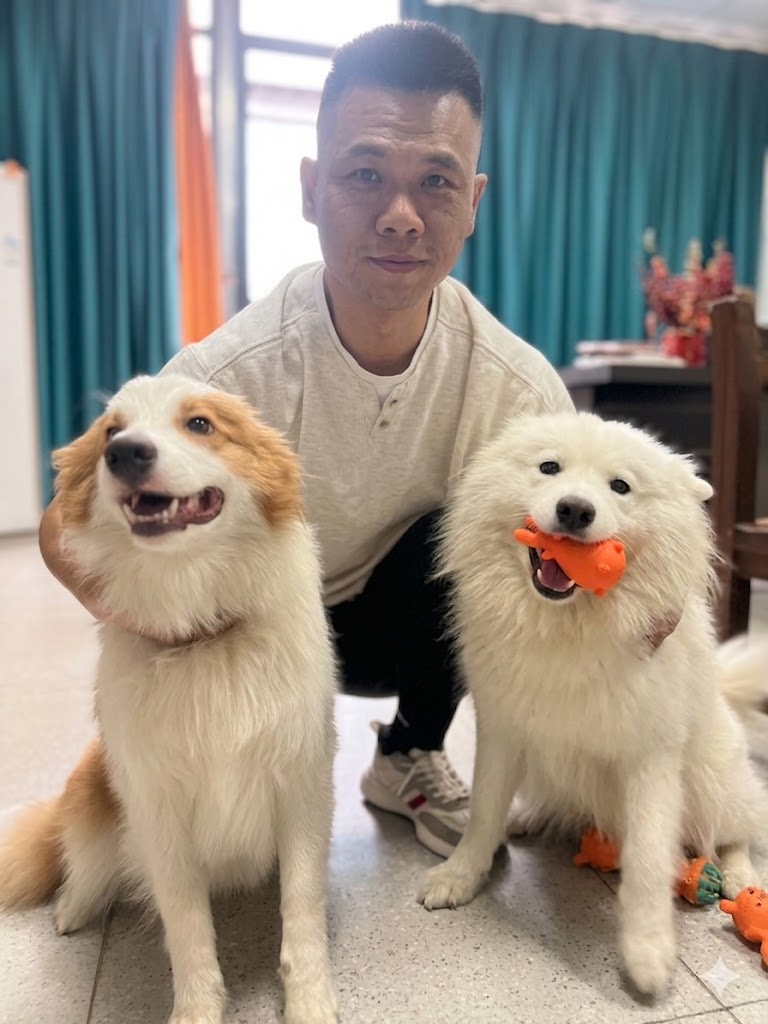
My name is Cathy, and as a customization expert for pet brands at the qqpets fabriek, I speak with entrepreneurs like you every single day. I have seen the excitement in your eyes when you describe your unique brand vision. I have also seen the doubt that follows, a doubt born from the old, intimidating way of manufacturing. I am here to tell you that the process has been completely transformed by technology1. Creating your own line of custom collars is no longer a privilege reserved for massive corporations with huge budgets2. The entire procedure has been simplified. It has been made accessible. It has been designed for you, the online brand creator. Let’s walk through the new, easy process together.
How can you create a one-of-a-kind design to make your brand stand out?
You know that a unique design is key3, but you are not a graphic designer and can't afford to hire one. You are afraid your brand will be forced to use the same generic patterns everyone else is selling, making it impossible for your custom collars to get noticed.
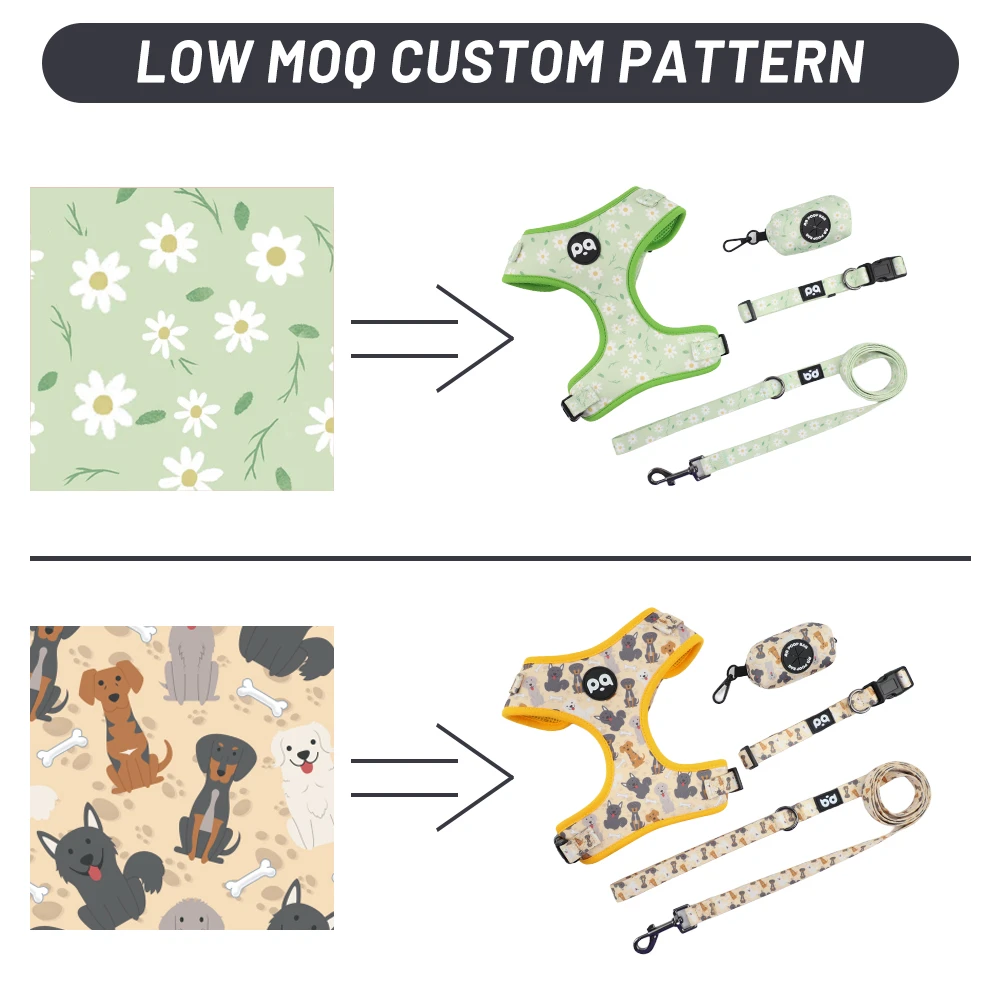
You can create a completely original, professional-quality design in minutes without any artistic skill4. A modern factory partner provides you with a free AI pattern generator, allowing you to turn your simple ideas into unique Aangepaste patronen instantly.
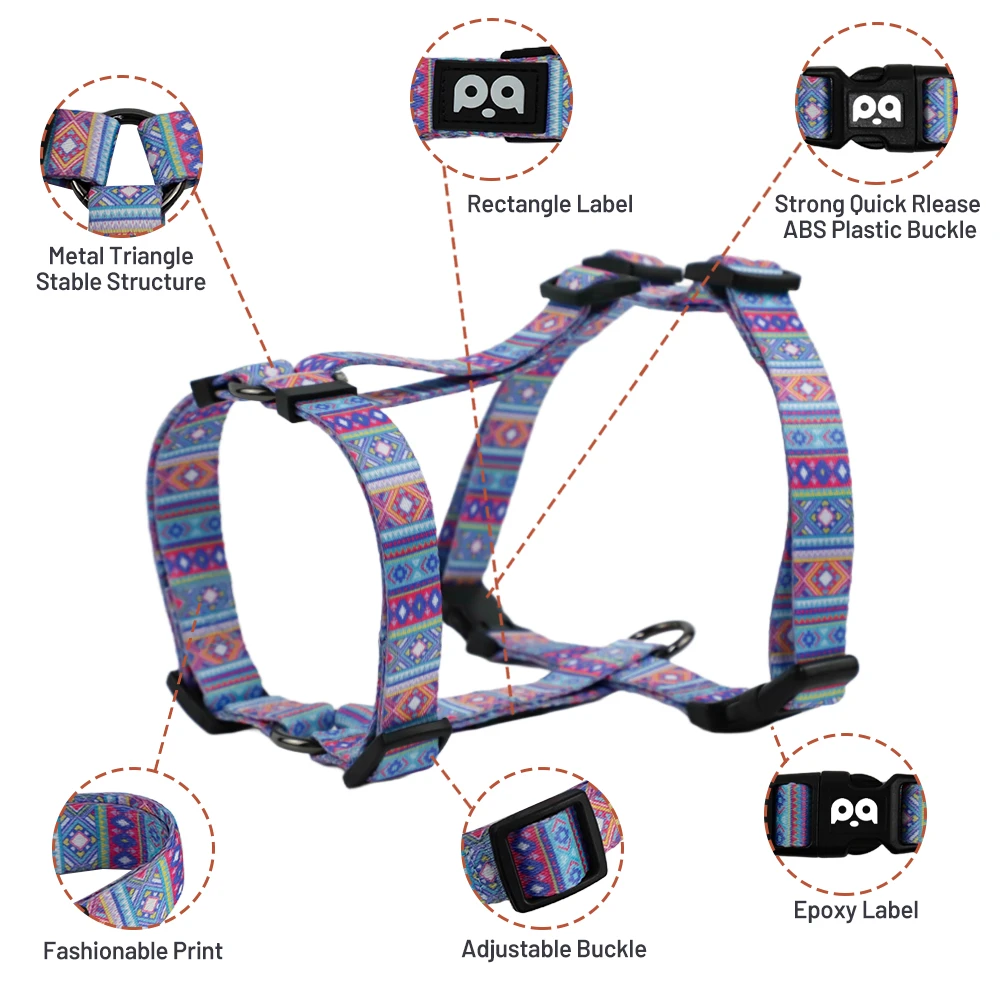
This is the first and most critical step in building a memorable brand: differentiation. In the pet product space, your pattern is your identity5. We recognized that the traditional design process was the biggest barrier for new brands. That is why we invested in making it obsolete. As a true customization expert, we don't just offer you a product; we offer you creative power. Our system gives you two amazing, free paths to a unique design. First, you can explore our private library of over a thousand professionally designed, market-tested patterns that are ready for you to use. Second, and this is what makes our partners so successful, you can use our revolutionary AI Pattern Generator. You simply type in a text description of your idea—for example, "dinosaur fossils on a blue background for a boy's dog" or "art deco gold and green pattern"—and our AI will generate dozens of original designs6 just for you. This technology ensures that your brand can be truly one-of-a-kind.
Your Design Studio: From Thought to Fabric
Let's look at how easy it is to become your brand's lead designer.
| Design Method | The Process | Why It's a Game-Changer for Your Brand |
|---|---|---|
| Our Exclusive Pattern Library | Browse our curated library of 1000+ proprietary designs, select your favorites, and apply them to your collection. | Instantly create a diverse product line with patterns that are proven to be popular with pet owners, at no design cost. |
| Our AI Pattern Generator | In our design system, type a simple text prompt describing the pattern you imagine. The AI generates unique options in seconds. | Achieve ultimate brand differentiation. You can create endless, 100% original patterns that no competitor has, ensuring every new design is a new product launch. |
How can you be sure the final product will look exactly like your design?
You have a perfect design in your head, but you are terrified of the "lost in translation" moment. You are anxious that the factory won't understand your vision, the pattern will be scaled incorrectly, or the logo will be in the wrong place, leaving you with a costly order that you can't sell.
You can be 100% confident in the final look by using a free, interactive 3D mockup system7 before placing any order. This tool lets you act as the designer, applying your pattern and logo to a photorealistic 3D model and approving the final look yourself, ensuring perfect translation from screen to product.
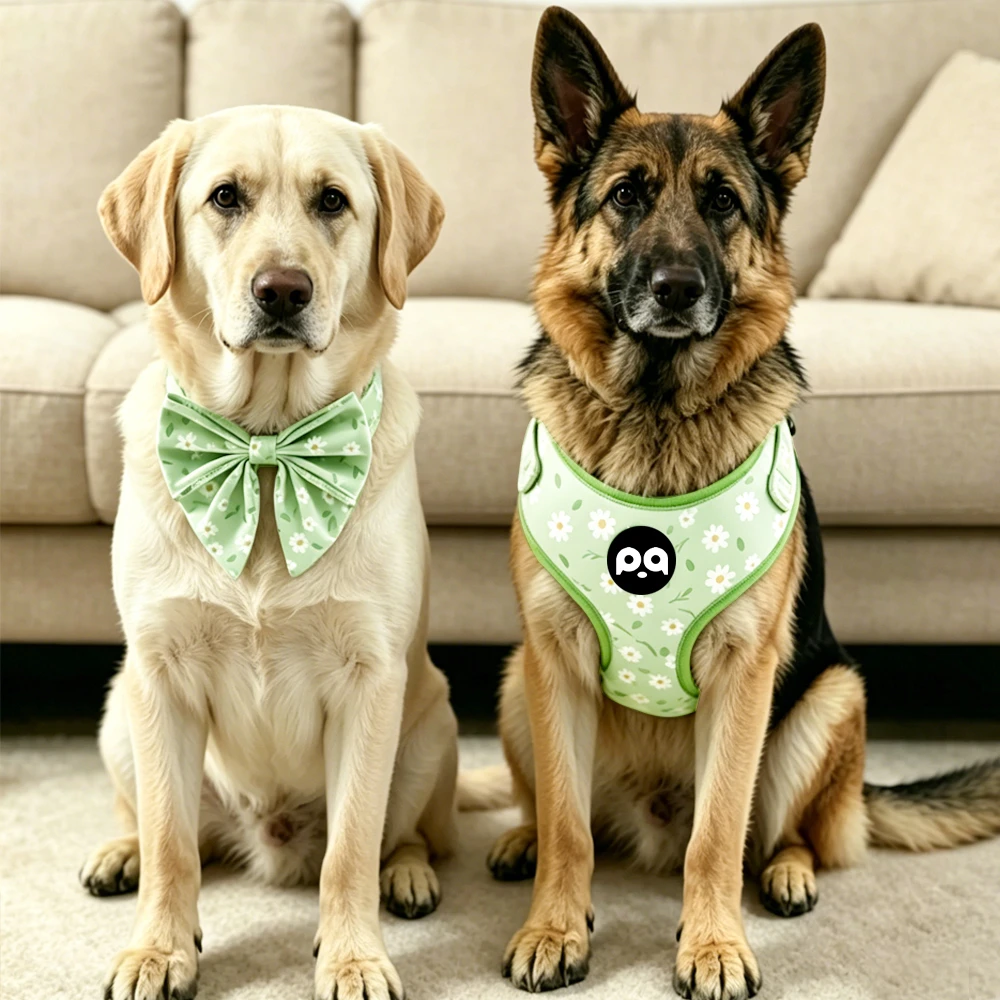
This stage is all about eliminating risk and building confidence8. This is the core of our promise: "Mockup in seconds. Sample in 3 Days." The old process of sending PDF proofs back and forth was slow and left too much room for error. Our solution was to build a powerful digital bridge between your vision and our production machines. We call it the 3D Mockup System, and it is your personal virtual prototyping studio. Here, you take the unique pattern you just created and apply it to a high-fidelity 3D model of the collar. You can upload your brand's logo, decide if you want a classic woven label or a rugged PVC patch, and physically drag it to the perfect spot. You can rotate the model, zoom in on the hardware, and inspect every detail9. This is not just a picture; it's an interactive blueprint. What you see and approve in this system is exactly what gets made. There are no surprises.
Your Virtual Product Approval Process
- Select Your Product: In the 3D system, start by choosing the exact collar, harness, or leash style you wish to create.
- Apply Your Pattern: Upload or select the unique pattern you've chosen. Watch it instantly wrap around the 3D model. Adjust scale and position as needed.
- Place Your Brand: Upload your logo file. Choose your label type (woven/PVC) and position it precisely on the product.
- Confirm Every Detail: Rotate the model 360 degrees. Check the look of the buckle, the D-ring, the stitching, and how your pattern repeats.
- Save and Approve: Once you are completely satisfied, you save the design. This saved file becomes the direct instruction for creating your physical sample.
How do you go from a design to a sellable product without a huge investment?
Your design is perfect and approved, but now comes the part that terrifies most small business owners: the financial commitment. You are worried about being forced into a massive Minimum Order Quantity (MOQ)10, sinking your entire budget into one product, and facing uncertain quality and long lead times.
You can launch your brand with a tiny investment thanks to a "lightweight customization" model. This process involves a fast and affordable physical sample for approval, followed by a production order with a very low MOQ of just 50 pieces, all backed by quality guarantees and stable delivery times.
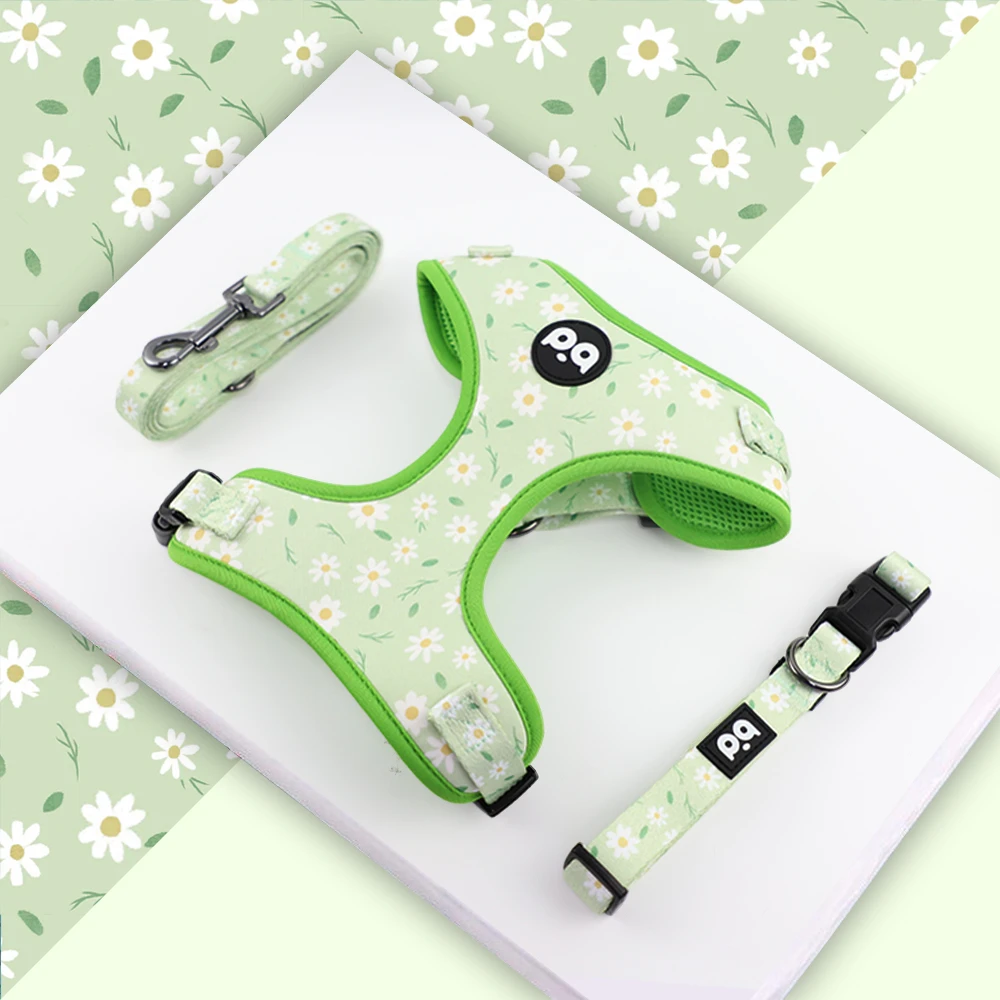
This final step is what separates a true factory partner from a simple supplier. We built our entire factory and business model to serve the needs of modern online brand sellers. We understand that agility and cash flow are your lifeblood11. After you approve your 3D design, we activate our "Sample in 3 Days" promise, getting a physical product in your hands for final approval with incredible speed. Then, the most important part: we do not require a huge, risky order. Our industry-disrupting MOQ of only 50 pieces per size and design changes the entire game. This means you can launch a full collection of five different designs for less than the old cost of launching just one. It allows you to test the market12, see what your customers love, and then reinvest in your winning designs. This entire process is safeguarded by our professional quality control team, who inspects your order before it ships, and our stable production lines that give you the reliable delivery schedule you need to build trust with your own customers.
The Modern Production Model: Minimizing Risk, Maximizing Growth
Let's compare the old way with the new, smarter way to launch a brand.
| Production Stage | The Old, High-Risk Factory Model | The qqpets Lightweight Customization Model |
|---|---|---|
| Physical Sample | Weeks or months to receive, often very expensive. | Fast and affordable. We get it to you in days so you can approve quality. |
| Minimum Order Quantity | 1,000 to 5,000+ pieces. Ties up all your capital. | Just 50 pieces. Allows you to launch multiple products and test your market with minimal risk. |
| Kwaliteitsborging | A gamble. You find out about problems when you receive the bulk order. | Guaranteed. A dedicated team inspects your order before it leaves our factory. We provide certifications. |
| Your Role | You are a small customer trying to manage a large, inflexible supplier. | You are our partner. We provide the tools and flexible support for you to succeed. |
The process to create your own brand is no longer a secret or a risk. It's a clear, simple, and exciting path. Are you ready to start your journey? Contact our team of experts today and let's build your brand together.
Conclusie
The process to create your own custom dog collars is simple: use AI to design, a 3D system to visualize, and a low-risk, 50-piece MOQ to launch your brand successfully.
"The relationship between mass customization and sustainable ...", https://pmc.ncbi.nlm.nih.gov/articles/PMC10950661/. Research on Industry 4.0 and mass customization describes how digital design, data exchange, and flexible production technologies have changed manufacturing workflows and enabled more individualized products; this supports the broader technological context rather than this factory’s specific process. Evidence role: historical_context; source type: paper. Supports: Technology has transformed the process of creating custom manufactured products.. Scope note: Contextual support only; it does not verify the vendor’s own workflow or performance claims. ↩
"The relationship between mass customization and sustainable ...", https://pmc.ncbi.nlm.nih.gov/articles/PMC10950661/. Scholarly work on digital fabrication and mass customization notes that digital tools can reduce entry barriers for smaller firms by lowering design and prototyping costs; this is contextual evidence and does not prove that all small brands can launch affordably. Evidence role: general_support; source type: paper. Supports: Digital tools have made custom product development more accessible to smaller businesses.. Scope note: The source would support the general trend, not the exact affordability of custom dog-collar production. ↩
"Linking product design to consumer behavior: the moderating ...", https://pmc.ncbi.nlm.nih.gov/articles/PMC5957053/. Marketing and product-design research links product differentiation and distinctive visual design with brand recognition and consumer evaluation; the evidence supports the general importance of design, not any specific collar pattern’s market success. Evidence role: expert_consensus; source type: paper. Supports: Unique design can be important for brand differentiation and market recognition.. Scope note: Contextual support only; it does not validate a particular design strategy for this product category. ↩
"Text-to-image Diffusion Models in Generative AI: A Survey", https://arxiv.org/abs/2303.07909. Studies of text-to-image generative AI describe systems that convert natural-language prompts into images, indicating that users can generate visual concepts without manually drawing them; this does not establish professional quality in every output. Evidence role: mechanism; source type: paper. Supports: Generative AI can let users create visual designs from text prompts without traditional drawing skills.. Scope note: Supports the mechanism of prompt-based image generation, not the quality or originality of every design produced. ↩
"Package design as a branding tool in the cosmetic industry", https://pmc.ncbi.nlm.nih.gov/articles/PMC9123395/. Branding research shows that visual identity elements such as color, pattern, and graphic style contribute to brand recognition and meaning; this supports the principle, while the application to pet collars is inferential. Evidence role: general_support; source type: paper. Supports: Visual patterns can function as part of a brand’s identity.. Scope note: The evidence is likely to concern visual branding broadly, not specifically dog collars. ↩
"Automated Prompt Generation for Creative and ...", https://arxiv.org/html/2509.21375v1. Technical literature on diffusion-based text-to-image models documents that such systems can generate multiple image variations from a single textual prompt; originality is model- and data-dependent and may require separate intellectual-property review. Evidence role: mechanism; source type: paper. Supports: AI image-generation systems can create multiple design variations from text prompts.. Scope note: Supports the capability to generate multiple variations, not a guarantee of legal originality or exclusivity. ↩
"A Content Analysis of 3D Virtual Prototyping and Zero- ...", https://scholarworks.calstate.edu/downloads/sn00b389v. Virtual prototyping literature defines computer-based 3D models as tools for evaluating product form and features before physical production; this supports the use of 3D mockups as a product-development method, not the accuracy of any one platform. Evidence role: definition; source type: paper. Supports: A 3D mockup system can function as a virtual prototyping tool before manufacturing.. Scope note: Does not verify the vendor’s specific 3D mockup system. ↩
"A virtual prototyping system for rapid product development", https://www.sciencedirect.com/science/article/abs/pii/S0010448503001106. Engineering design studies report that virtual prototyping can help identify design issues earlier and reduce reliance on physical prototypes; this supports risk reduction in general, not complete elimination of production risk. Evidence role: mechanism; source type: paper. Supports: Virtual prototyping can reduce product-development risk by allowing review before physical production.. Scope note: The evidence supports risk reduction, not the absolute claim that risk is eliminated. ↩
"From Words to Worlds: Exploring Generative 3D Models in ...", https://pmc.ncbi.nlm.nih.gov/articles/PMC11937759/. Research on 3D visualization and interactive product configuration describes how users can manipulate digital models to examine geometry, components, and appearance before manufacture; support is general rather than platform-specific. Evidence role: mechanism; source type: paper. Supports: Interactive 3D visualization can allow detailed inspection of a product model before production.. Scope note: Does not prove that this article’s specific interface includes every described function. ↩
"Minimum Order Quantity (MOQ): What It Means, Calculation ...", https://www.finaleinventory.com/guides/minimum-order-quantity-moq/. Supply-chain and procurement references define minimum order quantity as the smallest quantity a supplier will accept for an order, providing context for why MOQ affects purchasing commitments. Evidence role: definition; source type: education. Supports: MOQ refers to the minimum number of units that must be ordered from a supplier.. Scope note: A definition source will not verify the stated 50-piece MOQ. ↩
"The Effect of Cash Flow Problems and Resource Intermingling ...", https://pmc.ncbi.nlm.nih.gov/articles/PMC7494977/. Small-business finance sources consistently identify cash-flow management as a major determinant of business survival, supporting the claim that cash flow is critical for small sellers; agility is a related but broader managerial concept. Evidence role: expert_consensus; source type: government. Supports: Cash flow is especially important for small businesses and new sellers.. Scope note: Directly supports the cash-flow portion more strongly than the agility portion. ↩
"Assessment of Minimum Viable Product Techniques", https://pdxscholar.library.pdx.edu/cgi/viewcontent.cgi?article=2178&context=etm_studentprojects. Entrepreneurship literature on lean startup methods emphasizes testing product assumptions with limited releases or minimum viable products before scaling; this supports the general rationale for small-batch market testing, not the success of any particular collar launch. Evidence role: expert_consensus; source type: paper. Supports: Small initial production runs can help entrepreneurs test market demand before committing to larger orders.. Scope note: Contextual support only; it does not prove that a 50-piece batch is the optimal test size. ↩