 NL
 EN
 FR
 RU
 DE
 AR
 ES
 PT
 IT
 PL
 SL
 ET
 RO
 CS
 EL
 LV
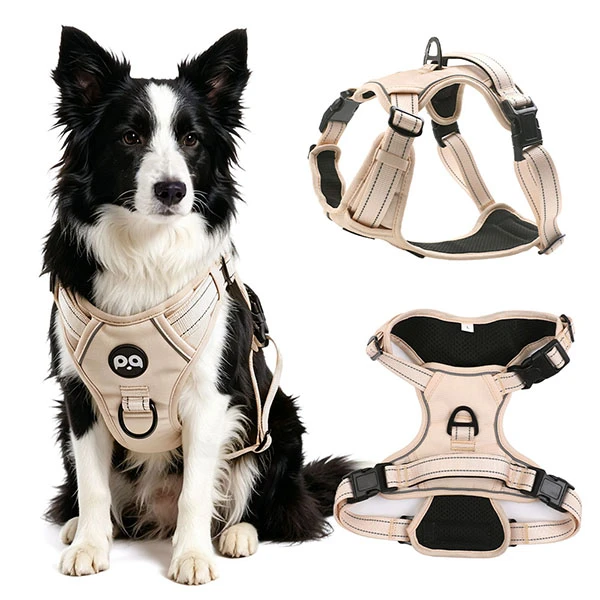
You’ve received your **dog collar and lead samples**, but now the pressure is on. Approving a flawed sample means committing to a bulk order that could ruin your brand’s reputation.
To properly evaluate a sample, you must perform a series of visual and physical stress tests. This includes checking print quality, material feel, stitching strength, hardware safety, and branding execution to ensure it meets retail standards.

My name is Cathy, and I’m a customization expert at the [qqpets factory](https://www.qqpets.com/). I know the feeling of excitement mixed with anxiety when that first sample package arrives. It represents the physical culmination of your brand vision. However, this is also the most critical checkpoint. A great digital design is meaningless if the physical product is subpar. Approving this sample is your final sign-off, your guarantee to your future customers. Overlooking a small detail at this stage can lead to big problems—like [negative reviews, costly returns](https://people.bu.edu/nachi/pdf/ProductReturnsWISE2013.pdf)[^1], and a warehouse full of unsellable inventory. That’s why our “**Sample in 3 Days**” promise is so essential; we get a production-grade sample into your hands quickly so you can perform a thorough, confident evaluation. This guide outlines the exact steps you should take to ensure the sample in your hand is the key to a successful bulk order.
### 1. Does the Physical Sample Perfectly Match Your Digital Design?
You spent time creating a unique pattern, but you’re worried the sample will have dull colors or a blurry print. A mismatch between your design and the final product can kill your brand’s credibility.
Your first step is a side-by-side comparison. The sample’s colors and pattern clarity must be identical to the digital mockup you approved. This verifies the supplier’s technical capability to execute your vision accurately.

Before you test for strength, you must test for accuracy. This is the moment where your digital creation becomes a tangible reality. The incredible power of our free **[3D Mockup System](https://qqpets.com/3d-mockup/)** is that it sets a crystal-clear expectation. The “**Mockup in seconds**” feature, where you used our AI to generate a unique **Custom Pattern**, gave you a precise, photorealistic preview. Now, your job is to hold the manufacturer accountable to that preview. Lay the physical sample directly next to your screen. Check these key points:
* **Color Fidelity:** Is the “deep ocean blue” in your design the exact same shade on the webbing? We use precise Pantone color codes in our [dye-sublimation](https://makingcenter.parsons.edu/wp-content/uploads/2016/09/DyeSub_2024_Oct.pdf)[^2] process to ensure what you see is what you get. Any significant color deviation is a major red flag about the supplier’s quality control.
* **Pattern Clarity & Scale:** Are the fine details of your AI-generated pattern crisp and clear? If you designed a pattern with small elements, are they sharp or are they blurry? Is the scale of the pattern correct? A professional manufacturer can replicate your digital file with 1:1 accuracy.
This first visual check is critical. If a supplier can’t even get the look right, you can’t trust them with the more important safety and durability aspects.
#### **Tertiary Heading: The Print Durability Test**
| Test | What to Do | What a Good Sample Shows | What a Bad Sample Shows |
| :— | :— | :— | :— |
| **Scratch Test** | Vigorously scratch the printed area with your fingernail. | **Nothing.** The color is infused into the fabric (dye-sublimation) and cannot be scratched off. | Flakes of color or ink come off. This is a cheap surface print. |
| **Water Test** | Soak a portion of the sample in water for a few minutes. | **Nothing.** The colors do not bleed or run. The print remains vibrant. | The water becomes discolored, or the colors bleed into each other. |
### 2. How Do You Test for Real-World Safety and Durability?
The sample looks nice, but your biggest fear is a product failure. You imagine a buckle snapping or a D-ring pulling open, which could have disastrous consequences for a customer’s pet.
You must manually stress-test all critical hardware and stitching. This means forcefully pulling on D-rings, testing the buckle mechanism repeatedly, and trying to separate the webbing at every joint.

A pet product’s primary function is to be safe. Your evaluation must now shift from aesthetics to engineering. This is where you have to be tough on the sample, because you can be sure [a strong, excited dog](https://pubmed.ncbi.nlm.nih.gov/41499011/)[^3] will be. A product’s integrity is found in its [weakest points](https://web.njit.edu/~sengupta/met%20301/Stress%20Concentration.pdf)[^4], so that’s where you need to focus your inspection.
* **Test the Stitching:** Locate the stress points—anywhere hardware is attached to the webbing. A quality sample will have [reinforced “box stitching”](https://backpackinglight.com/forums/topic/91271/)[^5] (a square with an X inside) or dense “bar tacking.” Grab the webbing on either side of the D-ring and pull. Pull hard. Do you see any stitches stretching or threads snapping? There should be zero give.
* **Test the Hardware:** First, check the D-ring. It absolutely must be **welded shut**. If you see a tiny gap where the metal was just bent into a ‘D’ shape, reject the sample immediately. That gap is a point of failure. Next, operate the buckle. Click it open and closed 20-30 times. It should feel secure and robust, not flimsy. The action should be smooth, without sticking.
* **Test the Webbing:** The webbing material itself is core to the product’s quality. It should feel both strong and soft. This is characteristic of the high-density polyester we use. It provides the strength needed for safety but is soft enough to prevent chafing on a dog’s neck or skin. A webbing that feels thin, plasticky, or overly stiff is a sign of a low-cost material that will lead to customer complaints.
### 3. Does the Sample Look and Feel Like a Premium Branded Product?
The sample is strong, but it lacks refinement. The logo is slightly crooked, and the cut edge of the webbing looks like it could fray. These small imperfections can make your brand look amateurish.
You must inspect the “finishing details” with the eyes of your most discerning customer. This includes the logo’s placement and quality, the smoothness of all edges, and the functionality of adjustment points.

Once you’ve confirmed the sample is safe and accurate, the final evaluation is about brand perception. This is what separates a generic product from a premium one that can command a higher price and build brand loyalty. You need to scrutinize every detail that your customer will see and touch.
* **Logo Execution:** Your logo is your brand’s signature. Whether you chose a modern PVC patch or a classic woven label, it must be perfect. Is it stitched on neatly? Is it perfectly centered? Is the logo itself crisp and well-defined? A sloppy logo application instantly devalues the entire product.
* **Edges and Finishing:** Look at the end of the collar or lead. The webbing should be cleanly cut and heat-sealed to prevent any possibility of fraying. Run your finger along all the edges of the product. There should be no loose threads or rough spots. This attention to detail communicates quality.
* **Adjustability:** If it’s a collar or harness, test the adjustment sliders. They should glide smoothly along the webbing to allow for easy sizing, but also have enough friction to hold their position firmly once set. A slider that is too loose will slip during use, and one that is too tight will be a point of frustration for the owner. Our low MOQ of 50 pieces allows you to test different sizes and ensure the adjustability is perfect across your entire range.
Ready to receive a production-grade sample you can evaluate with confidence? **[Contact us today](https://www.qqpets.com/contact-us/)** and let’s get started on your risk-free launch.
### Conclusion
A rigorous sample evaluation is your final quality control checkpoint. By testing for design accuracy, durability, and premium finishing, you protect your investment and guarantee a successful product launch.
—
[^1]: “The Impact of Online Product Reviews on Product Returns …”, https://people.bu.edu/nachi/pdf/ProductReturnsWISE2013.pdf. Research on product returns and online word-of-mouth indicates that perceived product quality and product failure can contribute to returns and unfavorable consumer reviews. Evidence role: general_support; source type: paper. Supports: Overlooking defects at the sample stage can lead to negative reviews and costly returns.. Scope note: The evidence would support the general relationship between product quality, returns, and reviews, not the specific outcomes of any one collar or lead order.
[^2]: “DYE SUBLIMATION FILE SETUP GUIDE”, https://makingcenter.parsons.edu/wp-content/uploads/2016/09/DyeSub_2024_Oct.pdf. Textile-printing references describe dye-sublimation as a process in which disperse dyes transfer into polyester fibers under heat, producing prints that differ from surface-applied inks. Evidence role: definition; source type: education. Supports: Dye-sublimation infuses color into polyester fabric rather than leaving only a surface print.. Scope note: This defines the mechanism of dye-sublimation but does not independently prove the durability of the particular sample under inspection.
[^3]: “Assessment of Dog-Leash Pulling Force and the Impact of …”, https://pubmed.ncbi.nlm.nih.gov/41499011/. Veterinary and animal-behavior sources note that dogs can generate substantial pulling forces during leash walking, making restraint equipment subject to significant mechanical loads. Evidence role: general_support; source type: education. Supports: Collars and leads may experience high loads from a strong or excited dog, justifying stress testing.. Scope note: The expected force varies widely by dog size, behavior, speed, and handler technique, so a source would contextualize rather than set a universal test force.
[^4]: “Stress Concentration Caused by Sudden Change in Form”, https://web.njit.edu/~sengupta/met%20301/Stress%20Concentration.pdf. Mechanical-design references describe failure as often initiating at stress concentrations, joints, seams, or material discontinuities where loads are concentrated. Evidence role: mechanism; source type: education. Supports: A collar or lead should be inspected at its weakest points, especially joints and attachment areas.. Scope note: This supports the engineering principle behind inspecting joints and attachment points; it is not specific to pet collars unless paired with product testing data.
[^5]: “LOAD BEARING, STRAIGHT STITCH, SMALL SPACES”, https://backpackinglight.com/forums/topic/91271/. Sewn-product engineering sources describe reinforced stitch patterns, including box-X and bar-tack constructions, as methods used to distribute load and strengthen webbing attachments. Evidence role: mechanism; source type: education. Supports: Reinforced box stitching or bar tacking is an appropriate feature to inspect at load-bearing webbing attachments.. Scope note: The source would explain the construction principle; actual strength still depends on thread, stitch density, material, and manufacturing quality.