 RU
RU  EN
EN  FR
FR  DE
DE  AR
AR  ES
ES  PT
PT  IT
IT  NL
NL  PL
PL  SL
SL  ET
ET  RO
RO  CS
CS  EL
EL  LV
LV 
How to start a brand with custom collars for small dogs?
You have a dream to start a brand with custom collars for small dogs, but you are frozen by the cost and complexity. You believe you need a huge budget for designers, inventory, and marketing, making it feel completely out of reach.
The best way to start is by partnering with a modern, tech-focused factory. This allows you to create professional, unique designs for free, verify your product without risk, and launch your brand with a tiny, affordable initial order.
My name is Cathy, and as a pet traction customization expert at the Фабрика qqpets, my favorite part of the job is helping new entrepreneurs turn their ideas into real, successful brands. I have seen so many people with incredible passion for pets get stuck. They believe the old rules still apply: that you need to be rich to start a product business. That is simply not true anymore. The entire manufacturing process has been revolutionized by technology. You no longer need a massive upfront investment. You just need a great idea and the right partner to help you execute it. This guide is your step-by-step roadmap. I will walk you through the new, smarter way to launch your dream brand, showing you how to overcome the three biggest hurdles: design, risk, and cost.
How can you create unique product designs with no budget?
You need beautiful, eye-catching designs to stand out in the crowded pet market1, but you have zero budget to hire a professional graphic designer. You are worried you will be stuck using the same generic, free patterns that a hundred other brands are already using.
You can create an infinite library of professional, exclusive designs for free by using your factory partner's integrated creative tools. This includes an AI Pattern Generator2 and a massive library of ready-to-use, exclusive patterns, giving you unlimited creative fuel for your brand.
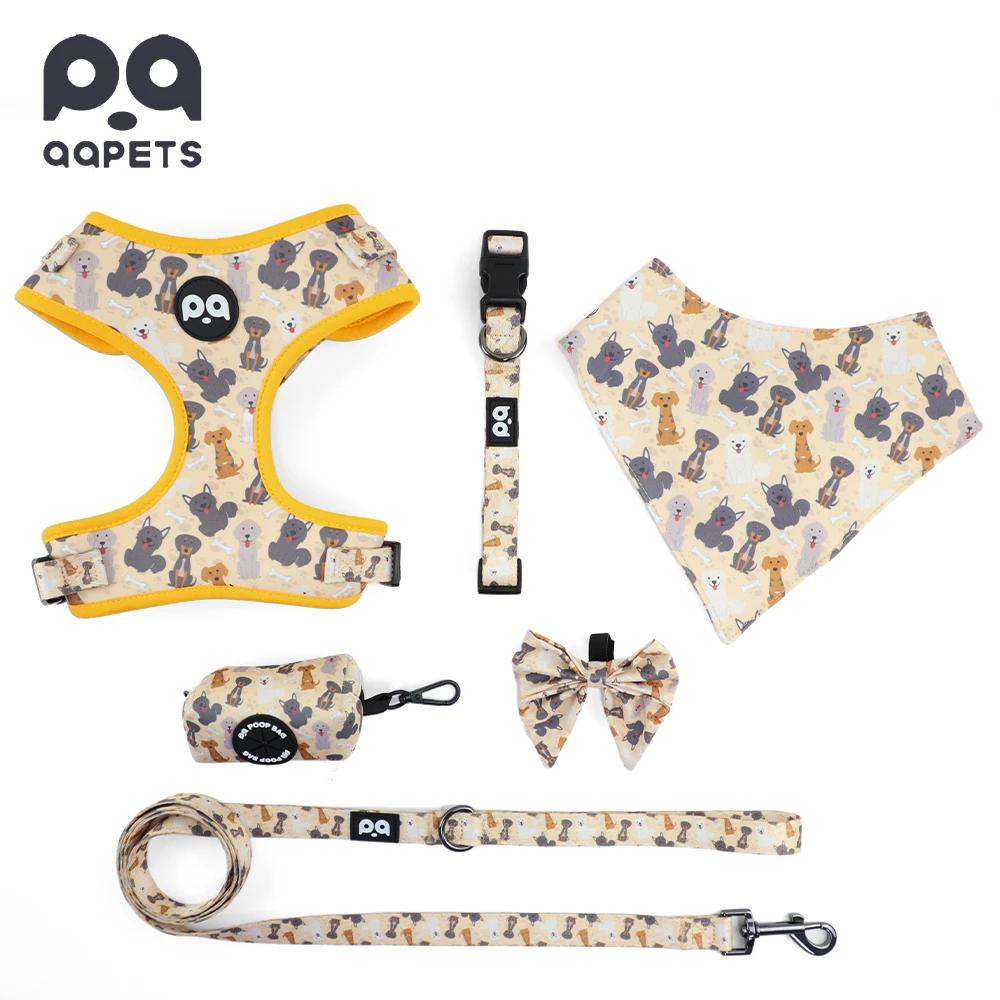
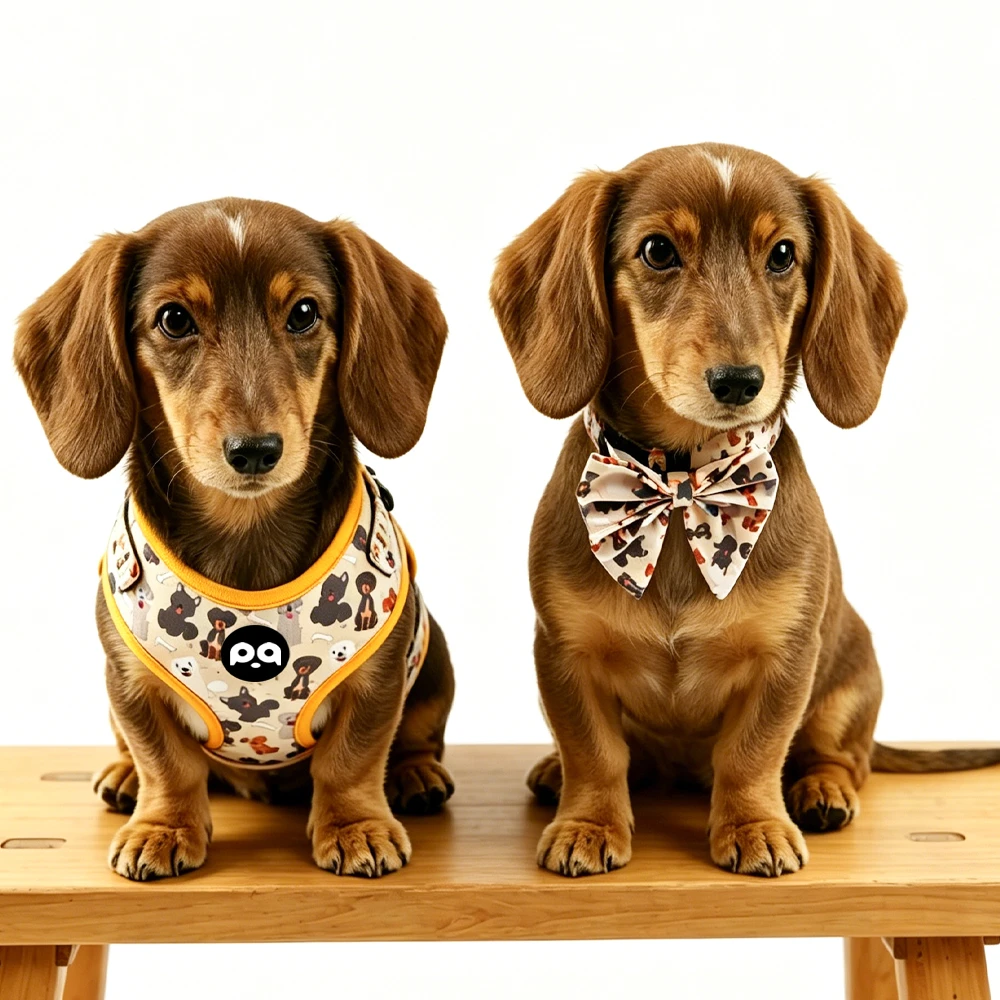
For a small dog brand, the pattern on the collar is everything. It is your brand's first impression3. It is the visual hook that makes a customer stop scrolling4 and fall in love with your product. In the past, creating these Пользовательские узоры was the first major roadblock for new brands because it was so expensive. We have removed that barrier completely. We believe great design should be accessible to everyone, so we built a creative suite for our partners that is completely free to use. You can use our incredible AI Pattern Generator to act as your personal designer. Just type in an idea, like "cute corgis floating in space" or "a vintage floral pattern with daisies," and the AI will generate unique, seamless patterns5 for you in seconds. If you need more inspiration, you can browse our private library of over a thousand exclusive patterns, curated by our design team. This technology allows you to build a diverse and unique product catalog before you have even spent a penny.
The Design Process: Old vs. New
| Stage | The Old, Expensive Way | The New, qqpets Way |
|---|---|---|
| Idea Generation | Brainstorm, then pay a designer to create it. | Brainstorm, then use the free AI to generate it instantly. |
| Cost | £50 - £200+ per single design. | £0. Create unlimited designs for free. |
| Time | Days or weeks to get a final design. | Seconds. |
| Result | You can afford maybe 1-2 designs to start. | You can create a whole collection of 20+ designs to choose from. |
How do you turn a design into a real product without risk?
You have a design you love, but now you face the scariest part: sending money to a factory overseas6. You are terrified you will get back a product that looks nothing like your design, has poor quality, or is just plain wrong, and your money will be gone.
You eliminate all production risk by using a factory's transparent, three-step verification process. This includes a free digital mockup for instant approval, a physical sample to hold and test, and an ISO 9001 certified quality control system overseeing production.
The fear of "getting it wrong" is what stops most new brands. This is why we created our "no surprises" production process, which is built around our promise: "Mockup in seconds. Sample in 3 Days." It is designed to give you complete confidence.
Step 1: See It Instantly in 3D. You will use our powerful and free 3D Mockup System. This is not just a flat picture. It is an interactive, photorealistic digital twin7 of your collar. You can apply your custom pattern, spin it around 360 degrees, zoom in on the stitching, change the hardware from black plastic to rose gold metal, and add your brand's logo. You approve the final look here. What you see is what we will make.
Step 2: Hold It in Your Hands. Once you approve the 3D model, we create and mail you a physical sample. This is the most crucial step for peace of mind. You get to feel the soft, durable webbing. You can test the click of the buckle. You can see the vibrant colors of your pattern in real life. You only give us the green light for full production after you have held this perfect sample in your hands and given your 100% approval. There is zero ambiguity and zero risk of getting a bad product.
How can you launch your brand without buying thousands of units?
You have a perfect design and a perfect sample, but now the factory is asking for a Minimum Order Quantity (MOQ) of 1,000 pieces. This would cost a fortune and is far too much risk for a new brand. You feel like you have hit a final, impossible wall.
You can launch your brand with minimal investment by partnering with a factory that specializes in "lightweight customization." This means you can place an order for as few as 50 pieces per design, allowing you to test the market8 and grow your brand organically.

The high MOQ of traditional manufacturing is the silent killer of new brands. It forces you to gamble your entire budget on one product, creating massive financial risk. We built our business to serve the next generation of online sellers, and that means we killed the high MOQ. Our model is built on agility and partnership. We offer an industry-leading low MOQ of just 50 pieces per size and pattern. This is more than just a number; it is a completely different business strategy that empowers you. Instead of ordering 500 units of a single "safe" design, you can now order 50 units each of 10 different, more creative designs for the exact same investment. You are not guessing what will be a bestseller; you are letting your customers tell you. You can launch a wide, exciting collection, see what sells out, and then confidently re-order your winners. This low-risk, data-driven approach is the secret to building a sustainable and profitable brand in today's market.
Launch Strategy: The Old Gamble vs. The Smart Test
| Metric | The Old High-MOQ Gamble | The New 50-Piece Smart Test |
|---|---|---|
| Initial Order | 500+ units of 1 design. | 50 units each of 10 different designs. |
| Financial Risk | Extremely High. One failed product can bankrupt you. | Extremely Low. Unpopular designs are a small, manageable loss. |
| Product Diversity | You have one product. | You have a full collection of 10 products. |
| Market Feedback | You either win or lose big. | You gather data on 10 products to see what works. |
Starting your dream brand is no longer a dream. It is a clear, low-risk, and affordable process. We provide the tools, the technology, and the partnership to make it happen. Ready to take the first step? Contact our expert team today.
Заключение
Start your small dog collar brand easily by using free AI design tools, a risk-free 3D mockup and sampling process, and a low 50-piece MOQ to launch a diverse collection.
"Report Name:Consumer Spending on Premium Pet Foods ...", https://apps.fas.usda.gov/newgainapi/api/Report/DownloadReportByFileName?fileName=Consumer%20Spending%20on%20Premium%20Pet%20Foods%20Expected%20to%20Grow%20_Hong%20Kong_Hong%20Kong_HK2024-0041. Industry market data from a neutral trade or government source documents the scale and growth of the pet-products sector, providing context for the claim that new pet accessory brands face a competitive market. Evidence role: statistic; source type: institution. Supports: The pet market is crowded and new collar brands need differentiation.. Scope note: Market-size data supports competitive context but does not directly measure the number of small-dog collar brands. ↩
"Text-to-image Diffusion Models in Generative AI: A Survey", https://arxiv.org/abs/2303.07909. Technical literature on text-to-image generative models explains how prompt-based AI systems can synthesize novel images and repeating visual motifs, supporting the feasibility of AI-assisted pattern generation. Evidence role: mechanism; source type: paper. Supports: Prompt-based AI tools can generate visual patterns that may be used as starting points for product design.. Scope note: General generative-AI research supports the mechanism but does not verify the capabilities of any specific factory tool. ↩
"Effects of Design Aesthetics on the Perceived Value of a Product", https://pmc.ncbi.nlm.nih.gov/articles/PMC8359925/. Consumer-behavior research on visual product appearance and packaging shows that visual design can influence initial attention and purchase evaluation, supporting the role of collar pattern as an early brand cue. Evidence role: mechanism; source type: paper. Supports: The collar pattern can function as an important first impression for a small dog collar brand.. Scope note: Such studies usually examine consumer goods broadly rather than dog collars specifically. ↩
"E - Wikipedia", https://en.wikipedia.org/wiki/E. Research on visual attention in online shopping and social media environments indicates that imagery and visual salience affect whether users notice and engage with products, lending contextual support to the claim. Evidence role: mechanism; source type: paper. Supports: Eye-catching collar patterns can help attract attention in online browsing contexts.. Scope note: The evidence would be contextual because user attention studies may not be specific to pet collars or small-dog products. ↩
"Generating Infinite-Size Textures using GANs with Patch- ...", https://arxiv.org/html/2309.02340v3. Research on computational textile design and generative image systems describes methods for producing repeatable or tileable patterns, supporting the general possibility of creating seamless design assets with software. Evidence role: mechanism; source type: paper. Supports: Software and AI methods can be used to create seamless patterns for product surfaces.. Scope note: The source would support software-assisted seamless pattern generation generally, not guarantee uniqueness or commercial exclusivity for every generated output. ↩
"Global supply chains risks and COVID-19 - PMC - NIH", https://pmc.ncbi.nlm.nih.gov/articles/PMC9640425/. International trade and supply-chain literature identifies quality uncertainty, communication barriers, and supplier verification as common risks in cross-border sourcing, supporting the concern described here. Evidence role: general_support; source type: paper. Supports: New brands can face quality and supplier-verification risks when sourcing from overseas factories.. Scope note: The evidence would describe general overseas sourcing risks rather than outcomes for any individual pet-accessory factory. ↩
"Digital twins", https://www.nist.gov/digital-twins. Engineering and product-development literature describes digital twins and 3D visualization as virtual representations used to inspect, simulate, and communicate product attributes before production. Evidence role: definition; source type: research. Supports: An interactive 3D digital representation can help buyers inspect product attributes before manufacturing.. Scope note: This supports the general function of digital twins and 3D visualization, not the photorealism or accuracy of a specific mockup platform. ↩
"Why Minimum Viable Products are the Real MVP", https://businesstech.bus.umich.edu/blog/why-minimum-viable-products-are-the-real-mvp/. Lean entrepreneurship literature describes testing products with limited initial offerings or minimum viable products to gather customer feedback before scaling investment, supporting the market-testing logic. Evidence role: expert_consensus; source type: education. Supports: Small initial production runs can help entrepreneurs test customer demand before committing to larger inventory orders.. Scope note: Lean-startup evidence supports the strategy in principle, but it does not prove that a 50-piece collar order is optimal for every brand. ↩