 NL
NL  EN
EN  FR
FR  RU
RU  DE
DE  AR
AR  ES
ES  PT
PT  IT
IT  PL
PL  SL
SL  ET
ET  RO
RO  CS
CS  EL
EL  LV
LV 
Your customers with Dachshunds are constantly struggling. They buy harness after harness, but nothing fits their dog's long body and deep chest1 correctly, leading to chafing, escapes2, and constant worry about their pet's safety.
Standard harnesses fail because they are designed for dogs with average proportions, not the Dachshund's unique long spine and deep, narrow chest3. This mismatch creates dangerous pressure points4 and makes it easy for these notorious escape artists to back out and run free.
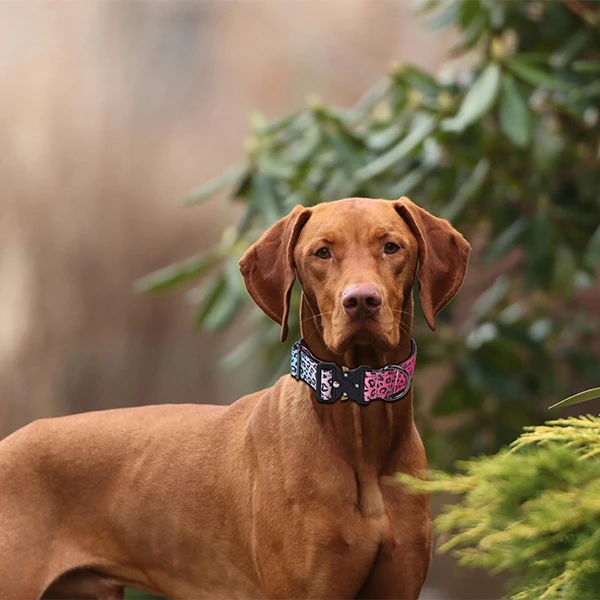
As a pet product customization expert at qqpets, this is a story I hear all the time from brands who want to serve the passionate Dachshund community. They see a huge gap in the market, but they feel powerless to fill it. They are stuck with generic products that simply don't work for this beloved breed. This is more than just a fitting issue; it's a safety issue, especially concerning the breed's predisposition to back problems like IVDD5. The great news is, creating a specialized, safe, and stylish harness for Dachshunds is not only possible but also easy and affordable when you have the right manufacturing partner.
How does a custom-fit harness protect a dachshund's unique body?
The Constant Fear of Injury
Your customers are terrified of hurting their Dachshund's delicate back. Every pull on a poorly fitting harness sends pressure to the wrong places, increasing the risk of spinal injury and turning a simple walk into a stressful event.
A custom harness is designed to protect a Dachshund's body by moving pressure off the fragile neck and spine6. The straps are positioned to sit securely around the deep chest, which is the strongest part of their body, ensuring both safety and comfort.
This is the fundamental difference between a generic product and a specialized solution. A harness that is properly designed for a "sausage dog" takes their unique anatomy into account. Instead of a "one-size-fits-all" approach, a custom solution focuses on a "one-breed-fits-best" philosophy. The structure is elongated to match their long torso, preventing the straps from digging into their sensitive armpits or riding up onto their neck7. This careful distribution of force is crucial. It means that when the dog pulls, the pressure is absorbed by their strong ribcage, not their vulnerable back8. For a Dachshund owner, a harness that provides this peace of mind isn't just a product; it's a necessity.
The Anatomy of a Perfect Fit
A harness for a Dachshund must be engineered differently. It's a matter of safety and function.
- Longer Body Straps: The strap connecting the neck and chest sections must be longer9 to prevent the harness from being too tight and restrictive along their spine.
- Deep Chest Support: The harness should wrap securely but comfortably around the deepest part of the chest, right behind the front legs10, to serve as the main anchor point.
- No-Escape Design: The fit around the chest and waist needs to be snug enough11 that even when a Dachshund plants their feet and pulls backward, they cannot wiggle out.
| Feature | Standaard harnas | Custom Dachshund Harness |
|---|---|---|
| Body Shape | Made for "square" dogs | Made for long, deep-chested dogs |
| Pressure Point | Neck and Shoulders | Evenly on the Ribcage/Chest |
| Spine Safety | Puts strain on the back | Protects the spine from strain |
| Beveiliging | High risk of escape | Secure, no-escape fit |
How can you create a unique dachshund harness brand quickly and affordably?
The Dream Feels Out of Reach
You see the massive potential in a niche brand for Dachshunds12, but you assume creating a truly custom and specialized product line is too expensive, requires massive order quantities, and involves a slow, complicated design process.
You can launch a brand quickly and affordably by partnering with a factory that specializes in "lightweight customization." Using our online 3D Mockup System, you can design and visualize your product in seconds, get a sample in days, and start with low order quantities.
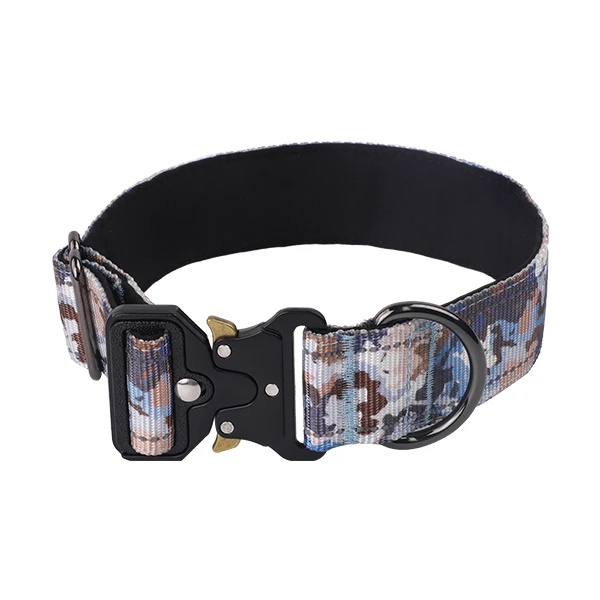
This is how we empower online sellers and boutique brands. We've removed the traditional barriers to entry. You don't need to be a massive corporation to create a high-quality, custom product line. We are a direct factory, which means we control the entire production process, ensuring stable quality and reliable delivery times. More importantly, our entire system is built for sellers like you. We understand that you need to test new ideas and serve niche markets without risking a huge amount of capital. This is why we offer a revolutionary approach to design and production that makes creating a specialized Dachshund brand not just possible, but simple.
Your Brand, Your Design, Our Factory
We provide all the tools you need to succeed.
- Design in Seconds: Onze "Mockup in seconds. Sample in 3 Days" process is a game-changer. Use our 3D Mockup System to choose a Dachshund-friendly harness style, then apply your unique Aangepaste patronen.
- Unlimited Creativity: Don't have a pattern? Use our AI Pattern Generator to create one from a simple text description, or choose from our library of thousands of free designs. A new pattern is a new product, allowing you to keep your collection fresh.
- Low-Risk Launch: You can start your specialized Dachshund harness line with a minimum order quantity (MOQ) of just 50 pieces per size and color. This allows you to test the market, get feedback, and grow your brand with confidence.
Ready to create the perfect harness for the Dachshund market? Contact our expert team today.
Conclusie
Standard harnesses fail Dachshunds by design. A custom solution protects their unique body and provides peace of mind, and our factory makes creating this perfect product simple, fast, and affordable.
"Breed-Specific Variations in Vertebral Right Heart Index (VRHi) - PMC", https://pmc.ncbi.nlm.nih.gov/articles/PMC12031339/. A breed-standard or veterinary anatomy source documents that Dachshunds are characterized by an elongated body and comparatively deep chest, supporting the anatomical premise of the fit problem. Evidence role: definition; source type: institution. Supports: Dachshunds have a long body and deep chest that can affect harness fit.. ↩
"Solving Common Dog Harness Fitting Problems", https://susanlancidesigns.com/blogs/dog-park/solving-common-dog-harness-fitting-problems?srsltid=AfmBOoqEjrxffYlb-UnWPKs8zs6joBSW1JdZ0BygwWA8jUcVasEbzX9Z. Animal-welfare or veterinary guidance on harness fitting notes that poorly fitted harnesses can rub the skin and fail to restrain the dog securely, supporting the general link between improper fit, chafing, and escape risk. Evidence role: general_support; source type: institution. Supports: Poorly fitting harnesses can lead to chafing and escape risk.. Scope note: The source would support the general mechanism of poor harness fit, not Dachshund-specific incidence rates. ↩
"Breed Standard - Dachshund Club of America", https://www.dachshundclubofamerica.org/breed-standard/. A kennel-club breed standard or veterinary reference describes the Dachshund’s elongated torso and chest conformation, supporting the claim that the breed has proportions distinct from many other dogs. Evidence role: definition; source type: institution. Supports: Dachshunds have a unique long spine and deep, narrow chest compared with average dog proportions.. Scope note: This supports the anatomical distinction, not the performance of any particular harness. ↩
"Pressure distribution under three different types of harnesses used ...", https://pubmed.ncbi.nlm.nih.gov/24360734/. Veterinary rehabilitation or animal biomechanics literature explains that harness design and fit affect pressure distribution across a dog’s body, supporting the claim that unsuitable equipment can create localized pressure areas. Evidence role: mechanism; source type: paper. Supports: A mismatched harness can create pressure points on a dog’s body.. Scope note: Such evidence usually addresses pressure distribution generally and may not prove that all standard harnesses create dangerous pressure points in Dachshunds. ↩
"Evaluation of intervertebral disc degeneration in young adult ... - PMC", https://pmc.ncbi.nlm.nih.gov/articles/PMC10523717/. Veterinary references identify Dachshunds as a chondrodystrophic breed with a high predisposition to intervertebral disc disease, supporting the claim that spinal health is a breed-specific concern. Evidence role: expert_consensus; source type: government. Supports: Dachshunds are predisposed to back problems such as intervertebral disc disease.. ↩
"Pressure and force on the canine neck when exercised using ... - PMC", https://pmc.ncbi.nlm.nih.gov/articles/PMC7386734/. Veterinary or animal-welfare guidance comparing collars and harnesses explains that harnesses can distribute leash forces over the torso rather than concentrating them on the neck, supporting the stated pressure-distribution rationale. Evidence role: mechanism; source type: institution. Supports: A well-designed harness can move leash pressure away from the neck and spine.. Scope note: This supports the general benefit of appropriate harness use; it does not demonstrate that the specific custom harness described reduces spinal injury risk. ↩
"Does Your Dog's Y-Harness Actually Fit? Full Guide + Picks", https://doggearreview.com/article/yharnessfit/. Professional harness-fitting guidance notes that straps should avoid the axilla and neck and should allow free shoulder movement, supporting the claim that poor placement can cause rubbing or restriction. Evidence role: expert_consensus; source type: institution. Supports: Harness straps that sit too close to the armpits or neck can cause discomfort or poor fit.. Scope note: This supports general fit principles rather than Dachshund-specific product dimensions. ↩
"Evaluation of intervertebral disc degeneration in young adult ... - PMC", https://pmc.ncbi.nlm.nih.gov/articles/PMC10523717/. Canine anatomy references describe the thoracic cage as the bony structure surrounding and supporting the chest, while Dachshund-focused veterinary sources note spinal vulnerability from IVDD, providing contextual support for favoring chest-load distribution over spinal loading. Evidence role: mechanism; source type: education. Supports: Leash force should be absorbed by the chest or ribcage rather than the vulnerable back.. Scope note: This is contextual anatomical support and does not directly prove that a given harness transfers force safely to the ribcage. ↩
"What's the best harness for a mix sausage dog with ... - Facebook", https://www.facebook.com/groups/9003421258/posts/10161797944771259/. Breed-conformation sources documenting the Dachshund’s elongated body provide contextual support for longer fore-to-aft harness spacing on this breed. Evidence role: general_support; source type: institution. Supports: A Dachshund harness may require a longer strap between the neck and chest sections because of the breed’s elongated body.. Scope note: The source would support the anatomical reason for longer spacing, not prescribe a specific strap length or design standard. ↩
"Guide: How Should a Harness Fit on a Dog and More", https://www.tailsofconnection.com/resources/guide-how-should-a-harness-fit-on-a-dog-and-more. Canine harness-fitting guidance commonly places the girth strap around the chest behind the forelimbs while avoiding the armpit, supporting the article’s description of the main anchor location. Evidence role: expert_consensus; source type: institution. Supports: The harness should wrap around the deepest part of the chest behind the front legs.. Scope note: This supports general harness placement and does not establish the optimal position for every Dachshund body type. ↩
"6 Best Dog Harnesses of 2026 (Tested & Reviewed)", https://www.treelinereview.com/gearreviews/best-dog-harnesses. Animal-safety guidance on harness fitting states that a secure, close fit is necessary to prevent a dog from slipping out while still allowing comfort and movement, supporting the escape-prevention principle. Evidence role: general_support; source type: institution. Supports: A secure harness fit around the chest and waist helps reduce the risk of escape.. Scope note: This supports the general need for snug fit; it does not prove a specific no-escape design for Dachshunds. ↩
"List of most popular dog breeds in the United States - Wikipedia", https://en.wikipedia.org/wiki/List_of_most_popular_dog_breeds_in_the_United_States. Registration or popularity statistics from a kennel club can show that Dachshunds are a widely kept breed, providing contextual support for the existence of a sizable audience for Dachshund-specific products. Evidence role: statistic; source type: institution. Supports: There is significant market potential for Dachshund-specific pet products.. Scope note: Breed popularity indicates potential audience size but does not directly prove commercial demand for a niche harness brand. ↩