 NL
 EN
 FR
 RU
 DE
 AR
 ES
 PT
 IT
 PL
 SL
 ET
 RO
 CS
 EL
 LV

You want to sell custom dog collars and leads, but the market is flooded with similar products1. You're afraid of investing in inventory that just blends in and doesn't sell.
A competitive range is built by creating visually unique, high-quality product sets2. This involves using exclusive patterns across perfectly matching collars, leads, and harnesses3, allowing you to launch a cohesive brand collection, not just individual items.
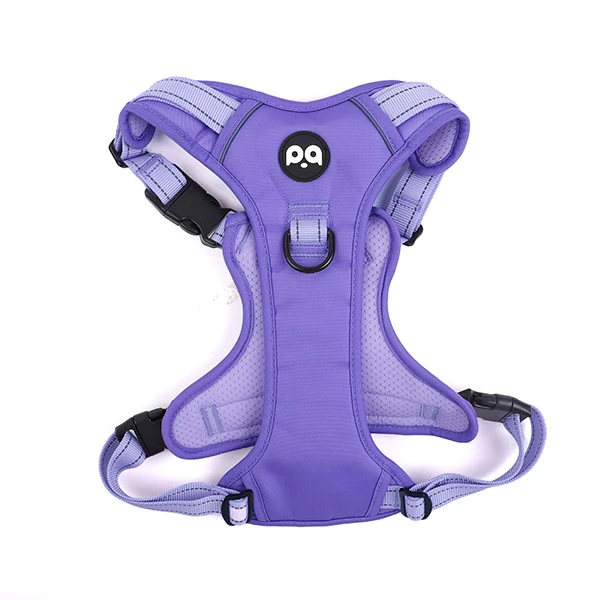
My name is Cathy, and as a customization specialist at the qqpets fabriek, I speak with brand owners every single day. A common story I hear is one of frustration. They have a vision for their brand, but they feel trapped between buying generic, off-the-shelf products that everyone else is selling, or facing the massive costs and high risks of full-scale custom manufacturing. This is why just selling a single custom dog collar is no longer enough. To be truly competitive, you need to offer a complete "pet walking product range" that tells a story and looks like a professional brand. The problem has always been that building such a range was out of reach for most businesses. We recognized this challenge and completely re-engineered our factory to solve it. We provide the tools and the flexible production process so you can build a complete, competitive, and custom product line easily and with minimal risk.
How can you create a design that truly differentiates your brand?
You're scrolling through supplier catalogs, and every pattern is a slight variation of the same old thing. You know a unique design is key4, but you aren't a designer, and hiring one is a costly bottleneck.
You can instantly become your own designer by using a free, integrated AI pattern generator. This technology allows you to create limitless, 100% exclusive designs that make your product range stand out immediately, all with zero design cost.
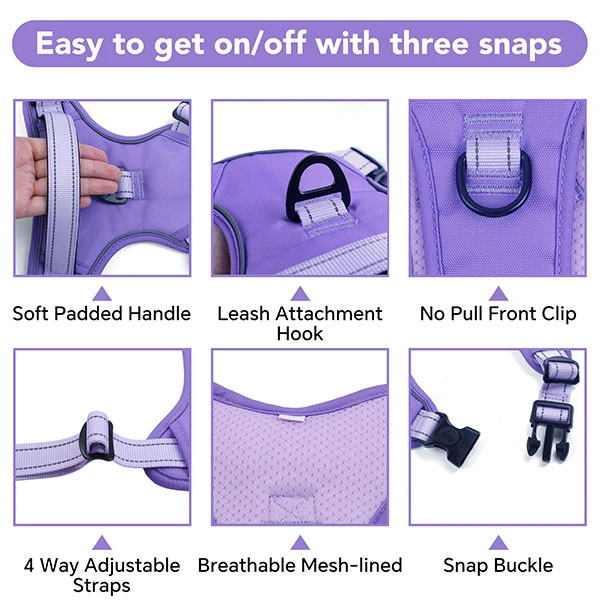
The single most powerful tool for differentiation in the pet accessories market is the visual pattern. A unique pattern transforms a standard product into a branded statement piece. This is precisely why we developed our revolutionary and completely free 3D Mockup System. The core of this system is our powerful AI Pattern Generator. This is where your brand's unique identity is born. You can simply type in any creative idea you have5. For example, you might type "a pattern of golden retrievers surfing on blue waves," or "a minimalist art deco pattern in gold and black." Within seconds, the AI presents you with several completely original Aangepaste patronen that are yours and yours alone. Then, using the "Mockup in seconds" feature, you can immediately apply your new signature design to a photorealistic 3D model6 of a collar, lead, or harness. You can see exactly how your final product will look, rotate it, and inspect it from every angle before spending a single dollar on samples or inventory. This process removes all the guesswork and financial barriers to creating a visually distinct brand. Each unique pattern you generate represents an entirely new product in your potential lineup.
Tertiary Heading: Modern Design Sourcing Comparison
| Design Method | Cost & Time Investment | Exclusivity Level | Resulting Brand Impact |
|---|---|---|---|
| Factory Stock Patterns | Free, but limited choices | None. Thousands of sellers use the same designs. | Generic and easily lost in the market. |
| Hiring a Designer | High ($100-$500+ per design), slow turnaround | High. Exclusive to you. | Effective, but a significant and often prohibitive expense for new lines. |
| qqpets AI Generator | 100% Free, Instant Results | High. 100% Unique to You. | The ultimate advantage: fast, free, exclusive designs that build a standout brand. |
How do you turn a single design into a full, cohesive product line?
You've approved a fantastic design for a collar, but now you need a matching lead and harness. You're worried the colors won't match perfectly, the materials will feel different, and the logos will look inconsistent.
A cohesive line is created by partnering with a single-source factory that manages your entire collection as one project. This ensures perfect material, color, pattern, and logo consistency across every item, from collar to lead to harness.
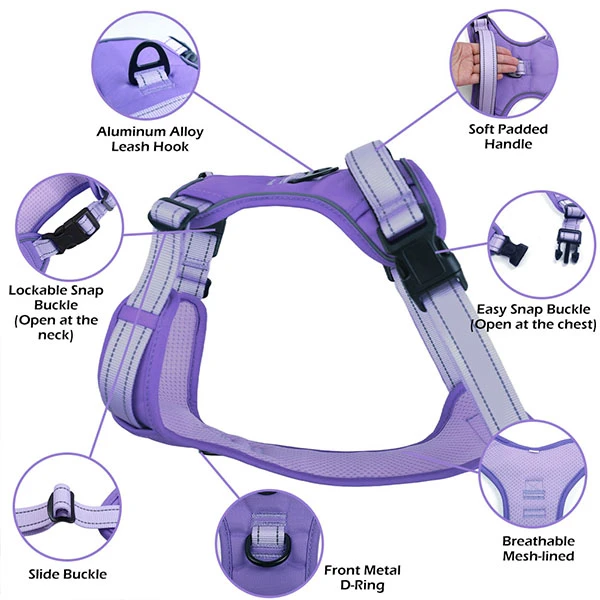
Building a brand is about creating a consistent and trustworthy experience7 for your customer. When a customer buys a matching set, they expect the word "matching" to be literal. Any small inconsistency, like a slightly different shade of blue or a different texture of webbing, can cheapen the perception of your brand.8 This is a common problem when sourcing different products from different places. We eliminate this issue entirely by being a dedicated pet traction customization expert. When we produce your collection, we manage it as a single, unified project.
- Color Consistency: The unique pattern and color palette you finalize in our 3D system is used to print the webbing for all your items in the same production batch. This guarantees that the Pantone colors are identical across every single piece.
- Material Uniformity: We use the same high-density, soft polyester webbing for our collars, leads, and harnesses, ensuring they not only look the same but also have the same premium feel and durability.
- Consistent Branding: You can choose a logo style—like a modern PVC patch or a classic woven label—and we will apply it with perfect consistency to every item in your range. This process allows you to confidently market and sell your products as high-value bundles, which is a proven strategy for increasing your average order value9 and building a loyal customer base.
How do you launch a full range without risking a huge investment?
This is the ultimate dilemma for brand owners. You know you need to offer multiple designs and a full range of products, but traditional factory Minimum Order Quantities (MOQs) of 500 or 1,000 units per design make this impossible without a massive budget.
You can de-risk your launch by partnering with a factory built for e-commerce, offering a "lightweight customization" model. With a game-changing MOQ of just 50 pieces, you can test multiple designs and products to see what sells best10.
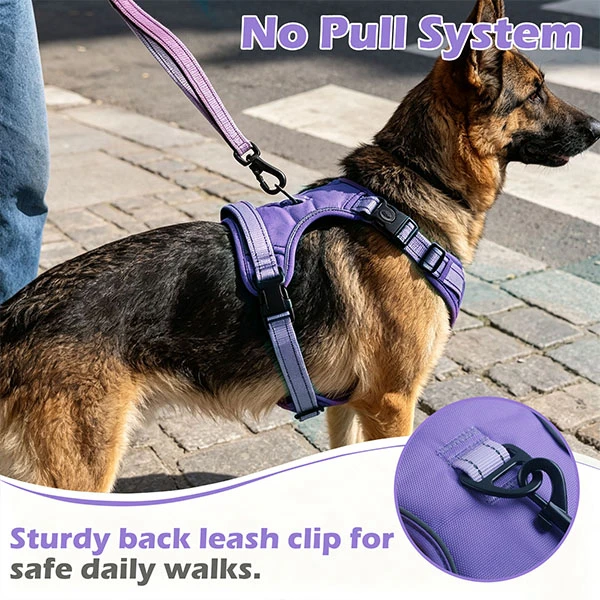
For an online seller, excess inventory is the enemy. It ties up your capital and incurs storage fees. The traditional high-MOQ manufacturing model forces you to place a huge bet on a single product, which is a recipe for failure in today's fast-moving market. Our model is different. Our 50-piece MOQ per size and design is a strategic launch tool. It fundamentally changes how you can build your business. Instead of investing your entire budget into 1,000 units of a single collar design, you can now spread that investment intelligently. Imagine being able to launch three different, unique designs at once to see which one resonates most with your audience. Or, for the same cost as one big, risky order elsewhere, you could launch a complete collection with us: 50 small collars, 50 medium collars, and 50 matching leads. This agile approach allows you to use real market data to make decisions. Let your customers tell you what the winner is. Once you have a proven seller, you can confidently scale up your order. This process, which we call "lightweight customization," protects your budget and provides a clear, data-driven path to building a profitable and competitive product range. Our "Sample in 3 Days" promise complements this perfectly, allowing you to quickly get a physical product in your hands to verify quality before even placing your small test order.
Ready to build your competitive pet product range the smart way? Our professional team is here to guide you. Contact us today to bring your brand to life.
Conclusie
Build a competitive pet product range with AI-powered unique designs, ensure cohesion with perfectly matched sets, and launch smartly with a low 50-piece MOQ to test the market and grow.
"Dog Collars, Leashes & Harnesses Market Size, 2033", https://www.persistencemarketresearch.com/market-research/dog-collars-leashes-harnesses-market.asp. A neutral pet-accessories market overview describing many competing products and a fragmented supplier landscape would contextualize the claim that custom collars and leads face heavy competition, though it would not prove saturation in every regional or niche segment. Evidence role: general_support; source type: other. Supports: The custom dog collar and lead market is crowded with similar products.. Scope note: Market-level evidence would be contextual and may not reflect every product niche or sales channel. ↩
"The Impact of Visual Elements of Packaging Design on ... - PMC", https://pmc.ncbi.nlm.nih.gov/articles/PMC11851823/. Research on product differentiation and consumer choice can support the idea that distinctive design and perceived quality help products compete, although such evidence is general and not specific to pet walking accessories. Evidence role: expert_consensus; source type: paper. Supports: Competitive pet walking ranges benefit from visually distinctive and high-quality product sets.. Scope note: The support would apply to consumer goods broadly rather than proving outcomes for this specific product category. ↩
"Understanding the effect of brand identity driven by consumer ...", https://pmc.ncbi.nlm.nih.gov/articles/PMC9521331/. Marketing literature on product-line coherence and brand consistency can support the claim that coordinated designs across related products strengthen a collection’s identity, while not directly measuring sales of matching pet accessories. Evidence role: general_support; source type: paper. Supports: Using coordinated exclusive patterns across collars, leads, and harnesses can strengthen a cohesive brand collection.. Scope note: Evidence would be indirect unless it specifically studies coordinated pet product sets. ↩
"Two Essays on the Effect of Visual Design on Consumer ...", https://rrpress.utsa.edu/items/020859e5-c794-4e91-89e0-fe02be2819b1. Studies of consumer product aesthetics and design differentiation can support the role of unique design in attracting consumer attention and shaping preference, though they do not establish that design is the only key factor in pet accessories. Evidence role: expert_consensus; source type: paper. Supports: Unique design is important for differentiating pet accessories.. Scope note: The support would be general to consumer products and should be framed as one factor among price, quality, distribution, and branding. ↩
"An Exploration of Default Images in Text-to-Image Generation", https://arxiv.org/html/2505.09166v2. Technical surveys of text-to-image generative models show that such systems can create images from natural-language prompts, supporting the mechanism described here; they do not verify the originality, ownership, or exclusivity of any individual generated pattern. Evidence role: mechanism; source type: paper. Supports: Text-to-image AI systems can generate visual designs from written prompts.. Scope note: The evidence would support the technical capability of prompt-based image generation, not legal exclusivity or vendor-specific performance. ↩
"A Review of Prototyping in XR: Linking Extended Reality to ...", https://arxiv.org/html/2504.02998v1. Research on digital prototyping and 3D product visualization supports the use of virtual models to evaluate product appearance before physical production, although it would not validate the fidelity of this specific mockup system. Evidence role: mechanism; source type: paper. Supports: Photorealistic 3D models can help users preview product appearance before ordering samples or inventory.. Scope note: The source would support the broader design and prototyping practice, not the accuracy of a particular vendor’s rendering tool. ↩
"What Is Brand Trust and Why It's Your Most Valuable Asset", https://imcprofessional.medill.northwestern.edu/blog/what-is-brand-trust. Brand-management research links consistent brand presentation with clearer brand associations and consumer trust, supporting the general claim that consistency contributes to trustworthy customer experience. Evidence role: expert_consensus; source type: paper. Supports: Brand consistency can contribute to a more trustworthy customer experience.. Scope note: The evidence would address brand consistency generally rather than proving trust effects for pet walking sets specifically. ↩
"URI research shows consumers perceive products with ...", https://www.uri.edu/news/2025/05/uri-research-shows-consumers-perceive-products-with-bold-colors-as-more-effective/. Studies on perceived product quality and visual consistency can support the view that mismatched colors or materials may lower quality perceptions, though the magnitude of the effect may vary by product category and customer expectations. Evidence role: mechanism; source type: paper. Supports: Small visual or material inconsistencies can reduce perceived brand or product quality.. Scope note: The support would be based on general perception and quality-signaling research, not necessarily pet collars and leads. ↩
"The Dynamic Effects of Bundling as a Product Strategy", https://www.hbs.edu/ris/Publication%20Files/dynamicbundling_2013_06_20_13def9fb-1904-479a-8a37-fa64eff9663a.pdf. Research on product bundling and retail pricing supports that bundles can increase basket size or transaction value under some conditions, but effects depend on pricing, perceived value, and product complementarity. Evidence role: statistic; source type: paper. Supports: Selling collars, leads, and harnesses as bundles can increase average order value.. Scope note: Bundling evidence is conditional and may not guarantee higher average order value for every pet accessory store. ↩
"Assessment of Minimum Viable Product Techniques", https://pdxscholar.library.pdx.edu/cgi/viewcontent.cgi?article=2178&context=etm_studentprojects. Entrepreneurship and lean-startup literature supports testing product variants with real customer response before scaling investment, though it does not determine the optimal MOQ or guarantee that a 50-piece test will be statistically sufficient. Evidence role: expert_consensus; source type: paper. Supports: Small-batch launches can be used to test multiple designs and products before scaling.. Scope note: The source would support the testing principle, not the specific 50-piece threshold or vendor model. ↩