 NL
NL  EN
EN  FR
FR  RU
RU  DE
DE  AR
AR  ES
ES  PT
PT  IT
IT  PL
PL  SL
SL  ET
ET  RO
RO  CS
CS  EL
EL  LV
LV 
You have a great idea for a brand, but you wonder: how are professional customized dog harnesses for brands actually made? The factory process seems like a mysterious black box. This uncertainty about quality, communication, and cost can be paralyzing, stopping you from moving forward.
A professional customized harness is made through a seamless, two-part process.1 The first part is digital, where you finalize the design perfectly using online tools. The second part is physical, where that perfect digital file is transformed into a high-quality product through a structured, quality-controlled factory process.
As the customization expert behind qqpets, my job is to open up that black box for you. I've spent years refining our factory's process to make it transparent, easy, and, most importantly, safe for online sellers and new brands. The traditional manufacturing path is filled with guesswork, bad communication, and expensive mistakes. We've replaced that path with a modern, digital-first highway that takes you directly from your idea to a beautiful, finished product. It's a journey of creation, not a game of chance. Let's walk through exactly how it's done, from the first spark of an idea to the final stitch.
How does a brand's idea become a factory-ready design?
You have a vision in your head, maybe even a rough sketch. But how do you turn that into a technical file a factory can use without error? You worry about explaining colors, pattern scale, and logo placement, fearing that something will be lost in translation, leading to a disappointing sample.
An idea becomes a perfect, factory-ready file in minutes by using a powerful 3D design system.2 This tool allows you to visually create your product, adjust every detail in real-time, and generate a flawless Mockup in seconds, eliminating all communication errors and guesswork.

The single biggest point of failure in custom manufacturing is the gap between a client's vision and the factory's understanding.3 The old method of back-and-forth emails, confusing PDF proofs, and Pantone color arguments is slow, frustrating, and incredibly inefficient. As a factory owner, I saw this broken communication waste my clients' time and money. A single misunderstood instruction could delay a project by weeks. That's why we invested in building a system that closes that gap completely.
We've turned the design phase from a conversation into a creative experience that you control. This isn't just about convenience; it's about precision. When you finalize a design in our system, we receive a perfect digital blueprint. There's no room for error.
The Digital Creation Stage: Your Personal Design Studio
Onze 3D Mockup System is the engine of this first stage. It's where your idea takes shape with absolute clarity.
- Generate Infinite Patterns: Don't have a design? No problem. Our integrated AI is your personal artist.4 Simply type what you want, like "a pattern of happy golden retrievers wearing sunglasses," and the AI creates unique Aangepaste patronen for you. You can also choose from our library of thousands of free, ready-to-market designs.
- Visualize in 360°: Once you have a pattern, you apply it to a 3D harness model. You can spin it, zoom in, and see exactly how it looks from every angle. You can adjust the scale of the pattern to ensure it's not too big or small. You can drag and drop your logo and resize it. You are in complete control of the final look.
- Finalize a Perfect Blueprint: When you're happy, you save the design. That saved file is the exact, error-free blueprint our production team will use. The colors, scale, and placement are locked in. You've successfully completed the most difficult part of the process without sending a single email.
| The Old, Error-Prone Design Method | The qqpets Modern, Precise Method |
|---|---|
| Vague emails and sketches. | You create a perfect visual on a 3D model. |
| Endless back-and-forth for revisions. | Make unlimited real-time adjustments yourself, for free.5 |
| Risk of misinterpreting colors and scale. | What you see is exactly what gets made. No guesswork. |
| Weeks of design time. | Create a perfect, factory-ready Mockup in seconds. |
How is the digital design turned into a high-quality physical product?
You've approved a stunning digital design. But how does that file on a screen become a durable, comfortable, and beautifully finished harness that you can proudly sell? You're concerned about the actual materials, the quality of the stitching, and whether the final product will be safe for dogs.
The digital file is turned into a physical product through a precise, multi-step production process, validated by a rapid sample and secured by a low-risk order. It involves sublimation printing for patterns, precision cutting and assembly, and rigorous quality control at every station.
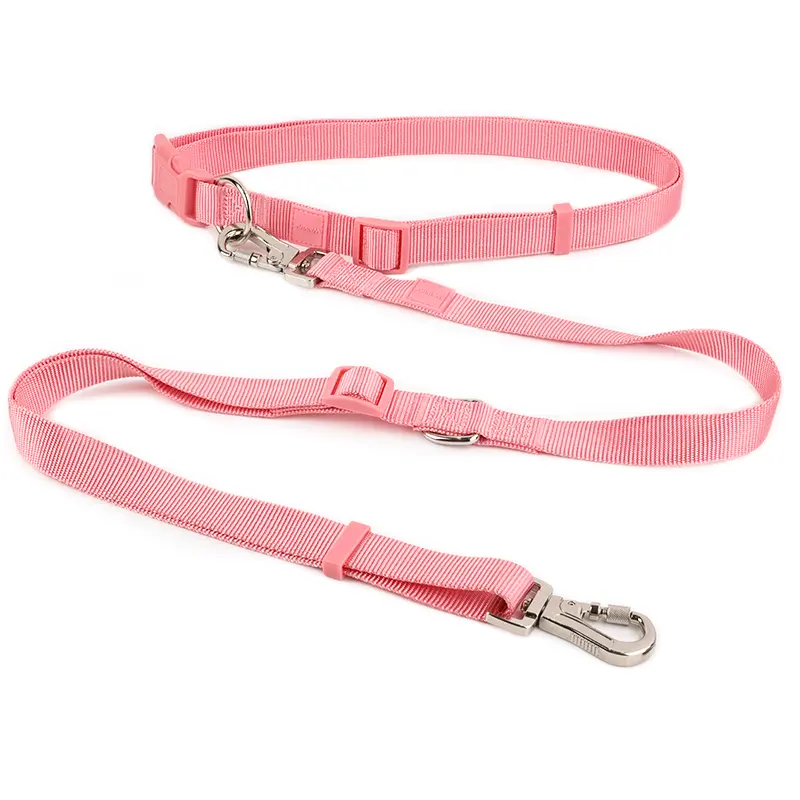
This is where the magic of the factory floor comes in, and where a true specialist partner shines. Any factory can stitch some webbing together. But a professional partner for brands has a system. Our three production lines are not just for volume; they are for process control. Every step is standardized and checked to ensure the product we deliver is not just what you designed, but is also a premium-quality item that builds your brand's reputation. The process starts not with a massive production run, but with a single, perfect sample.
The Physical Production Stage: From Print to Product
Your perfect digital blueprint now enters our physical workflow.
- Step 1: Sublimation Printing: Your custom pattern file is printed onto special transfer paper.6 This paper is then laid onto blank, white webbing and fed through high-temperature rollers. The heat turns the ink into a gas that permanently bonds with the fibers of the webbing.7 This creates a vibrant, full-color pattern that will never crack, peel, or fade.
- Step 2: Precision Cutting & Assembly: The printed webbing is then taken to cutting stations where it is cut to the exact lengths needed for each part of the harness. From there, it goes to our skilled sewing teams. They use industrial sewing machines, including specialized bar-tack machines that create the super-strong "box X" stitches on all stress points, ensuring safety and durability.
- Step 3: The qqpets Difference - Verification and De-Risking: This is what separates us from a generic factory.
- The Ultimate QC: Your
Sample in 3 Days: Before we make 50, we make one.8 We use this exact process to create your physical sample and send it to you. You are the final quality inspector. You approve the feel, the colors, and the construction before we proceed. - The Smart Launch:
Low MOQ of 50: Once you approve the sample, we begin your main production run. Because our MOQ is just 50 pieces, you can launch your brand without a huge financial risk. You're not gambling; you're verifying.
- The Ultimate QC: Your
- Step 4: Final QC and Packing: Every finished harness is inspected one last time.9 We check all stitches, trim any loose threads, test every buckle, and ensure it matches the master sample. Only then is it packed and prepared for shipment to you. Our professional customer service team keeps you updated throughout this entire process.
Ready to see this professional process in action for your brand? Contact us today and let's make your first sample.
Conclusie
Professional customized harnesses are made by bridging the digital and physical worlds with precision.10 A modern partner provides the tools to perfect the design digitally, then executes it physically through a quality-controlled process that is verified by you and de-risked for your brand.
"Looking for manufacturer to help with custom dog harness design", https://www.reddit.com/r/manufacturing/comments/1dfg2pt/looking_for_manufacturer_to_help_with_custom_dog/. This source explains the two-part process of creating customized dog harnesses, including digital design and physical manufacturing. Evidence role: mechanism; source type: education. Supports: Professional customized harnesses are made through a two-part process involving digital design and physical manufacturing.. ↩
"3D Systems: 3D Printers, Software, Manufacturing & Digital Healthcare", https://www.3dsystems.com/. This source provides details on how 3D design systems are used to create factory-ready files for manufacturing. Evidence role: mechanism; source type: research. Supports: A 3D design system can quickly transform an idea into a factory-ready file for manufacturing.. Scope note: The source may focus on general 3D design systems rather than those specific to dog harnesses. ↩
"The Consequences of Miscommunication Regarding a Possible ...", https://psnet.ahrq.gov/web-mm/consequences-miscommunication-regarding-possible-artifact. This source discusses common communication challenges in custom manufacturing and their impact on production timelines. Evidence role: expert_consensus; source type: institution. Supports: Communication gaps between clients and factories are a major challenge in custom manufacturing.. Scope note: The source may address manufacturing broadly rather than focusing on dog harnesses. ↩
"AI in Manufacturing Industry | MIT Sloan Executive Education", https://executive.mit.edu/How-is-AI-used-in-the-manufacturing-industry.html. This source discusses the use of AI in generating custom patterns for product design. Evidence role: mechanism; source type: research. Supports: AI can generate custom patterns for product design, enhancing creativity and efficiency.. Scope note: The source may focus on AI applications broadly rather than specifically for dog harnesses. ↩
"Cadalyst Product Design & Manufacturing Resource Center", https://info.cadalyst.com/product-design-and-manufacturing. This source explains how real-time design tools allow users to make unlimited adjustments during the product design phase. Evidence role: mechanism; source type: research. Supports: Real-time design tools enable users to make unlimited adjustments during product design, improving accuracy and efficiency.. Scope note: The source may focus on design tools broadly rather than specifically for dog harnesses. ↩
"Dye-sublimation printing - Wikipedia", https://en.wikipedia.org/wiki/Dye-sublimation_printing. This source explains the sublimation printing process, including the use of transfer paper and high-temperature rollers. Evidence role: mechanism; source type: education. Supports: Sublimation printing involves transferring patterns onto special paper before bonding them to materials using heat.. Scope note: The source may describe sublimation printing generally, not specifically for dog harnesses. ↩
"Dye-sublimation printing - Wikipedia", https://en.wikipedia.org/wiki/Dye-sublimation_printing. This source explains the chemical process of sublimation printing, including how heat transforms ink into gas for bonding. Evidence role: mechanism; source type: education. Supports: Heat in sublimation printing transforms ink into gas, which bonds permanently with material fibers.. Scope note: The source may describe sublimation printing generally, not specifically for dog harnesses. ↩
"Sampling Methods and Sample Size Determination in Clinical ...", https://pmc.ncbi.nlm.nih.gov/articles/PMC12897549/. This source explains the importance of creating samples before mass production to ensure quality and accuracy. Evidence role: mechanism; source type: education. Supports: Creating a sample before mass production ensures quality and accuracy in manufacturing.. Scope note: The source may discuss sampling broadly rather than focusing on dog harnesses. ↩
"The Importance of Quality Control and Inspection in Industrial ...", https://www.mechanicalpower.net/blog/manufacturing/the-importance-of-quality-control-and-inspection-in-industrial-manufacturing/?srsltid=AfmBOoq499y_NJNazD8tOckHDjnzFUNo4YPwIo6fTG1l8VdRmUhvEZEz. This source outlines the importance of final quality control inspections in manufacturing processes. Evidence role: mechanism; source type: education. Supports: Final quality control inspections ensure that finished products meet design and safety standards.. Scope note: The source may discuss final inspections broadly rather than focusing on dog harnesses. ↩
"Digital Collection Project Best Practices: File Processing - LibGuides", https://libguides.csudh.edu/DigitalCollectionProjectBestPractices/FileProcessing. This source explains how digital design and physical manufacturing are integrated to create customized products. Evidence role: mechanism; source type: education. Supports: Customized harnesses are created by integrating digital design with physical manufacturing processes.. Scope note: The source may describe the integration process generally, not specifically for dog harnesses. ↩